
Pangoot; our second destination in our birding trip. The first one had been Sattal. My friends and I were on a week long birding trip to the Himalayan foothills. You can read my post on Sattal here.
Pangoot is a village that lies around 40 kms away from Sattal. There is also an elevation difference of 610 meters. This results in there being a set of birds that are seen at this place that are not found around Sattal. These were some of the birds that we were hoping to see in our visit there.
Our place of stay in Pangoot itself had a number of bird species including one of the “local targets”; the Spot-winged Grosbeak.

Spot-winged Grosbeak (M) 
Spot-winged Grosbeak (F)
They had a funny way of eating the fruit from the tree on which it was on. It had a very slow motion of munching it; reminded me of a sloth making very slow movements 🙂 .
We got excellent views of a Buff-barred Warbler that was going about foraging.

Buff-barred Warbler
The others birds around the lodge included the common Rusty-cheeked Scimitar Babbler, Black-headed Jay, a very large flock of White-throated Laughingthrush, Grey-winged Blackbirds , Chestnut-crowned Laughingthrush and Grey Bushchats.

Black-headed Jay 
White-throated Laughingthrush 
Grey-winged Blackbird (M) 
Chestnut-crowned Laughingthrush 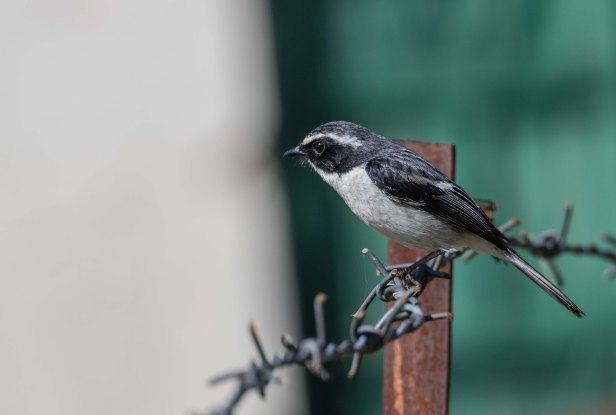
Grey Bushchat (M)
The ones which needed to be sought out were the Golden Bush-robin and the Striated Laughingthrush.

Golden Bush-robin 
Striated Laughingthrush
We travelled quite a bit of distance (or atleast felt so given the slow pace and the climb) to catch some of the other birds. Some that we saw at a village were the Rufous-breasted Accentor, Black-throated Accentor and the Striated Prinia.

Rufous-breasted Accentor 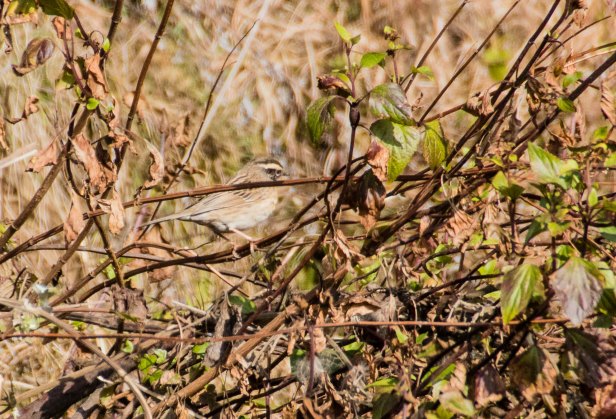
Black-throated Accentor
Even the Common Stonechat different in these parts.

Common Stonechat
We however dipped on the Fire-fronted Serins. They seemed to have skipped “village” by the time we got there.
A drive further away from the village gave us our first flock of Rock Buntings. We started seeing them more regularly as we headed on further.
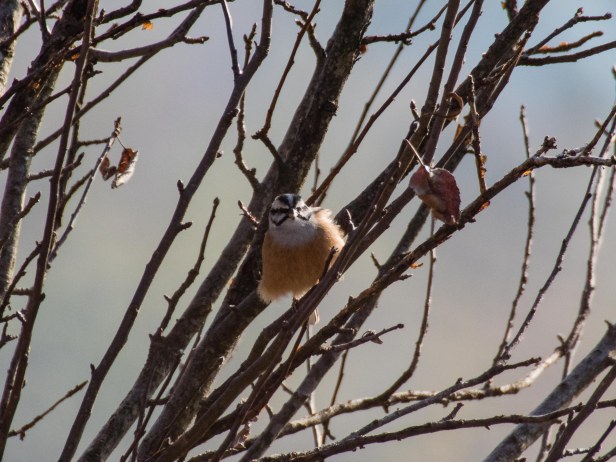
Rock Bunting
Another stop had us seeing European Goldfinches, Lesser Whitethroat, Verditer Flycatcher and Himalayan Griffon. We had hoped to see the Speckled Wood-Pigeon on our way back, but had to dip on it.
Back at the lodge, the silence of the night was broken often by the calls of the Collared Owlets and Grey Nightjars. Strangely I did not hear any calls of the Large-tailed Nightjar.
I had decided to wake up in the middle of the night post the moon-set, to check if I could see the Milky Way. Well, I woke up at 1:50am to do so. No luck with the Milky Way. But it held an even bigger surprise; there was a Mountain Scops-Owl sitting on an open branch of the tree just outside my room 😀 ! Unfortunately it flew off before I could get my camera or my binoculars. Well I was just happy to have seen it!
The morning session was dedicated to trying to seeing some of the other “local specials”; the Koklass Pheasant, the Cheer Pheasant. For this we left earlier than usual. We did not get to see the Cheer Pheasant. However the area gave us some good views of Upland Pipits singing and doing their display flights. You can see (and hear) it singing in the video later in the post.

Upland Pipit
as well as Himilayan Griffons; in fact 12 of them coming in one after the other.
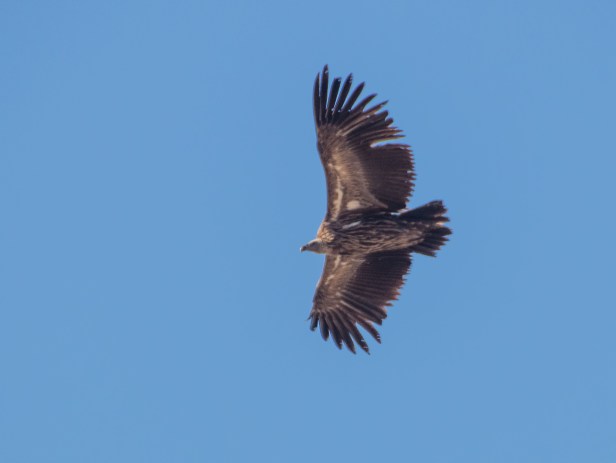
Himalayan Griffon
We also got to see a few flocks of Altai Accentors, though at some distance.

Atai Accentor
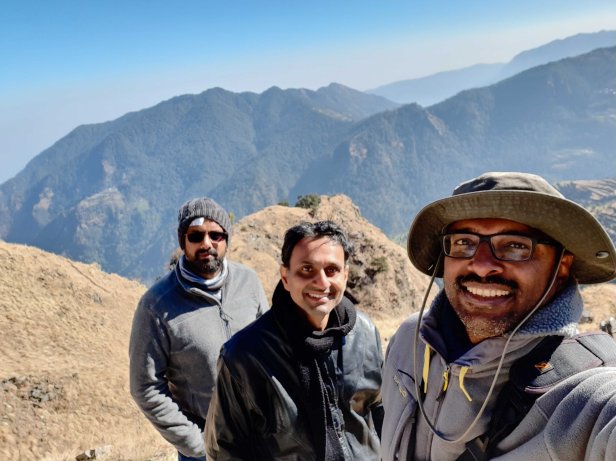
Here is us having breakfast at the Cheer Pheasant lookout point.

The surrounding landscape was impressive and calming; just what we needed coming from our busy city lives 🙂 .


Here is a family of Himalayan Gorals seeing us seeing them 😉 . They were so sure-footed on the slopes and were a sight to see!
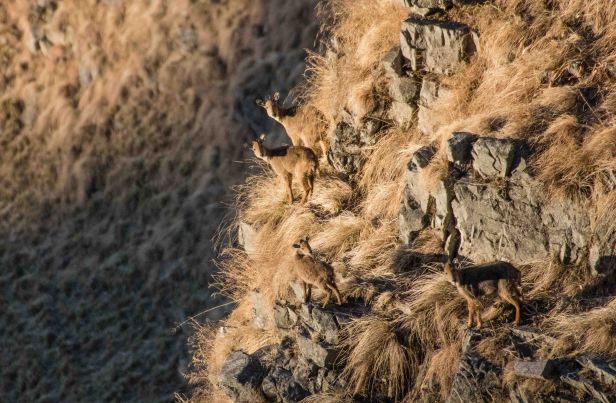
Himalayan Gorals
We had better luck with the Koklass Pheasant. We heard several calls first. Finally we got an excellent view of a male sitting on a tree branch.

Koklass Pheasant (M)
As soon as it sensed our presence, it became alert. Look at its transformation 😀 ! And it finally flew off into the forest.

Koklass Pheasant (M)
We also got excellent views of a Mistle Thrush when we sat in the car judging the presence of the Koklass Pheasant. I had to take the picture of the bird through the windshield though.
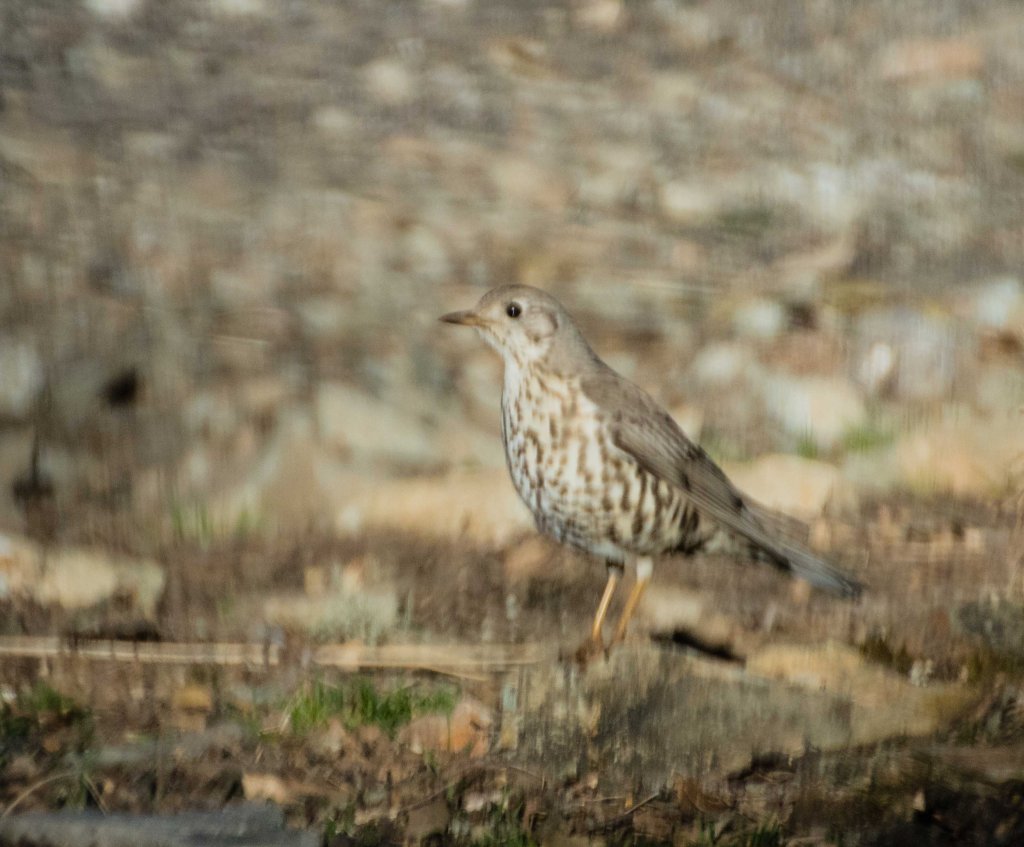
Mistle Thrush
We got some lovely views of the hills as well from being up there.


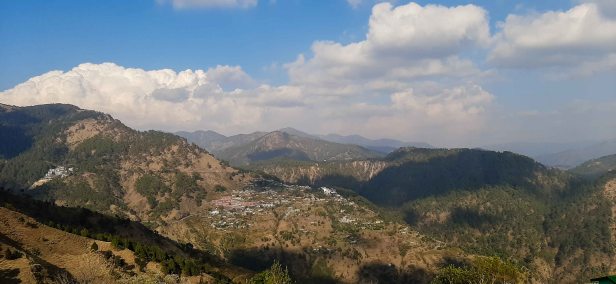

Here is a view of the snow-capped Nanda Devi range of the Himalayas in the background.
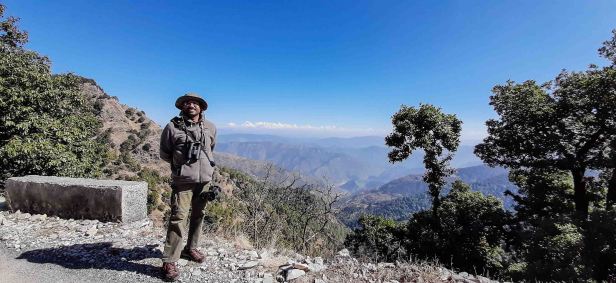
A stop at the “helicopter pad” point on our way back to the lodge, had us seeing several Tits. These included the Coal Tit, Green-backed Tit, Black-throated Bushtit and the less abundant Yellow-browed Tit.

Yellow-browed Tit
We got excellent views of a Brown-fronted Woodpecker drinking nectar from a Rhododendron flower. Never knew that a woodpecker does so! Check out the video below to see it.
We had hoped to see a Scaly-bellied Woodpecker but had to dip on it. We however got excellent views of a Rufous-bellied Woodpecker.
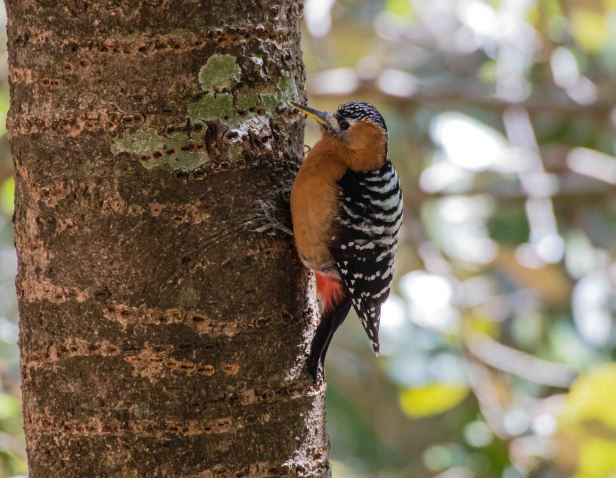
Rufous-bellied Woodpecker (F)
The Rufous-bellied Woodpecker is a nectar sucker. It was very interesting to see how it had made rows of holes on the entire tree trunk; you can see a part of it in the above picture. The tree was surely going to fall down at some point 😀 .
As we stood rooted at the spot admiring the woodpecker, Hari shouted “Raptor!”; a Black Eagle flew majestically over us! Almost immediately after another raptor flew in the same direction; a juvenile Mountain Hawk Eagle!
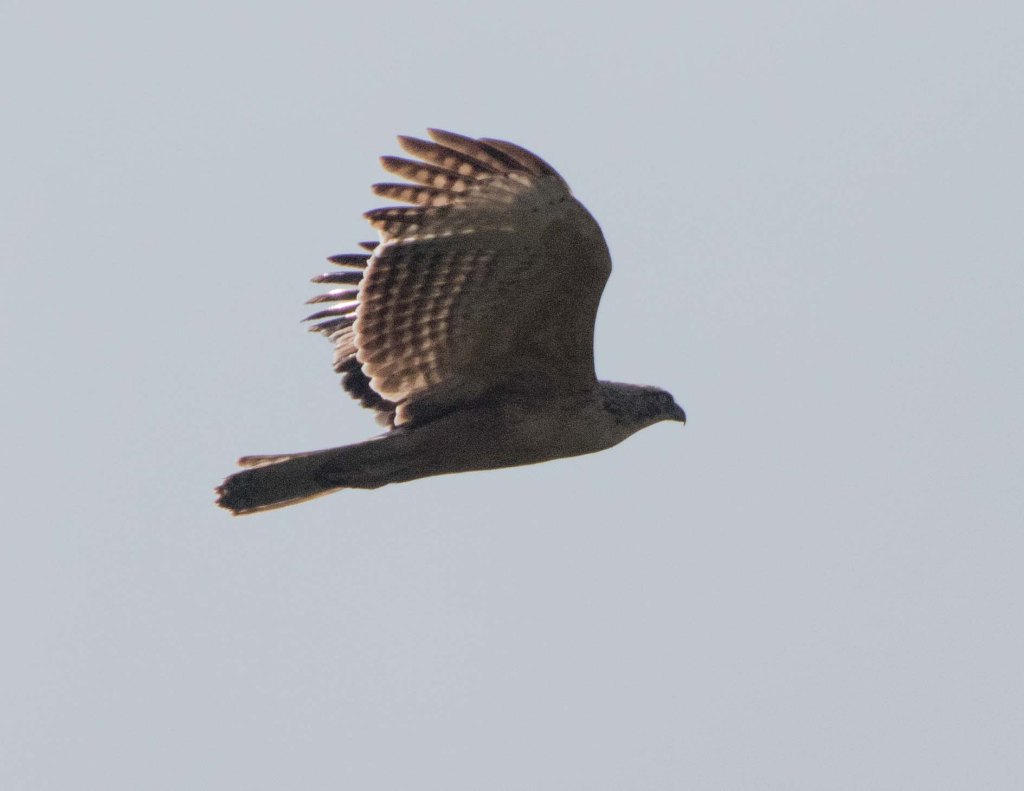
Mountain Hawk Eagle
Video
Here is a short video I made on some of the birds we had seen in our visit to Pangoot.
Other Info
Birding is not easy here. Sightings can be infrequent and not that easy. Be mentally prepared for this, especially if you are birding without playing calls, like we did. Here too we found that activity in the afternoon was very limited.
Pangoot village is where almost all the places of stay are. However birding is not strictly limited to the village; one usually has to travel out to different spots. A big part of the area is a bird sanctuary. One does birding by driving through and stopping whenever some interesting call or sighting happens. That is what we did.
Given the elevation, the weather plays an important role. It had snowed the week before we reached. There were several places that the snow still survived. Temperatures can drop quickly if it rains or snows. Be prepared for this.
There are no places to eat once you leave Pangoot village. So if you plan to stay out long, then pack food.
 Mad about Birding and Travel
Enjoyed reading it. Thanks for sharing, would love to visit the place soon. Video with calls and woodpecker enjoying nectar was awesome.
LikeLiked by 1 person
Thanks Rahul.
LikeLike
Was waiting for the next post… Read all the posts I missed. Enjoyed reading and awaiting the next😁
LikeLiked by 1 person
Thanks Ishan! Many more coming up; one every two weeks actually 🙂
LikeLike
Birding is the game of patience. You did a great job. Loved reading the post. Thank you for sharing. 🙂
LikeLiked by 1 person
It definitely is :-). Thanks for commenting
LikeLike
Pangot is a birder’s paradise. So my list and your list of sightings (in Pangot) put together makes a real long list 🙂
Beautiful birds and captures. You could see and photograph the Koklass pheasant…. wow! Next time I am in Pangot I hope to spot these set of birds
LikeLiked by 1 person
Here is hoping that you do 🙂
LikeLiked by 1 person
I think i love the rufus belly woodpecker. So Cute.
LikeLike
Loved reading it. If all goes well , I would be in that region for some birding this December. Your blog has been a great help in my planning.Thanks a ton!
LikeLiked by 1 person
Good to know Sunandan. Hope you make it and have a great trip. Stay safe.
LikeLike