Pelagic birding; something that I had tried to do twice before but had been unsuccessful. But what is Pelagic birding?
Well, for that we have to first know what pelagic birds are. These are birds that spend a significant portion of its life on the open ocean. They rarely venture close to land except to breed. So to see them, one would need to go to the islands where they breed. But these islands are usually isolated and pretty difficult to reach. The next best chance is to try and see them on the open ocean. Pelagic birding is nothing but birdwatching of pelagic birds, mostly on the open ocean.
So why had I been unsuccessful in the previous two attempts at pelagic birding? As you read above, it is essentially going into the open ocean in search of the pelagic birds. So weather is a very important factor in such trips. On the previous occasions, the weather had become unfavourable with high wind speeds and high waves necessitating the cancellation of the trips. In fact, the coast guard had issued warning to all seafarers and closed down the port. There is saying “Third time lucky”; it came true for me 😀 .
The pelagic trip happened from the Mangalore, a coastal town in the state of Karnataka, India. The trip itself was happening on a Saturday. However some friends of mine and I reached a day earlier in order to bird around Mangalore. You can read about it here.
We were to board the boat at the Mangalore Port. We reached the designated boarding point by 6:15AM. For many of us, it was to be our first pelagic trip. Once on the boat, I could feel the anticipation building up. We had been warned that not everyone takes well to travelling on the open waters and get sea-sick. Well, we would just have to rely on the advice of the several “veterans” in the group, a few having done 7 or more pelagic birding trips.
Pelagic birding is very different from birding on land. For one, you need patience, and a lot of it. You can go for miles in the open sea and not find a single bird. One usually gathers at the bow of the boat and keep scanning the waters for any bird(s). And when one does, then we shout out “Bird at 2 0’clock”. Yes, the directions need to be given in “hours” 😀 . Well that is just to make it easy for everyone to get the same reference.
To make things more challenging, pelagic birds are not the easiest to tell apart, given that their plumage can be similar, especially those of the same family. So the usual practice is to click as many photos of the bird as possible. A definite identification is only concluded once back on shore after examining the photos. Now imagine trying to take photographs of the birds from a boat that is constantly moving up and down or sideways depending on the waves. Add to this that the bird itself will be bobbing up and down based on the waves. So in essence pelagic birding is like trying to find a needle in a hay stack that is constantly moving; and this is if you are not sea-sick 😀 !
Well, there are some strategies employed to increase the odds of seeing pelagic birds. One of them is to lookout for fishing boats and go near them; fishing boats tend to attract birds as they are potential sources of an “easy” meal.
Given the “hardship”, sighting of a pelagic bird is usually met with enthusiastic shouts such as “Skua Skua!!!” etc. And anyone who may have been resting on the floor of the boat, jumps up determined to see the bird. We had the boat crew as well getting into frenzy and shouting out “Skua Skua Skua…”. It soon almost became the anthem for the trip 😉 .
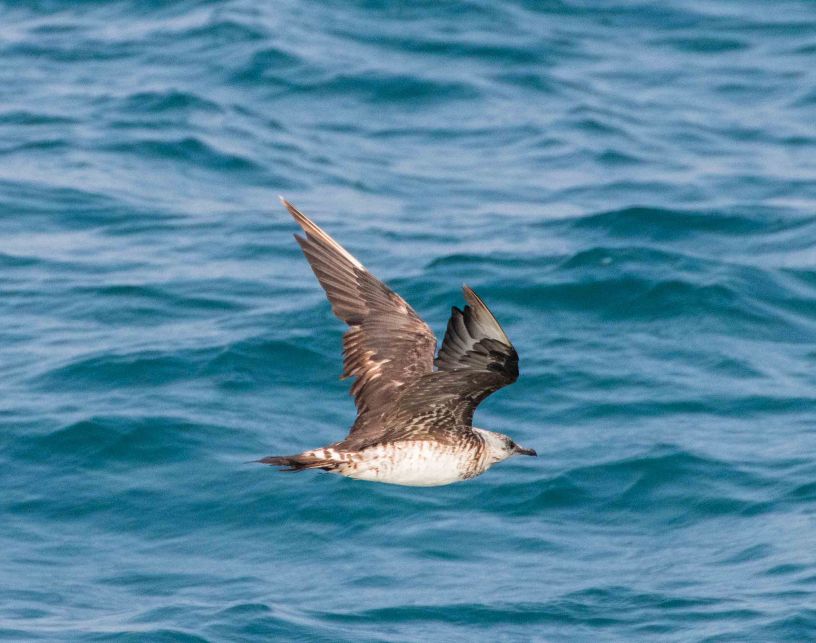
On this particular trip, as luck would have it, the sea was rougher than the “usual”, even by the experience of the “veterans”. But thankfully almost all took “well to the sea”. We also had to return to port earlier than expected as we had got a warning of the wind picking up further speed later in the day. And yes, we did get to see some birds. Here are pictures of some of them:
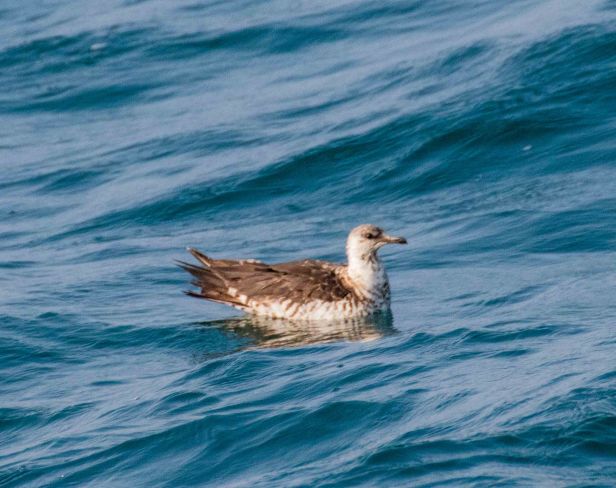
Arctic Skua 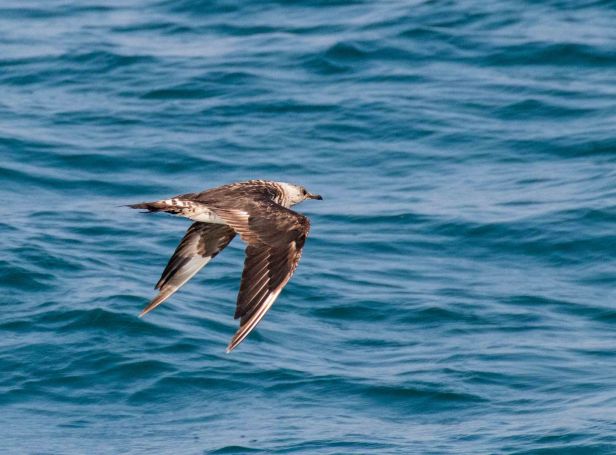
Arctic Skua 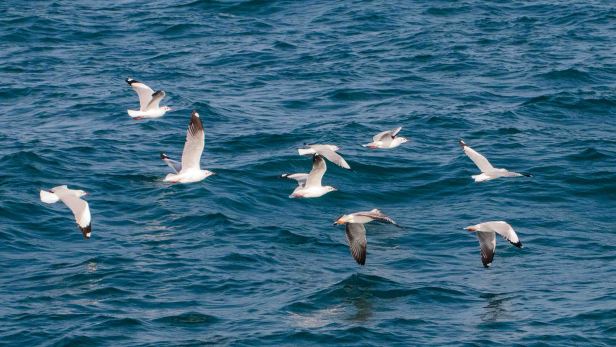
Brown-headed Gulls 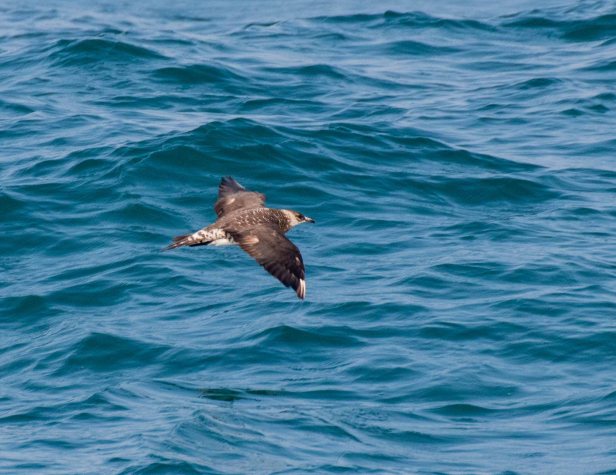
Arctic Skua 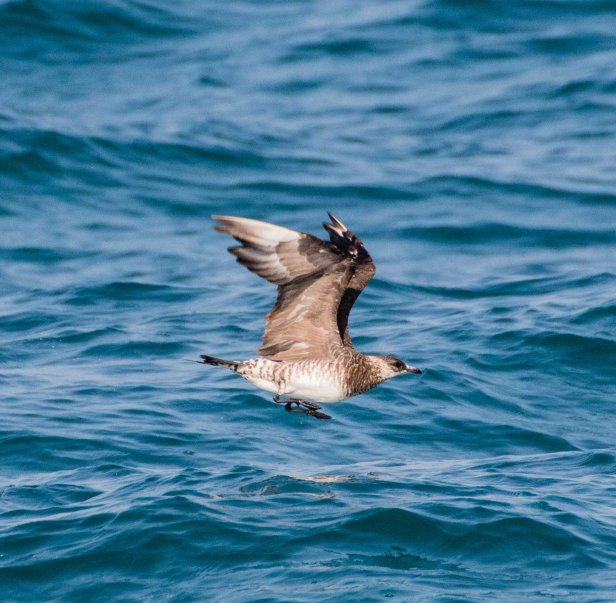
Arctic Skua 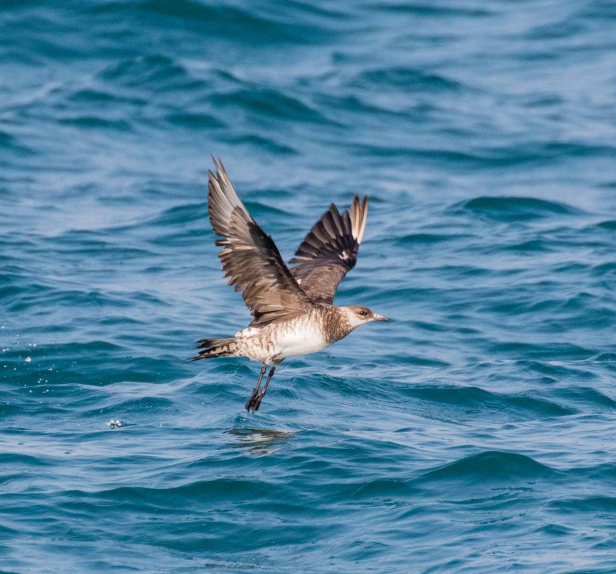
Arctic Skua 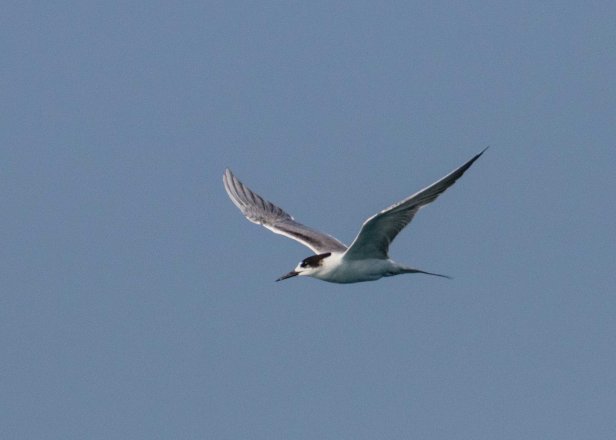
Common Tern 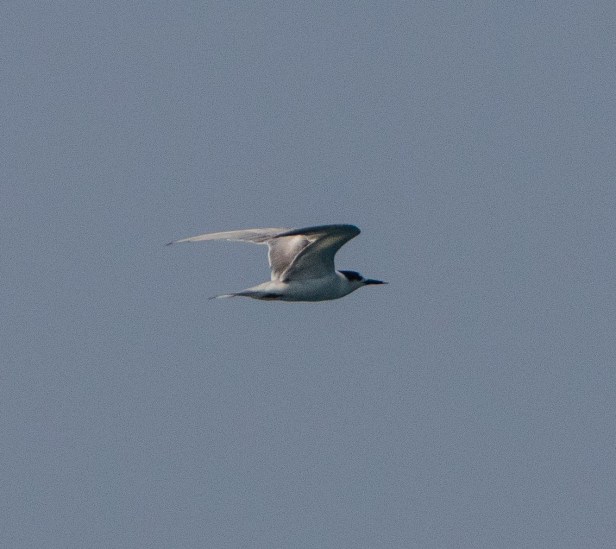
Sandwich Tern 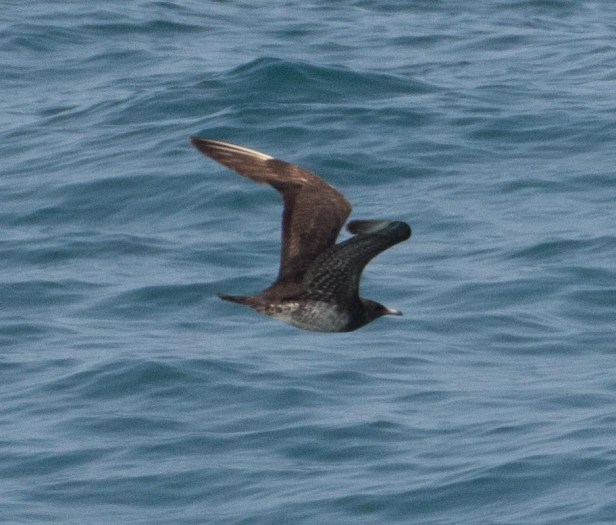
Pomarine Skua 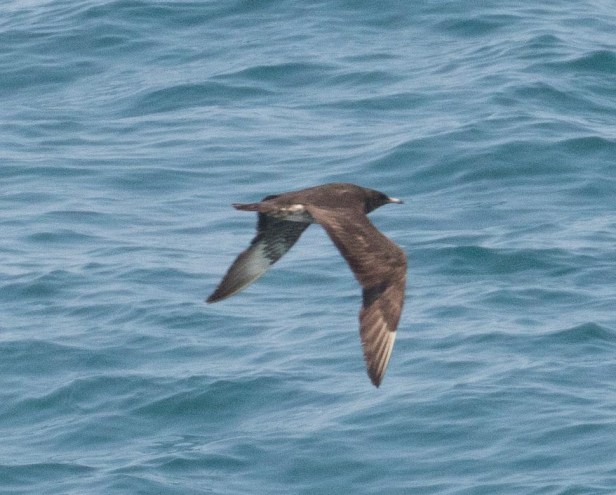
Pomarine Skua
All in all, it was a great experience. I will definitely consider going on another pelagic birding trip. Here is a picture of the group that went in the trip:

A big thanks goes to the organisers from coastal Karnataka birders who arranged all the logistics for the trip, especially making it open to anyone who wants to participate. Keep up the good work!
Suggestions
If you are considering going on a Pelagic trip, there are several things that one should keep in mind:
- It is always good to know upfront if you are prone to sea sickness. This can be a real dampener if you find out that you are once on the boat. Keep some medicines handy anyways
- Once the boat leaves the harbour, they usually return almost after 8 hours. So be mentally prepared for it
- Be prepared to be bored most of the time 🙂 . Like I mentioned earlier in this post, finding pelagic birds is like finding a needle in a moving hay stack. Making friends while on the trip helps
- I felt it was better to stand at the bow (front) of the boat. It was both thrilling and you had the best angle of view. Moreover you could anticipate what sort of waves were going to hit you 😉
- If you are wanting to photograph the birds, which is recommended given that pelagic birds are difficult to ID in general as well as the fact that everything is moving even when trying to peer through your binoculars, take a camera that is simple to wield. Taking a super big telephoto prime lens is, in my opinion, impractical. You will struggle to use it, especially if the sea is rough
- Take plenty of water and wear long and comfortable clothing. Sun will be glaring down on you generally
- Prepared for the trip to be cancelled at the 11th hour. I am telling from experience 😀 . My first two trips got cancelled like this
- Reach the place atleast the night before. It is better to have got a good night’s rest before the pelagic trip
 Mad about Birding and Travel
A lot of patience, patience and patience is required. Hats off to you and your team!!
LikeLiked by 1 person
You nailed it…The other element is luck and no sea sickness 🙂
LikeLiked by 1 person
Agreed 💯
LikeLiked by 1 person
As always a nice read..thank you sir…
LikeLiked by 1 person
Thanks Ram 😀
LikeLike
It is hard, but so much fun, for me to try and capture pelagic birds, because I am on a moving ship, far at sea. They catch the wind drafts and soar, and then, slice the waves to ribbons. They are pelagic acrobats. I am supposed to go back to Antarctica in January. Considering the state of the world, it is doubtful I will go. I hope I do. I want to see the albatross again. Your captures are magic.
LikeLiked by 1 person
Well, January is far away at present. So fingers crossed, things will improve and you will be able to go back to Antarctica. I hope to visit there once as well. Yes, seeing pelagic birds fly are magical and very different. When you write that you want to see the Albatross again, I just want to see one :-D.
LikeLike