
Pulicat Lake, located across the Nellore district in Andhra Pradesh and Tiruvallur district of Tamil Nadu, is the second largest brackish water ecosystem in India after Chilka Lake in Odisha.
The lake is high on the list of places to visit for any birder, to see migratory waterfowl, waders and some shorebirds. I had already twice visited the Andhra Pradesh side of Pulicat Lake. (You can read about that side of the lake here ) Well, frankly speaking, given this, I had not imagined that I would make a trip to the Tamil Nadu side. But the lure of the possibility to sight new birds is a strong one 🙂 . In my case, the bird that came calling was the Lesser Noddy.
Lesser Noddy is a pelagic bird that spends most of its time out in the open waters of an ocean or sea. To be able to get to see one close to land is frankly rare, except when they are in their breeding grounds. So when I got to know that a Lesser Noddy has been staying over in Pulicat Lake on the Tamil Nadu side for several months, I had to, of course, try and see it 😉 . It was thus that I made the trip there.
The trip that I undertook was for just two days in Oct 2018; basically leave early morning on a Saturday, reach Pulicat Lake around noon, do two birding sessions (one Saturday evening and the second on Sunday morning) and then start back a bit before noon on Sunday. I had two of my friends, Vinay and Raghavendra, also join me on the trip.
As I experienced, birding in the Tamil Nadu side is very different from that at the Andhra Pradesh side. Here the only way to see the birds is to hire a fishing boat and go to where they are. Here are photos of some of the birds that we got to see.

Black-bellied (Grey) Plover 
Sanderling 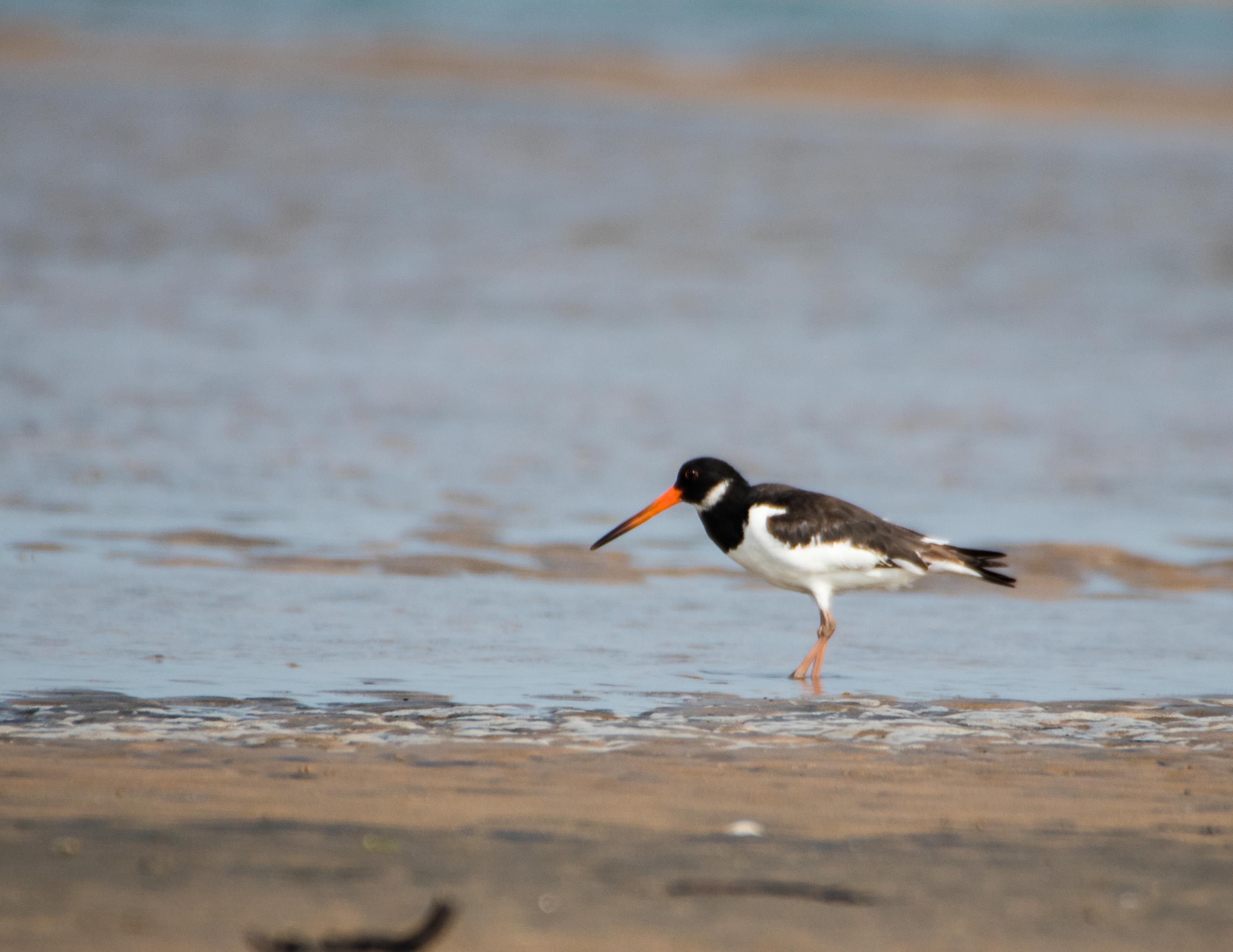
Eurasian Oystercatcher 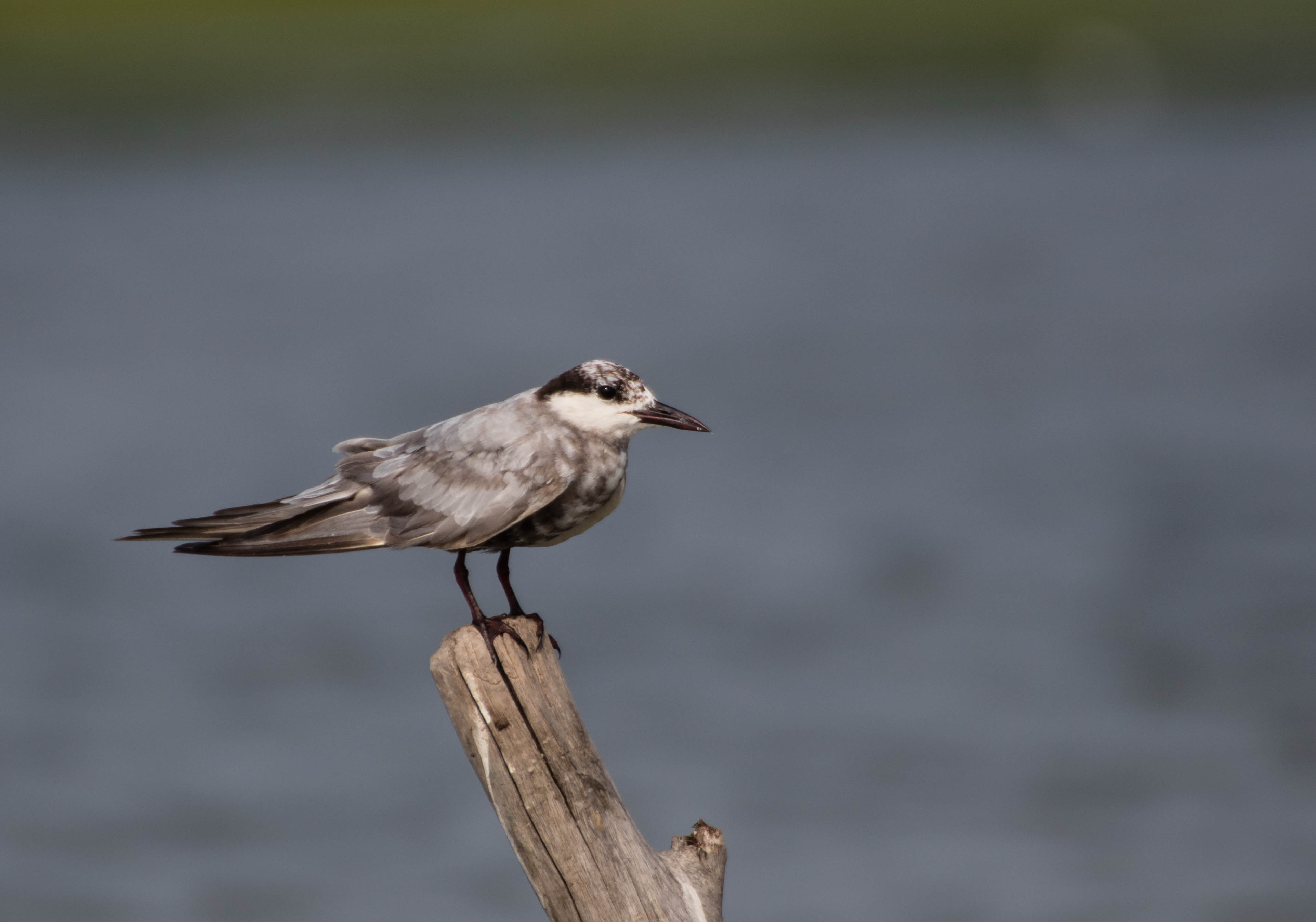
Whiskered Tern 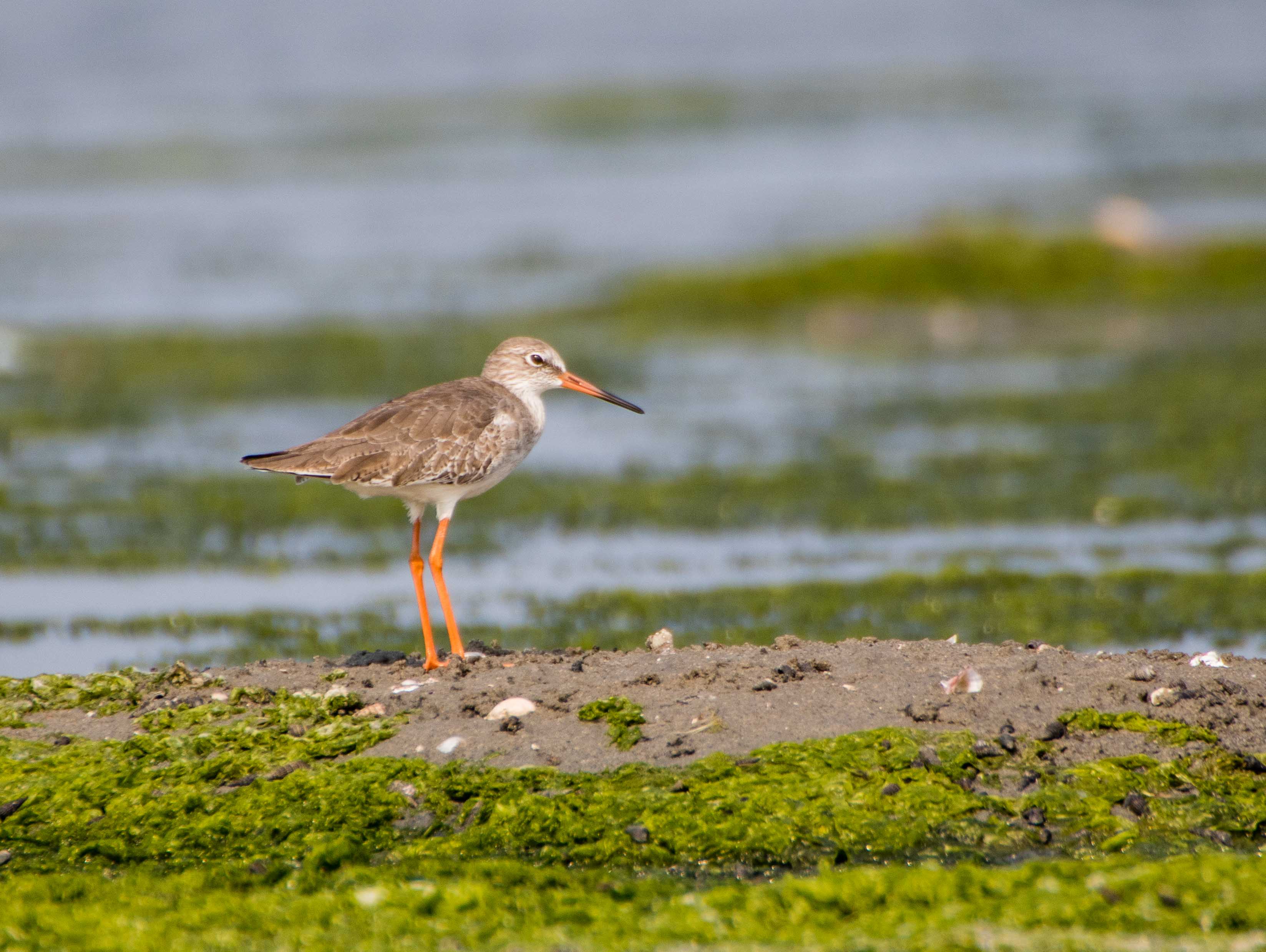
Common Redshank 
Caspian Terns and Crested Terns 
Brown-headed Gulls 
Terek Sandpiper 
Pacific Golden-Plover 
Sand Plover 
Spot-billed Pelican 
Broad -billed Sandpiper
You might be wondering, “What about the Lesser Noddy?”. It had decided to “skip town” by the time we arrived 😦 . Well, that is how wildlife is (and should be); unpredictable!
Talking of wildlife sightings being unpredictable, it was not just the Lesser Noddy. Never had I thought I would get to see a pack of Golden Jackals there. But that is what we indeed got to see; in both the evening and morning sessions!. You can read about that here.
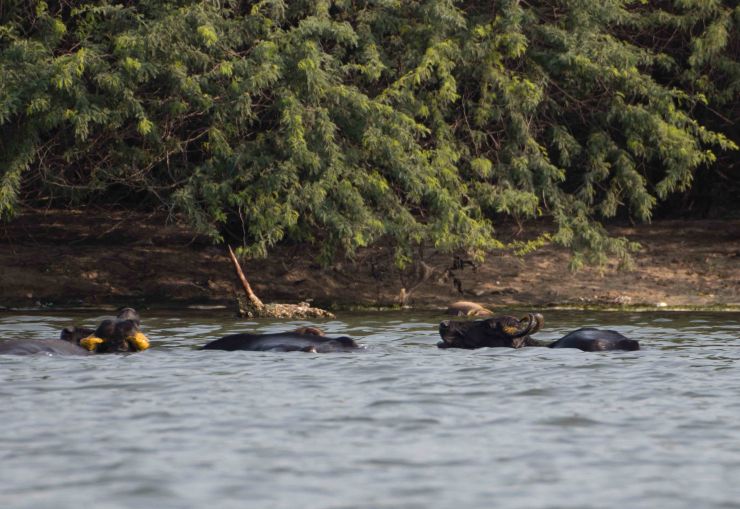
At one point I saw some “strange” creatures swimming across in the water. A closer look and they turned out to be buffaloes crossing to one of the islands 🙂 . They definitely are decent swimmers!
It was not just the wildlife that was enchanting. We also got to catch a beautiful sunset while returning on the first day; a setting Sun is mesmerising

So in the end we did not get to see the main target of the trip. However we got some fantastic views of many other beauties. The road trip itself became a gastronomic adventure; trying different types of Biryani and other local specialties. Yum!
Now having covered both sides of the lake with this trip, you could ask my opinion on which one I enjoyed more. Also a question which will most likely come to a person who has not been to either side and is wanting to decide on which side to make their first trip to. So let me try and answer it below based on what I experienced.
To me these two places are very different in what they offer; in the mode of transport that one would use for getting around, the species of birds, number of birds and how close you can get to them.
- Mode of Transport – At the Andhra Pradesh side, one does birding mostly by using a vehicle to get around. Essentially you drive on the SHAR road in your vehicle. You then stop at points of interest as you see birds besides the road. Then you observe them directly from the road or at places, where possible , you walk onto the dry lake bed. At the Tamil Nadu side, all the birding is only via the boat. You essentially sit on the boat and go on it to different islands where you find birds
- Species of Birds – There is a good amount of overlap in the bird species. However there are differences in the habitat in some parts that I think will yield differences. The initial stretch of the SHAR road in the Andhra Pradesh side has got vast tracts of agricultural fields. These then slowly make way for reeds and marshy land before it fully yields into the lake. This supports different species of Weavers, I aleast did not notice anything similar to this on the Tamil Nadu side that I explored. I think the chances of seeing rarities are equal at both
- Bird Numbers – I found that the flocks are much larger in the Andhra Pradesh side. For e.g. Little Stints were in the 1000s. The migratory ducks were in the 100s. I am not sure if this could have been owing to one being at lake shore at the Andhra Pradesh side and not on the water. A caveat though; my visits to the Andhra Pradesh side were during January whereas my trip to the Tamil Nadu side was in Oct. So I do not know if visiting in January instead would have made a dramatic difference in the counts that we got to see in the Tamil Nadu side
- Closeness to the Birds – Here the Tamil Nadu side wins hands-down. Since you are in the boat, the boatman can take the boat quite close to the island shore when the birds are seen on them. This means that you can take good photographs of many of them birds. This is mostly not possible in the Andhra Pradesh side. There are places where one can walk onto the dry patch of the lake bed. But the birds would still be away. They also scare easily if they see any human approaching there on foot.
To sum it up, much of the preference really will depend on ones priority. I do like being able to get good photographs of the birds I get to see. But I am more of a birder at heart than a bird photographer. So for me getting to see the bird, watching them in large numbers, “doing their thing”, etc. weighs in more than getting great photographs of them. Given this, my choice would be the Andhra Pradesh side. I think bird photographers would however like the Tamil Nadu as the subjects will be more approachable there. So the choice is really yours to make. But hey, the best is if you can visit both the sides 🙂 .
Virtual Tour
Here is a short video log of the boat trip that we undertook during the trip. It will give you a decent idea of what to expect from the boat journey. Of course the birds you see may differ.
Useful Information
Having to take the boat to reach where the birds are, you will need to hire a boatman to take you around. I think there are a few who take birders/bird photographers regularly. Getting one of them would mean that they are familiar with the “usual” places as well as know many of the bird species. The person that we had hired (Yuvraj) had even mastered how to angle the boat and move it closer to the island shores keeping in mind the direction of the sun! One catch is that the boatmen speak only Tamil.
There are no hotels in the Pulicat village at the lake. It is essentially a fisherman’s colony. The nearest hotels are around 30 kilometers away. We however had got a room which Yuvraj’s friend rents out. Eating joints too are limited. There are several road-side eateries. We managed with them. Proper restaurants are again around 30 kilometers away.
Being on the coast, the weather remains the same throughout the year. During the boating sessions it gets pretty hot as one is in a boat with no cover. The sun can get very strong. So take a hat and plenty of water. Also be prepared to sit on the “floor” of the boat. There are no chairs available on it. So wear clothes that you would not mind getting wet. Wear slippers or sandals, preferrably water proof. Maybe even get a small cushion to sit on if you want.
Bird Checklists
Here are the set of birds that we got to see in the two sessions:
| 1 | Indian Spot-billed Duck |
| 2 | Northern Pintail |
| 3 | Greater Flamingo |
| 4 | Rock Pigeon (Blue Rock Pigeon) |
| 5 | Asian Palm-Swift |
| 6 | Eurasian Oystercatcher |
| 7 | Black-bellied Plover (Grey Plover) |
| 8 | Pacific Golden-Plover |
| 9 | Lesser Sand-Plover |
| 10 | Greater Sand-Plover |
| 11 | Whimbrel |
| 12 | Eurasian Curlew |
| 13 | Black-tailed Godwit |
| 14 | Ruddy Turnstone |
| 15 | Broad-billed Sandpiper |
| 16 | Curlew Sandpiper |
| 17 | Sanderling |
| 18 | Little Stint |
| 19 | Terek Sandpiper |
| 20 | Marsh Sandpiper |
| 21 | Common Redshank |
| 22 | Brown-headed Gull |
| 23 | Lesser Black-backed Gull |
| 24 | Little Tern |
| 25 | Gull-billed Tern |
| 26 | Caspian Tern |
| 27 | Whiskered Tern |
| 28 | Common Tern |
| 29 | Great Crested Tern |
| 30 | Lesser Crested Tern |
| 31 | Painted Stork |
| 32 | Little Cormorant |
| 33 | Spot-billed Pelican |
| 34 | Grey Heron |
| 35 | Little Egret |
| 36 | Western Reef-Heron (Western Reef-Egret) |
| 37 | Striated Heron (Little Heron) |
| 38 | Black-headed Ibis |
| 39 | Brahminy Kite |
| 40 | White-bellied Sea-Eagle |
| 41 | Pied Kingfisher |
| 42 | House Crow |
| 43 | Barn Swallow |
If you liked the post then click on the “Like” button below and do consider following my blog. I would also love to hear your thoughts. Maybe you have been to Pulicat Lake or have visited other nature rich spots that you loved. Do leave comments below to let me know.
 Mad about Birding and Travel
Thomas, this post really helped me clear my doubts about Pulicat bird sanctuary. I’d would visit the place in near future and hopefully find flamingos in some good numbers..!! Thanks for all the information. 🙂
LikeLiked by 1 person
Glad it did Kiran. I am sure you will find Flamingos when you go.. Just time it right 🙂
LikeLike
Hi
Thank you for this lovely post. Very informative.
Was there for a day in January. Got some photos of the flamingos.
Will plan to stay for a day and do a boat trip the next time.
Warmly
Sriram janak
LikeLiked by 1 person
Thanks Sriram
LikeLike
Beautiful Images of waders. Specially oystercatcher.
LikeLiked by 1 person
Thanks. They are beautiful birds indeed
LikeLiked by 1 person
I loved all the pic, its amazing information its scale on the map,
Iam planing to visit this place this Dec,2019, would love to hear your suggestion on wt to do and wt not to do and good place to stay and the rates on boat rides and so on…
LikeLike
Thanks Murali. The options for places to stay close to Pulicat Lake in TN is very limited. We managed to get a basic accommodation for a night through a friend of the boat man. The boat ride was arranged through a friend of mine. So I do not have the details handy with me.
LikeLike
Hi Thomas,
Very useful info regarding Pulicat. Even though I am in Chennai your inputs were more useful than I could have got otherwise. Its very true that the road to SHAR is the best place. Also the Sun can be very overbearing during the day. Your pics are damn god and 43 sightings is amazing. A good binocs is a must. Congratulations and wishing you many many years of travel & clicks. God Bless.
LikeLiked by 1 person
Thank you for your kind words. I am also glad that the post helped you in your travel there.
LikeLike
Thank you for the detailed post. Have a few questions. We are a family if 4 in Chennai and we are planning to do a trip this coming Sunday. Planning to leave at 5 am. Now I just realised that Pulicat lake and sanctuary are 2 different things. Lake is 60 kms from Chennai and sanctuary is almost 100. Where would you recommend we go first so to spot the flamingoes mainly ? And would we be in time if we left at 5 in the morning to either places ? Do help with your valuable suggestions.
LikeLike
Hi thanks for all the detailed information. We are planning to do a day trip tomorrow from Chennai – mainly to sight flamingoes. Planning to leave by 5 am. Do you think we should go straight to the sanctuary or do the Tamil Nadu side ?
LikeLike
Hi Divya,
Sorry I did not realise that I had not replied to your comment. Hopefully this response reaches you in time.
On your query, The Andhra Pradesh (AP) side is known as Pulicat Sanctuary. You should be able to see Flamingos at both the Tamil Nadu (TN) side and the AP side. However I have not visited in February before. So i can’t say with certainty. On the place that you should choose for your visit, it really depends on your main “focus”. If it is photography, then I would think you will want to get closer to your subjects. That is better done in the TN side. But in sheer birding experience, I preferred AP sides as my “focus” is birding. I have included some comparison points in my post on my visit to the TN side.
Don’t know if this helped. But, hope you have a wonderful trip. You can also do both sides in a day 😉
LikeLike
Thanks a heap . Yeah we will try and do both!
LikeLiked by 1 person