For a birder, Bikaner and Tal Chhapar in the state of Rajasthan in India, are considered as great places to see raptors like eagles, harriers, buzzards, kites, hawks and vultures. My birding buddy Vignesh Menon and I had been wanting to visit these places for some time. But as they say things happen only when the time is right. Well, the time for the trip finally came in the last week of Jan 2016. And the places certainly lived up to their reputation of being the “raptor land”.
The trip was for 4 days and 3 nights. We were to fly from Bangalore to Jaipur and then cover Tal Chappar and Bikaner by road. A couple of days before our date of departure we got messaged that our flight out from Bangalore to Jaipur had got rescheduled to 2 hours later than the original departure time. Hmmm, this was going to possibly disrupt our initial plan of spending some time in Tal Chhapar on the first day itself before heading on to Bikaner. Well, we would just have to play along and see how things work out.
Day 1
Once the flight landed in Jaipur we were out of the arrival hall in a jiffy. We had engaged transport from the place of stay at Bikaner. The driver would also act as our guide during the road trip. He came around with the car once we called him. Luggage dumped in the boot and we were off; our first destination Tal Chhapar. Well atleast that was the plan. Only time would tell if we would be able to actual bird in Tal Chhapar given that we had a delayed start.
The ride from Jaipur was on good highways. So the ride was smooth. We made a quick stop at a roadside shop to pick up some biscuits as lunch was going to be late. It yielded the first of our birds; Bank Mynas. Our lunch stop had a Blue Rock Thrush peering down at us from a nearby roof-top.

Our driver was on the lookout of raptors flying about as he drove along the highway. Of course, having Vignesh as my travel companion meant we anyway had his raptor-like vision; he has a uncanny ability to spot and identify raptors from quite a distance. What would look like a black speck in the sky to me would have him exclaiming that it is so-and-so raptor. And it would usually turn out right. Well, that is why we call him “Raptor Menon“. Two such specks in the sky became our first of the unplanned stops. The two specks turned out to be a Bonelli’s Eagle and a Long-legged Buzzard. Another such stop had us seeing two Steppe Eagles. The driver commented that once we reach Bikaner we would get tired of seeing Steppe Eagles. We of course did not believe him; how can one get tired of seeing Steppe Eagles, an uncommon bird in South India 🙂 .
A stop just after crossing a highway toll booth gave us our first sighting of a Laggar Falcon. Given the time of the day we decided to try and avoid stopping further in between so as to increase our chances of getting some decent time to bird in Tal Chhapar. But luck did not favour us, atleast not entirely. We got stuck for more than 30 minutes at a railway crossing. It was evening by the time we reached the entrance of Tal Chhapar. Dusk would fall soon. We decided not to go into the famed grasslands of Tal Chhapar. Instead we would drive around it and visit a site behind the grassland along with a visit to the salt pans. A highlight was seeing an Indian Eagle Owl in a well, possibly getting ready for the start of its day (technically night 🙂 ), some excellent views of Pied Avocets and small flock of Demoiselle Cranes. We also got our first views of the Brown Rock Chat.


It was starting to get dark. So we decided to head on to Bikaner. We finally reached Bikaner around 10PM. It had been a long day having woken up early. So both of us were tired and happy to retire to bed soon. We were looking forward to the following day.
Day 2
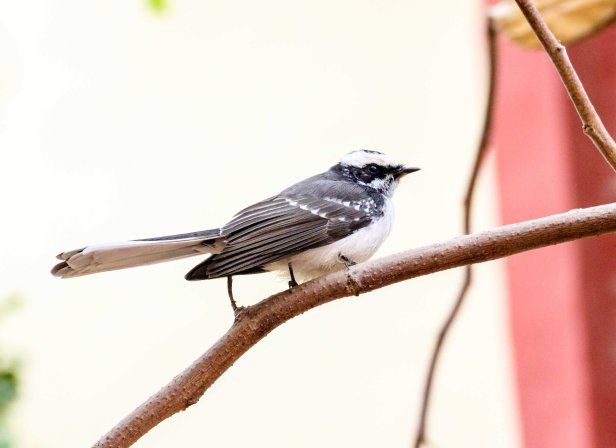
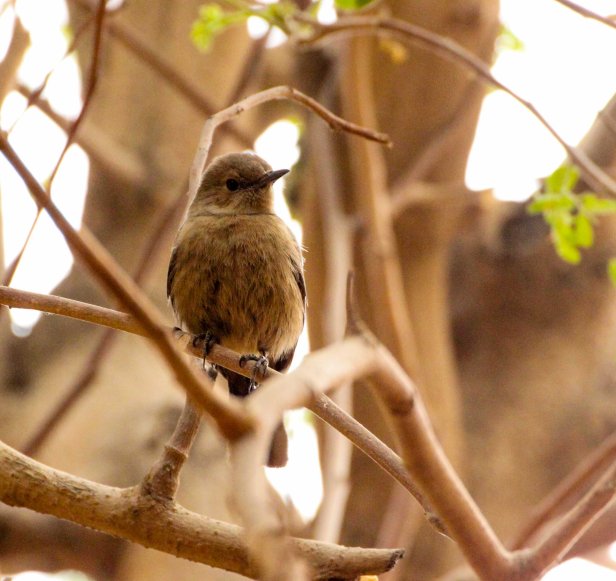
We were ready by 7AM the next morning. But it was a very misty morning. Visibility was very low and we would have to wait for it to clear before we could make our way to the famous Jorbeer Carcass Dump area. Being January I guess it was to be expected. We would just have to wait it out. Well, the time was not entirely wasted. A White-browed Fantail and a Brown Rock Chat paid us a visit at the guest house.
We were to cover the surrounding area around the Jorbeer Carcass Dump in the first half. At around 10AM with no sign of the mist reducing we decided to anyway head out; we had to give it a go. Jitu Solanki, the owner of the guest house where we were staying and a well known local expert, was guiding us in this session. The mist continued to be thick even as we neared the area. But what a wonderful session it turned out to be! The raptors included Egyptian Vulture, Cinereous Vulture, Eurasian Griffon, Greater Spotted Eagle, Tawny Eagle, Steppe Eagle, Eastern Imperial Eagle, Eurasian Kestrel, Laggar Falcon and a Saker Falcon. And indeed the default raptor here was the Steppe Eagle; we could see why the driver had commented about getting tired of seeing Steppe Eagles 🙂 .



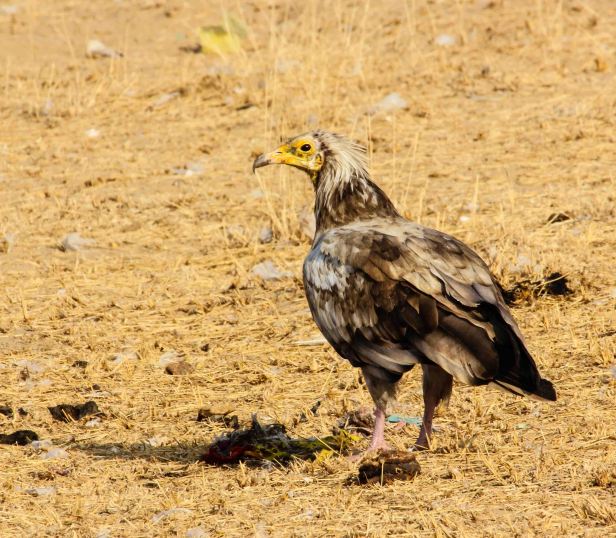
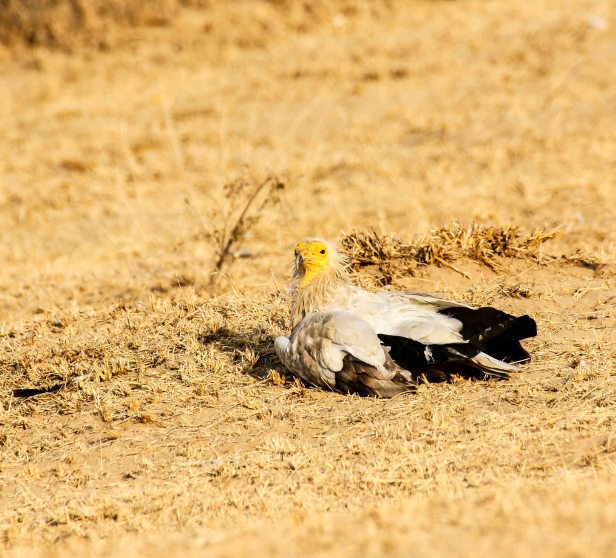
It was amazing to see the Eurasian Griffons and Cinereous Vultures spreading their wings in a bid to catch the sunlight; possible a mechanism to disinfect and keep them clean.

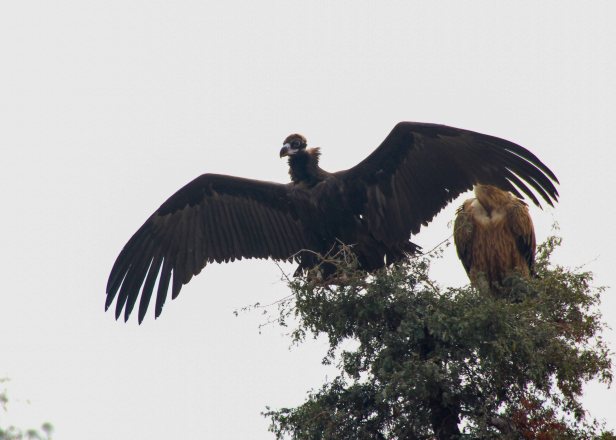
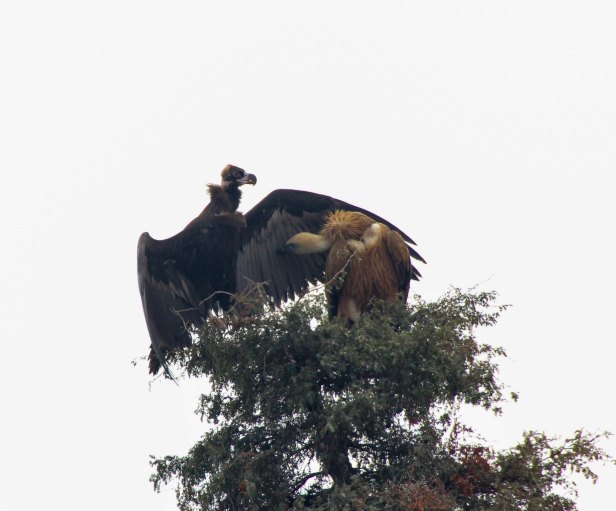
We even saw an interesting scene where a Eurasian Griffon was preening a Cinereous Vulture.
We also got to see other birds like the Variable Wheatear, Southern Grey Shrike, Desert Wheatear, Lesser Whitethroats, Common Babbler as well as flocks of Greater Short-toed Larks.
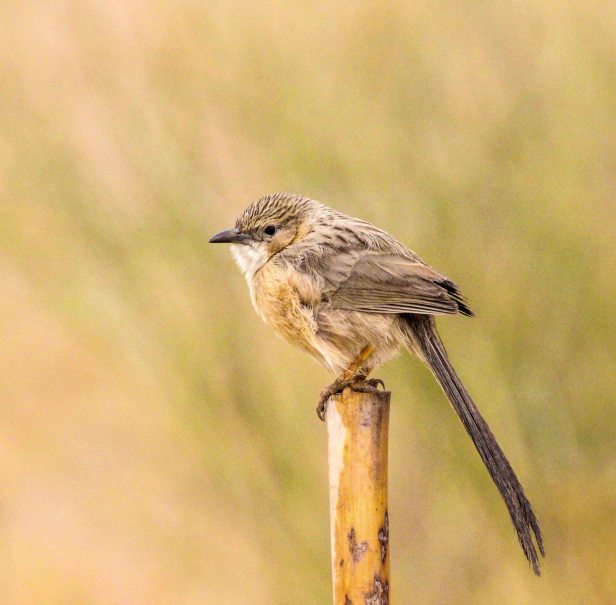

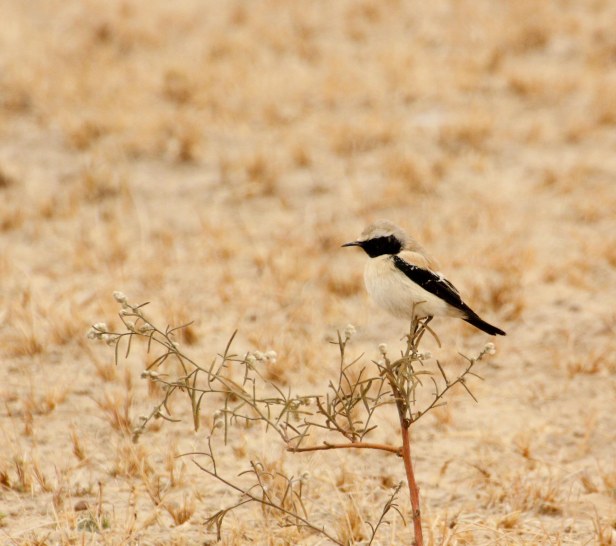


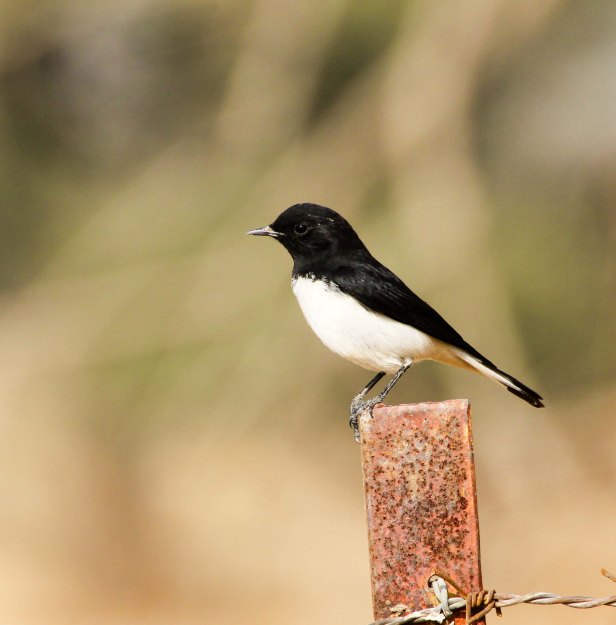
A drive around had us getting to see the Yellow-eyed Pigeon in good numbers mixed in a flock of Feral Pigeons.

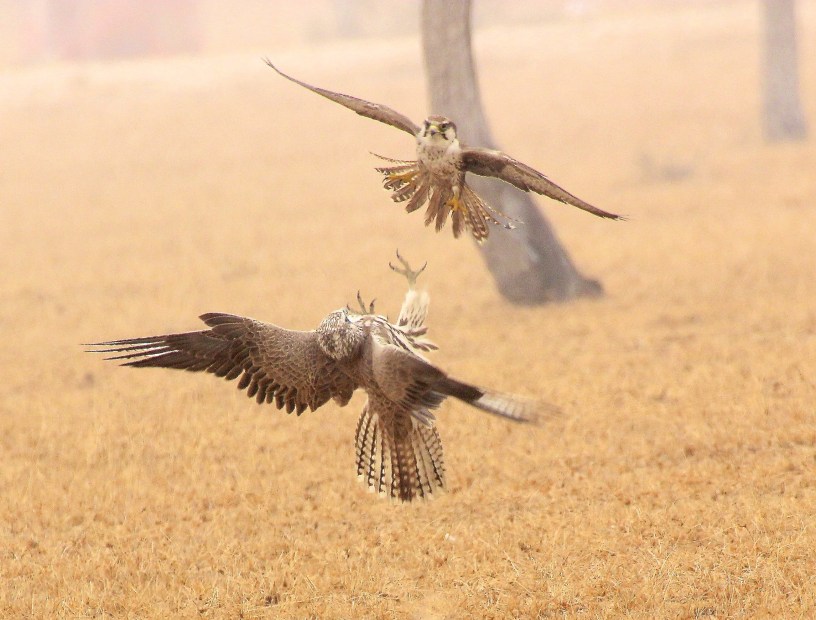
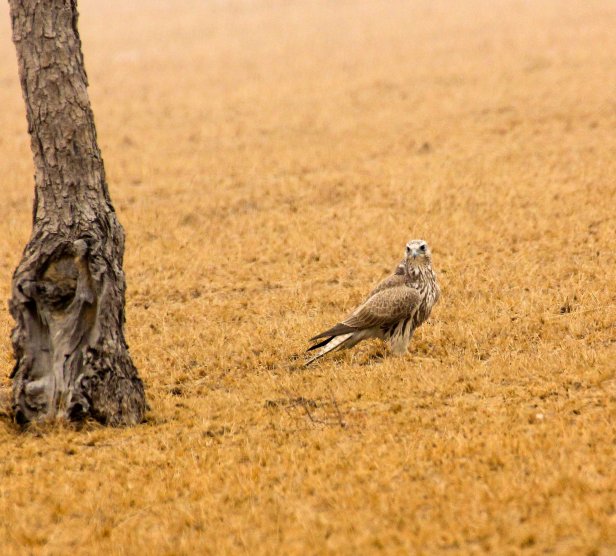
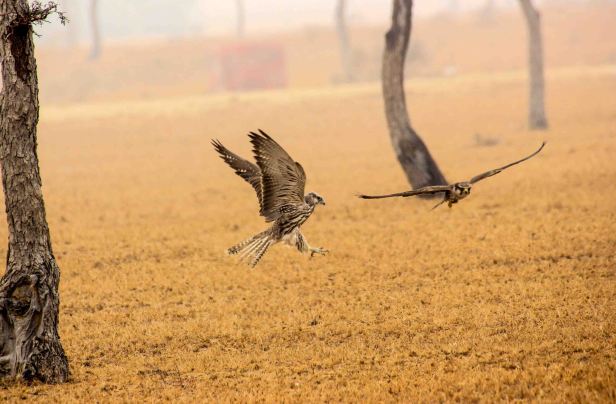
But the highlight for the session has to be the fight between a Saker Falcon and a Laggar Falcon!
A Laggar Falcon is very territorial and we saw it in action. We were driving around trying to see if we could locate a Saker Falcon. There seemed to be no sign of it when suddenly the Saker flew right into our sight and attacked a Common Babbler on a tree. The resident Laggar Falcon was not going to have any of that. In some moments we saw it swooping down to attack the Saker. The Saker landed on the ground with the Laggar repeatedly swooping down to attack the Saker. Finally the Saker flew away leaving the Laggar Falcon victorious (at least this time!). The Laggar then repeatedly kept flying off and perching back onto the tree, probably re-establishing its right over the domain. A takeaway from what we witnessed seemed to be “Your opponent may be larger but most times it is sheer guts that matter“; and the Laggar proved it this time around.
What we saw had been mind numbing; thankfully the fingers were not numbed and were clicking photos 🙂 .Here are some photos from what we witnessed:



We also to got see the Indian Desert Jird, one of the regular preys for raptors as well as a Desert Hare, Nilgai (aka Blue Bull) and some Chinkara (aka Indian Gazelle).


The session post lunch was at the Jorbeer Carcass Dump. We were amazed at the number of vultures that we saw circling overhead the dump; surely a few hundred. Even more amazing for me was how Vignesh was able to narrow in on a Himalayan Griffon in it!
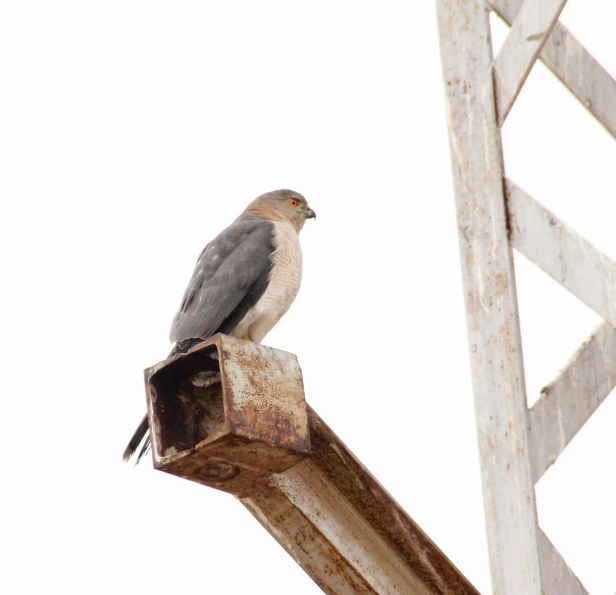
Once in the Carcass Dump there was a well marked pathway for vehicles to drive on. And that is what we did. We added the Shikra, Black-eared Kite and Black-Winged Kite to our raptor list.
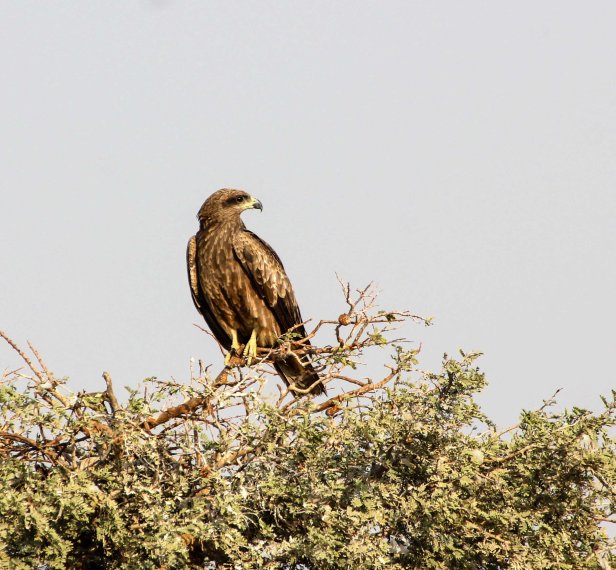
Again there were plenty of Steppe Eagles on the trees as well as on the ground.


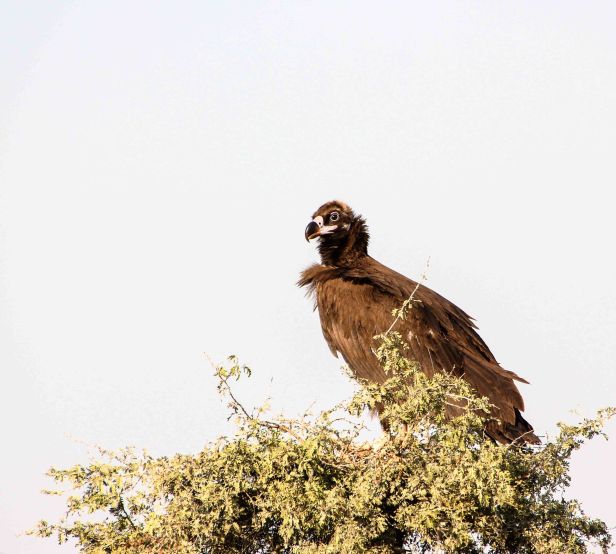
We also got up close to a Cinereous Vulture giving us plenty of time to observe and admire it. All the Cinereous Vultures that we were seeing very immatures. But they were still so big!
The drive around also gave us the opportunity to get some excellent views of birds in flight.
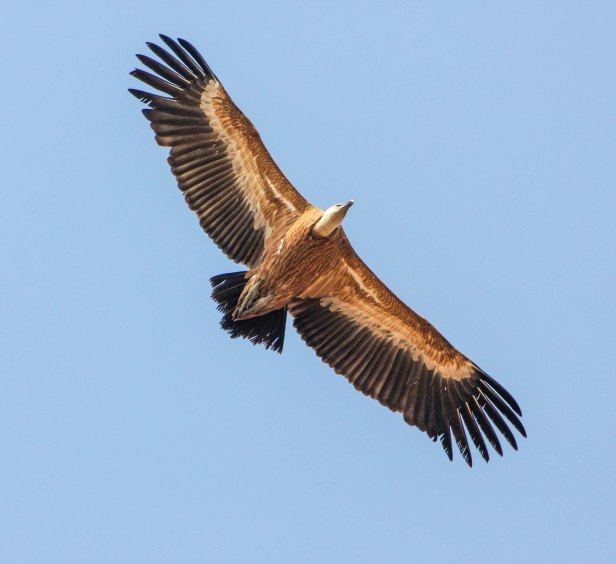

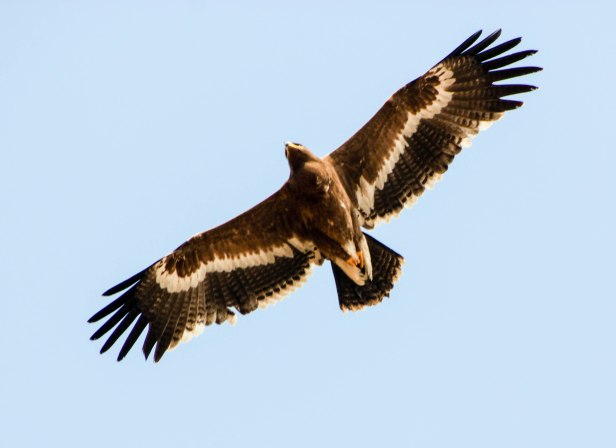
There were plenty of vultures gnawing and tearing at the carcasses. Their competition were feral dogs and crows. Here is a picture as well as video of what we saw.

Here is a video of a Steppe Eagle (Juvenile) scavenging:
There were plenty of Eurasian Griffon’s around. Here is a video of them:
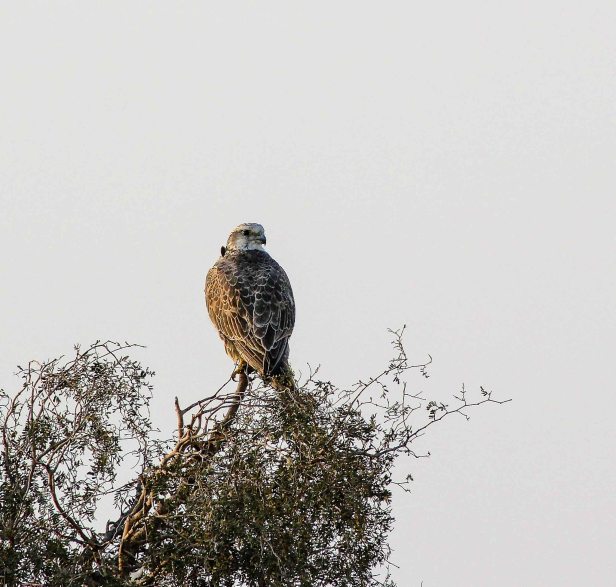
The day’s session ended with a Saker Falcon perched on a tree top giving us excellent and patient views.
Day 3
Today Jitu was taking us towards a different location in the first half; Gajner Bird Sanctuary and the surrounding area. Again the morning was misty. So we chose to leave a little delayed. Finally as we entered the open patch that Jitu was wanting to show us the mist had mostly disappeared. The first new bird into the list was a flock of Chestnut-bellied Sandgrouse; so well camouflaged. They would appear as stones from a distance.

Soon we had a fantastic views of a Long Legged Buzzard perched on a tree.

Our attempts to get a bit closer were received with suspicion and it flew of to a distant tree. The drive further on was interrupted by the sighting of a Desert Fox.

Ahead our attention was drawn to a large flock of sparrows. We decided to observe it more closely. So we walked closer to the flock foraging on the ground. In addition to House Sparrows, the flock also had a good number of Spanish Sparrows.

There were also a number of Greater Short-toed Larks foraging on the ground. We were yielded some good views of a male Eurasian Kestrel and an Isabelline Wheatear.


The path around a small pond yielded a Black Redstart. We then decided to drive on to the Gajner water body. We encountered many Red-wattled Lapwings and Grey Francolins standing next to the road that we were driving on. They did not run off into the bushes unlike in the parts where we were from. Was it because of less natural predation here, we wondered.
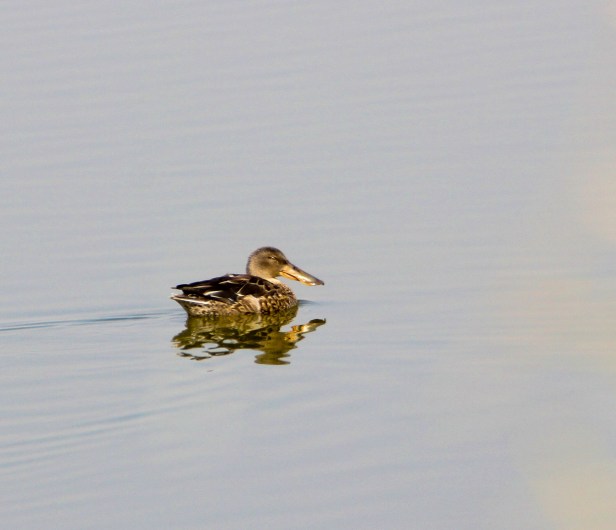
The large water body at Gajner yielded us Bar-headed Goose, Northern Shoveler, Green-winged Teal, Little Grebe, Eurasian Spoonbill.

A lone White Wagtail was exploring the lake bund and a Lesser Whitethroat going about looking for food.

The walk back to the car gave us good views of Grey-throated Martins.
The birding session post lunch was again in the area surrounding the Jorbeer Carcass Dump. To the list of birds that we had seen in our earlier visit we added excellent views of an Eurasian Sparrowhawk.

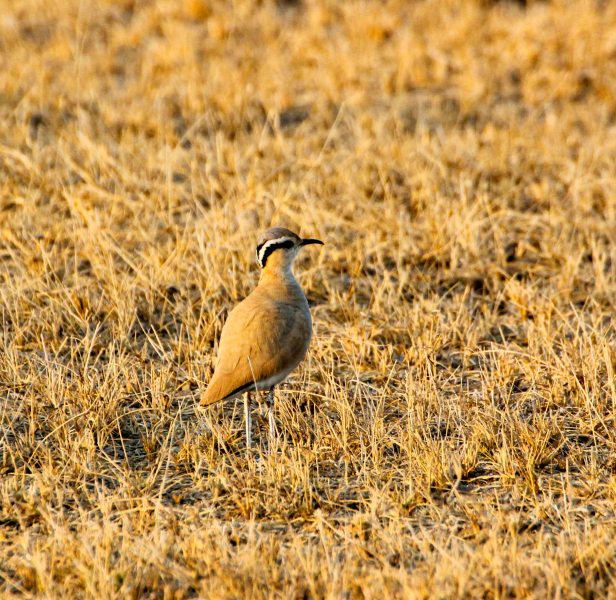
As we were enjoying some close views of a flock of Chestnut-bellied Sandgrouse, I noticed a some birds walking a little further off. They certainly looked different. So we approached them on foot. They turned out to be a flock of Cream-coloured Coursers!
Day 4
Today we were to cover Tal Chhapar and then head to Jaipur to catch our flight back to Bangalore. We wanted to reach Tal Chhapar by 8AM in time for the protected area getting open. So we left Bikaner much before it was dawn. Breakfast was a cup of hot tea and some biscuits in a tea stall in the village near the sanctuary. Our hunger was for the birds 🙂 . We could not wait to get in as we had missed to cover it on the first day.
The bird that greeted us at the sanctuary gate was an elegant Indian Peacock. It was walking on a wall not at all scared of the humans around.

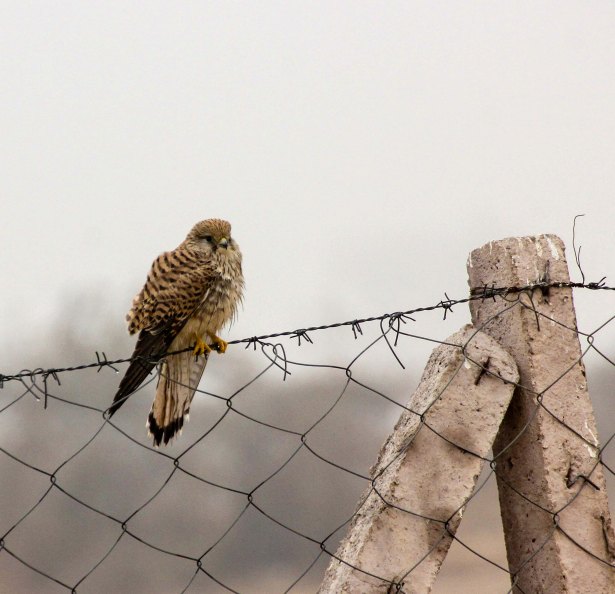
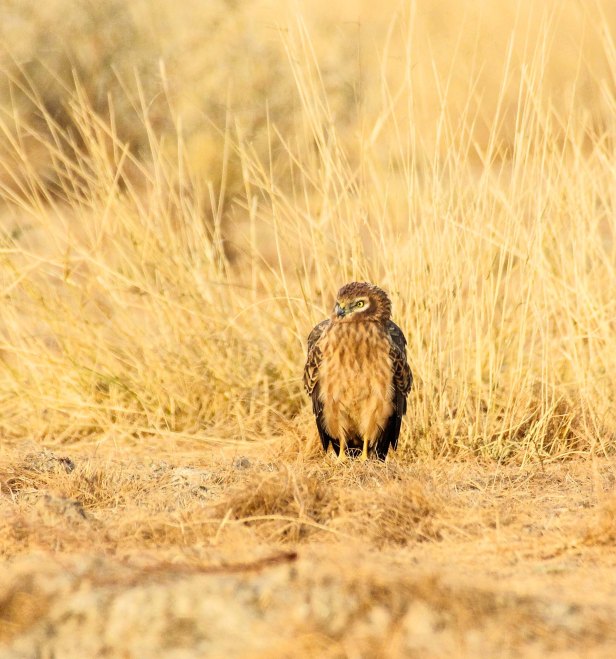
Finally we were inside the sanctuary! We drove on the pathways taking us to different parts of the grassland. And we were treated to some great views of Montagu’s Harrier and Eurasian Kestrel perched in the morning chill.

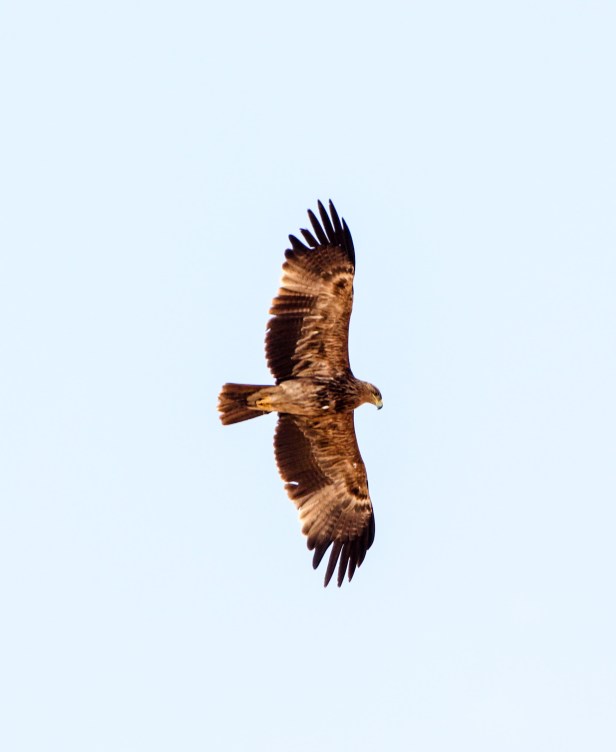
The other raptors that paid us a visit were the Greater Spotted Eagle, Tawny Eagle, Steppe Eagle, Shikra and Eurasian Sparrowhawk. Another bird that we wanted to see was the Black Francolin. We heard its call from several locations but did not reveal itself 😦 . We drove around and were treated to good views of a Common Stonechat, Black Redstart and several Wheatears.


The Tal Chhapar Sanctuary is actually a sanctuary for the Indian Blackbuck. So it was only natural for us to get to see several of them as we were driving around the grassland.

We also got to see a Wild Boar and several Nilgai (aka Blue Bull) roaming around.

Driving around the pathway in the middle of the grassland got us adding Bimaculated Larks and Common Quails to the list. We decided to head out of the sanctuary and go to the salt-pans nearby. As we neared the gate we saw a bird that looked like a Prinia. It turned out to be a Graceful Prinia.

We suddenly heard a commotion just behind us. Turning around we saw a Black Francolin chasing another. As it came near us it aborted the chase and went into the nearby bush. Well, we had good looks at the bird that we had given up on earlier 🙂 . This spot also gave us decent views of a few Dusky Crag-Martins flying around hawking insects. Exiting the gates and we got some excellent views of a Red-collared Dove. This time a male.

I had thought I had seen them when we earlier in the morning. But they had been females. Females are very similar to Eurasian Collared Doves, which there were plenty of around, except in size. But on a chilly morning like it was today they all sit puffed up. So I had not been sure.
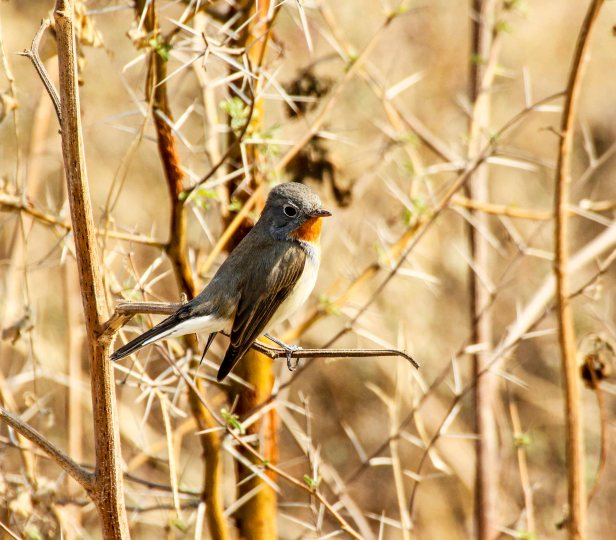
Our drive to the salt pans was interrupted right at the start. We sighted a Red-breasted Flycatcher perched just besides the road. Now how can one not stop and admire such a beautiful specimen?
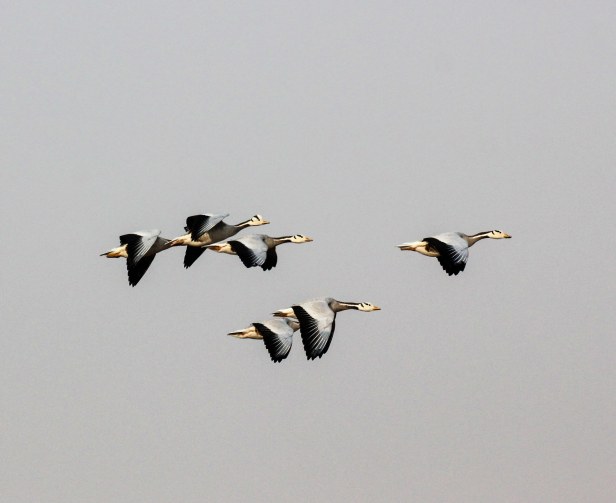
Moving further on we got to a few Bar-headed Geese taking to flight close to the sanctuary fences.
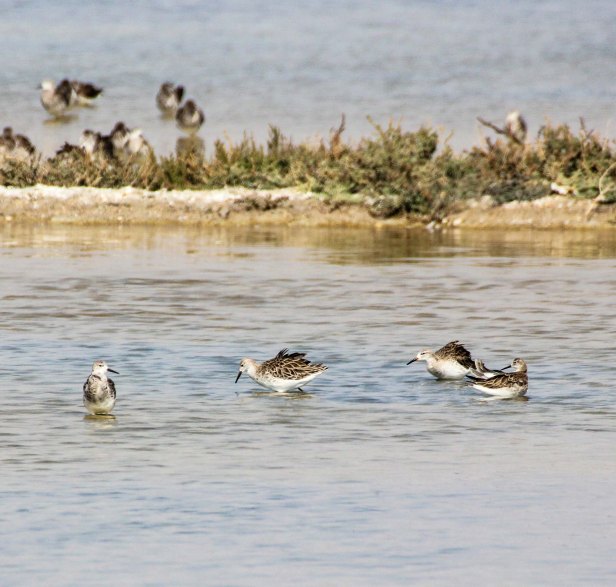
The salt pans area got us to see a Crested Lark, Ruffs, Spotted Redshank and a Common Greenshank.

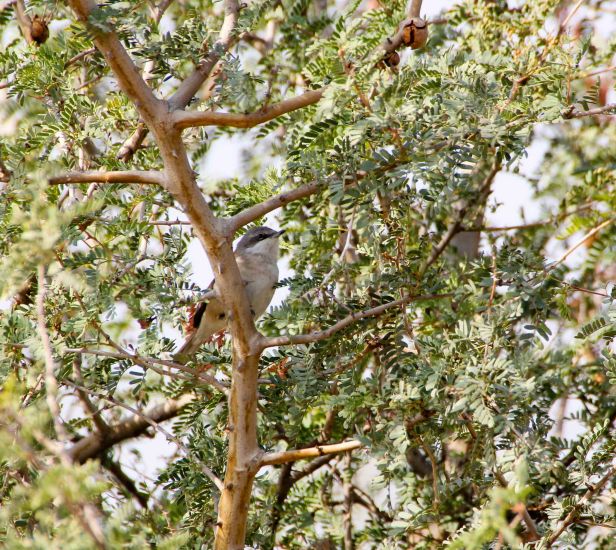
It was to time go to Goshala area in search of the Indian Spotted Creeper. But try as we did for almost an hour the bird did not show up. Well, one cannot have luck favouring every time I guess. Soon it become time to start our journey back to Jaipur. So we aborted our search and moved on, but not before we were rewarding by seeing a Booted Eagle flying by and close views of a Black Redstart and Lesser Whitethroat.

The drive to Jaipur was smooth and interrupted only by our stop for lunch. We reached Jaipur airport well on time. There we will bid goodbye to the driver cum guide and went inside to catch our flight back home.
In the flight we compared notes and completed our checklists for the trip. And what a cracking trip it had been! Our primary targets for the trip had been raptors and vultures. And we had our hearts fill. We had got to see 16 raptors and 4 types of vultures. There has been so many different morphs of the raptors that we encountered. So it certainly is a great place to study the birds if anyone is interested. To top it we had also got to see some of the desert mammals. We did however miss to see White-tailed Eagle. One turned up a some weeks later after our trip 🙂 . That is the charm of nature; unpredictable!
Tips
If you are planning to do a trip to these places, it is best done in the period Nov to Mar. The weather will be more tolerable. Rajasthan gets very hot in the summers. Moreover a lot of the birds that were listed in the blog are migratory and hence come only during this period.
If you only plan to do Tal Chhapar then it is possibly best to stay in the property directly attached to the sanctuary. If you are looking to cover both places then you should target atleast two sessions in Tal Chhapar. That was our plan as well. However our flight delays messed that up.
Bird Checklist
Below are the bird species that we had got to see during the trip:
| 1 | Bank Myna |
| 2 | Blue Rock Thrush |
| 3 | Eurasian Collared-Dove |
| 4 | Laughing Dove (Little Brown Dove) |
| 5 | White-browed Fantail |
| 6 | Red-vented Bulbul |
| 7 | White-eared Bulbul |
| 8 | Indian Chat (Brown Rock Chat) |
| 9 | House Sparrow |
| 10 | Grey Francolin |
| 11 | Cattle Egret |
| 12 | Red-naped Ibis (Indian Black Ibis) |
| 13 | Black-winged Kite (Black-shouldered Kite) |
| 14 | Egyptian Vulture |
| 15 | Cinereous Vulture |
| 16 | Himalayan Griffon (Himalayan Vulture) |
| 17 | Eurasian Griffon (Griffon Vulture) |
| 18 | Greater Spotted Eagle |
| 19 | Tawny Eagle |
| 20 | Steppe Eagle |
| 21 | Imperial Eagle |
| 22 | Shikra |
| 23 | Black Kite |
| 24 | Red-wattled Lapwing |
| 25 | Rock Pigeon (Blue Rock Pigeon) |
| 26 | Pale-backed Pigeon (Yellow-eyed Pigeon) |
| 27 | Eurasian Hoopoe |
| 28 | White-throated Kingfisher |
| 29 | Eurasian Kestrel (Common Kestrel) |
| 30 | Laggar Falcon |
| 31 | Saker Falcon |
| 32 | Rose-ringed Parakeet |
| 33 | Southern Grey Shrike |
| 34 | Black Drongo |
| 35 | House Crow |
| 36 | Lesser Whitethroat |
| 37 | Common Babbler |
| 38 | Variable Wheatear |
| 39 | Desert Wheatear |
| 40 | Isabelline Wheatear |
| 41 | Common Myna |
| 42 | Purple Sunbird |
| 43 | Tawny Pipit |
| 44 | Bar-headed Goose |
| 45 | Northern Shoveler |
| 46 | Green-winged Teal (Common Teal) |
| 47 | Little Grebe |
| 48 | Eurasian Spoonbill |
| 49 | Bonelli’s Eagle |
| 50 | Long-legged Buzzard |
| 51 | Demoiselle Crane |
| 52 | Black-winged Stilt |
| 53 | Common Sandpiper |
| 54 | Common Greenshank |
| 55 | Chestnut-bellied Sandgrouse |
| 56 | Yellow-footed Pigeon (Yellow-footed Green-Pigeon) |
| 57 | Grey-throated Martin (Plain Martin) |
| 58 | Oriental Magpie-Robin |
| 59 | Black Redstart |
| 60 | White Wagtail |
| 61 | Spanish Sparrow |
| 62 | Indian Silverbill (White-throated Munia) |
| 63 | Eurasian Sparrowhawk |
| 64 | Cream-colored Courser |
| 65 | Indian Peafowl |
| 66 | Common Quail |
| 67 | Black Francolin |
| 68 | Booted Eagle |
| 69 | Montagu’s Harrier |
| 70 | Pied Avocet |
| 71 | Ruff |
| 72 | Spotted Redshank |
| 73 | Red Collared-Dove (Red Turtle-Dove) |
| 74 | Asian Koel |
| 75 | Rock Eagle-Owl (Indian Eagle-Owl) |
| 76 | Green Bee-eater |
| 77 | Indian Roller |
| 78 | Rufous Treepie |
| 79 | Bimaculated Lark |
| 80 | Crested Lark |
| 81 | Dusky Crag-Martin |
| 82 | Graceful Prinia |
| 83 | Large Grey Babbler |
| 84 | Red-breasted Flycatcher |
| 85 | Common/Stejneger’s Stonechat (Siberian/Stejneger’s Stonechat) |
Mammals Sighted
Here are the set of mammals that we sighted in the trip:
- Indian Desert Jird
- Desert Hare
- Desert Fox
- Nilgai
- Chinkara
- Wild Boar
- Indian Blackbuck
 Mad about Birding and Travel
Breathtaking shots and an engaging article. Definitely adding Bikaner and Tal Chappar to my bucket list!
LikeLiked by 1 person
Yes definitely worth a visit. I would suggest that you also add Jaisalmar and Desert National Park in the itinerary when you do visit. Not too far from Bikaner.
LikeLiked by 1 person
Wow!Through these amazing pictures I get to see raptors up close. Nice blog too.
LikeLiked by 1 person
Enjoyed the post and the great photos and videos! Thank you for the effort in putting it together.
LikeLiked by 1 person
Thanks Deepa
LikeLike
Your visit reminded me my visit to these places
Bird lover must visit these places
The narration is excellent
I could not stop reading till I read full
LikeLiked by 1 person
Thanks Harish
LikeLike
What a post… My son and I are raptor enthusiasts…this becomes a must visit place for us..
Currently we bird in and around Bangalore to sight raptors…
LikeLiked by 1 person
Thanks for comment. A great place to see raptors around Bangalore is Hoskote Lake. How long are you in Bangalore? May be I could take you there if our timings match 🙂
LikeLike
Thanks for your reply. We got into birding around a year ago though been Bangalore for a decade now.
I see your ebird entries. Wow.
I have been to hoskote to see Marsh Harrier and greater spotted eagle..
Would love to bird with you..
Recently in a drive to BR hills we saw Crested Hawk eagle and Legge’s hawk eagle…
Below is my ebird profile.
https://ebird.org/india/profile/MTAzMTU4OA/world
My email I’d is balsubu@gmail.com
Looking forward…
LikeLike
Hoskote is a great place to bird and go there several times a year. I have a blog coming on it shortly. Will let you know when I am going there next. You can see if you are able to join.
LikeLike
Great sightings!! A very well written blog too. I will be in Bikaner in January and came across your blog through google search. Could you share the number of your local guide in Bikaner, please. Thanks and happy birding!!
LikeLike
Hi Archana,
Thanks for reading and commenting. I have sent you the information over your email id.
LikeLike
Wow, these are some amazing photos and videos! It was nice that you had the count at the end because I was wondering what the total was. The ones that jumped out for me were the fighting birds, the sparrows in flight, and the geese in flight. Someday I want to get a large number of birds in flight photographed. Just something I never see here. What an adventure!
LikeLiked by 1 person
Thanks Lisa. I can so relate to what you say about seeing a large number of birds in flight together 🙂 . I was thankfully able to experience it on a couple of occassions when I visited the Pulicat Lake. When the waterfowl or waders took off, they would fill up the entire view! Check out my post on the trip https://madaboutbirdingandtravel.wordpress.com/2018/02/19/pulicat-lake/ when you get the chance.
I wish that you also get to experience it soon 🙂
LikeLiked by 1 person
I will check out the post. …and I will always keep looking for those super cool photo ops!
LikeLike