Post our early morning Hot Air Balloon ride over the Valley of the Kings, it was finally time to actually visit it.
First some information about what the Valley of the Kings is. Located on the west bank of the Nile near Luxor, it is a valley that served as the final resting places for pharaohs and powerful nobles from the 18th dynasty to the 20th dynasty. During this period, the royals were not buried in pyramids. Instead they were buried in rock-cut tombs. These tombs were carved into the cliff sides and were meant to be hidden from grave robbers. This was hoping that they were not as visible as the pyramids of earlier times. Over 60 royal tombs have been discovered in the valley including some of the famous ones like those of Hatshepsut, Thutmose I, Tutankhamun and Ramesses II.
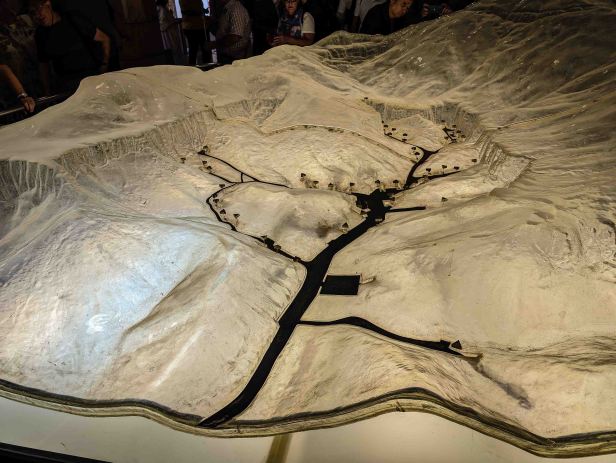
At the main visitors entrance to the complex, there was a 3D model showing the layout of the valley. Here it the view from the top.
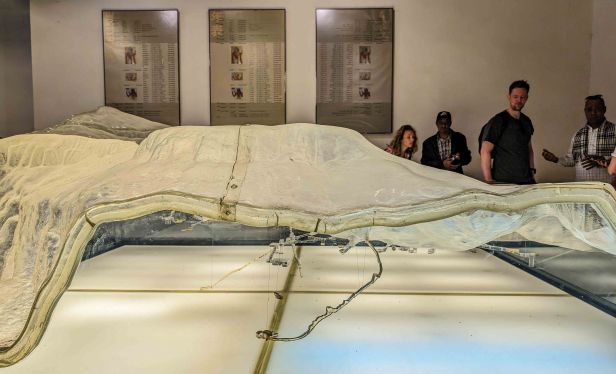
Looking below, one could see how the tombs went below the ground.
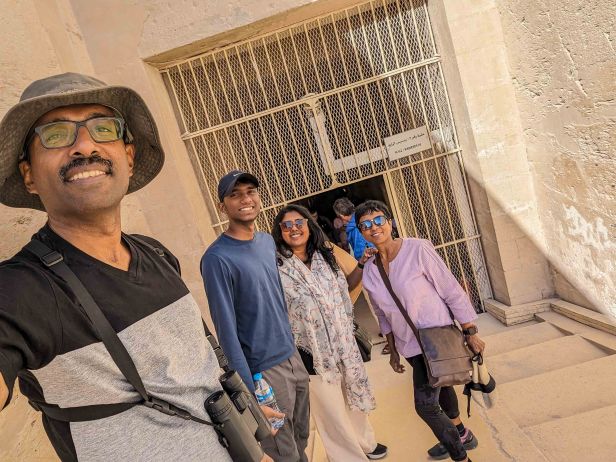
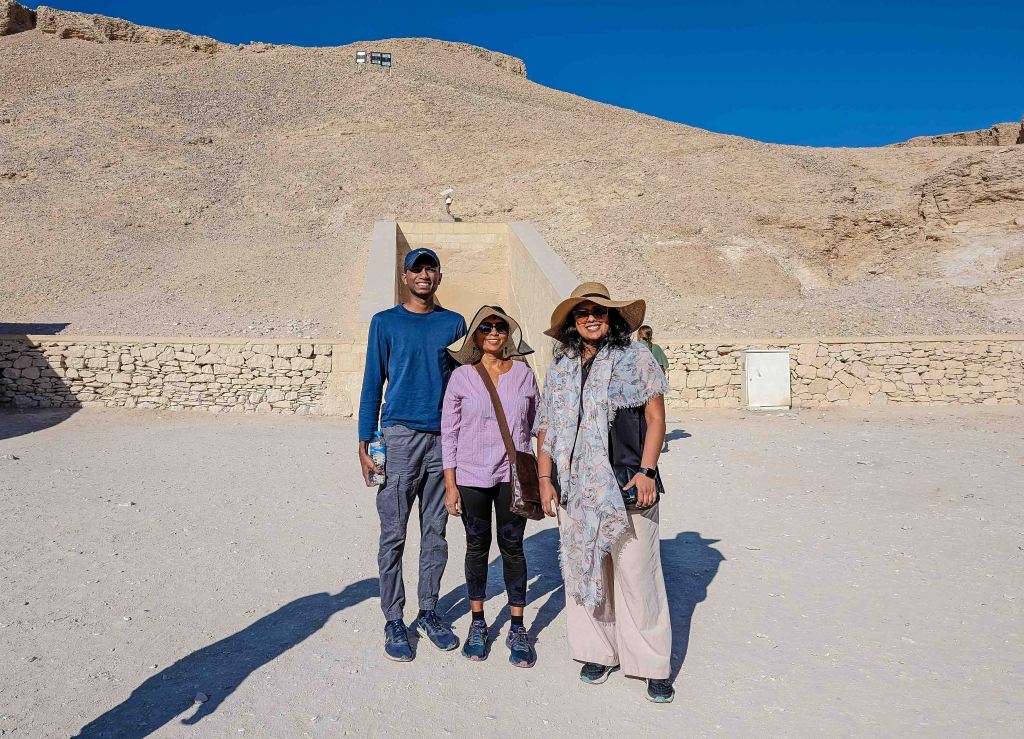
From the visitor centre, we were ferried to the tombs site on an electric vehicle. Not every tomb was open to visitors. So we had to choose which one(s) to visit. We decided to go into that of Ramesses IV. Here is us at the tomb entrance:
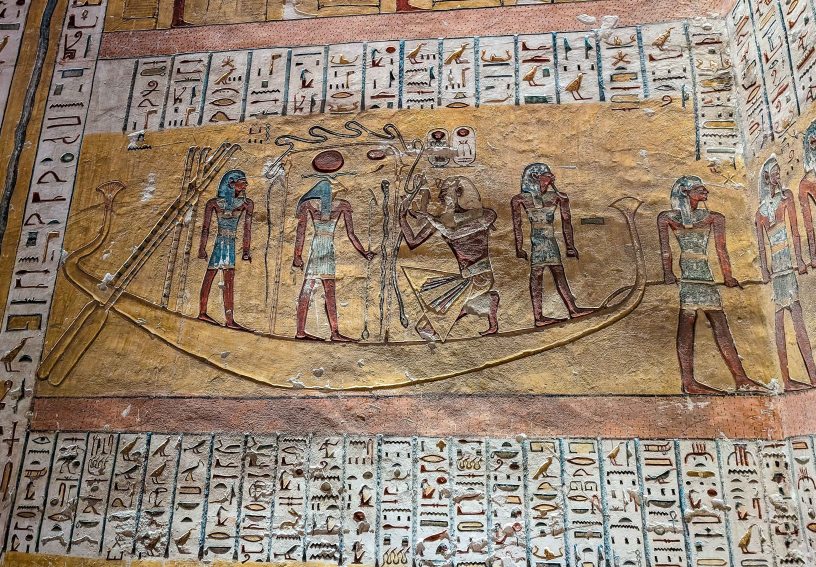
And here are some pictures from the inside.
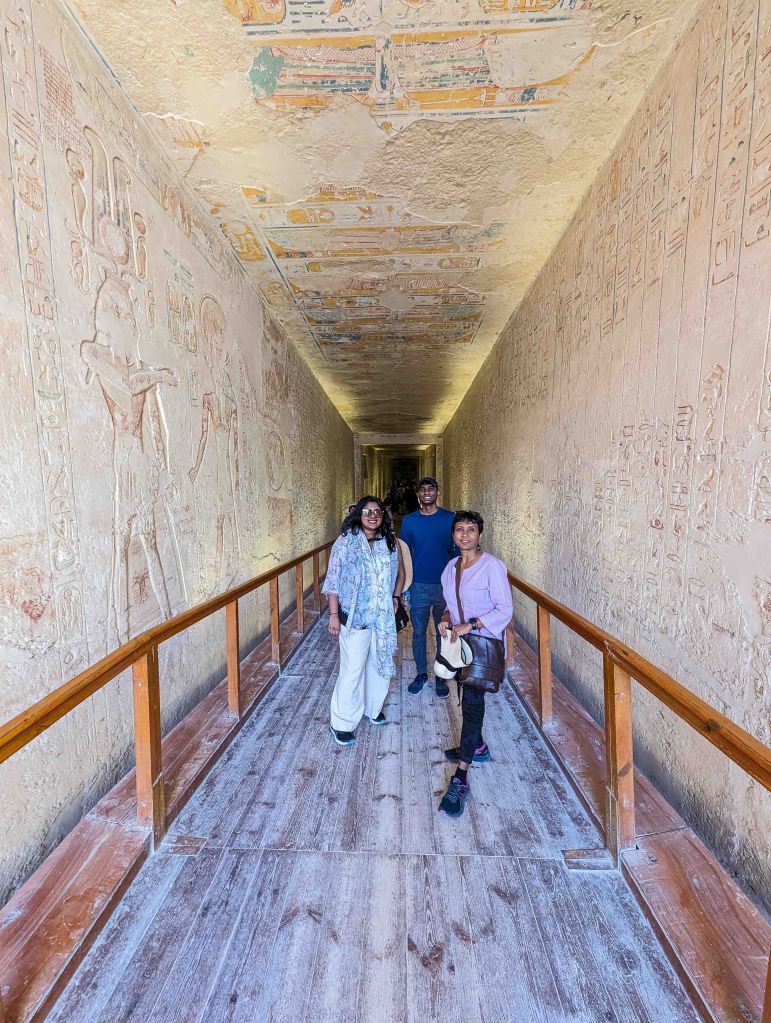
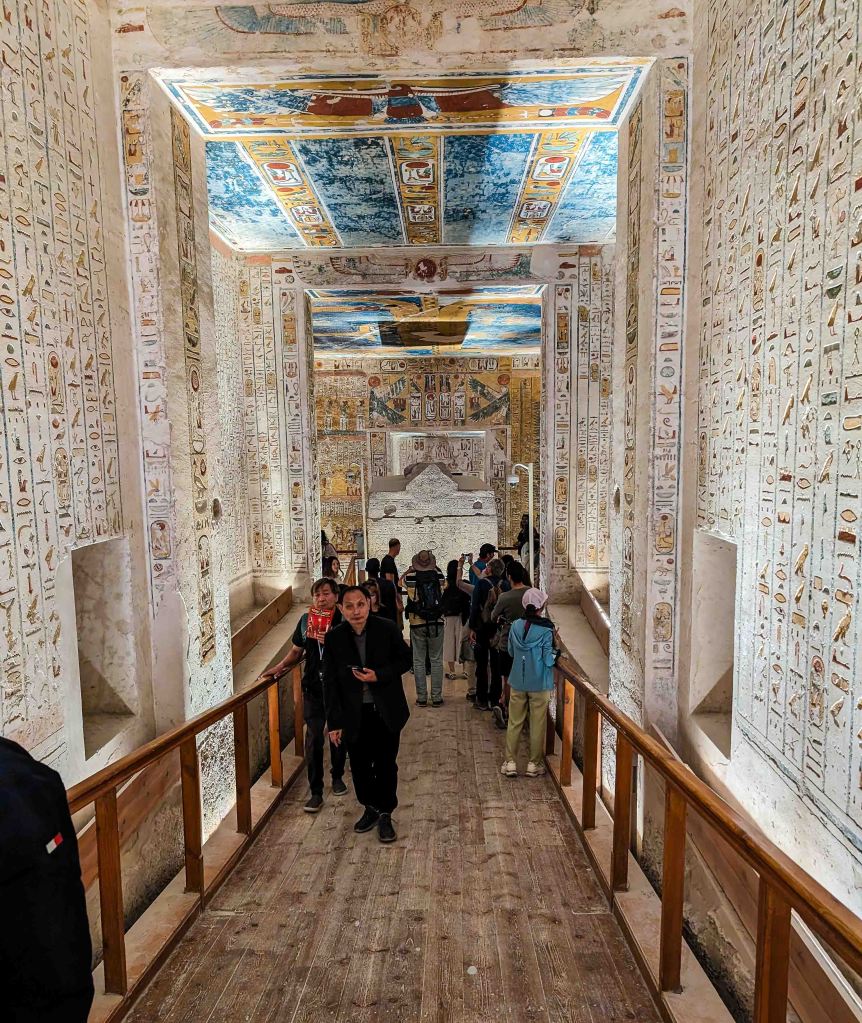
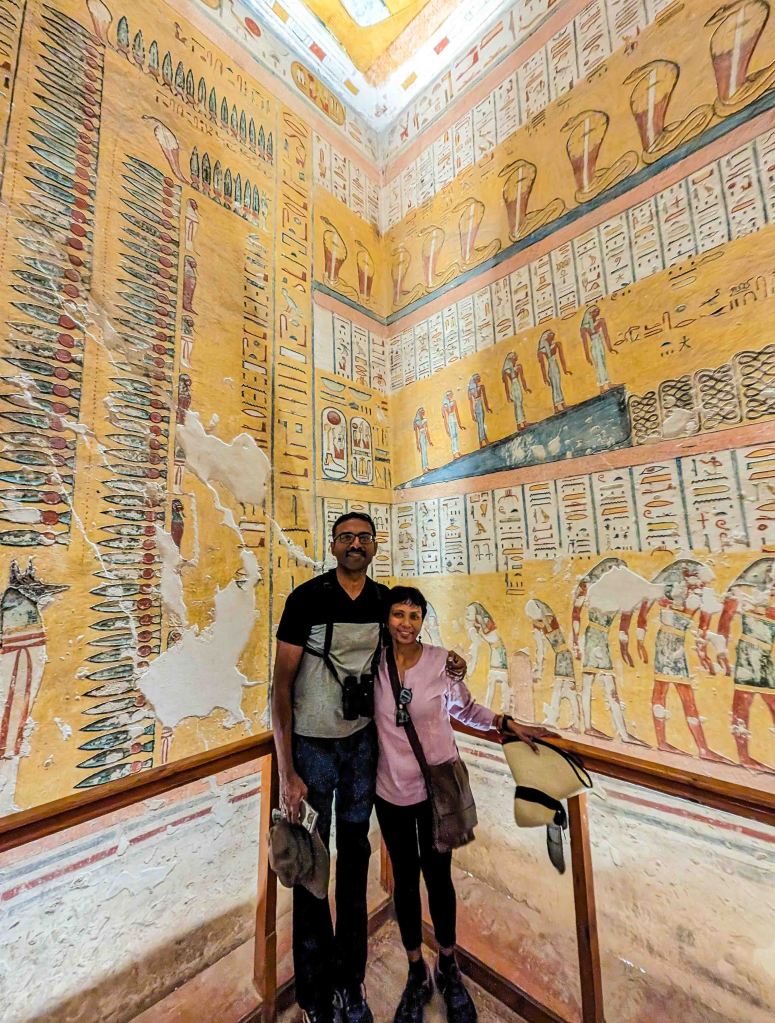
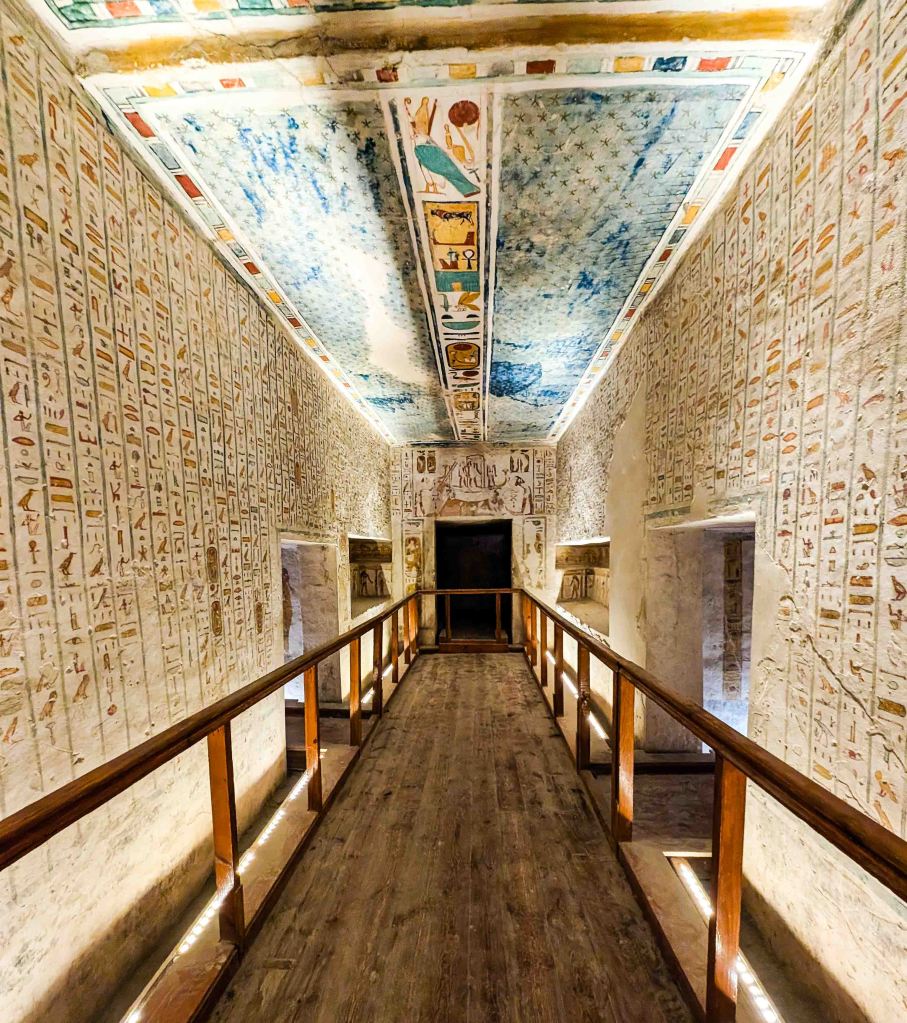
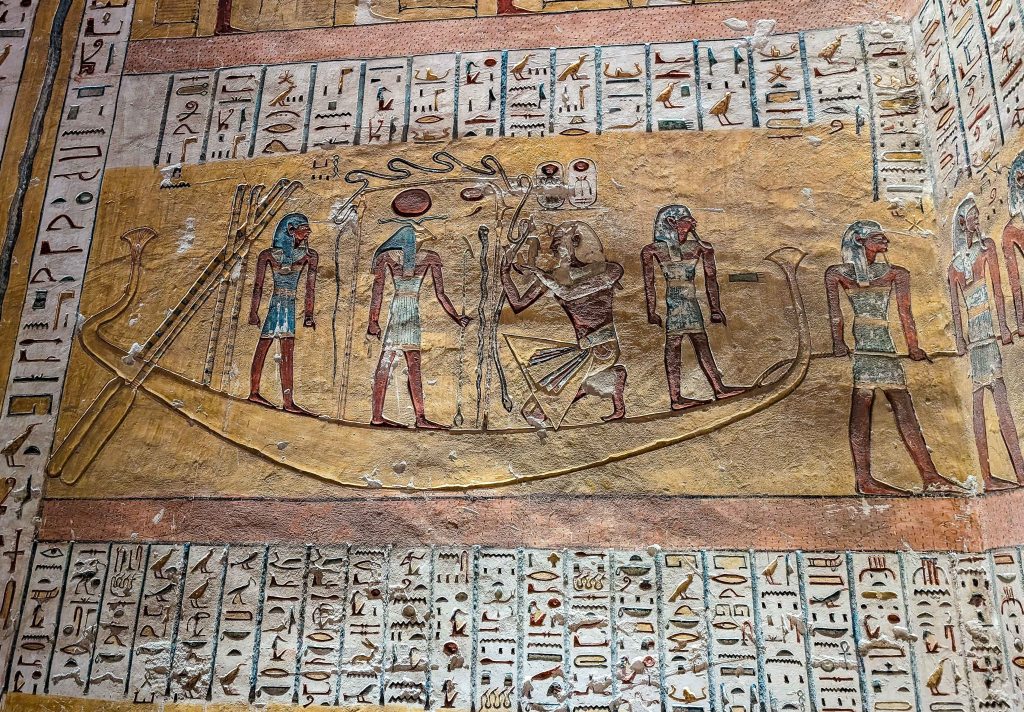
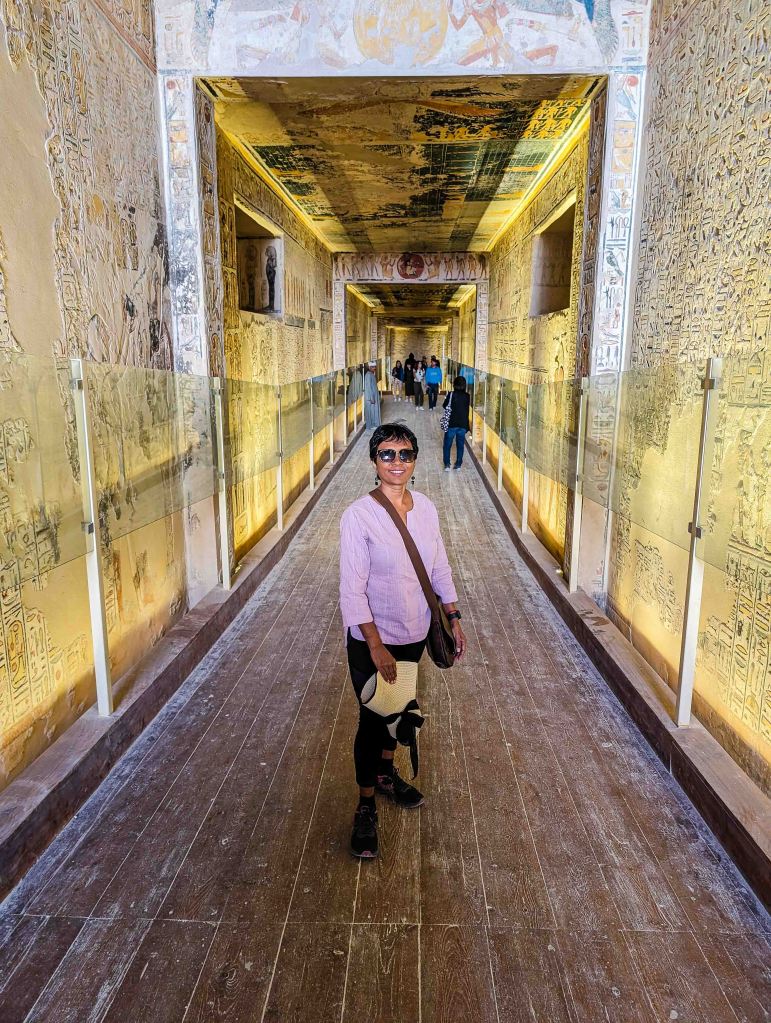
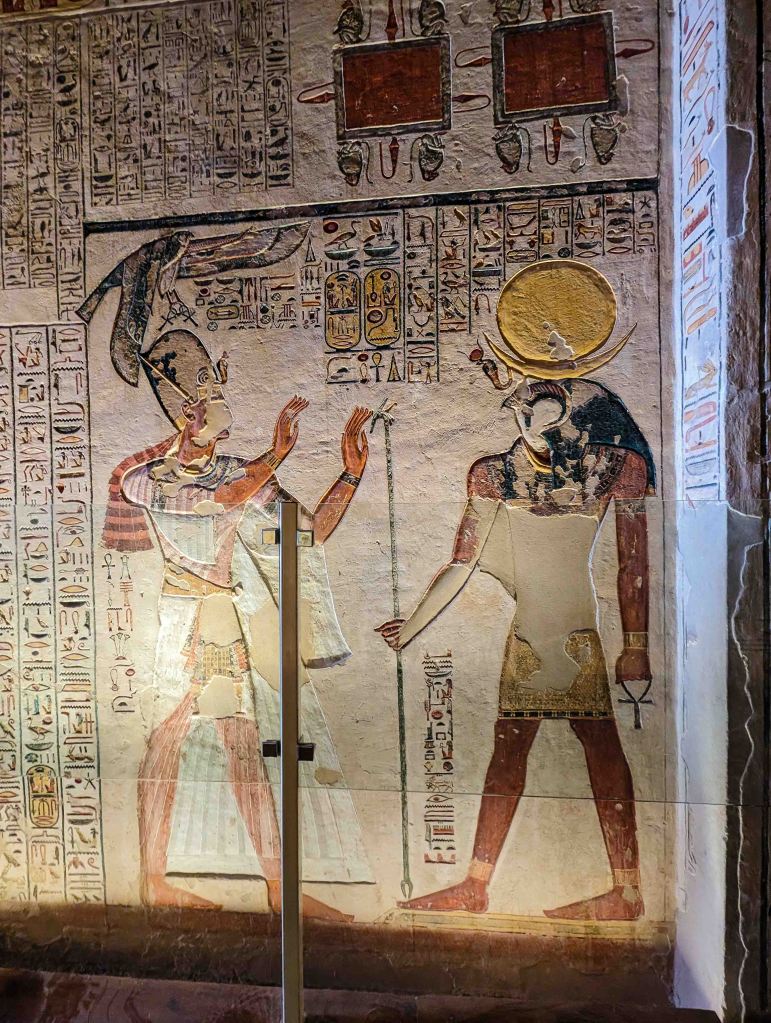
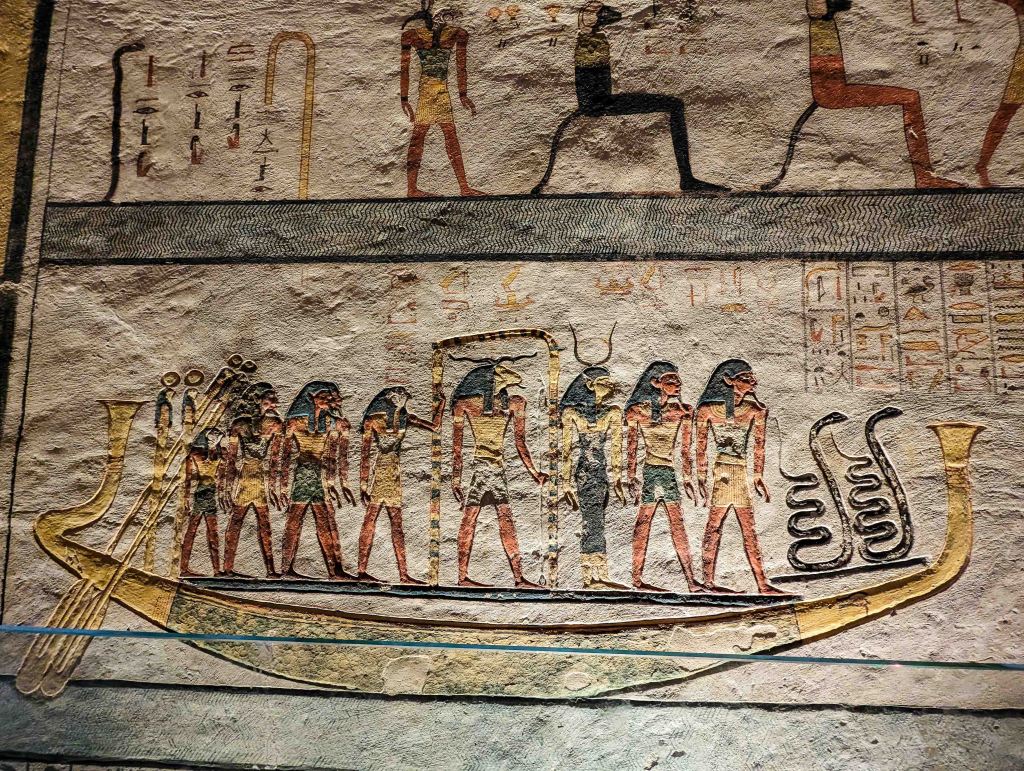
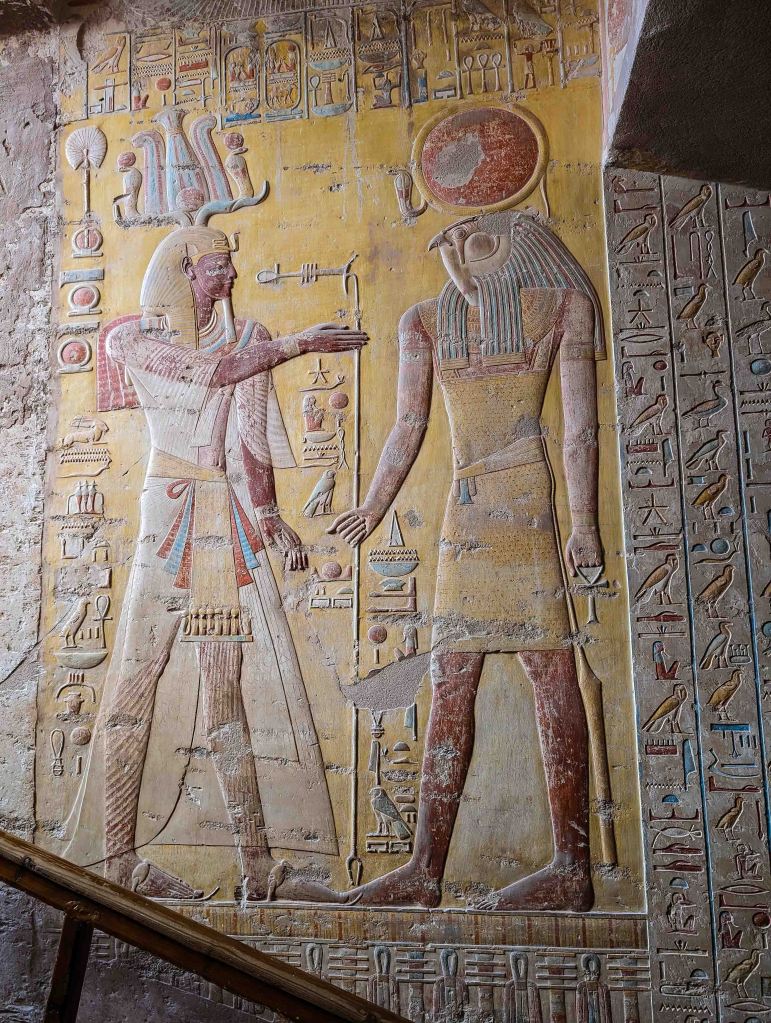
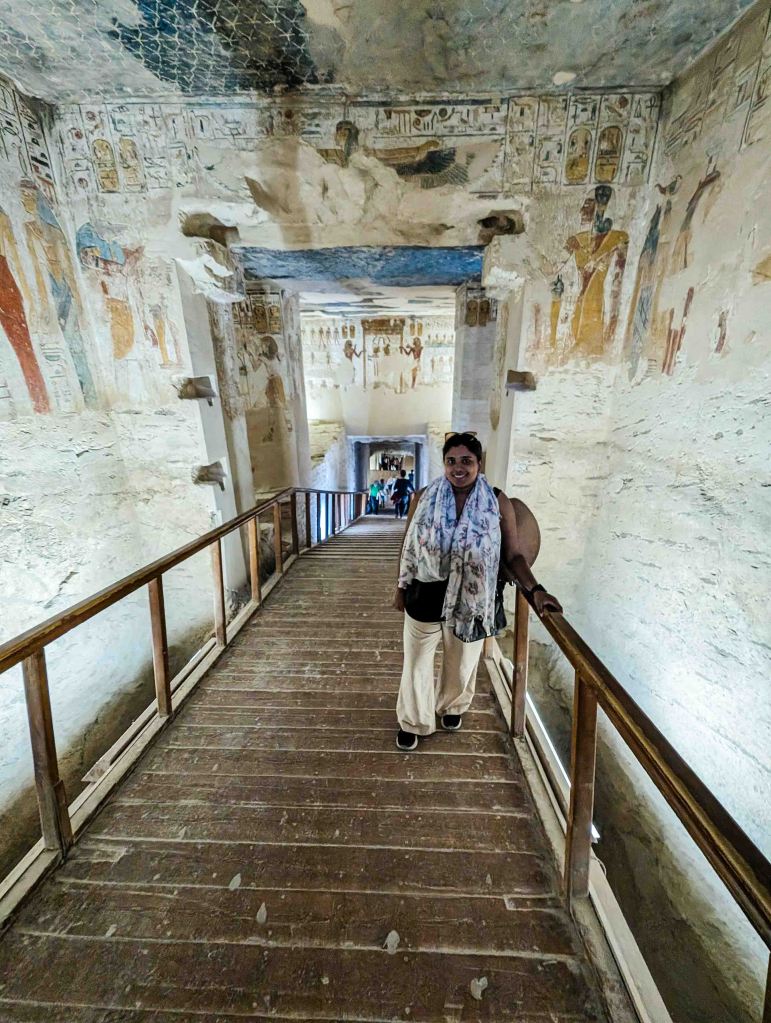
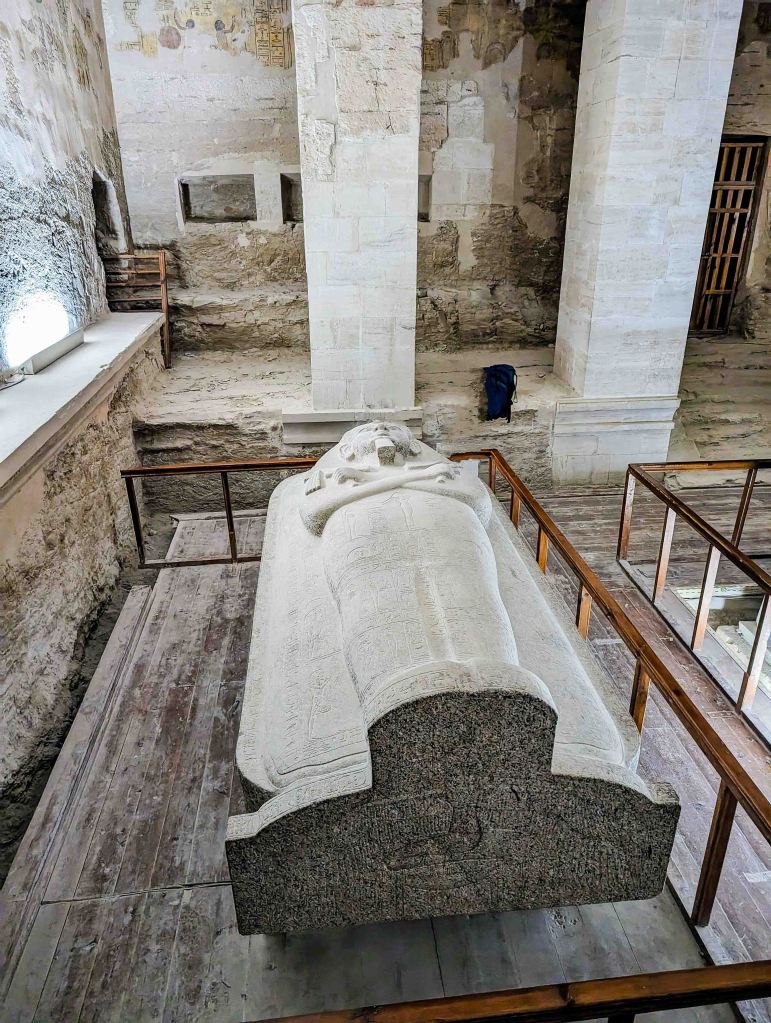
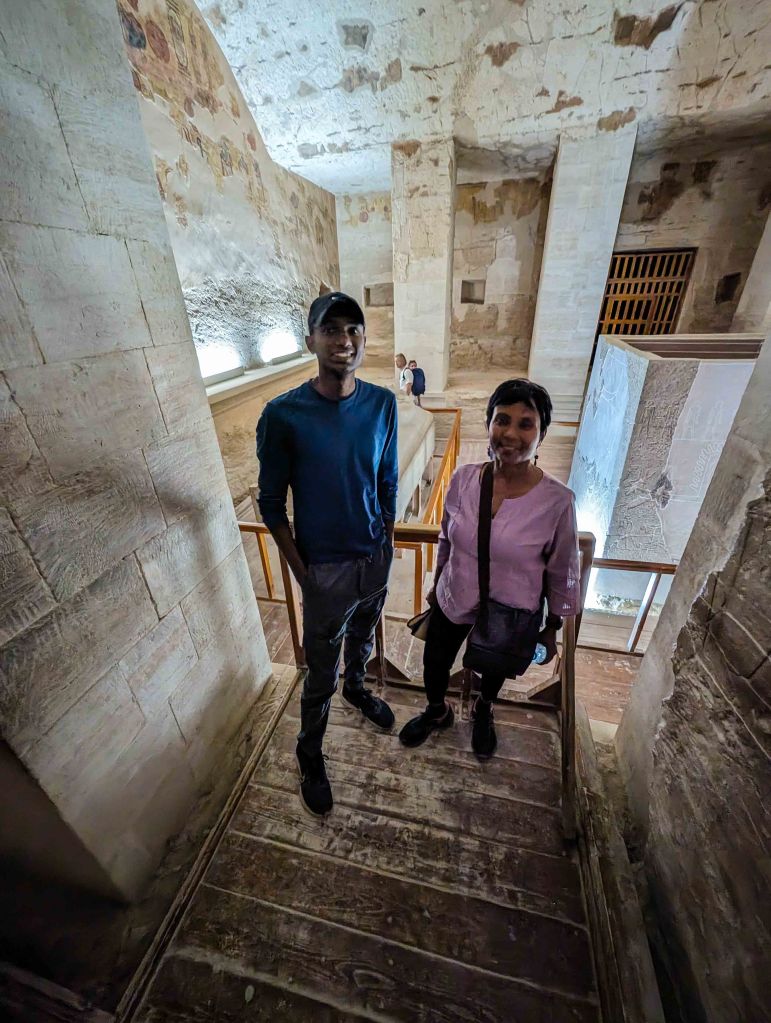
We had not expected it to be so colourful. The colours of the paintings were well preserved even after so many centuries!
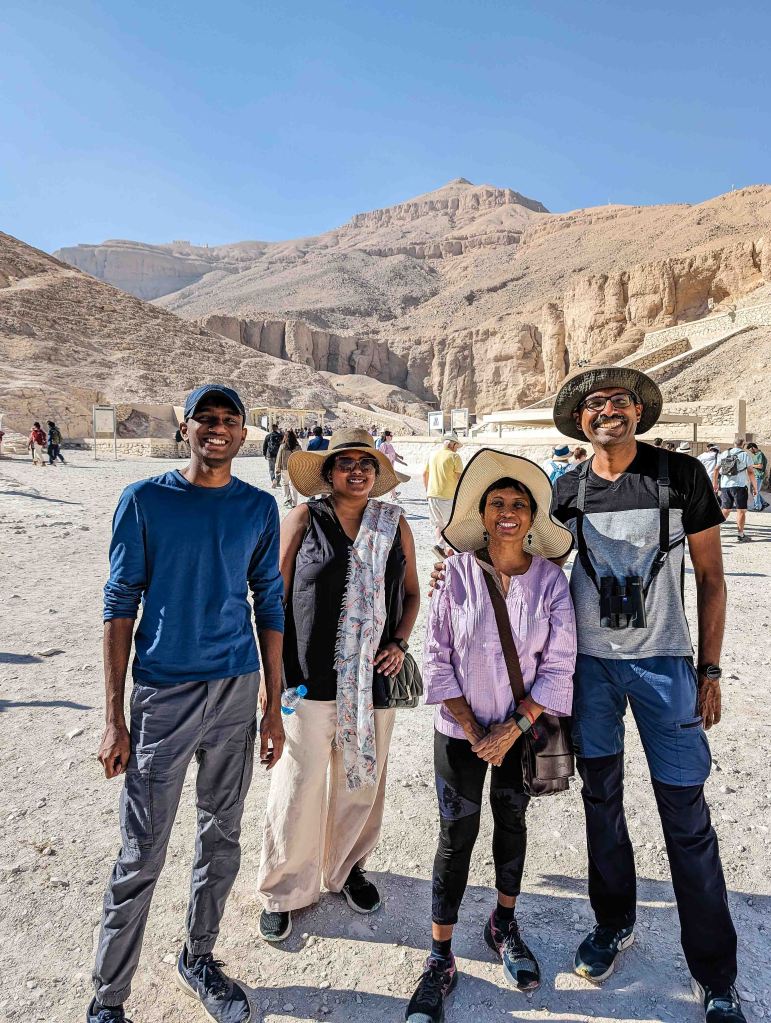
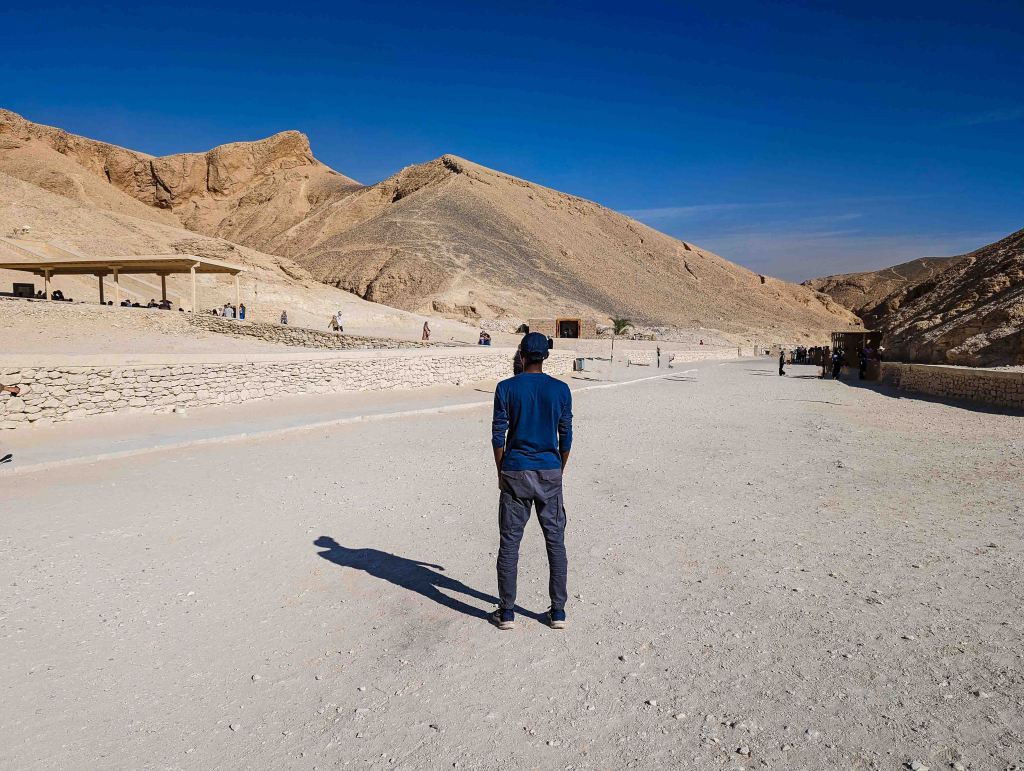
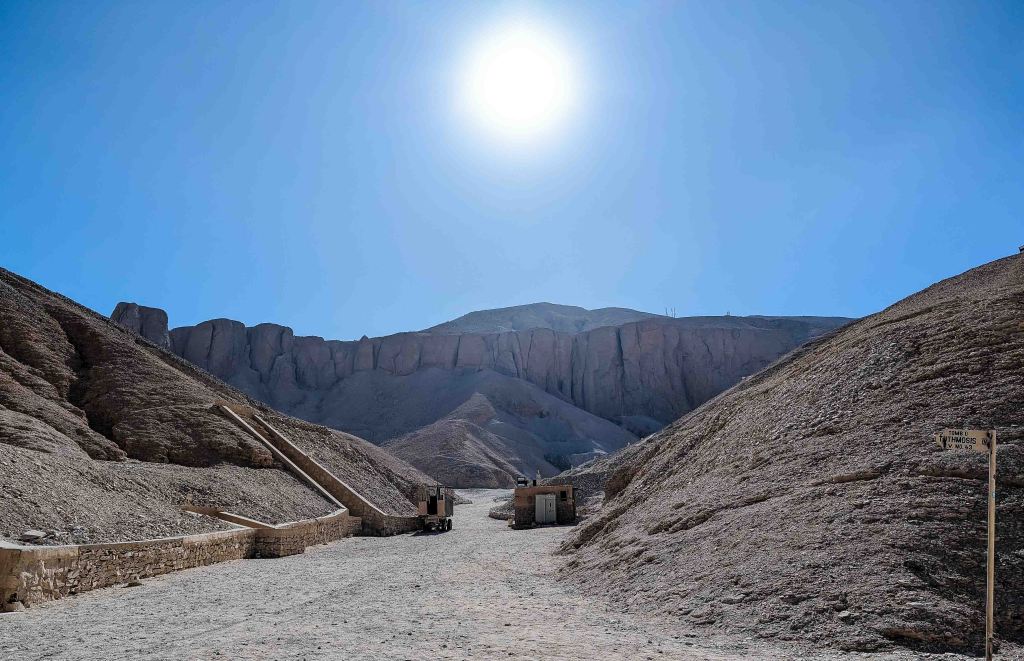
Here are some pictures of us in the Valley of the Kings before we decided to head to the next site, Temple of Hatshepsut.
Hatshepsut was the Great Royal Wife of Pharaoh Thutmose II. Upon the death of her husband and half-brother Thutmose II, she initially ruled as regent to her stepson, Thutmose III, who inherited the throne at the age of two. Several years into her regency, Hatshepsut assumed the position of pharaoh and adopted the full royal titulary, making her a co-ruler alongside Thutmose III. She ruled for 21 years. This was the only second known woman who ruled in her own right.
Here are some views of the entrance to the temple far a bit afar:
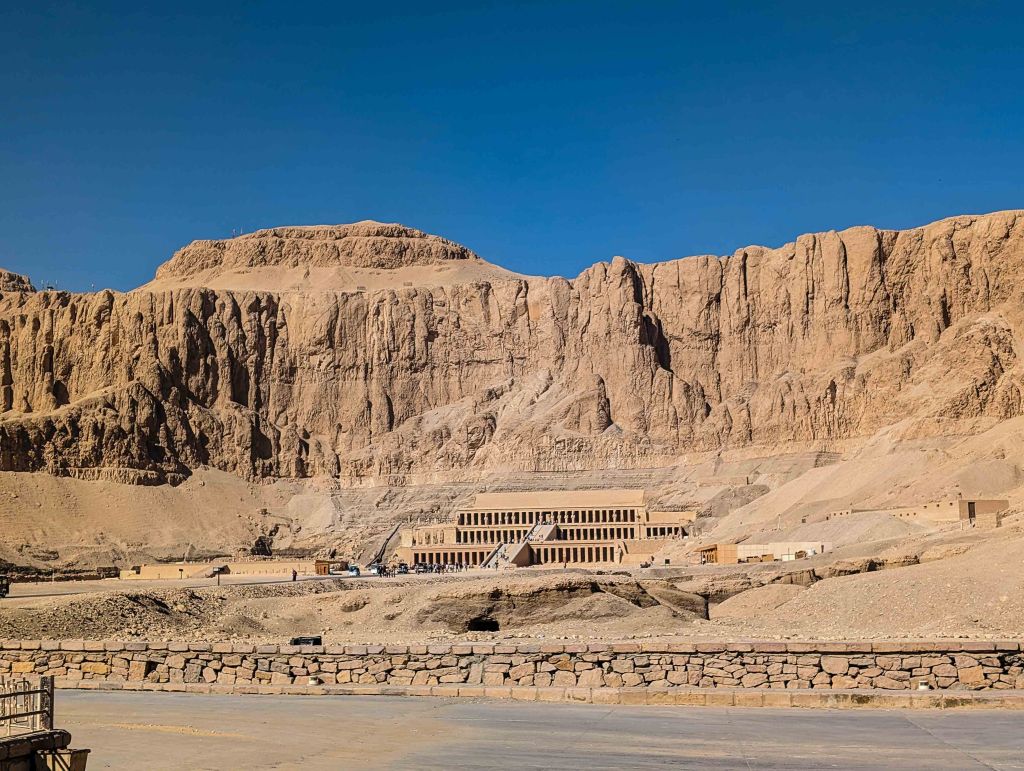
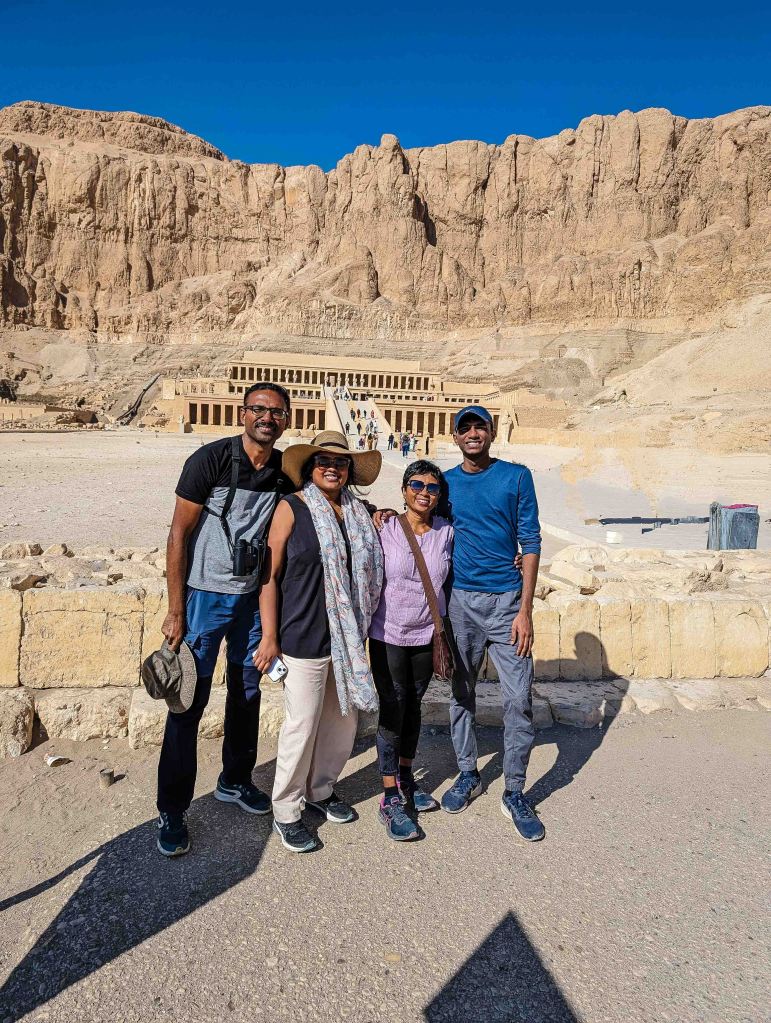
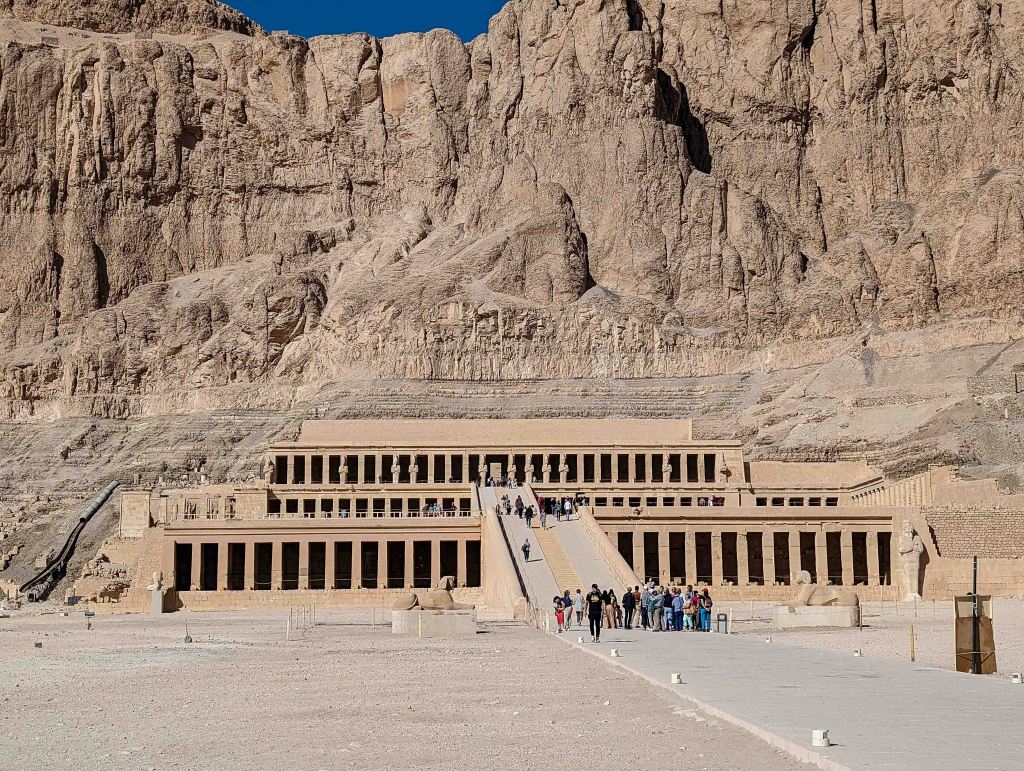
And finally from the temple itself.
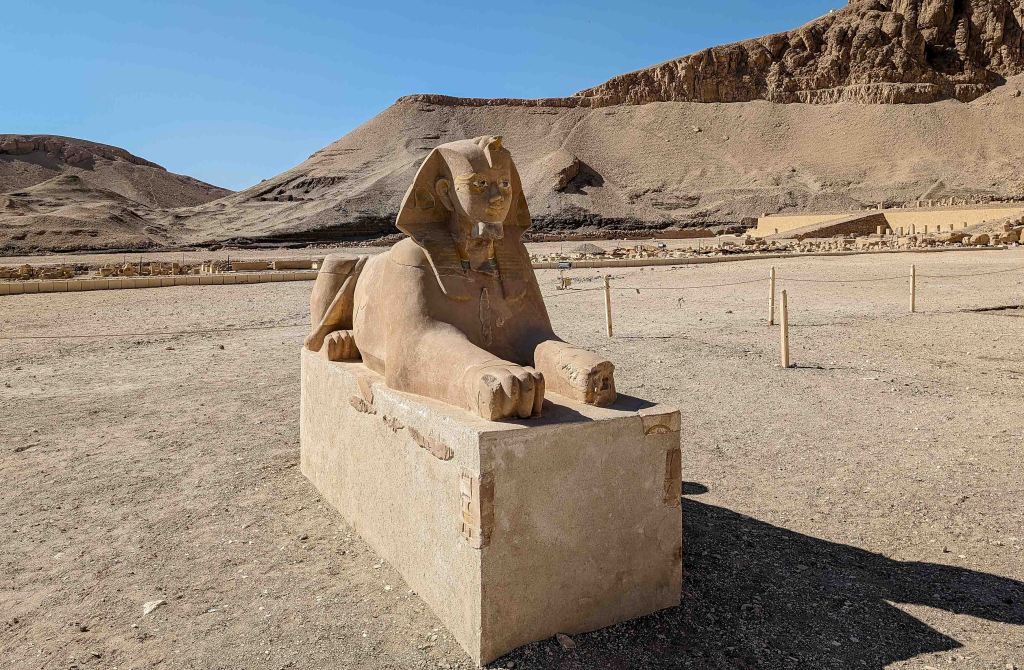
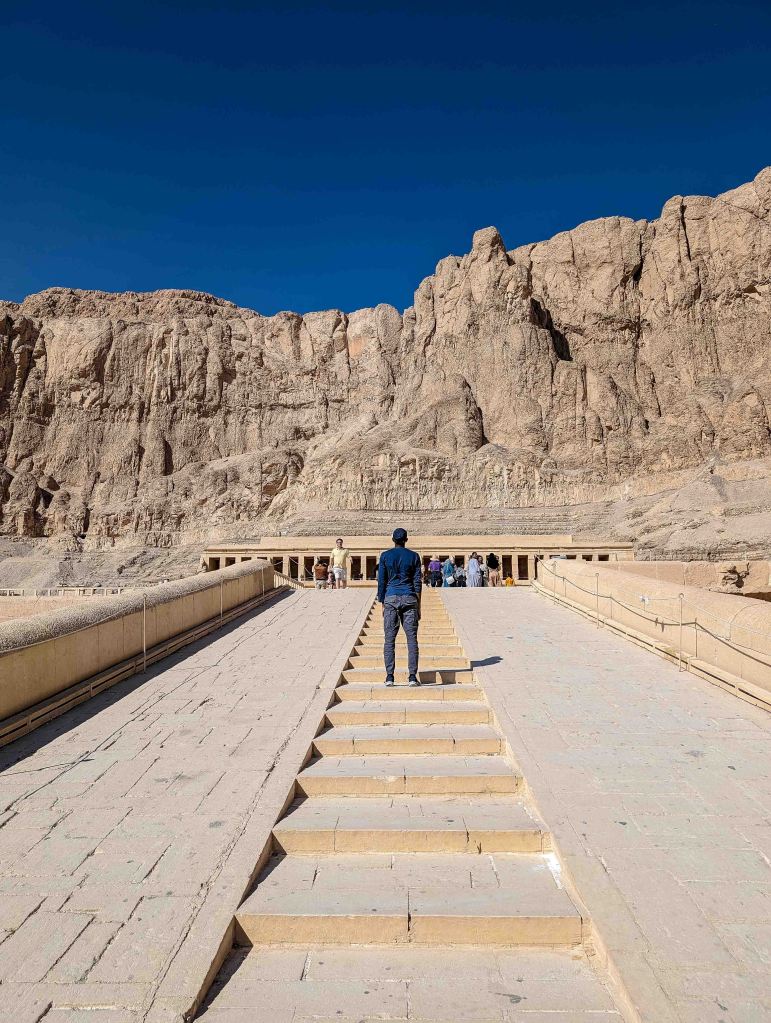
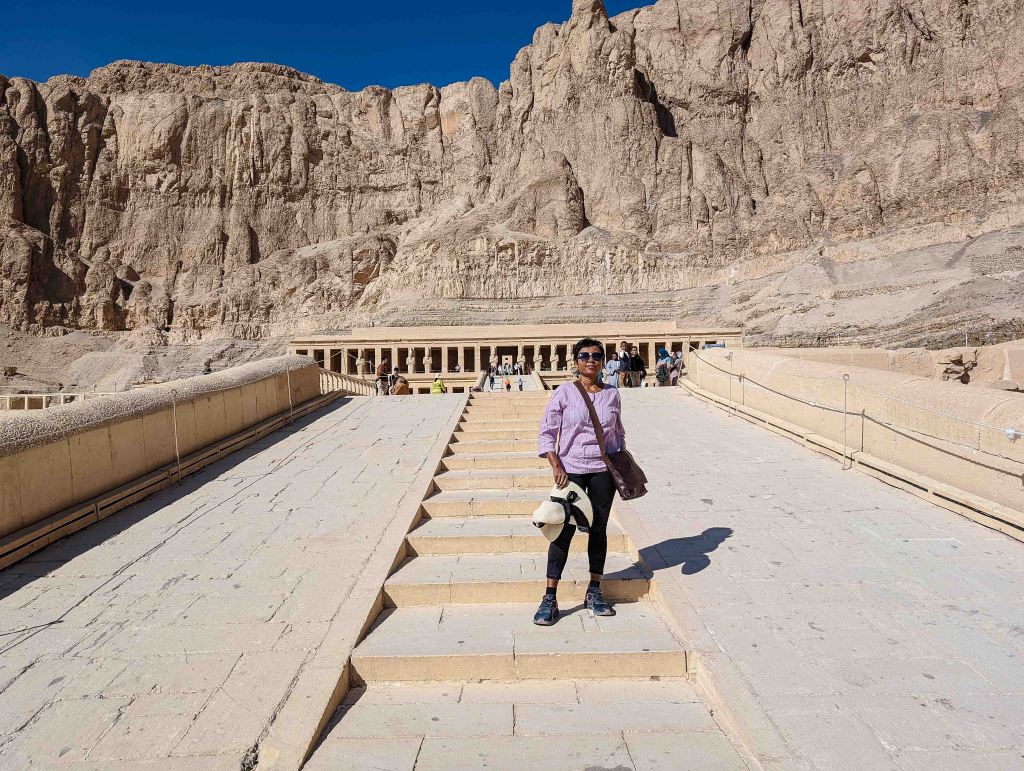
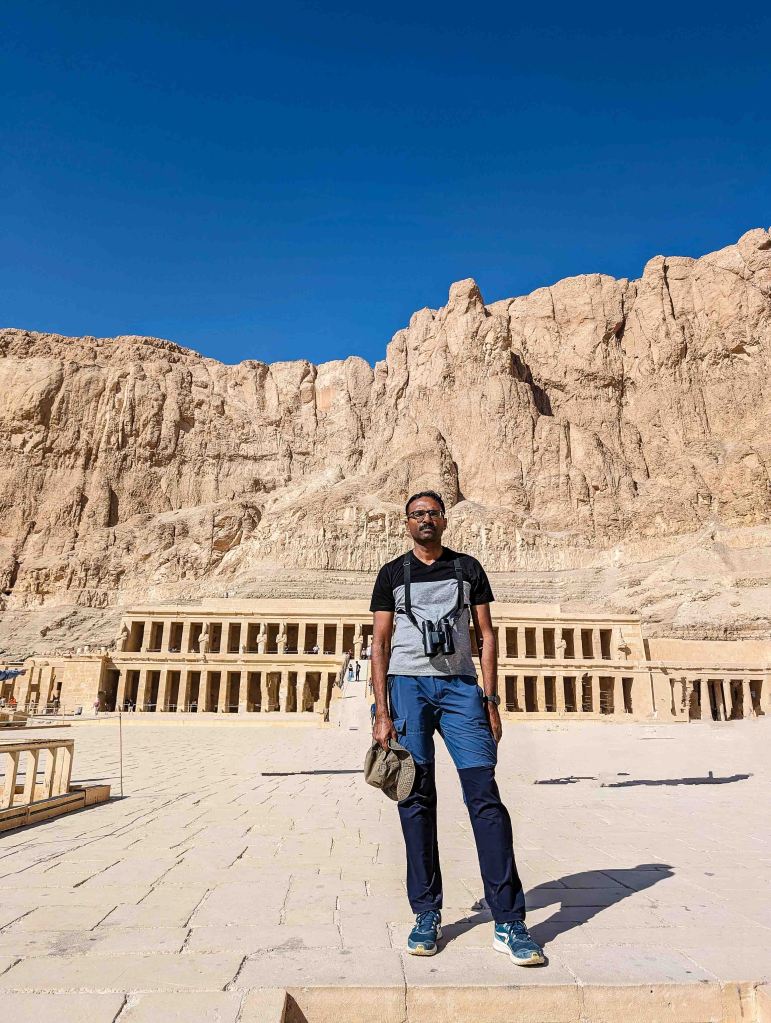
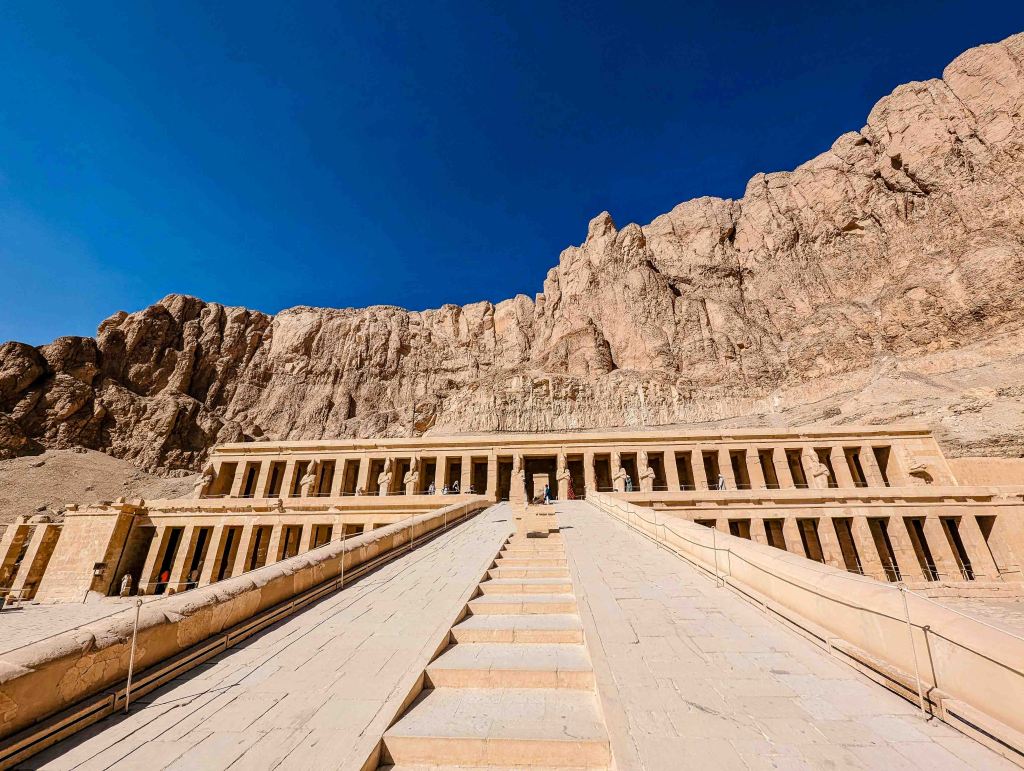
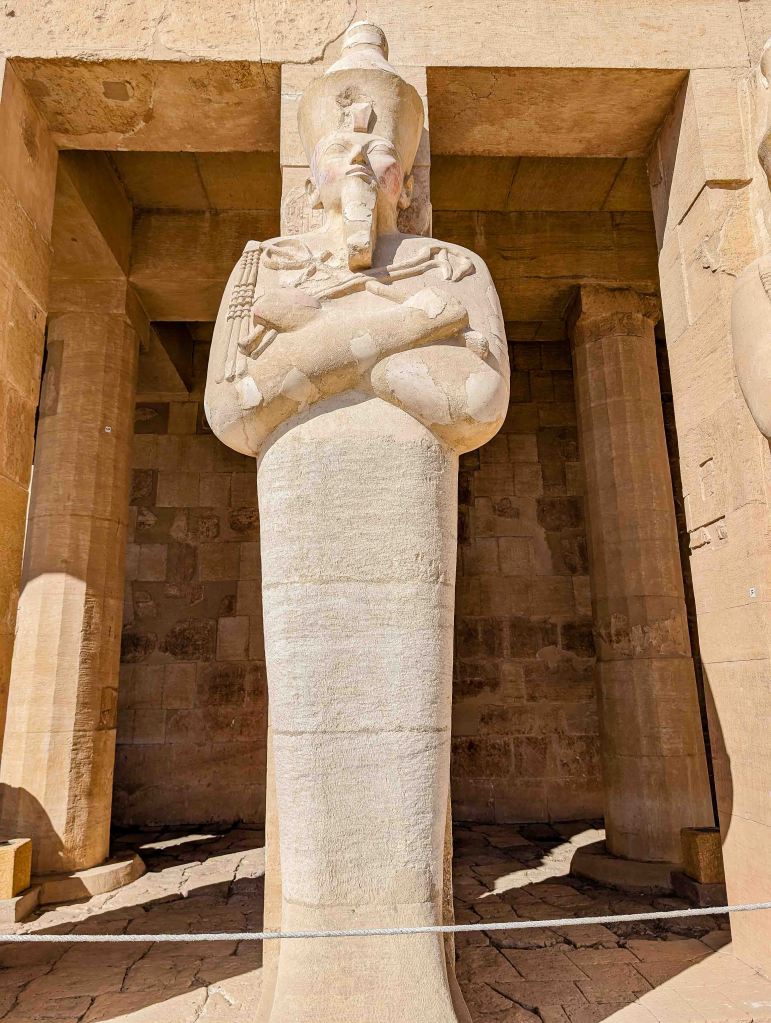
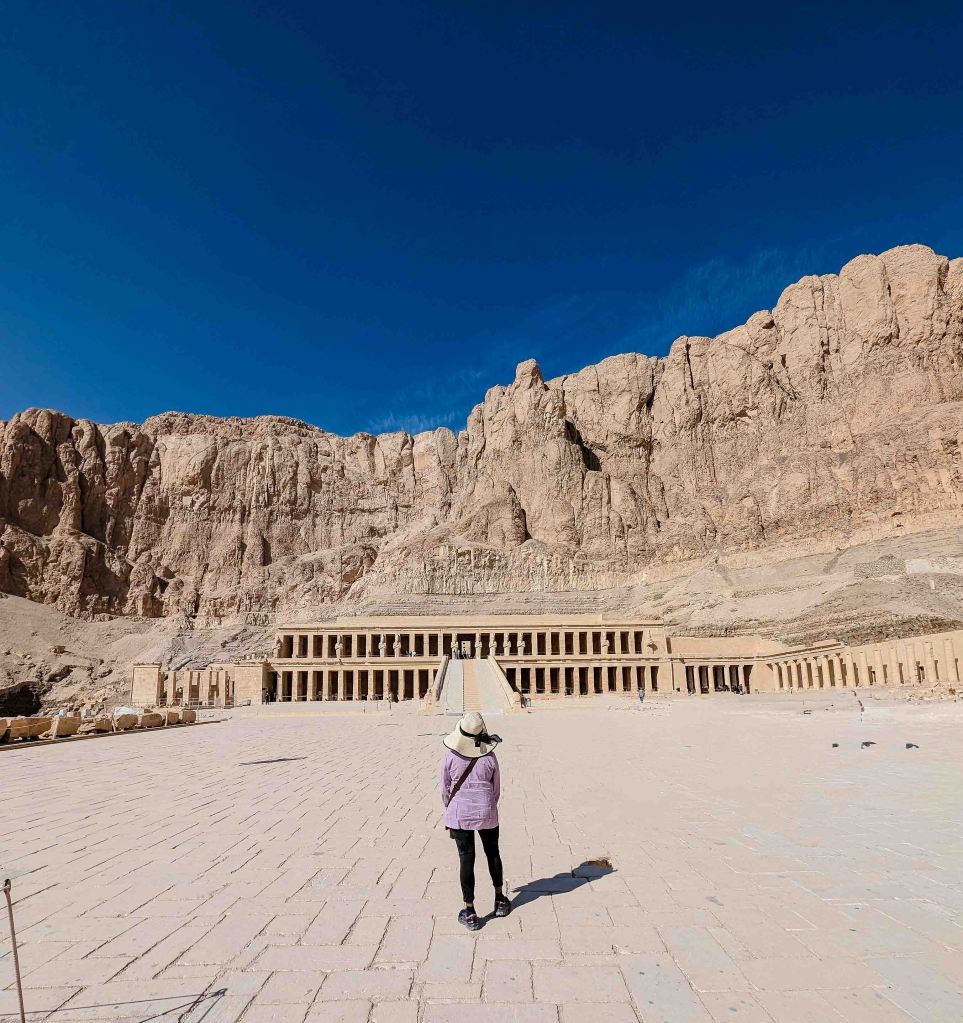
Sadly towards the end of the reign of Thutmose III and into the reign of his son Amenhotep II, an attempt was made to remove her from the accounts of history. So lot of her statues were destroyed and her monuments defaced.
Next we decided to swing by the Colossi of Memnon and Temple of Amenhoteb III. These are two massive stone statues of Pharaoh Amenhotep III. They stand in front of the ruined Temple of Amenhotep III.

Here is a wider view of the site:
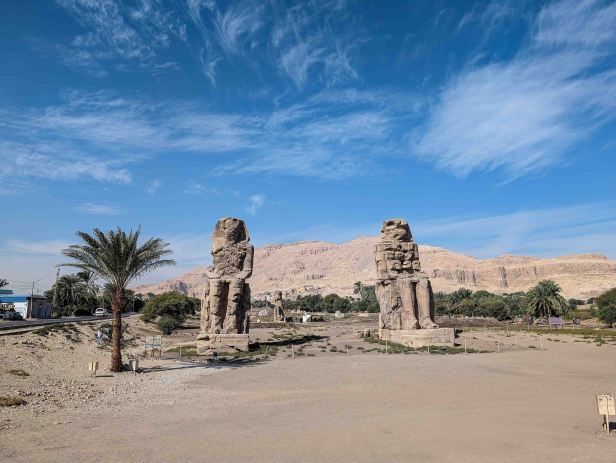
Our next sites were to be the famous Karnak Temple and Luxor Temple. But that I will cover in my next post. Their grandeur justifies a dedicated post.
Recommendations
Here are some things that come to mind after having visited them:
- Do not miss seeing them 🙂 . They are grand, especially the Valley of the Kings.
- Going into the tombs, given that it is a tunnel going into the ground, can be claustrophobic for some. The air does get stuffy as one goes deeper. If you are one such person, you may want to choose the tombs that you go into. Some are deeper than the others.
- You standard tour would include one or two tombs. The tomb of Tutankhamun has a separate ticket for itself. But keep in mind, that it is deeper than the others.
- It will be very hot outside. So keep a wide rimmed hat and drinking water.
- As always, take a guide to tell you about the history.
 Mad about Birding and Travel
Only name that sounds familiar was Tutankhamun for me…🙂
LikeLiked by 1 person
That was the same for me too until we went exploring the place 🙂
LikeLike
Excellent job of clicking ancient hieroglyphics & channeling your flair of capturing right moments. Egypt was an epic family trip, but your blog is making my memories even better! Well done.
LikeLiked by 1 person