
For a raptor enthusiast what can be better than getting to watch the breeding cycle of eagles? Hmm, what could it be? Well, I do not know if it is better. But it certainly matches the experience; observing the breeding in a pair of Owls! Yes, we got to observe breeding in a pair of Indian Eagle-Owls 😀 !
Breeding periods are sensitive for birds. And so are breeding sites, especially if they are likely to be reused. Owls are considered even more vulnerable given certain sensitivities in the local communities and culture. So when we debated over creating a blog post to share what we observed, we had to take these aspects into consideration. If there already were articles available publicly over the internet on breeding of the Indian Eagle-Owls, I was not inclined to create a post. My searches on the internet revealed some scientific papers but did not reveal any articles that were easy to understand for a layman; one that uses photos and video to share what transpired. Hence we decided to go ahead with creating this blog post.
By now you would have seen “we” being used several times already. If you are wondering who this “we” refers to, well it is my friend Rahul Singh and I 🙂 .
From what I have read in the scientific papers thus far, I do not think we have made observations of any new behaviours as such. Irrespective, the time we spend with them was special. We observed how strong parenting instincts were in the breeding pair and how curious and inquisitive the chicks were, just like any child. And not to forget cute 😉 . We hope that the site continues to be a breeding site for the adults. Hence we have chosen not to share its specific coordinates.
Warning: This is going to be a long post. That is the only way to do justice to what we saw. For the structure of the post, I have chosen to use the same structure when I had documented the parenting in Bonelli’s Eagles earlier. It will include week-wise observations using photos. There is also a video at the end of this post showing the behaviour and progress over the 9 weeks of observations. All week numbers are a “guess-stimation” only 🙂 .
Initial Sighting
It was 26th Jan when Rahul first saw the parent sitting on the nest. It was presumably the female parent in the nest. He had seen both the parents earlier. But it was super exciting news to see one sitting in the nest! Here are photos of it doing so:


The other adult was also sitting near by. Here it is:
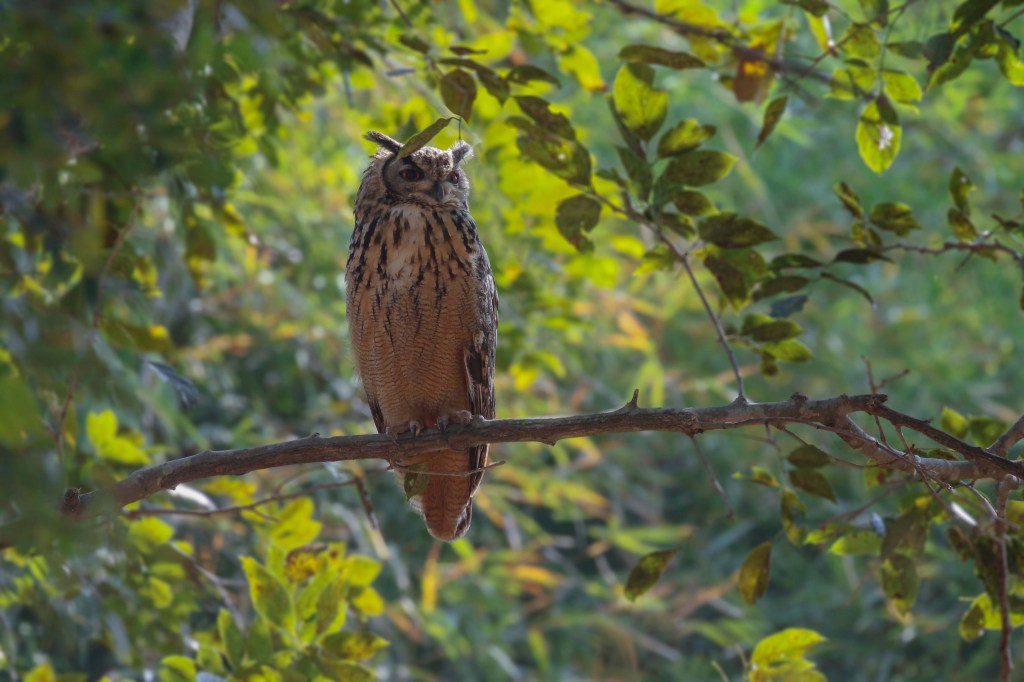
At this stage Rahul thought it was the adult just sitting “at home”. Nothing “popped out” from the photos to alert him of something special happening. It was when he visited again on 12th Feb that it hit him 🙂 .
When I preparing to write this post, I went through my set of photos and videos to arrive at the potential timeline from hatching for each of the weeks. At that time I only had the videos from Rahul that he had shared early on. Since he had not taken videos of his visit on 26th Jan, nothing exceptional stood out for me too. So I thought the chicks hatched some time in week starting 30th Jan. However when I got the above pictures from him, what I had thought of 26th Jan changed. I suspect the chicks had already hatched by then. Check out the below photo in which I have marked a section with a red box. I think that is atleast one chick. The parent also seems to be careful in just standing over them.

What do you think?
Anyways, for the rest of this blog post, I have gone ahead with the revised timeline. Hence 26th Jan is being considered as week 1, i.e. they had hatched in this week.
Week 3 (12th Feb)
Rahul made the visit alone to the nest. He had not expected to see what he did; there were chicks in the nest!
The chicks were in the nest with the parent. Here is their first photo together 🙂 .

The protective instinct of the parent was also observed. Whenever any bird like a crow or kite, flew over the nest, the parent would make a snapping sound with its beak (check it out in the video). This we guessed was a warning signal to them to stay away. The chicks were already observing every motion in their new world. They would follow any movement above the nest also but staying close to the parent 🙂 .
Here is another one with the chicks observing a bird flying over their nest:

Rahul paid another visit on 14th Feb. This visit proved very eventful. He observed the chicks being fed by the parent. It was a sizeable rat. The chicks obviously were not old enough to tear the prey on their own and eat. So the parent took on the duty of a dotting mother doing the honours. The parent would take bite size chunks and feed them. Here are photos it doing so:

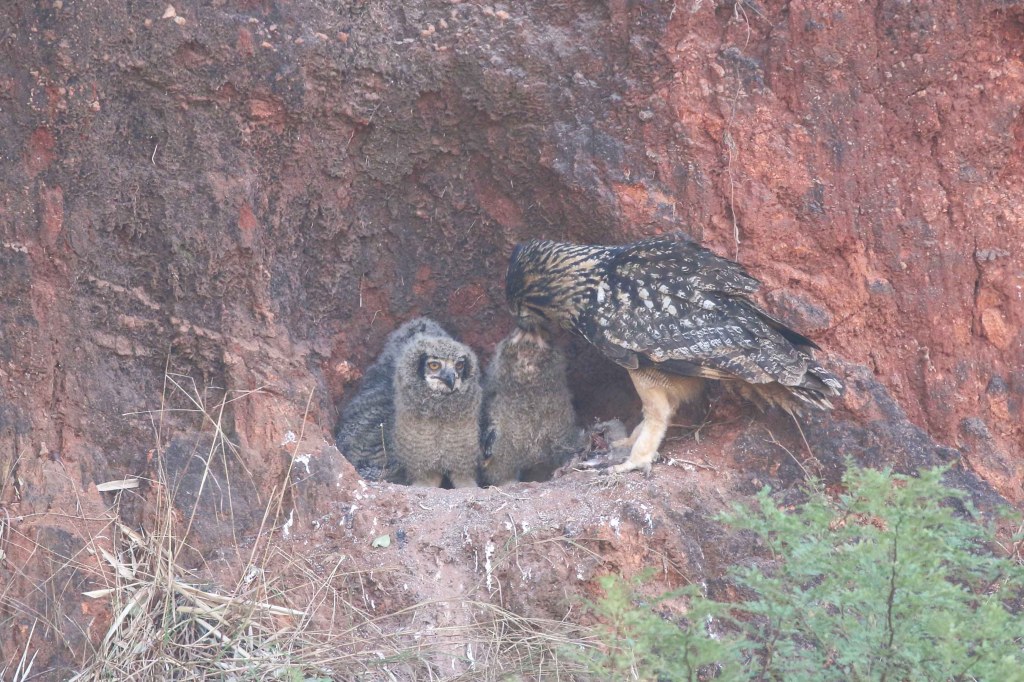
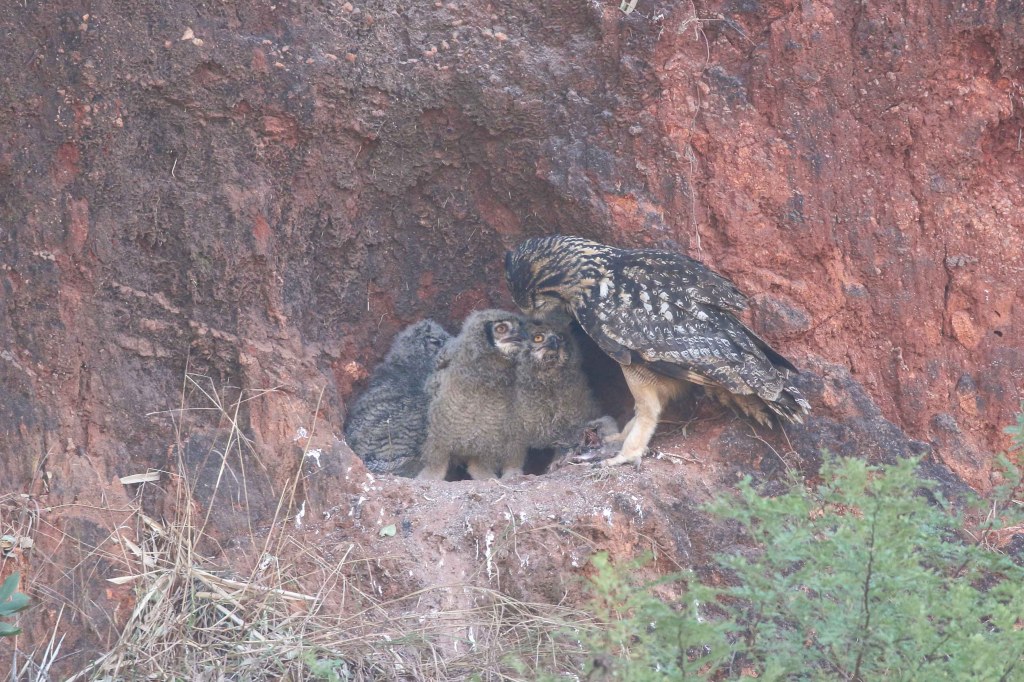
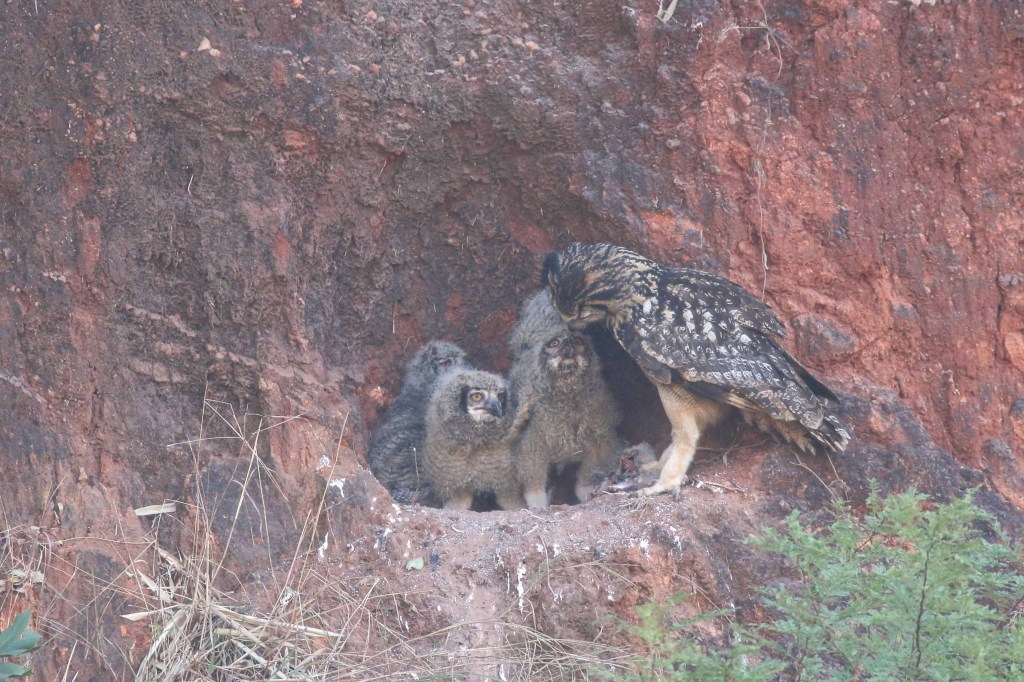

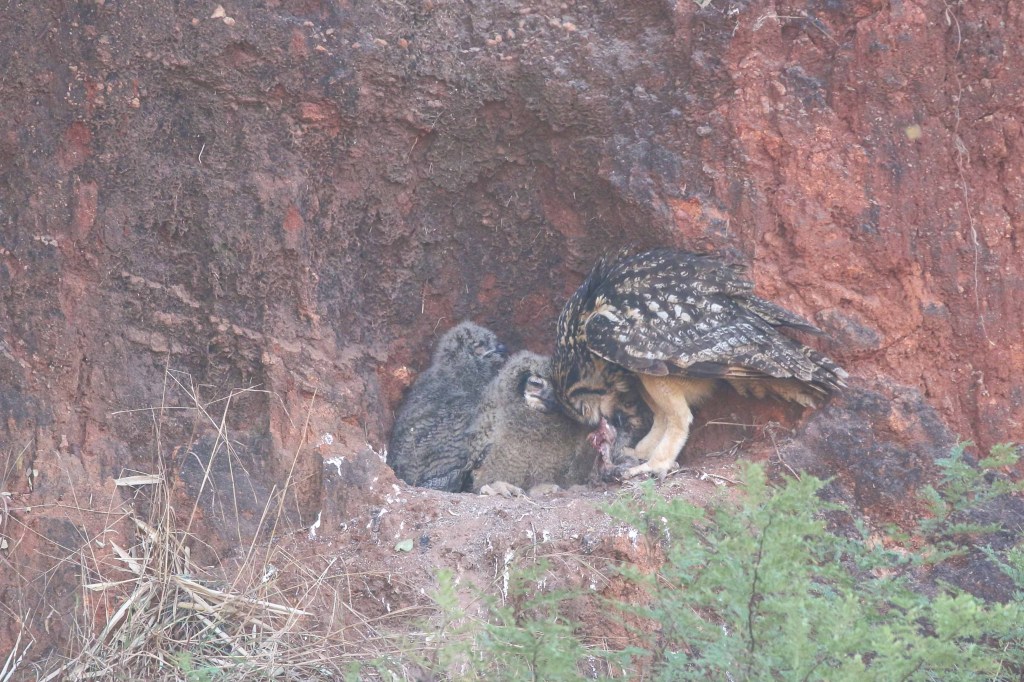

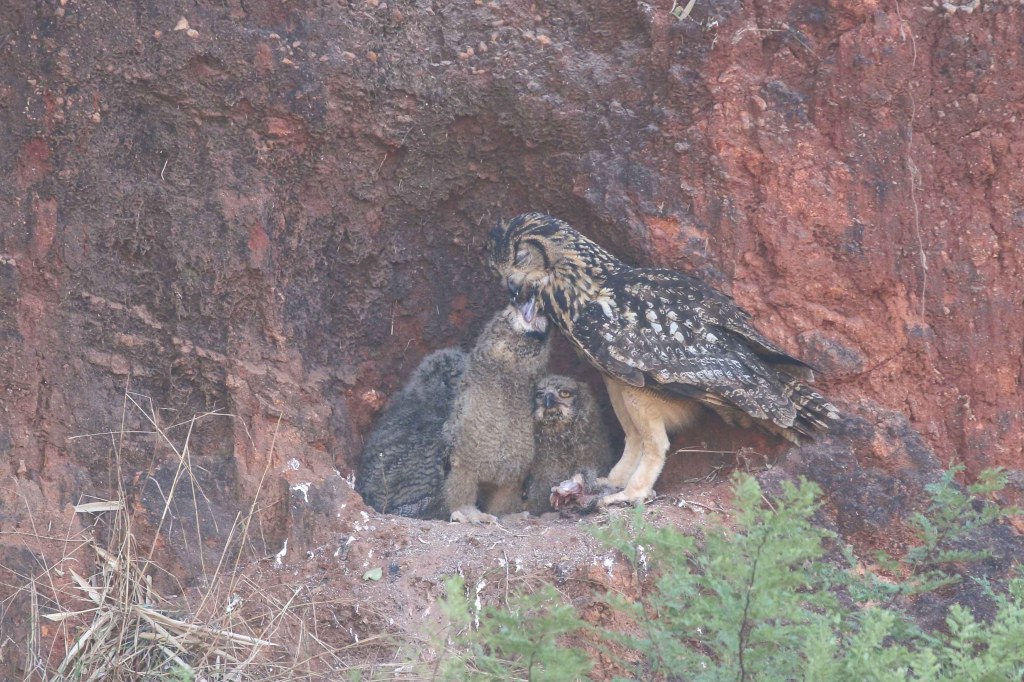


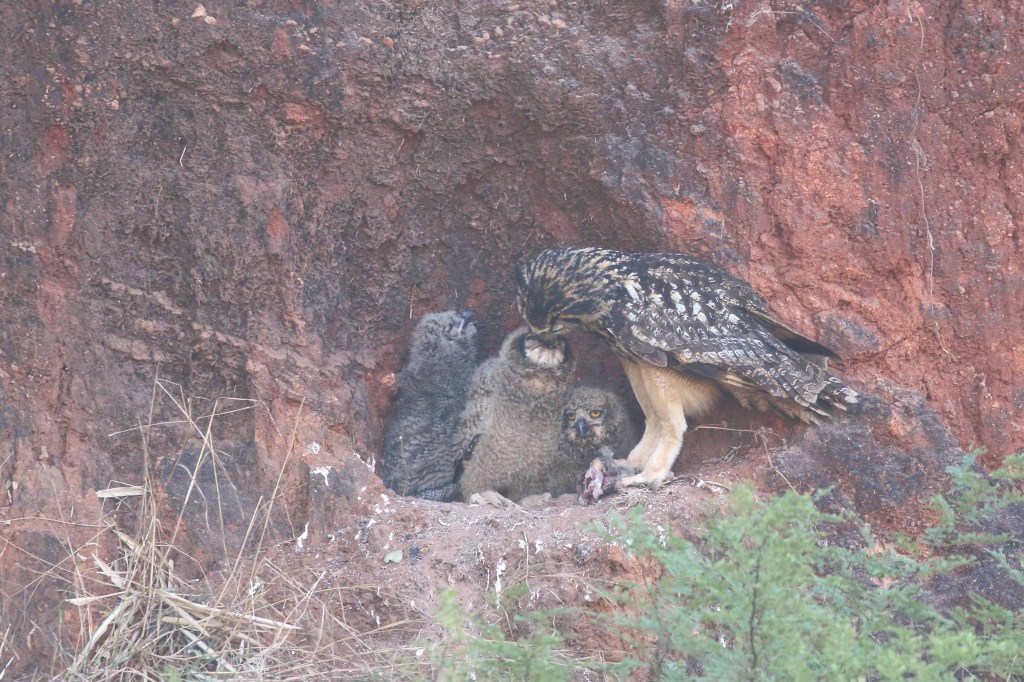

This turned out to be the only time that we managed to see them being fed by the parent. We assumed that during all other times, they were fed at other times of the dawn/dusk or at night.
Week 5 (20th Feb)
Rahul and I went twice in this week. 20th being my first visit to see the family, I was super excited. Though Rahul had shared with me photos and videos from his previous visits, I was not sure on what to expect judging by their rate of growth. They did not disappoint 🙂
Here is what I got to see first:

They must have been like, “Who is this new chap that has come to see us?” 😀 . One of them soon opened its eyes to take a better look.

The parents were not to be seen. I wondered where they were and if it is was indeed their practice to let the chicks be on their own.
A few minutes later we let them be and headed off to explore the nearby area. A hour and half later we returned to the nest to take a look before heading back home. This time they were awake with two of them standing up. They were immediately curious as to who we were when we stopped to observe.

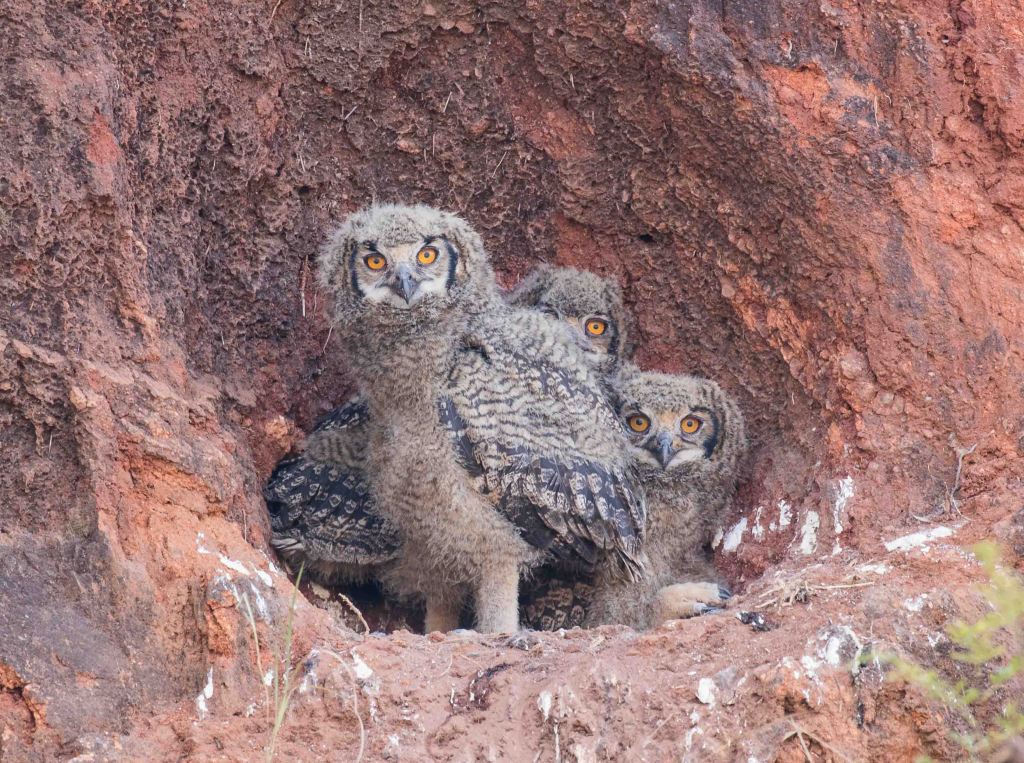
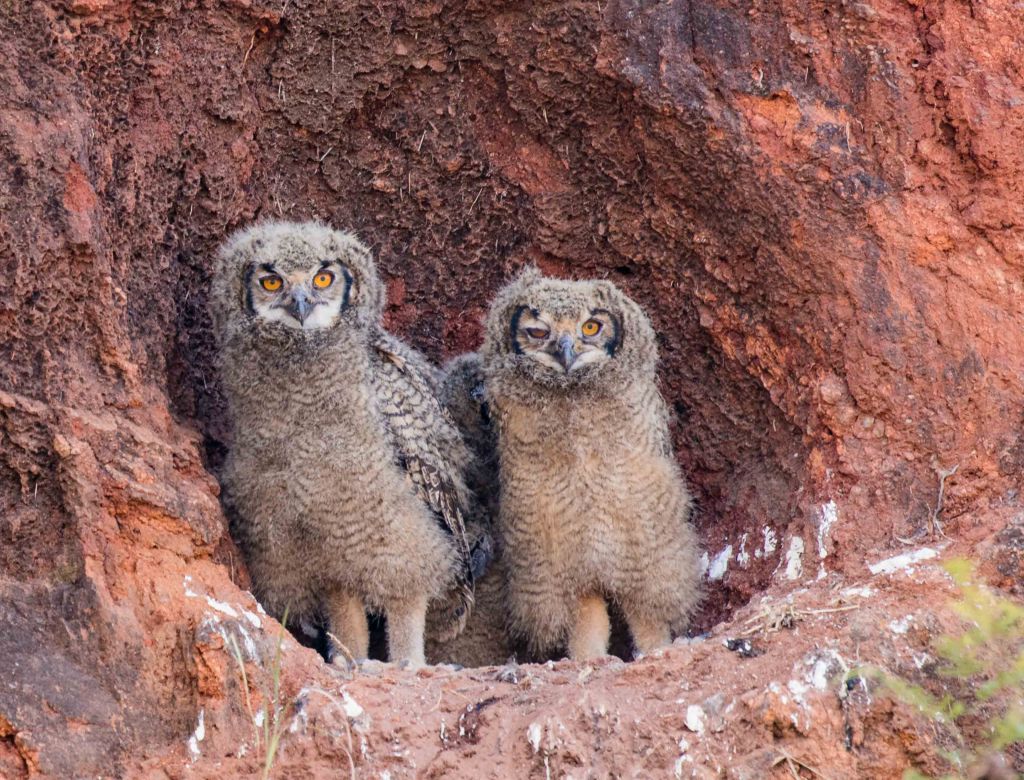
Finally they settled back down in the nest.

From what I saw in the first visit, their eyes were mostly yellow with the pupils being just a tiny black spot unlike in adults were they pupil was much larger. I guessed that they were still getting used to the daylight. You will see in photos from visits in later weeks that this changes.
It was time to head back home. As we started to head back we saw the parents. First it was the female, judging by the size. She was carefully sitting behind some blades of dried grass with a clean view of the nest.

The male (you can see he is smaller in size) was sitting on the mound above her. He too with a clear sight of the nest 🙂 .
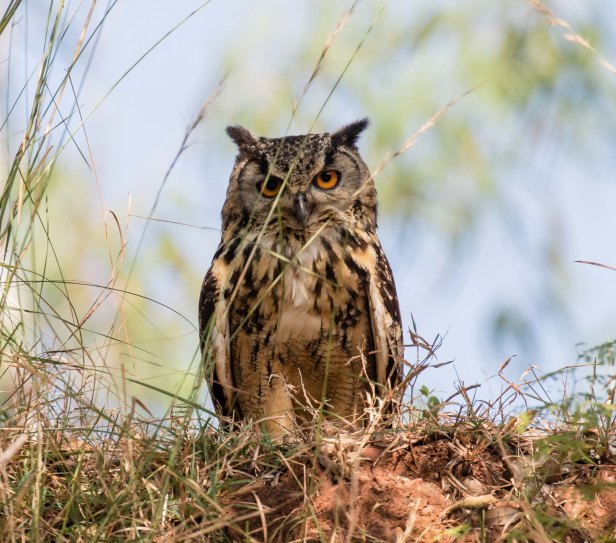
What magnificent birds! Like for all raptors, to me their eyes are the most noticeable feature for me. They seem as if they are peering into ones soul directly 😀 .
The male soon had a enough of observing us and decided to literally walk off to another section with more dried grass to hid himself. A minute or so later, he flew up and perched on a tree branch. Here he is on the perch:

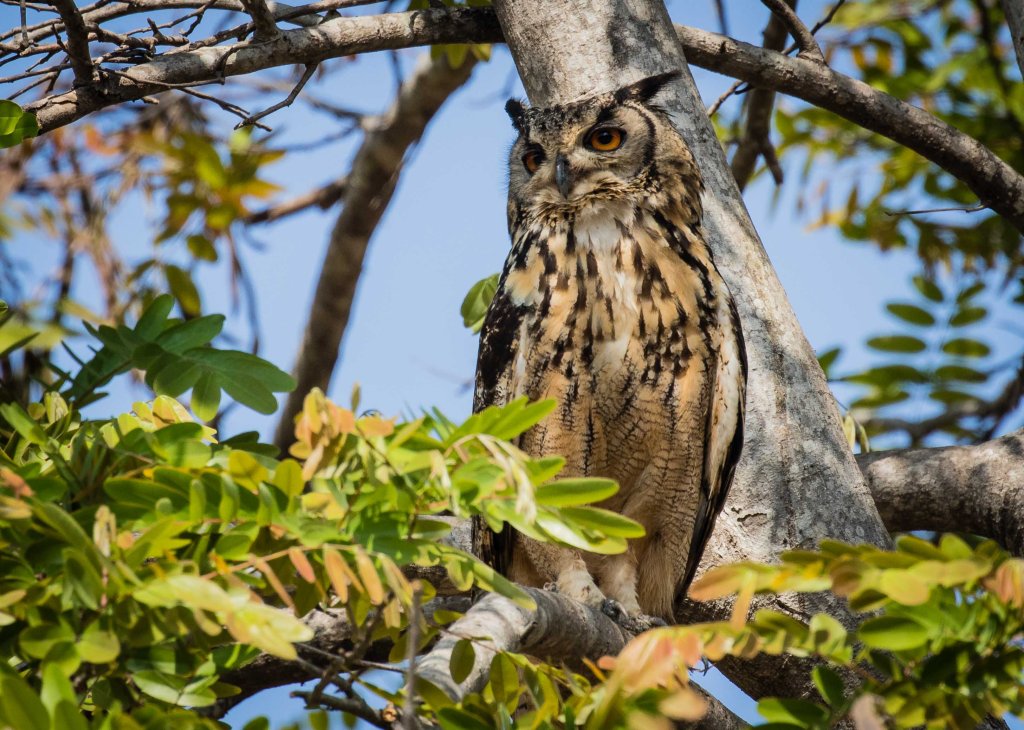
From our visits over the next 4 weeks, we inferred that this perch was one of the favourite ones for the male. Nothing obstructed his view of the nest. The female would change her perch. She would be seen often much closer to the nest on other perches.
In this week, we visited again on 24th Feb. The chicks were growing fast, structurally and in confidence. The first sight of the day had us seeing one of the chicks out of the nest:

You can also see the change in the pupil size starting to take place. The chick outside seemed larger in size; probably the first to hatch or the dominant one? Anyways, it eventually went back into the nest. Nothing like the safety of home I guess for a young one 🙂 .
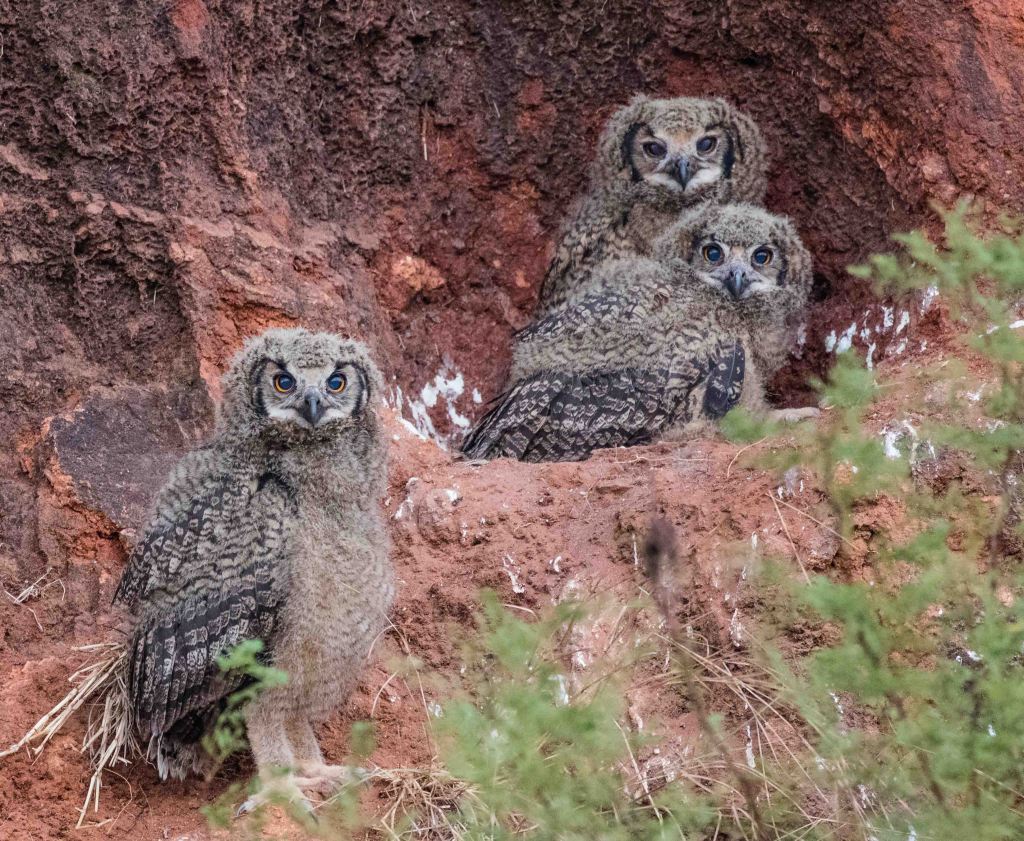

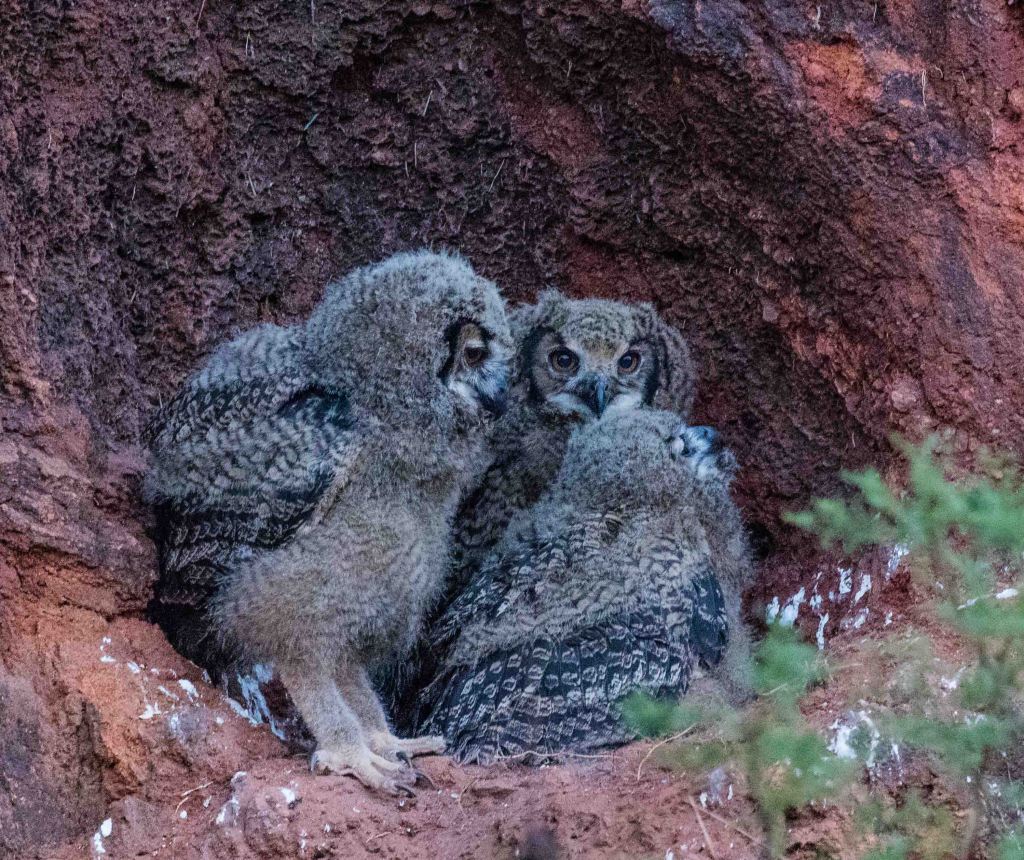
We decided to move on and explore other areas like last time. But we first looked for the parents. The female was nearby on a tree behind the nest. The male however was on his usual perch on the tree branch. He did not seem bothered by our presence.

When we returned post birding in other parts of the area, we saw chicks were trying to sleep.


Cute don’t you think? 😀
Week 6 (3rd and 4th Mar)
We had intended to go together on 3rd Mar. I did not end up going as I was not feeling well. Rahul however went.
The chicks had certainly grown, not just physically but also in character. They were not satisfied with just being in and besides their nest anymore. And why should they be when there was a whole new world to explore around them. So they were doing what any curious child would do; explore 😀 ! Here are some photos of them doing that:


One of the chicks decided to get some rest back at the nest.

The parent was also not far away. Here it is at one of its usual roosting perches:

With my health improving, of course fueled by my desire to the chicks, I made a trip on 4th Mar. When I reached, there were only two chicks that were to be seen. Both were in the nest:

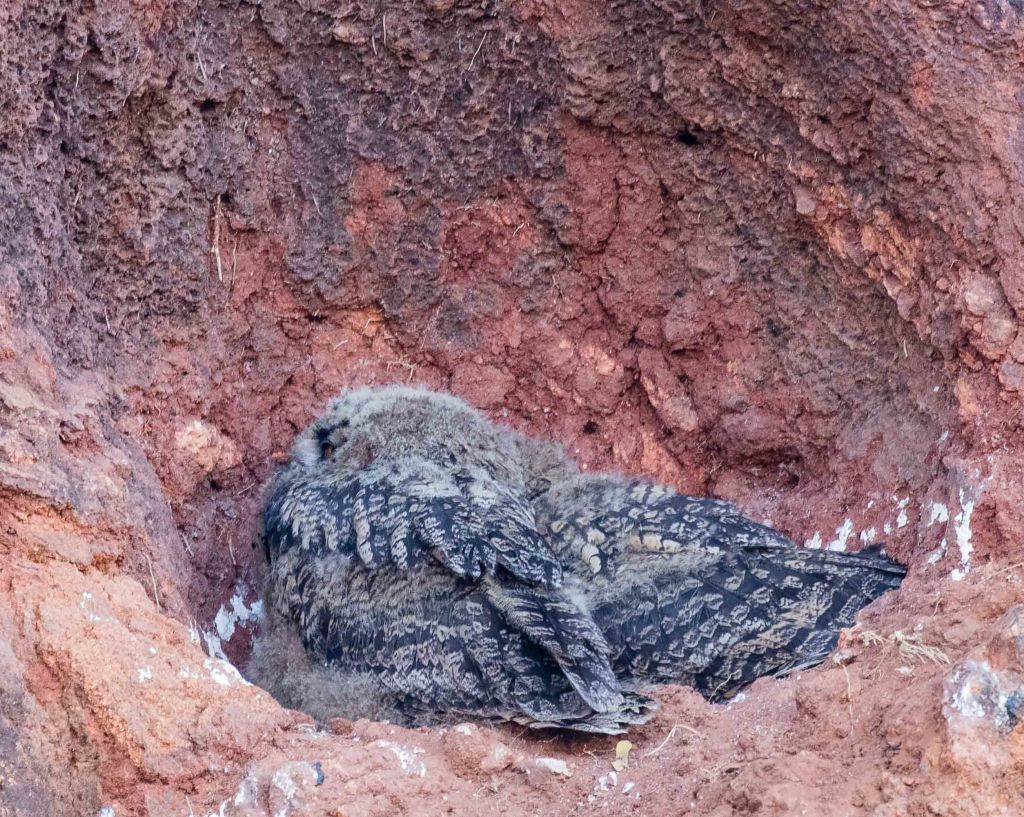
I could not locate the third chick even with some searching. I hoped that it was still alive and well, in fact I was quite positive about it given what Rahul had seen them do the day before.
What however stood for me from the observations in this week was how the chicks were managing to get to almost precarious places on the “wall”. Maybe they were just walking it? They must be having quite the grip and strength to do so. It was fascinating for me.
As always, the male parent was faithfully watching over them from his usual roosting perch.

Week 7 (10th Mar)
In this visit, we observed that the chicks had “given up” on their nest. We suspect that they had become too big to fit it or was just natural for them in their growth journey to be safe outside it. All the three chicks were at different parts of the “wall”, though not far from each other 🙂 . One of them was sitting completely exposed on a rock.
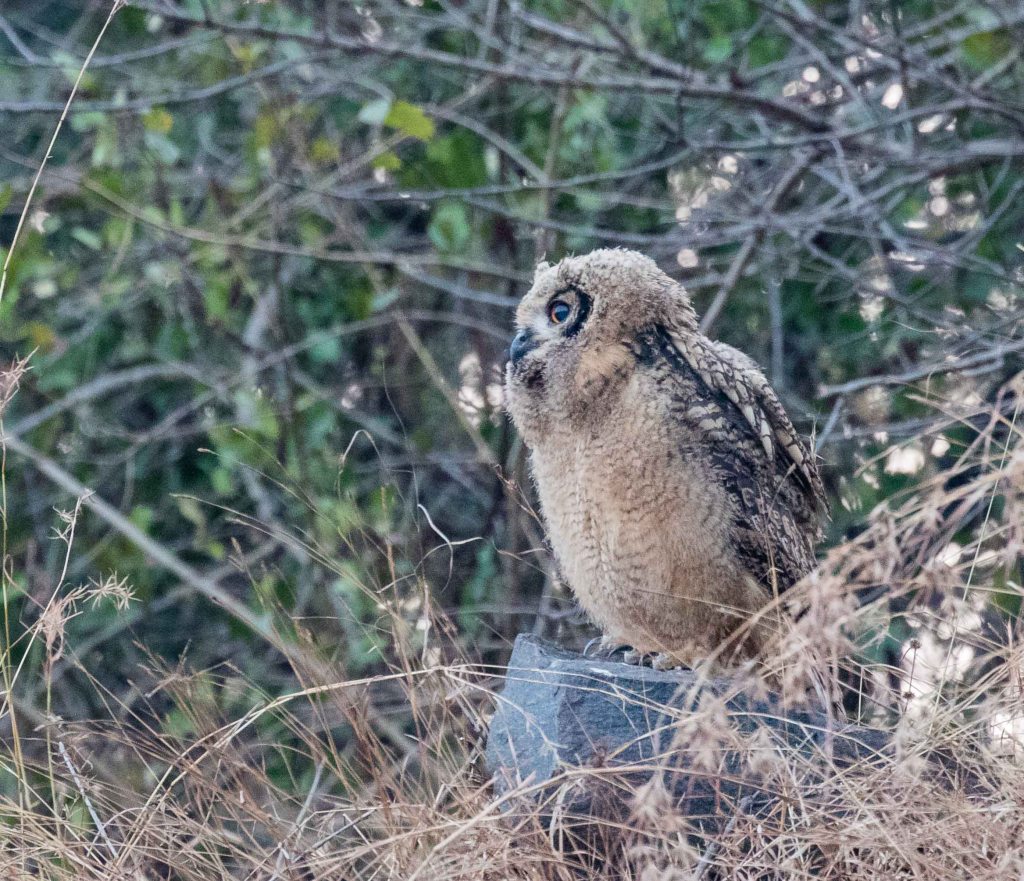

That one was curious about us peering at it through our binoculars and taking photos :-). The other two were less obliging. Here is one of them:
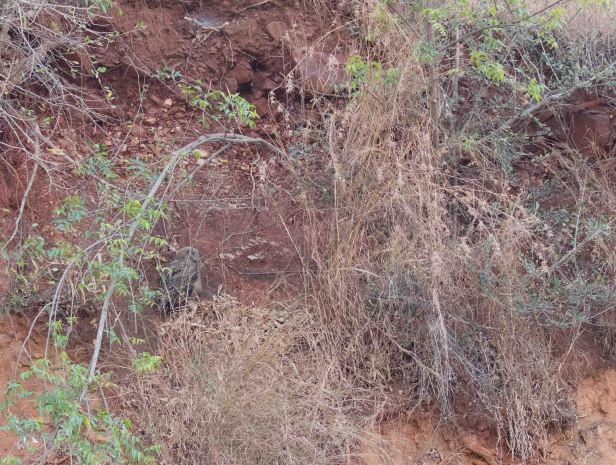
See it? Well, here is a zoomed in view:
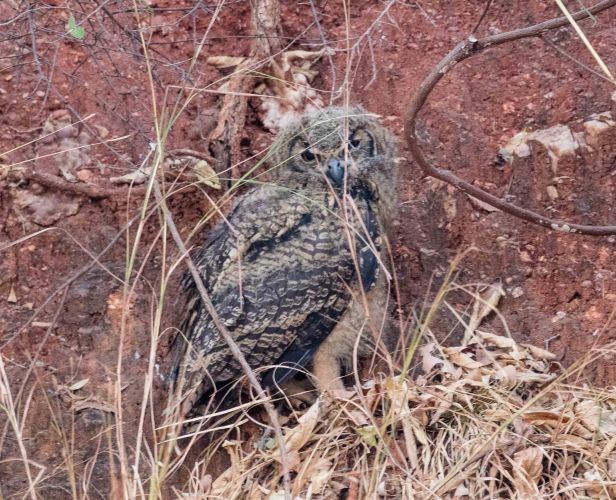
It eventually got bored of us and dozed off.


The other was even better hidden. Here is a zoomed in version of where it was.

Can you see it? I would not be surprised if your answer was a No. It just shows you how well they can blend into their surroundings. Here is a better angle where it is visible:

When I returned to the chick on the top, it was also trying to dose off.

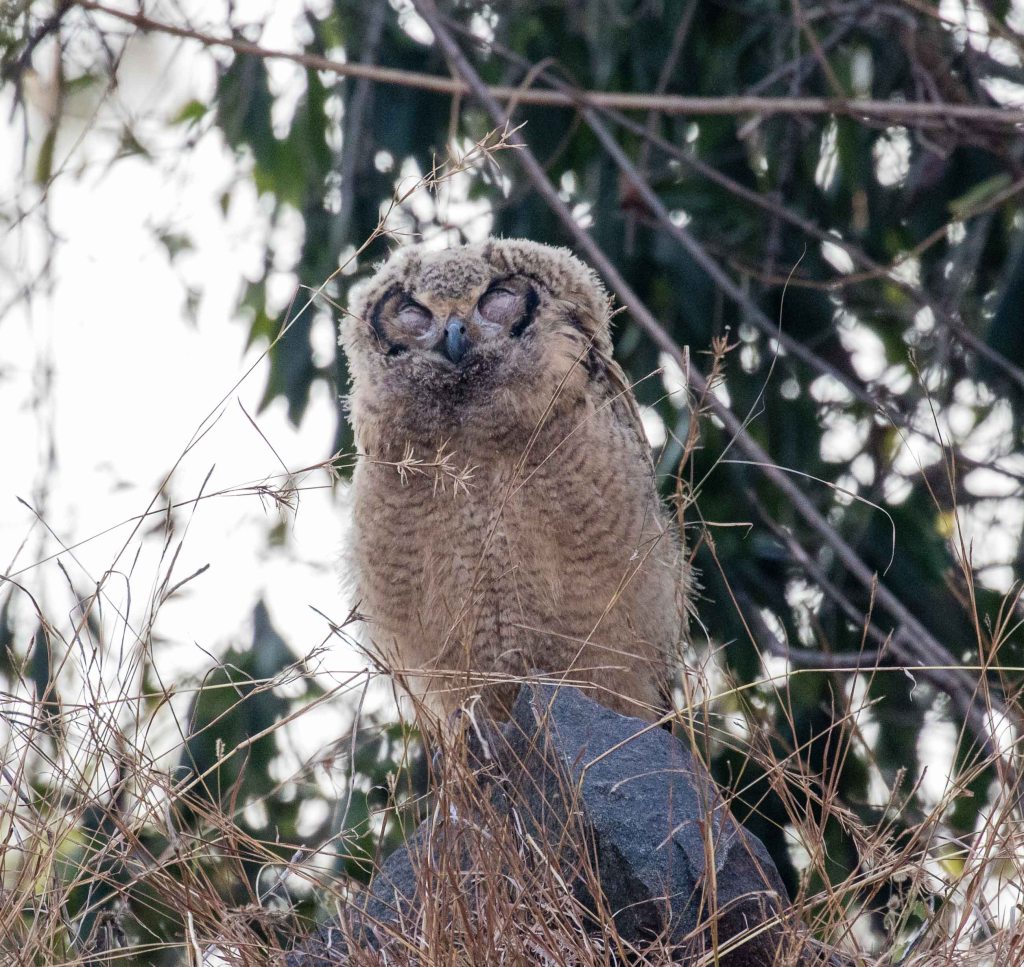
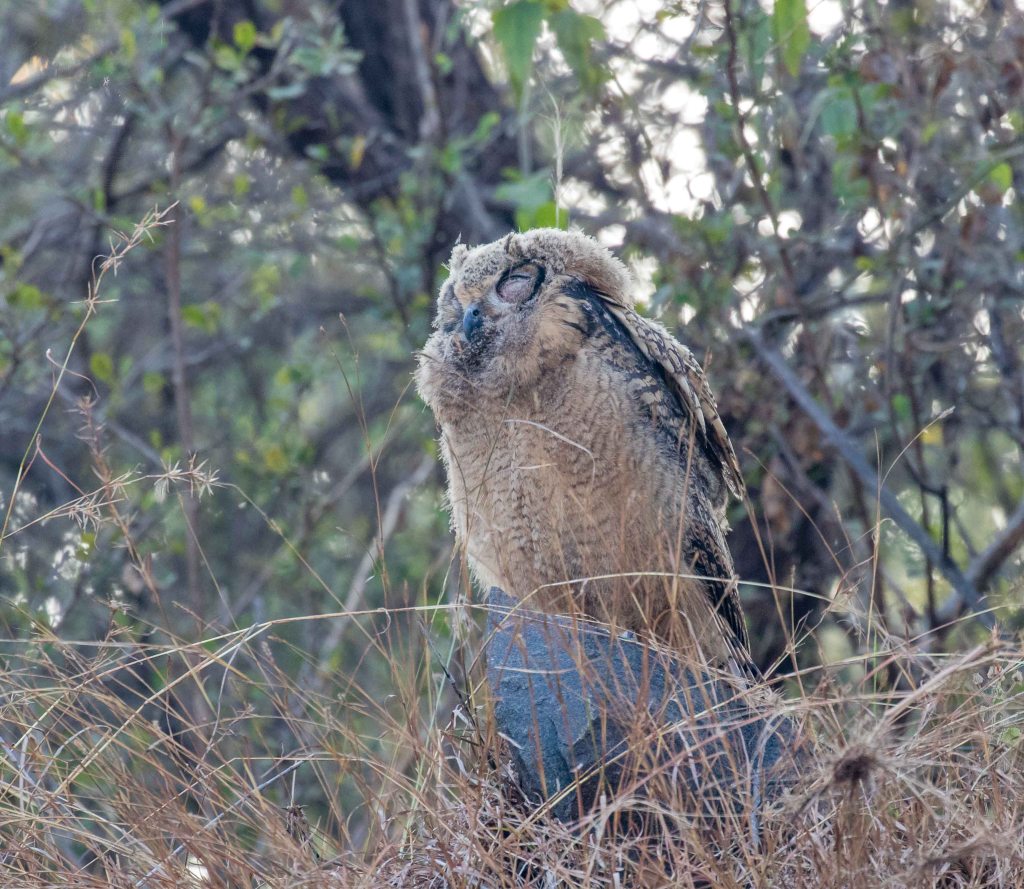
Week 8 (18th Mar)
The chicks were not to be seen in any of their usual “hiding” spots on “their” wall even after a search for several minutes! We wondered what had happened. And as it human nature, it is mostly negative thoughts that come rushing in 😦 . However we were in for a surprise.
We kept hearing something making a short screeching sound. It was new to both of us. We tried to locate its source. Lo and behold, It was one of the chicks! There were two of them that we saw but this time there near a rock atop the wall on the opposite side 😀 !
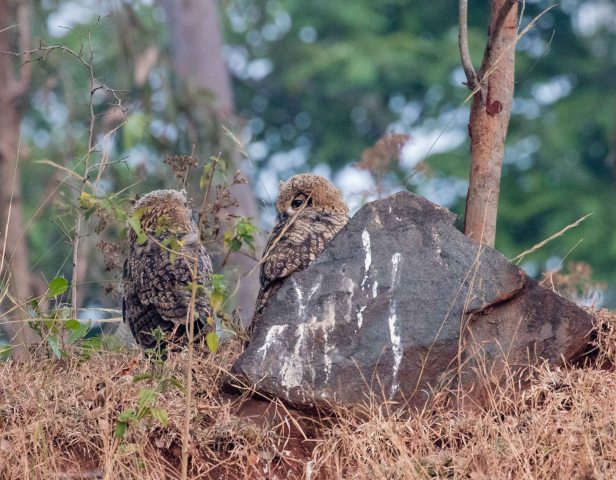
We were clueless on how they might have reached there. It was quite a distance to have just walked! Had they started flying?
The chick that was calling eventually climbed up on top of the rock while its sibling stood beside it.

Now where was the third one, we wondered. We got our answer to this one as well as clues on how they might have got their, just after a few seconds. The one on the ground flew up to a tree branch close by! Wow, they can fly now 😀 . And thankfully we had been able to capture it on video (check out it at the end of the post).
The one that had flown up to the branch decided that it was not the place for it and flew back down in a few seconds. Here is the one perched on the tree branch:
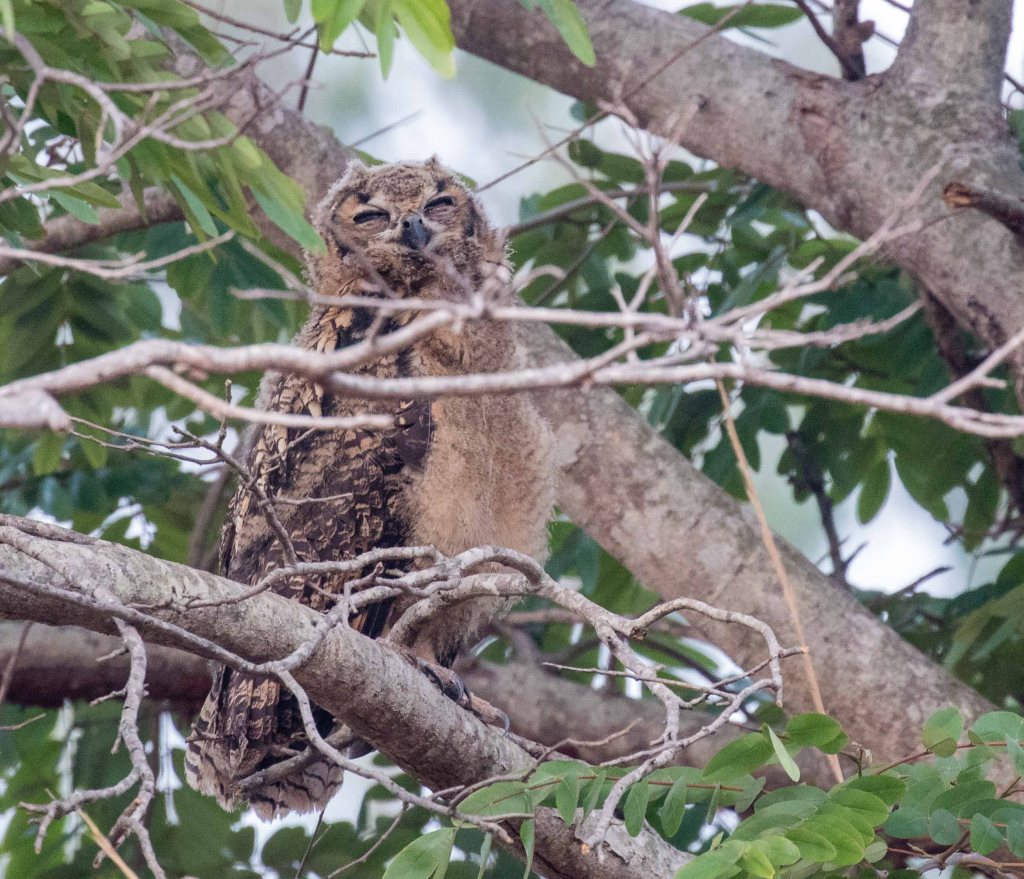


Here is the one on the rock getting curious about us:


Here are the three chicks together:

The two on the ground were busy preening themselves:


The one on the rock was particularly engrossed in it; looks like it was particular about its looks 🙂


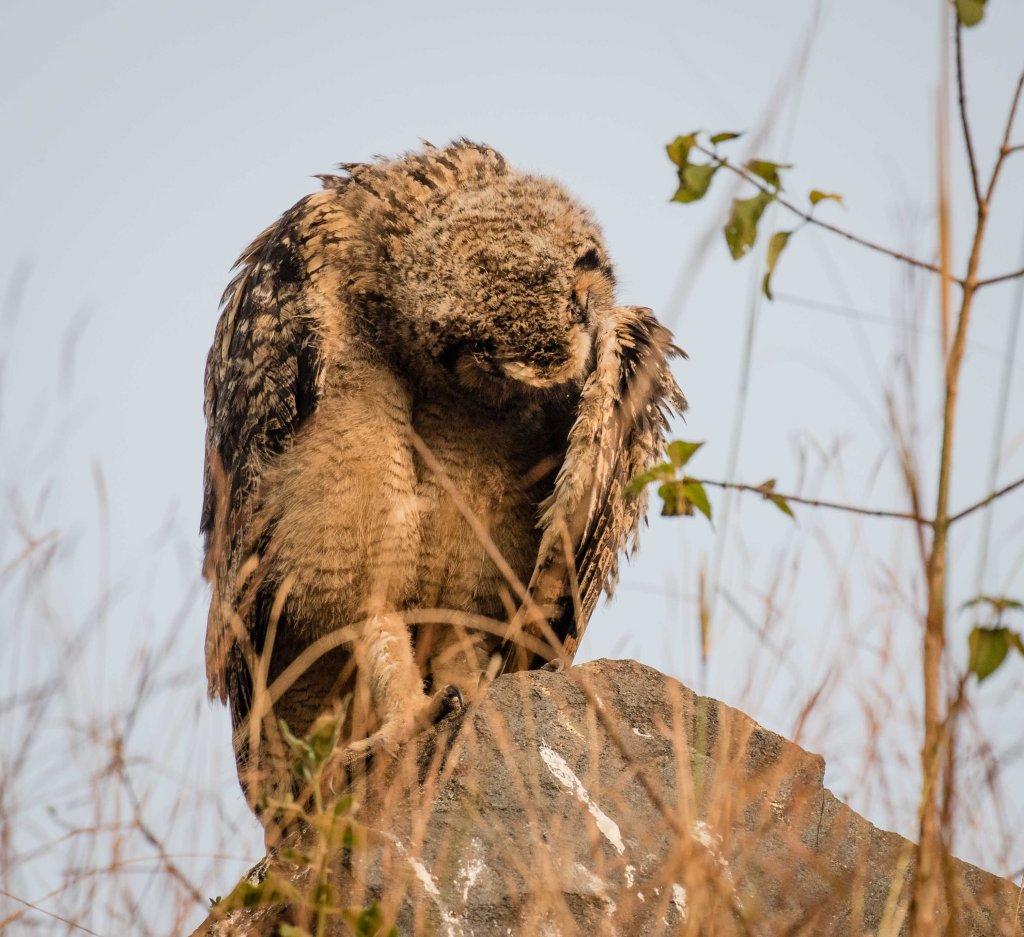
They eventually decided to try and get some sleep, after all it was their “night”.

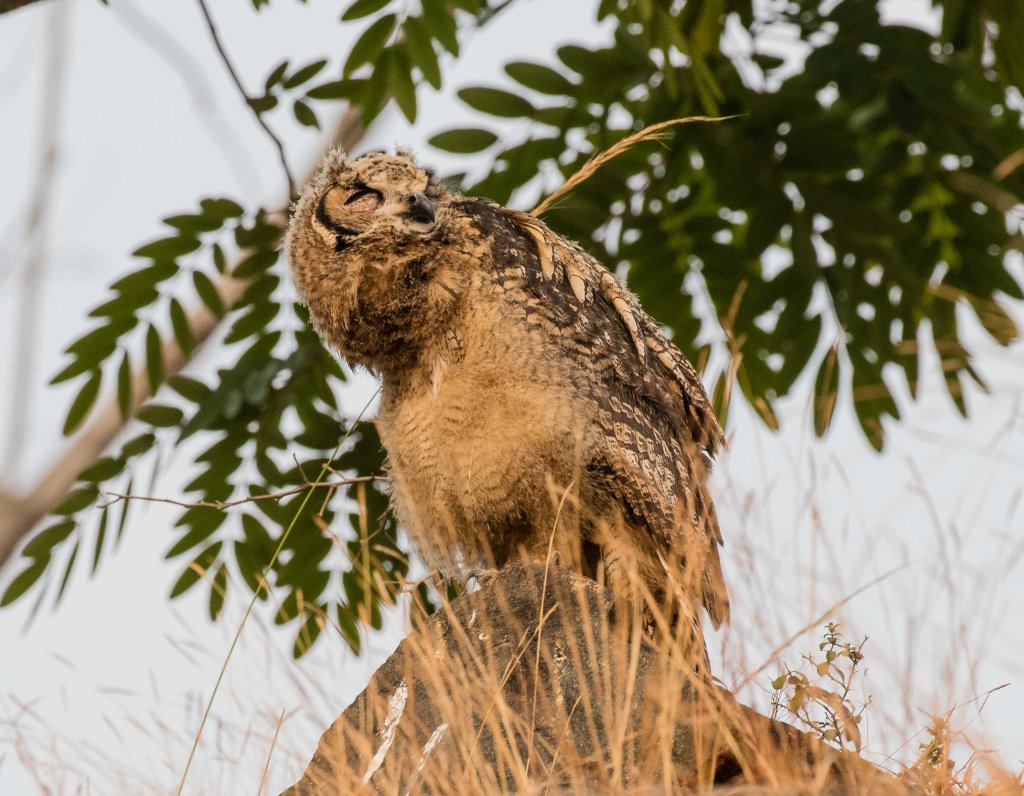
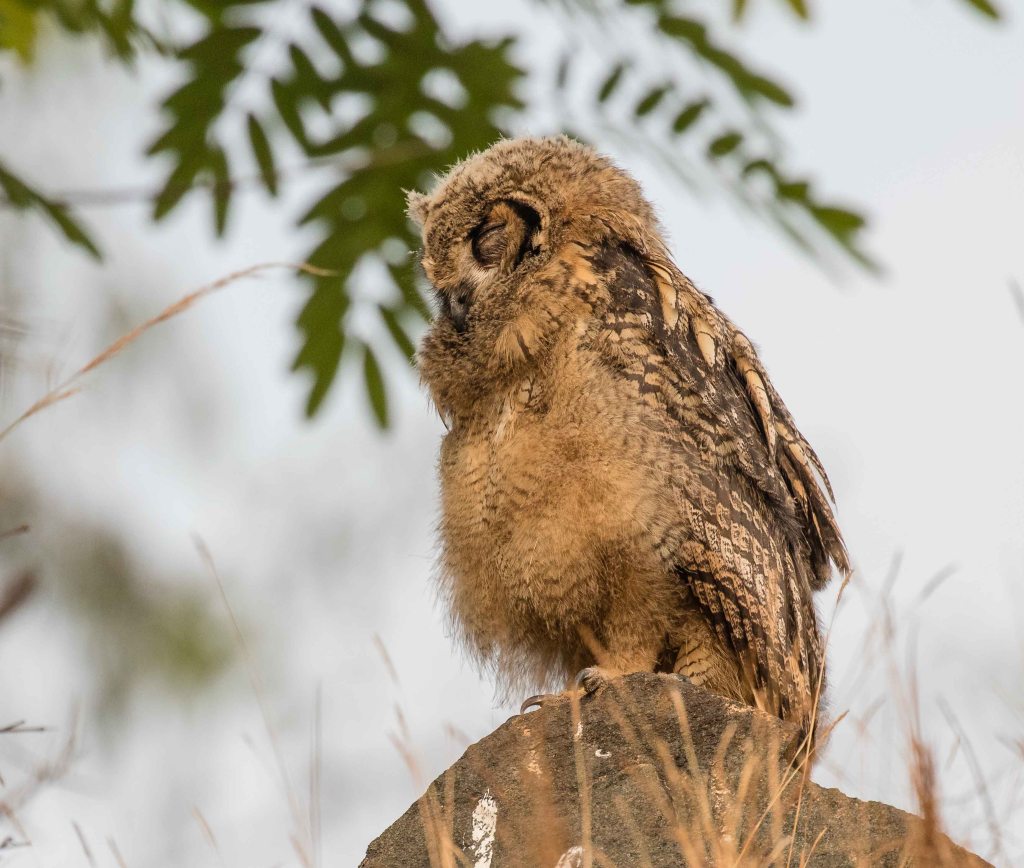
Here are some photos with all three chicks on a tree branch some time later:


Here is a habitat shot of them. There are three chicks and one adult in the photo. Try and locate all four of them.

Spotted all of them? The three chicks are relatively easy. Got the adult? No? How about in the below version?
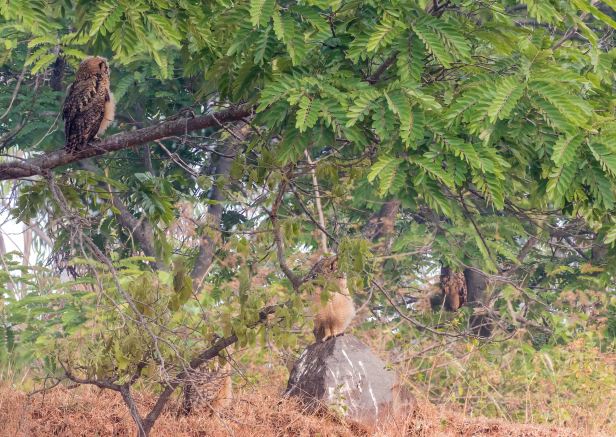
If not yet, then you will need to look harder. I promise you that it is there 🙂 .
Week 9 (24th Mar)
The chicks were back on “their” wall. No guesses on how they might have reached there 🙂 . This time we got to see only two of them. They were both sitting close to each other on the top. Here is one of them:

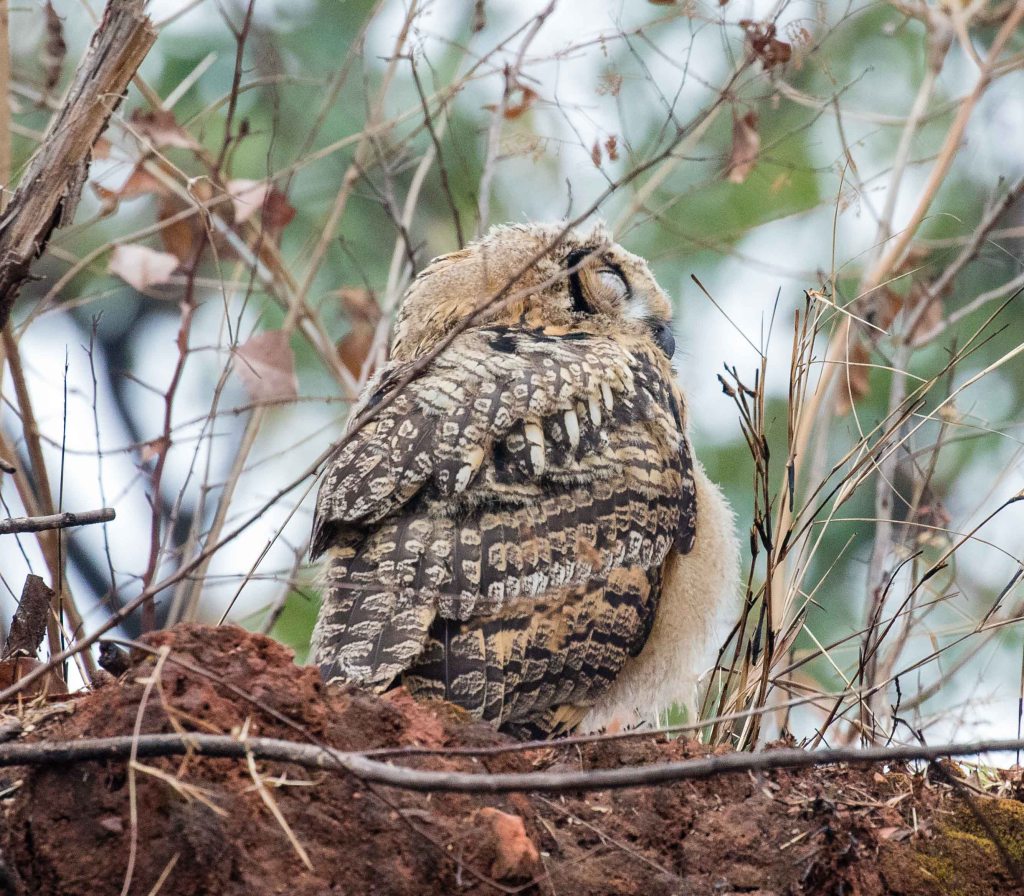

Here is the other one:


One of the adults was also close by, this time on the ground close to the nest:

This was to be our last visit to them in the breeding cycle. We were both to travel together for a birding trip for around 2 weeks from the following week. So we did what we could do; wished all of them the very best and we hoped that we would see them in the future.
Video
Throughout every visit we had taken videos of what we saw. Here is a compilation of them (it includes clips from both Rahul and me). In this you can see almost all the behaviours we observed on the field; the protective behaviour of the parent, being fed, chicks huddled up, being curious, being cute, exploring, preening, short flight and even calling. Do check it.
I have intentional kept the video long so as to show all these behaviours. I have inserted points of specific behaviour to which you can directly jump to, if you wish. You will however need to open the video in YouTube and expand the description to see the time markers.
I have also added captions at the beginning of each week so as to make it easy to identify the period of capture. Hope you enjoy the video.
Other Nesting Observations
Interested in seeing nesting and breeding of another magnificent raptor? Read my blog post on Parenting in Bonelli’s Eagles.
Interested in that of smaller garden birds instead? Check out my blog posts on Travails of Sunbird Breeding and Nesting of Common Tailorbird.
 Mad about Birding and Travel
Fabulous. Absolutely fabulous. I have never read, watched or even heard anything of breeding owls before!
Wow I am thrilled to bits reading this post! I could simply stare at these images forever.
Thank you so much for writing this. While I am insanely jealous, I am also thrilled to bits. Owls, to me are the most fascinating birds. Yet there is still so much to learn about them. This post just allowed me to immerse myself in the captivating lives of these magnificent birds!
I am yet to have the privilege of seeing the Indian Eagle Owl. Waiting for that day! This article has only strengthened my love and favouritism for owls!
Thanks again for the article. I am sure I will be returning to it many times going forward 🙂
LikeLiked by 1 person
Thanks a lot Ishan. Once my post went live, you were one of the first people whom I thought about as you had previously told me about your love for Owls 🙂 .
LikeLike
Amazing documentation Thomas. Nice to see weekly progress and amazing video.
LikeLiked by 1 person
Thank Kumar 🙂
LikeLike
Absolutely majestic birds! I wish to sight these sometime soon 🥲
LikeLiked by 1 person
Yes they definitely are. Your time will definitely come 🙂
LikeLiked by 1 person
WOW! Stunning.
LikeLiked by 1 person
Thanks Cindy!
LikeLike
Wow… Well done!! Wonderful captures!
LikeLiked by 1 person
Thanks Jyothi!
LikeLiked by 1 person
So well chronicled step-by step. Appreciate the effort, time & patience needed to put this together. It will serve me well to remember your ‘capability’ in future 🙂
LikeLiked by 1 person