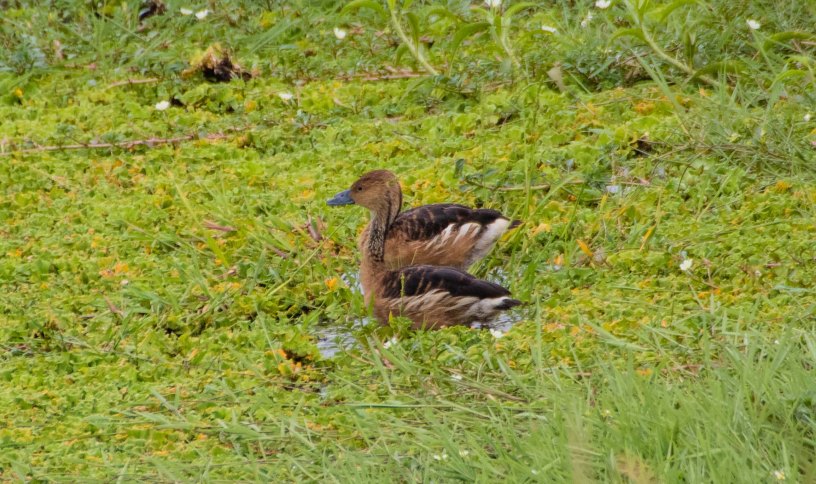
Fulvous Whistling Ducks are uncommon around where I stay. So when we were visiting a place where we had a chance to see them, why would any birder miss the opportunity, right? And that is what we did too 🙂 .
We had gone to Pulicat Lake to see the Lesser Noddy. With that quest having been a great success, though we did go through some tense moments at the start (you can read about that part of the trip here), we were now headed back towards home. We decided to try to see the Fulvous Whistling Ducks, if possible, on the way back. It was a lifer for two of us (Albin and me). Dhanapal spoke to a friend and got recommendations to try for them at the Chembarambakkam lake. This lake was unfamiliar to me. I had heard of the ducks being regularly seen at a different marshland. But that was almost in the city of Chennai and a sizeable amount of deviation from our route back home. This lake was however enroute. So we decided to give it a try.
The lake turned out to be a massive one. It had a road on the periphery where we were at. There was hardly any people around. We had reached around noon and on a weekday. So I do not know if these were the reasons why tit was deserted.
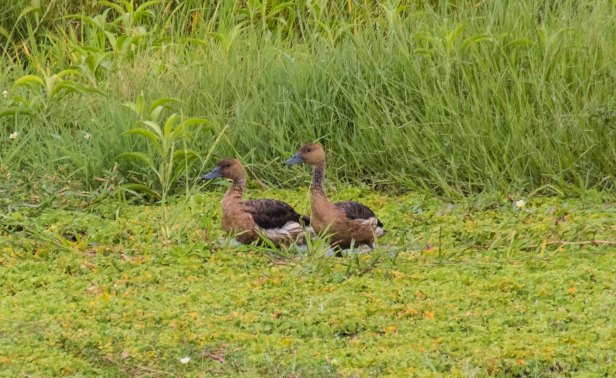
Though it was noon, it was somewhat overcast. We scanned the lake as we slowly went by. Here is the first view of the Fulvous Whistling Ducks that I got.
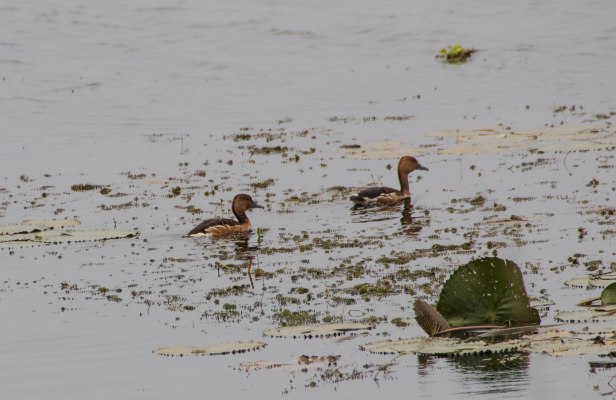
They were quite similar to the more common Lesser Whistling Ducks that we get to see around Bangalore. But the pattern on the neck, head and more prominent white streaks on its sides told them apart. They also had a very different call. Eventually we got to see quite a few of them doing various things :-).
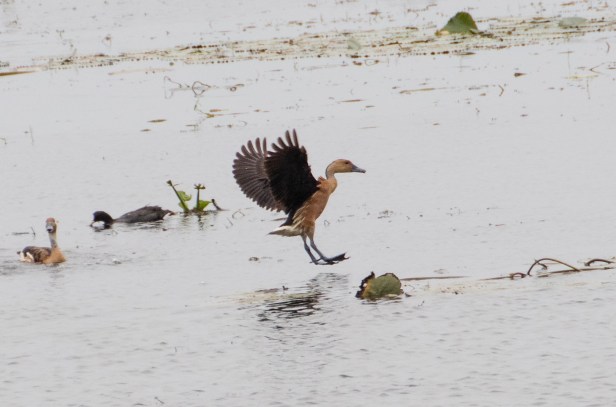
Here is one flying in to land:


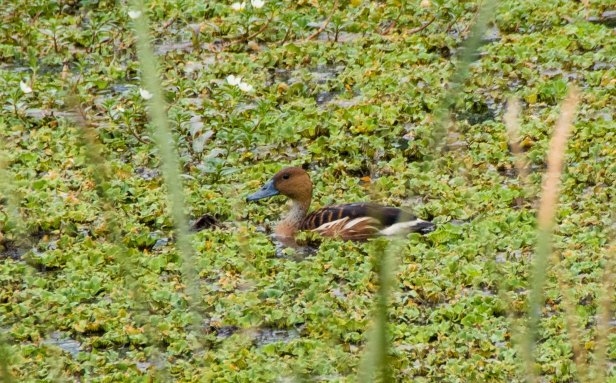
We saw a number of them busy preening themselves. Check out the video further down in the post to see them doing so. Here are some photos of them in between their preening:


All in all we got very good sightings of the ducks at the lake. We were all glad that we had stopped over at the lake 🙂 .
Video
Here is a short video that I compiled together on some of their behaviour. You can also briefly hear their typical call when one of them lands in the water.
 Mad about Birding and Travel
Lovely captures!!
LikeLiked by 1 person
Thanks Jyothi!
LikeLike
Whistling Ducks are not found where I am either but I have seen them along the Gulf Coast of the US. I like your captures.
LikeLiked by 1 person
They have an interesting call, which I think has contributed to their common name.
LikeLike