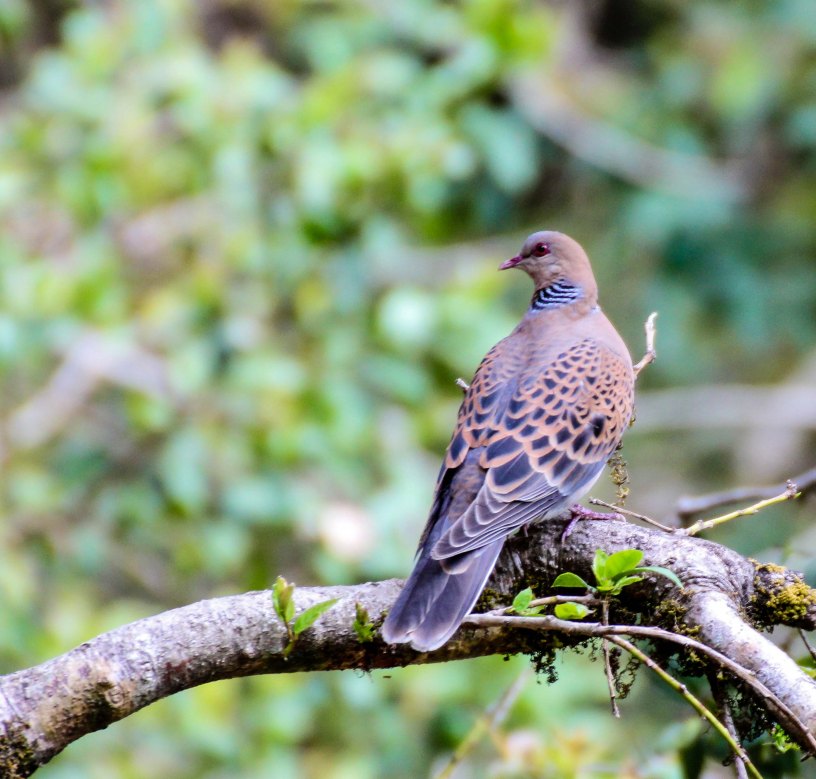
Binsar Wildlife Sanctuary; it was here that I had my first experience of birding in the state of Uttarakhand in India. It made me fall in love with birding around the Himalayas. So here is my post on the birds I saw around Binsar.
My family and I spent roughly three days in the Binsar Wildlife Sanctuary. We had stayed at the KMVN Tourist Rest House. The best part was that it was located inside the sanctuary.
The first bird that greeted us at the entrance of the sanctuary was the Blue Whistling-Thrush. It is a bird that is found almost anywhere you go. Many people tend to dismiss it as it is very common. It is a beautiful bird, especially if you get to see it in the right light.
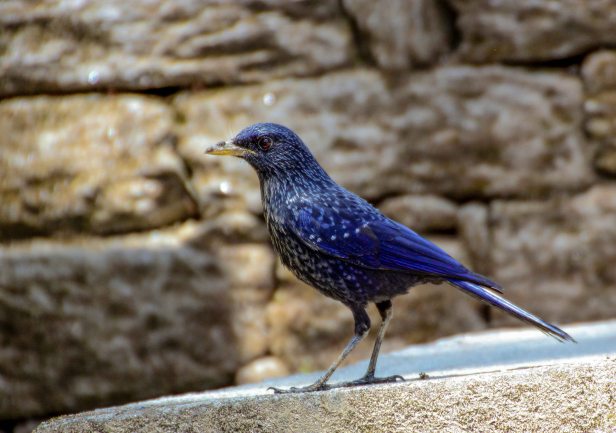
Blue Whistling-Thrush
The one I saw busy collecting nesting material; must have been building its nest close by.
Once we finished the check-in formalities at the Rest House, we were immediately out to walk and explore the surroundings. The first bird that catch my eye was the shiny bright Verditer Flycatcher.
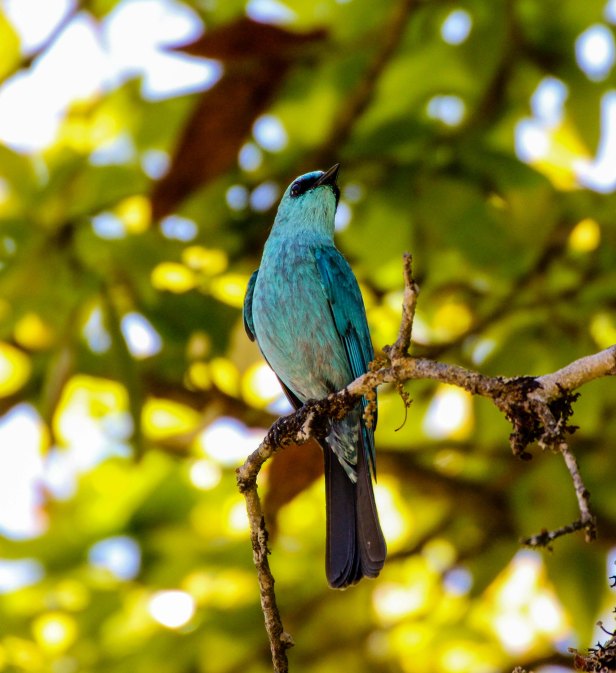
Verditer Flycatcher
It was April when we were visiting. These birds, like many others who had migrated further south of India during the winter, had returned to these parts for Spring, They would breed soon. So it was a great time to see such birds in their breeding plumage.
One of the most common birds that is found here was the Oriental Turtle Dove; again a bird that is very briefly makes its appearance during winter down south but one has to be lucky to see it.
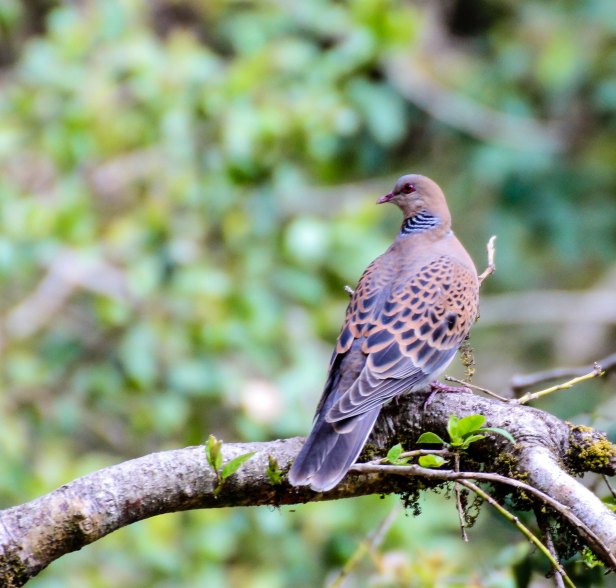
Oriental Turtle-Dove
There was a sudden flutter of birds as I walked. Hmmm, something surely had happened. Investigating the area I saw a Accipiter sitting down below, almost hidden by the trees; a Besra juvenile.
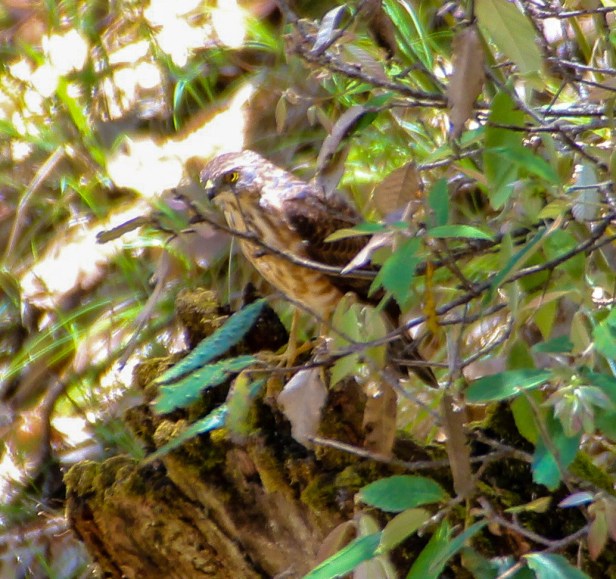
Besra
Another common bird was the Eurasian Jay; an elegant looking bird to me 🙂 .
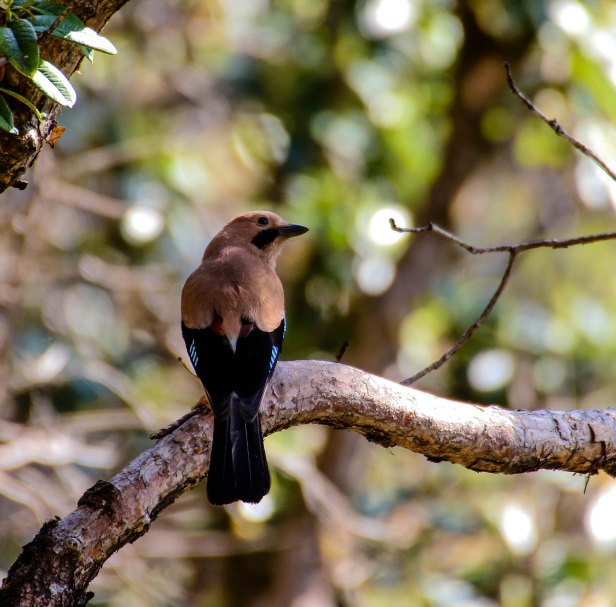
Eurasian Jay
I got to see several species of Tits. These included the Black-throated Tit, Cinerous Tit, Himalayan Black-lored Tit, Coal Tit and Green-backed Tit.

Coal Tit 
Green-backed Tit
Two of the most intriguing bird species for me, in terms of their behaviour, were the Treecreeper and the Nuthatch. The ones I saw here were the Bar-tailed Treecreeper and the White-tailed Nuthatch.

Bar-tailed Creeper 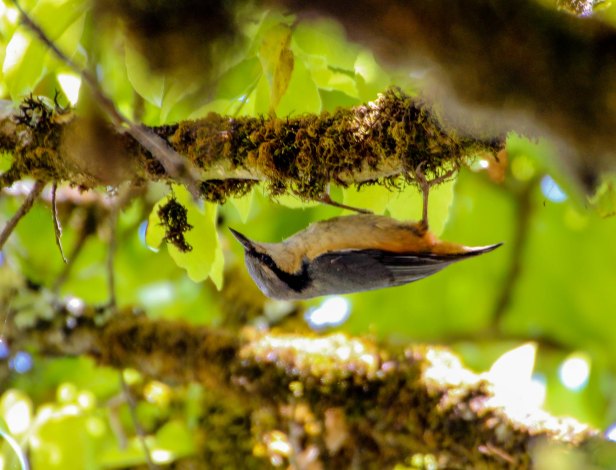
White-tailed Nuthatch
It was fun to see the winding around the trunk and the branches in search of food; the Treecreeper usually going up and the Nuthatch usually going down 😀 .
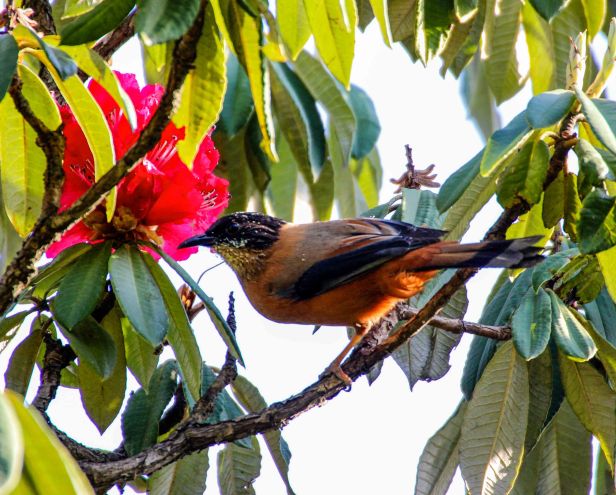
A common bird that makes it presence felt by its call, is the Rufous Sibia. When we visited, the Rhododendrons were flowering. So we would almost invariably see a Rufous Sibia putting its head into one. Here is one that you can with its faced covered with pollen. Well the trees don’t mind I think 🙂 .
There were several Warblers around, all of course fleeting glances. The only ones I managed to photograph were the ones below:

Hume’s Warbler 
Grey-hooded Warbler
They were at times given the company of the Green Shrike-Babbler.

Green Shrike-Babbler
Binsar had plenty of trees. Where there are trees, there has to be Woodpeckers. And there were. I got to see two of them; the Rufous-bellied Woodpecker and the Brown-fronted Woodpecker. Both were busy knocking away on the tree branches in search of food.

Rufous-bellied Woodpecker 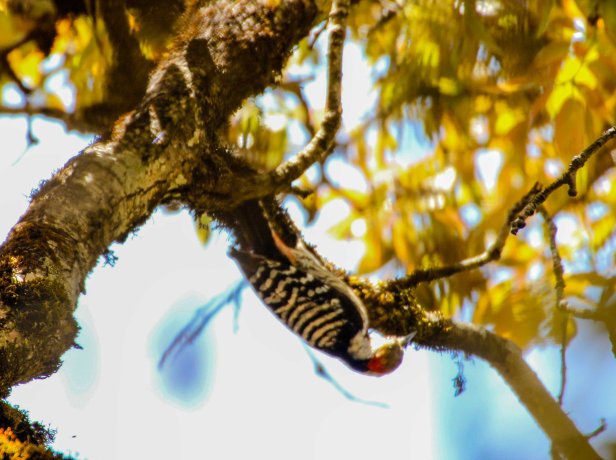
Brown-fronted Woodpecker
One of the most vocal birds were the White-throated Laughingthrushes. They were always in a flock. Several times I saw them sitting on the branch and grooming each other; amusing to watch.

White-throated Laughingthrush
Speaking of Thrushes, the Chestnut-bellied Rock-Thrush is a bird I saw several times in my walks. So expect to see one. The Tickell’s Thrush was the more infrequent one.

Chestnut-bellied Rock-Thrush
The Flycatchers were also fun to watch, with their typical habit of looking around for few times, then suddenly take off and return back to its perch. The ones I saw were the Grey-headed Canary-Flycatcher and the Ultramarine Flycatchers; both having returned to their summer grounds.

Grey-headed Canary-Flycatcher 
Ultramarine Flycatcher
Don’t forget to look up into the sky at times. You may get to see raptors. By doing so, I got to see the Black Eagle as well as the Himalayan Griffon.

Early morning are a great time to bird. Look at the tree canopy. You are sure to spot birds busily going about their business. Two birds that stood out owing to their bright colours were the Dark-breasted Rosefinch and the Long-tailed Minivet.
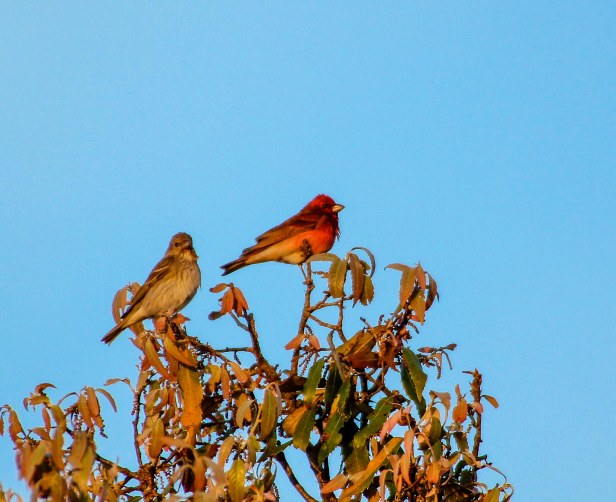
Dark-breasted Rosefinch 
Long-tailed Minivet (M)
Yet another fairly common bird was the Grey-winged Blackbird. They can be often seen going through the leaf litter on the forest floor.
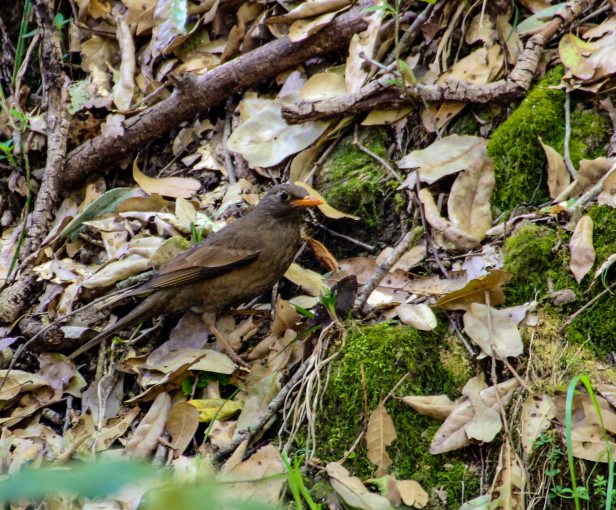
Grey-winged Blackbird (F)
Suggestions
April is a great time to visit these parts. The birds which had gone off to their winters would have returned. They will be in their breeding plumage, nest building as well as singing a lot. For e.g. during my visit, almost everywhere I went, I saw the Grey-hooded Warbler busy collecting nesting material and singing a lot. Weather is also brilliant. Very pleasant in the day times and chilly in the night.
Don’t just look at the birds. Make sure you enjoy the trails; walk around and enjoy the trees, the serenity, the fresh air. Look out for the mammals as well. You may see Deer and the shy Yellow-throated Martens if you are lucky.
For birding guides, I had not booked anyone in advance. I walked over to the junction in front of the KMVN Rest House early in the morning. There were a couple of licensed guides there. You can hire them for a couple hours. They know the trails. So it was good to get a good sense of the place as well. We loved the walk that we ended up taking with him.
There are several places to stay, including luxury resorts. However I would still prefer to stay at the KMVN Rest House in the Sanctuary itself. The facilities were pretty basic; but the location, the views and the setting in the forest was unbeatable. Folks who were staying in resorts outside the sanctuary would come to the viewing area at the KMVN Rest House in the mornings as it had the best ones to the Himalayan range.
To reach the place, we took the train Kathgodam. From there we went by car all the way to the Binsar Wildlife Sanctuary.
 Mad about Birding and Travel
I love ‘birding’ in your blogs!! You do all the hard work & I get to appreciate it at leisure. Definitely works for me!
LikeLiked by 1 person
Awesome! I have Binsar in mind and your post does add fuel to the fire 🙂 Fantastic captures. I agree the KMVN has a brilliant location (most of these MVNs do).
So have you started going for birding to nearby locations etc?
I had some fab sightings from my friend’s hill home around Pangoot. ….. and I can see that I had seen beautiful birds when I had gone to Sattal around a decade ago. At that time I was not into bird watching and did not have the right gears. I am looking through my archive and loving it
LikeLiked by 1 person
Yes, you must do a trip to Binsar :-).
Birding trips have been pretty limited this year owing to Covid. The only outstation trip has been the one to Sattal and Pangoot back in Mar. But then the lockdowns opened my eyes to the world of spiders and insects. I do not need to go far from home for that 🙂 . They can be found around my garden itself. A vast and wondrous world to explore.
This new world has encouraged me to start a new blog dedicated to their world,
Check it out when you get the time.
LikeLike
As always, I’m surprised by the variety you manage to locate within a single location. India is truly a birder’s paradise.
LikeLiked by 1 person
Thanks Henry. Yes, we have been blessed with some rich biodiversity in these parts of the world 🙂
LikeLiked by 1 person
Wow.. great captures!!
LikeLiked by 1 person
Thanks Jyothi!
LikeLike