
Borneo is the third largest island in the world. The island of Borneo is politically divided among three countries; Indonesia, Malaysia and Brunei. Being a very large island and holding some of the world’s oldest rainforests it holds a good number of endemic species. So birding in Borneo is high on the list for many birders. It certainly was for me when I was based in Kuala Lumpur for a year.
My trip to Borneo came towards the end of June in 2017. The trip was for 4 days to the Malaysian state of Sabah in Borneo. It was a duration not sufficient to cover all the major hotspots. But that is all I had with me. So I chose to cover two spots; Mount Kinabalu and Sepilok. This would give a chance to cover some montane species as well as some of the lowland species.
I caught an early morning flight out from Kuala Lumpur to Kota Kinabalu. The approach to the Kota Kinabalu offered some fantastic view of the island coast with its blue waters. Here is a short video taken from inside the plane on my phone:
Upon arrival at Kota Kinabalu I went through immigration (yes, all visitors from mainland have to undergo it) and exited the airport. I had engaged the services of the local birding guide Andrew Siani for the entire trip. Andrew met at the airport and soon we were on our way to Mount Kinabalu in his 4WD vehicle.
Mount Kinabalu Park
It was a good 2.5 hours drive to the Kinabalu Park gates from the Kota Kinabalu airport. We reached a a bit before noon. We wanted to spend the whole afternoon birding. So we decided to first grab lunch at the restaurant opposite the park gates before we got into the park. Here is the view of the Kinabalu Park entrance from the restaurant.
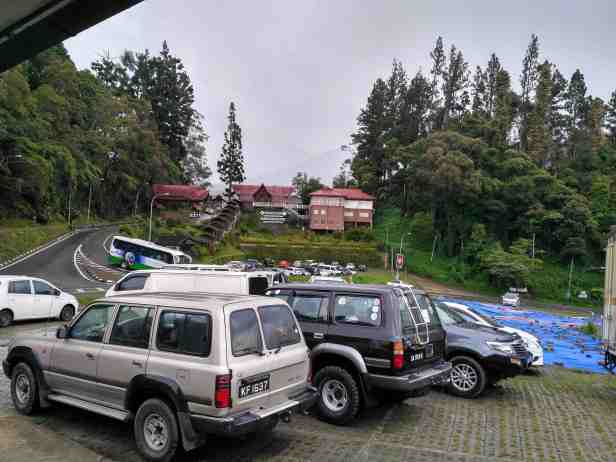
It was an overcast day. It even started to drizzle when we were having our lunch. The weather certainly was not looking favourable for birding. But I guess we had no choice but to try our luck. Well, it rained heavily for a significant part of the afternoon session. So much of the time was spent waiting under a shelter. But it was not a completely washed out. Here are some of the new birds that I got to see in the afternoon session:


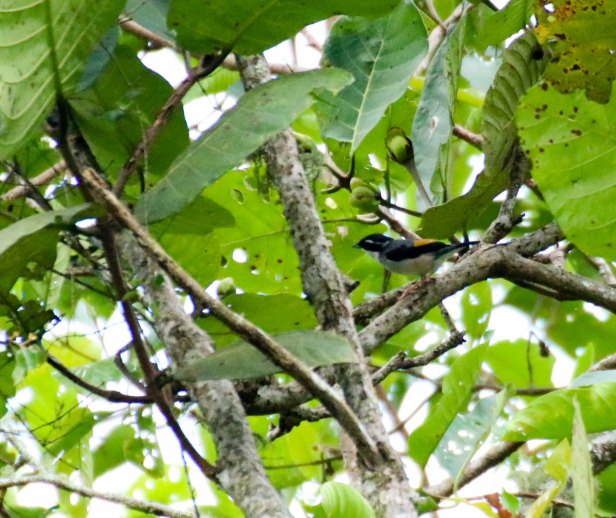
We were to going to spend the whole first half of the second day again at the Kinabalu Park. We started at dawn the next day. The hotel staff had organised a breakfast spread early on. So we could fill up our tummies before we left for the park. The session turned out very productive with no rain encountered at all. Here are some of the birds from the session.


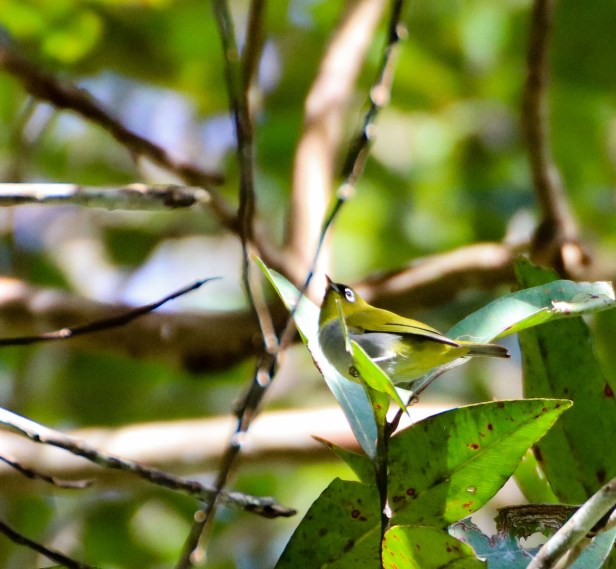


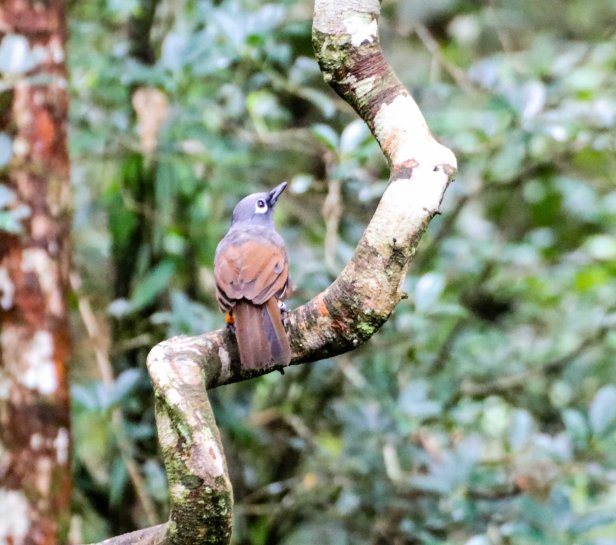

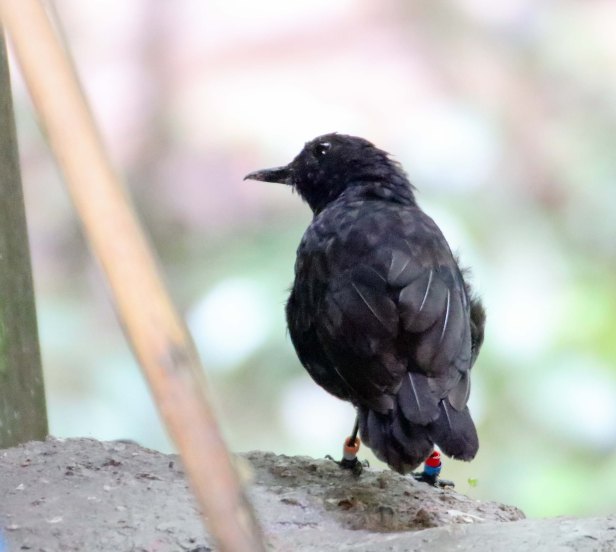

In the afternoon it was time to drive to Sepilok. The drive took us around 4 hours. It had been a good decision to drive to Sepilok instead of catching a flight as it saved us time as well as gave me two new birds, the White-fronted Falconet and the White-breasted Woodswallow.


Sepilok – Rainforest Discovery Centre
This was going to be our place of exploration for the two days. We did an early start reaching the gate of the centre by 5:50AM. Well staying at very close to it helps 🙂 . I just loved the place. It has broadly two sections; one section having a canopy walk over the rainforest
and the other section offering various trails into the rainforest
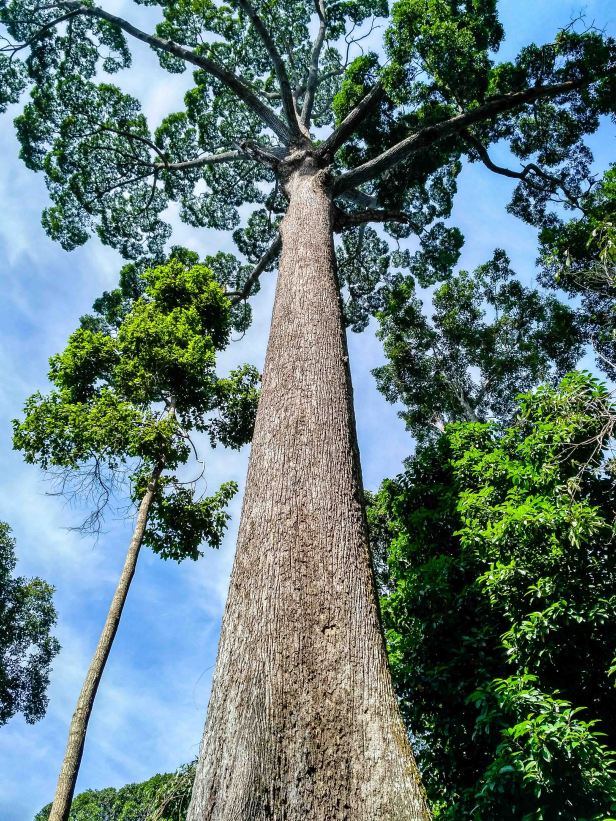
And boy, were some of the tree tall!
We spend almost the whole day walking on the various trails as well as the canopy walkway and birding; except for the breaks we took for breakfast, lunch and evening tea. That is the only way to go about it. And it turned out to be a very fruitful day. Here are some of the birds that I got to see, most of which were new to me:


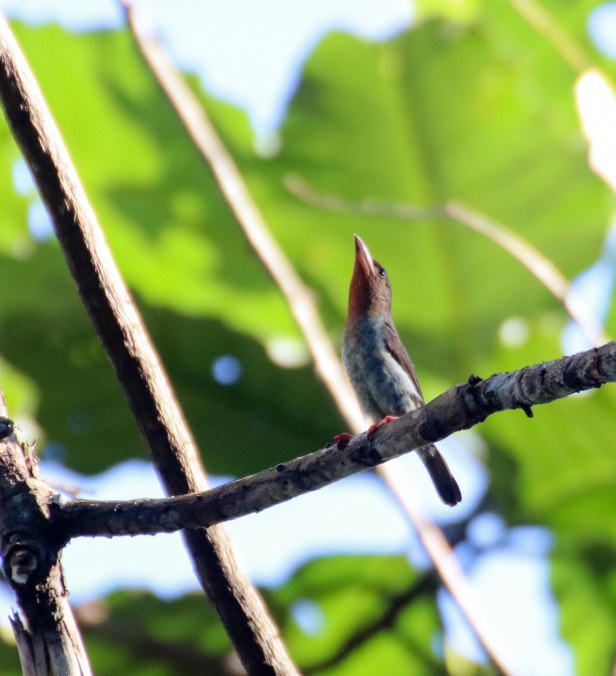


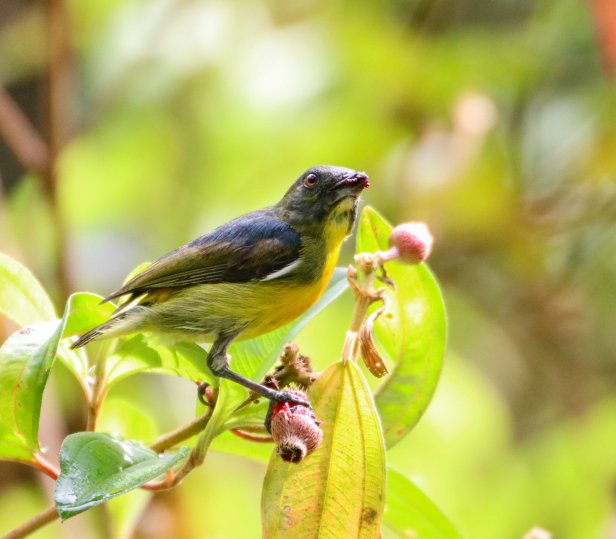
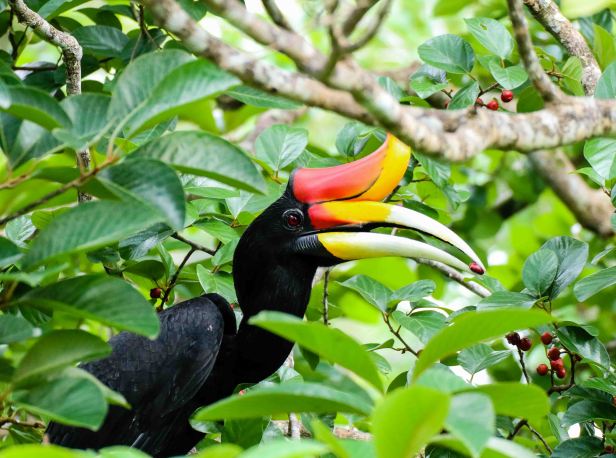

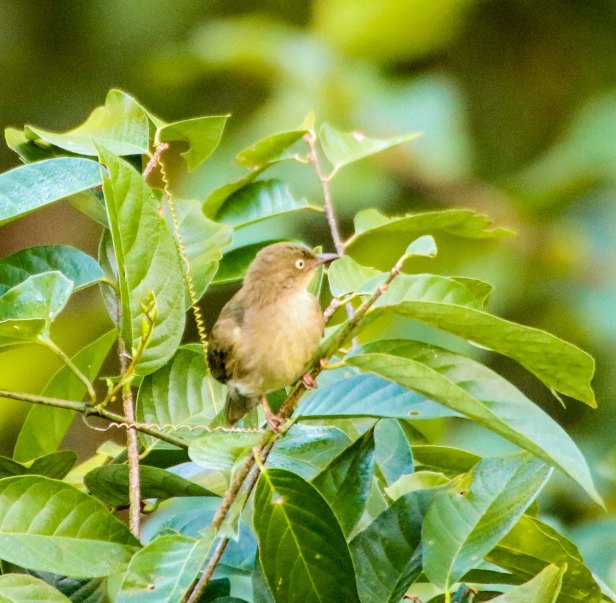
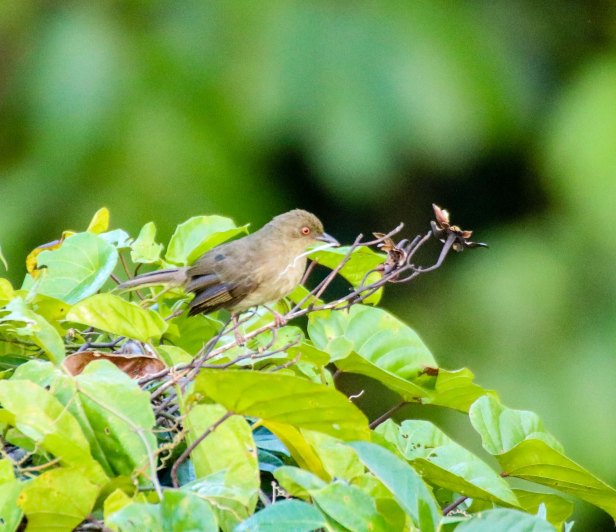
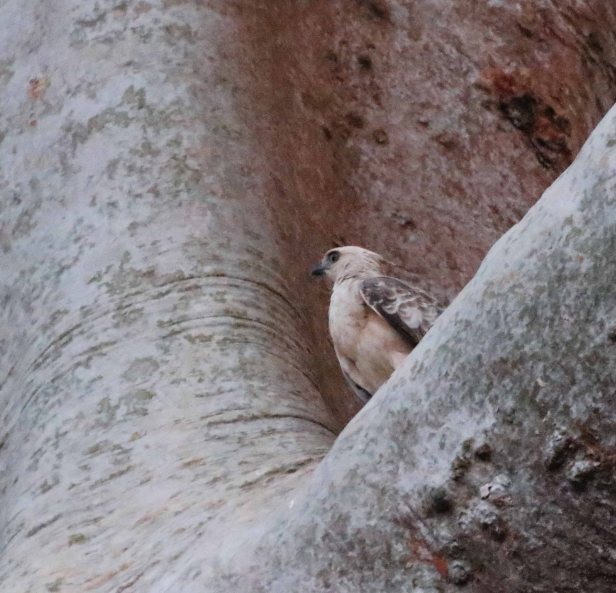
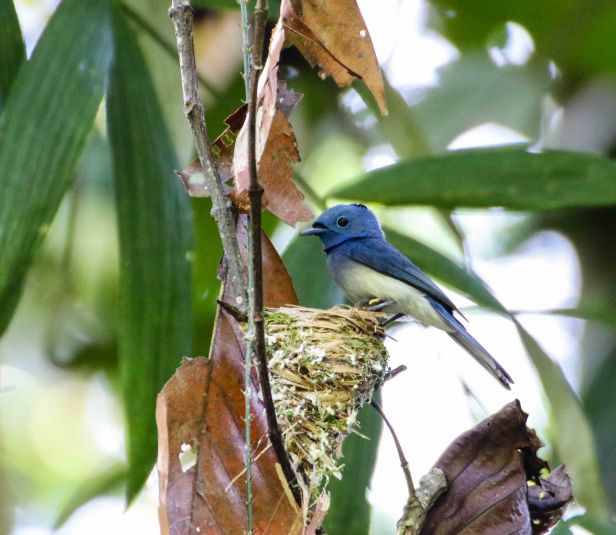
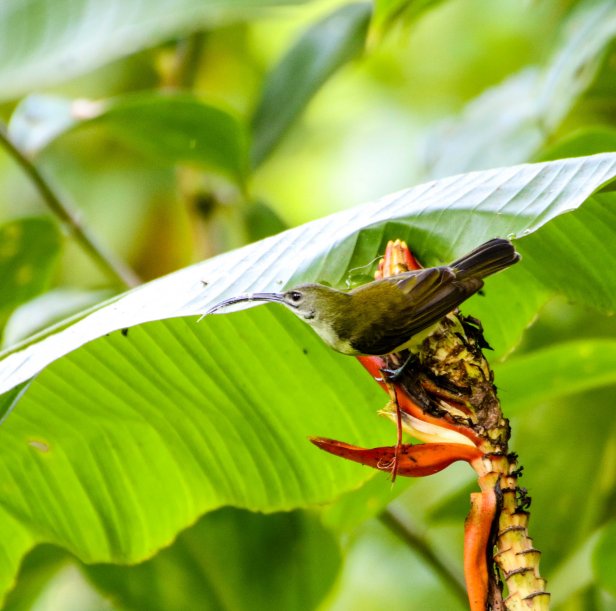
The next day we followed a similar routine. Here are some of other birds that I got to see then:


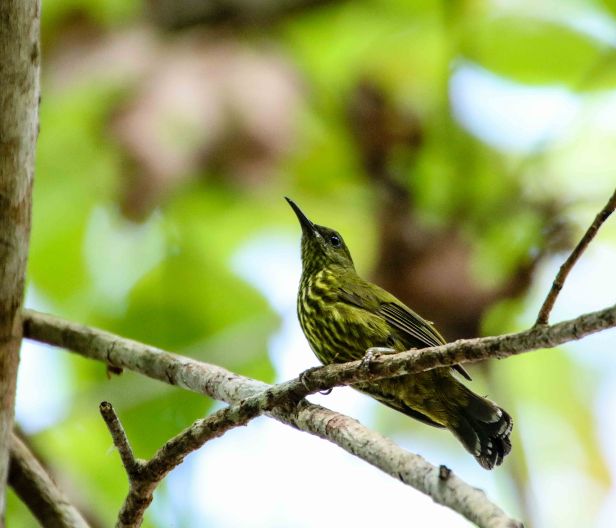


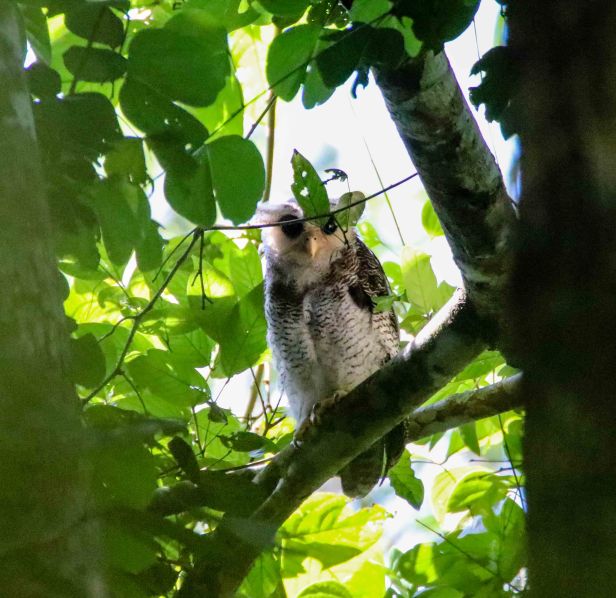
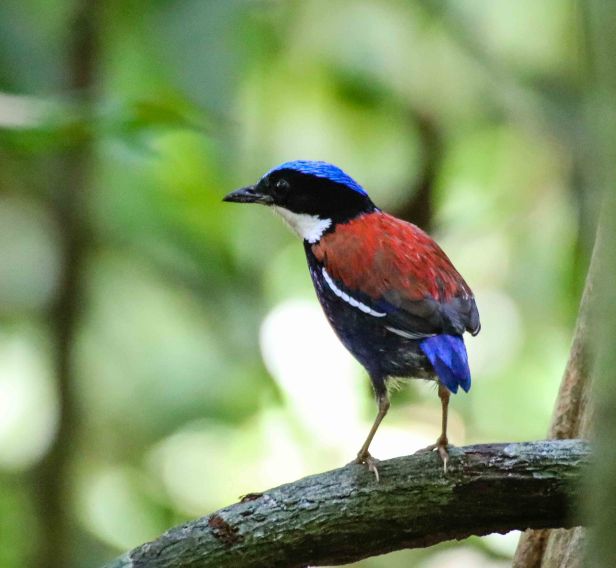
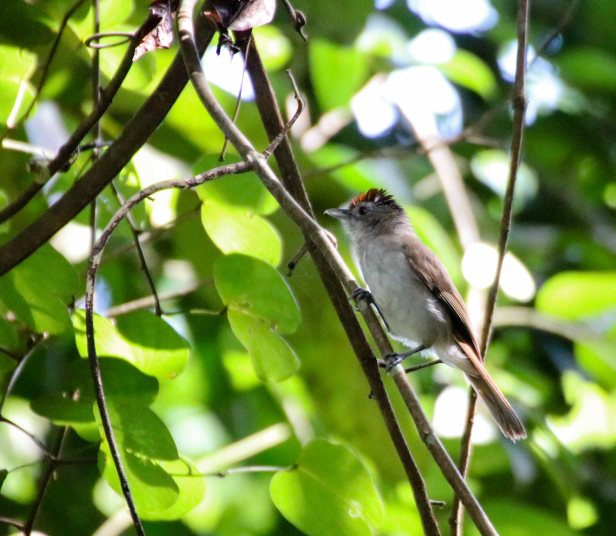



By evening it was time to catch my flight back to Kuala Lumpur. Andrew dropped me at the Sandakan airport where we bid our goodbye.
So did the birding trip to Borneo meet my expectations? It certainly did. The variety of birds was just spectacular. And I had only been to a couple of the hotspots! The place obviously warrants a much longer trip to do justice, something I hope I will be able to do in the future.
Birding in Peninsular Malaysia has also been extremely rewarding for me. You can read of the various hotspots and the associated information in my post here.
Bird Checklist
Here are the birds that I had seen during the trip:
| 1 | Oriental Darter |
| 2 | Crested Serpent-Eagle |
| 3 | Wallace’s Hawk-Eagle |
| 4 | Rufous-bellied Eagle |
| 5 | Crested Goshawk |
| 6 | Spotted Dove |
| 7 | Zebra Dove |
| 8 | Little Green-Pigeon |
| 9 | Pink-necked Pigeon |
| 10 | Green Imperial-Pigeon |
| 11 | Greater Coucal |
| 12 | Raffles’s Malkoha |
| 13 | Chestnut-breasted Malkoha |
| 14 | Barred Eagle-Owl |
| 15 | Silver-rumped Needletail |
| 16 | Bornean Swiftlet |
| 17 | Plume-toed Swift (Andaman Glossy Swiftlet) |
| 18 | White-nest Swiftlet (Edible-nest Swiftlet) |
| 19 | Germain’s Swiftlet |
| 20 | Asian Palm-Swift |
| 21 | Grey-rumped Treeswift |
| 22 | Rhinoceros Hornbill |
| 23 | Black Hornbill |
| 24 | Rufous-backed Dwarf-Kingfisher |
| 25 | Collared Kingfisher |
| 26 | Blue-throated Bee-eater |
| 27 | Oriental Dollarbird |
| 28 | Brown Barbet |
| 29 | Blue-eared Barbet |
| 30 | Golden-naped Barbet |
| 31 | White-bellied Woodpecker (Great Black Woodpecker) |
| 32 | Banded Woodpecker |
| 33 | Checker-throated Woodpecker |
| 34 | Rufous Woodpecker |
| 35 | Buff-rumped Woodpecker |
| 36 | Maroon Woodpecker |
| 37 | White-fronted Falconet |
| 38 | Long-tailed Parakeet |
| 39 | Black-and-red Broadbill |
| 40 | Black-and-yellow Broadbill |
| 41 | Black-crowned Pitta |
| 42 | Blue-headed Pitta |
| 43 | Hooded Pitta |
| 44 | Large Woodshrike |
| 45 | Black-winged Flycatcher-shrike |
| 46 | Rufous-winged Philentoma |
| 47 | White-breasted Woodswallow |
| 48 | Common Iora |
| 49 | Green Iora |
| 50 | Fiery Minivet |
| 51 | Grey-chinned Minivet |
| 52 | Sunda Cuckooshrike |
| 53 | Bornean Whistler |
| 54 | Blyth’s Shrike-Babbler (Blyth’s White-browed Shrike-Babbler) |
| 55 | Black-and-crimson Oriole |
| 56 | Ashy Drongo |
| 57 | Hair-crested Drongo (Spangled Drongo) |
| 58 | Greater Racket-tailed Drongo |
| 59 | Malaysian Pied-Fantail |
| 60 | White-throated Fantail |
| 61 | Black-naped Monarch |
| 62 | Bornean Green-Magpie |
| 63 | Bornean Treepie |
| 64 | Slender-billed Crow |
| 65 | Pacific Swallow |
| 66 | Puff-backed Bulbul |
| 67 | Grey-bellied Bulbul |
| 68 | Flavescent Bulbul |
| 69 | Yellow-vented Bulbul |
| 70 | Olive-winged Bulbul |
| 71 | Cream-vented Bulbul |
| 72 | Red-eyed Bulbul |
| 73 | Spectacled Bulbul |
| 74 | Hairy-backed Bulbul |
| 75 | Ochraceous Bulbul |
| 76 | Charlotte’s Bulbul |
| 77 | Streaked Bulbul |
| 78 | Bornean Stubtail |
| 79 | Sunda Bush Warbler |
| 80 | Mountain Leaf Warbler |
| 81 | Yellow-breasted Warbler |
| 82 | Dark-necked Tailorbird |
| 83 | Ashy Tailorbird |
| 84 | Yellow-bellied Prinia |
| 85 | Chestnut-crested Yuhina |
| 86 | Mountain Black-eye |
| 87 | Black-capped White-eye |
| 88 | Fluffy-backed Tit-Babbler |
| 89 | Chestnut-winged Babbler |
| 90 | Chestnut-rumped Babbler |
| 91 | Grey-throated Babbler |
| 92 | Sooty-capped Babbler |
| 93 | Rufous-crowned Babbler |
| 94 | White-chested Babbler |
| 95 | Mountain Wren-Babbler |
| 96 | Sunda Laughingthrush |
| 97 | Chestnut-hooded Laughingthrush |
| 98 | Oriental Magpie-Robin |
| 99 | White-rumped Shama |
| 100 | Pale Blue Flycatcher |
| 101 | Indigo Flycatcher |
| 102 | Bornean Whistling-Thrush |
| 103 | White-crowned Forktail |
| 104 | Pygmy Flycatcher |
| 105 | Asian Glossy Starling |
| 106 | Javan Myna |
| 107 | Lesser Green Leafbird |
| 108 | Yellow-breasted Flowerpecker |
| 109 | Yellow-rumped Flowerpecker |
| 110 | Yellow-vented Flowerpecker |
| 111 | Orange-bellied Flowerpecker |
| 112 | Black-sided Flowerpecker |
| 113 | Ruby-cheeked Sunbird |
| 114 | Plain Sunbird |
| 115 | Copper-throated Sunbird |
| 116 | Temminck’s Sunbird |
| 117 | Crimson Sunbird |
| 118 | Thick-billed Spiderhunter |
| 119 | Long-billed Spiderhunter |
| 120 | Little Spiderhunter |
| 121 | Purple-naped Spiderhunter |
| 122 | Eurasian Tree Sparrow |
| 123 | Red Avadavat |
| 124 | Dusky Munia |
| 125 | Chestnut Munia |
Mammals Sighted
Here are the mammals that I got to see in the trip
- Genting Squirrel
- Bornean Black Banded Squirrel
- Whitehead Pygmy Squirrel
- Giant Tree Squirrel
- Prevost’s Squirrel
- Red Giant Flying Squirrel
- Pig-tailed Macaque
Weather
Mount Kinabalu was cold. It also rained for a few hours on the first day. Having a rain jacket will help. The region around Sepilok was very humid. Take some small towels or handkerchiefs. Being in the tropics it is very humid and you will be sweating a lot, atleast I did. Also keep drinking water as it is easy to get dehydrated given the constant perspiration.
If you liked the post then click on the “Like” button below and do consider following my blog. I would also love to hear your thoughts. Maybe you have been to Borneo or have visited similar nature rich places. Do leave comments below to let me know.
 Mad about Birding and Travel
Beautiful birds
Like to go there.
LikeLike
Thanks Harish. You must. Absolutely stunning place.
LikeLike
Wow! These are great shots! The Rhinoceros Hornbill is especially stunning.
LikeLike
Thanks. It spend around half a minute on the tree in front of me before it flew off.
LikeLike
Amazing list of birds, great blog, I’m fast becoming a fan of your blog. It has been my childhood dream to visit Borneo, so Me and my wife are planning to visit Borneo for birding this year for 1 week. Kindly share the details of your birding guide or any other contact who can help us out.
Looking forward to hear from you.
Thanks & regards,
Hari
LikeLiked by 1 person
Also please let me know when would be the ideal time to visit Borneo.
Cheers,
Hari
LikeLike
I would not say that there is any particular season for visiting Borneo. The climate stays mostly the same throughout the year. The main birding targets are anyway the local endemics usually. I can’t remember if there is a particular season where rainfall is heavier than usual. You might want to check on that
LikeLike
Thank you for your kind words Hari. I am glad you are liking my blog posts.
Borneo is magical. There is a sense of mystery whenever I hear its name. Being an isolated island, it has an unique set of species found nowhere else. So definitely a place not to be missed. It has varying terrain. So to do justice to it, you will certainly need more than a week. But if that is all you have, then you have go with that, like I did :-D.
I had engaged services of Andrew Siani as the birding guide. He is considered one of the best out there. I will send you his mail id over email
LikeLike
Enjoyed it…lot of birds…🙂
LikeLiked by 1 person
Thanks Rahul 🙂
LikeLike
Great photos and great birds, thinking of going this year, could you give me the contact for the guide if that is OK? Thanks
LikeLike
Thanks Steve. I have sent you an email with what i had.
LikeLike
Your blog has inspired me to visit Kinabalu for bird watching. Nice description and photographs. Can you please share the details about your guide and good places to stay? Thanks
LikeLiked by 1 person
Hi Swati, Thanks for the comments. It is a wonderful place to bird. I have send you an email with the details I have on the birding guide. He should be able to help with the stay as well. Hope you have a great trip!
LikeLike
Hi there… wonderful trip. We are also keen to experience. Mind if you can share the contact of the birding guide? Thank you.
LikeLike
Hi Min, I have sent you his contact details over an email.
LikeLike