
“What does Bahrain have to do anything with birds?”, you can ask. And you are mostly not mistaken. It is an island nation in the Middle East, meaning it would be completely a desert or aleast arid, it rarely if at all gets mentioned in birding blogs and one would most likely not have ever met a Bahraini birder. This is the same impression that I had about Bahrain.
And why would I be thinking of Bahrain!? Well I got to know that I was going to be deputed to the island nation for a period of around 4 months on work during 2015. Me being me, I was obviously interested in finding out the prospects of birding there. So there I was, researching on the possible birds found in Bahrain, the birding sites and birding groups based there. What I found did not look encouraging, well not entirely. Though there were references to the possible species that are found in Bahrain, there was hardly any details on the birding sites and absolutely no mention of any birding groups based in Bahrain. Hmmm! It was not going to be easy birding there. But boy-oh-boy, what a satisfying stint I had as far as birding was concerned!
Birding is not easy there. Though Bahrain is not a very large island you still need to know where the usual birding spots are. I will cover this part along with some of the birds seen, based on my experience, in this blog. It certainly becomes easier if you have a local birder to take you around. In this I was lucky to become acquainted with Dr. Ajay Kumar Singh (Ajay) during my stay in Bahrain. He has been based in Bahrain for several years and is passionate about wildlife and nature photography. In him I found the perfect companion to go birding with (and hopefully he also found a good companion in me 🙂 ).
We went birding on almost all days off (weekend and public holidays). I found that the best way to do birding in Bahrain at most of the spots is while being in the car. This is true for all spots other than those where there is no access road for the car to go in. You basically drive by in your car with your windows rolled down and stop when you spot something interesting. The birds are less easily spooked this way, allowing you to approach them much closer than if you were walking towards them.
Bahrain being an island is a great place to observe waders and shorebirds. And being there during the yearly migration period is great timing. Lots of them use Bahrain as a stopover during their yearly migration. And many of the individuals may still be retaining some of their breeding plumages. I was certainly lucky to be there then. So here are the most promising birding spots in Bahrain based on where I went.
Busaiteen Beach
This is the most “happening” place during migration. This was almost always one of our spots during the weekend trips. The coastline here is pretty long. So travelling in a vehicle is possibly the only way to do this. If you were to walk it would be just too exhausting given the blazing sun and the humidity.
Busaiteen beach is the best place to the Socotra Cormorants. Look out for them drying themselves on the rocky beach bank area. They generally will allow one to approach them quite close.

During migration season seeing a scene like below is not unusual; migrants galore!
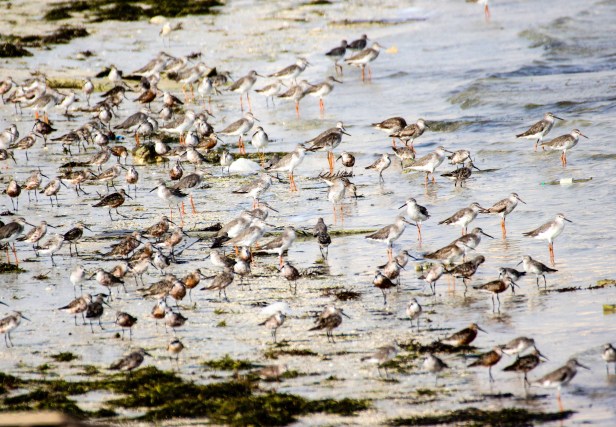
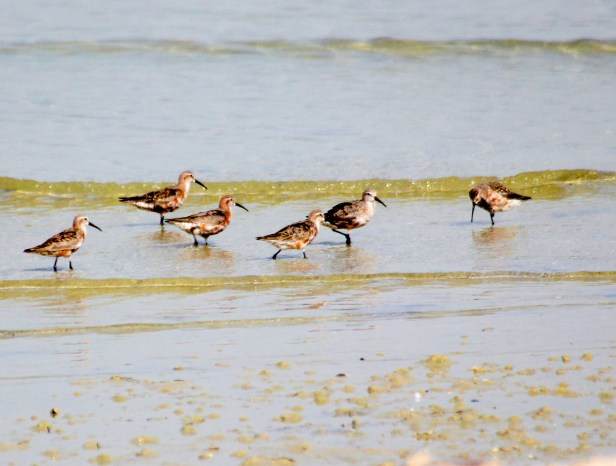
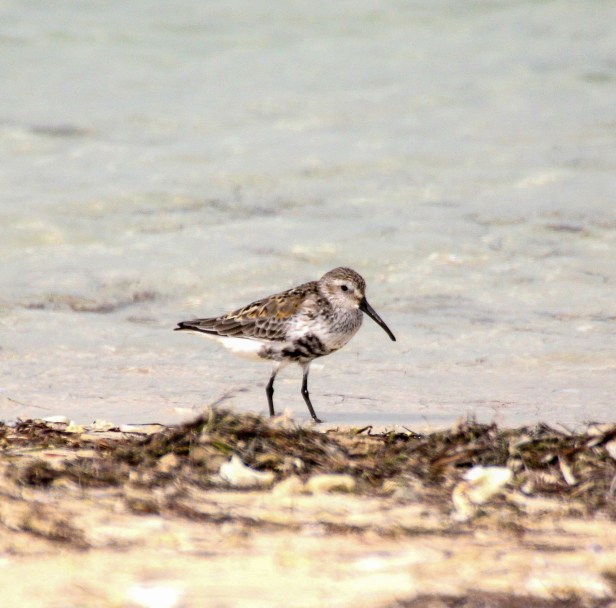
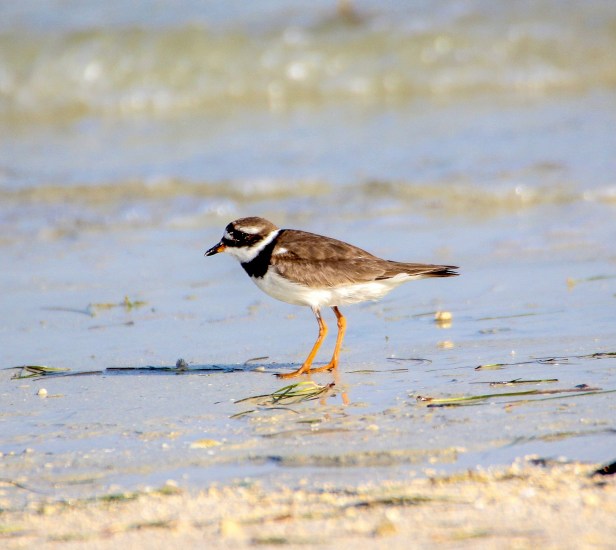
Visiting the beach over several weeks will yield various species. They include the Grey Plover, Curlew Sandpiper, Dunlin, Little Stint, Common Ringed Plover, Eurasian Curlew, Whimbrel, Greater Sand Plover and the Lesser Sand Plover.


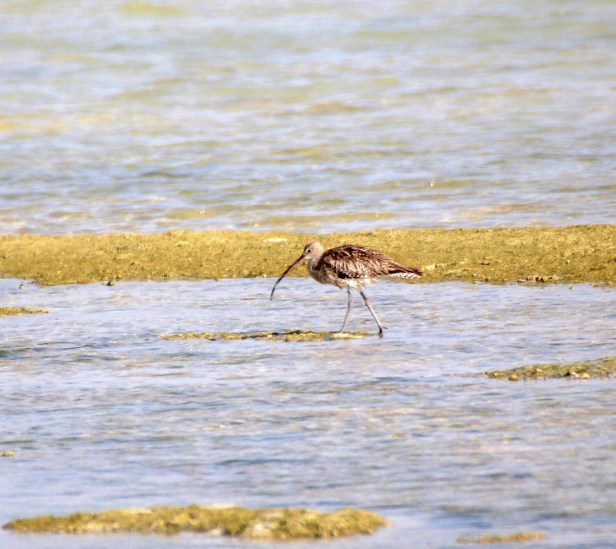
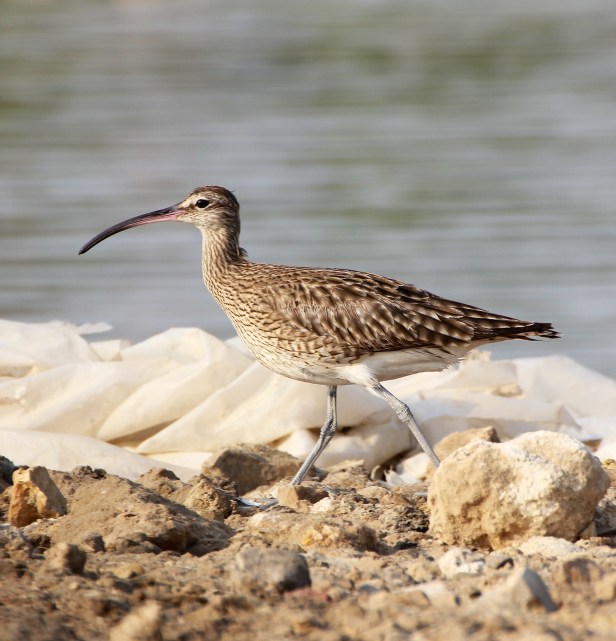


Then of course you get the terns and gulls. There also come in good numbers. Here is a view of part of a flock that took off when we approached them.

I got to see White-cheeked Terns, Caspian Terns, Lesser Crested Terns, Little Terns and Gull-billed Terns.


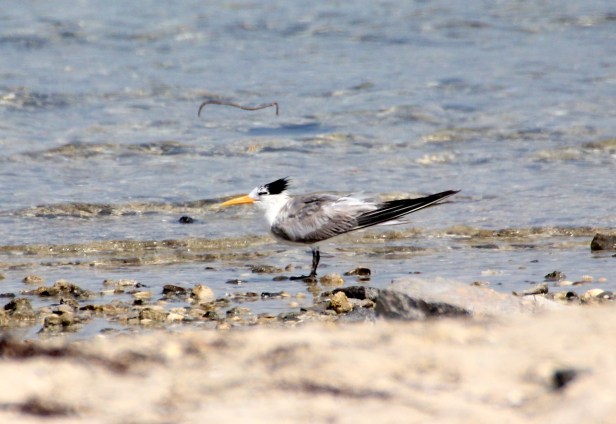

The gulls I saw were the Heuglin’s Gull and the Slender-billed Gull. And come in plenty they do!

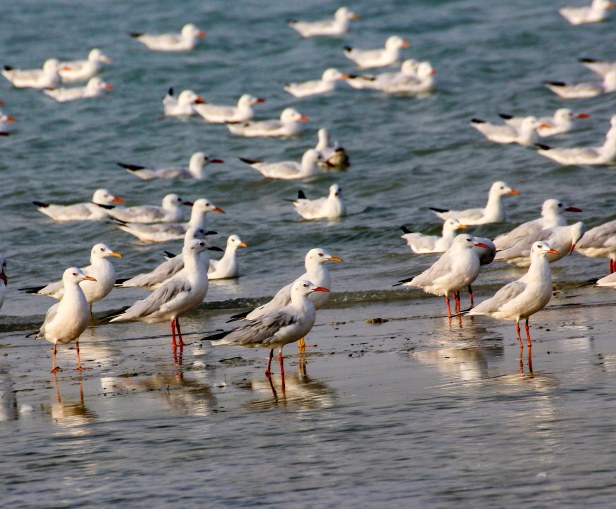
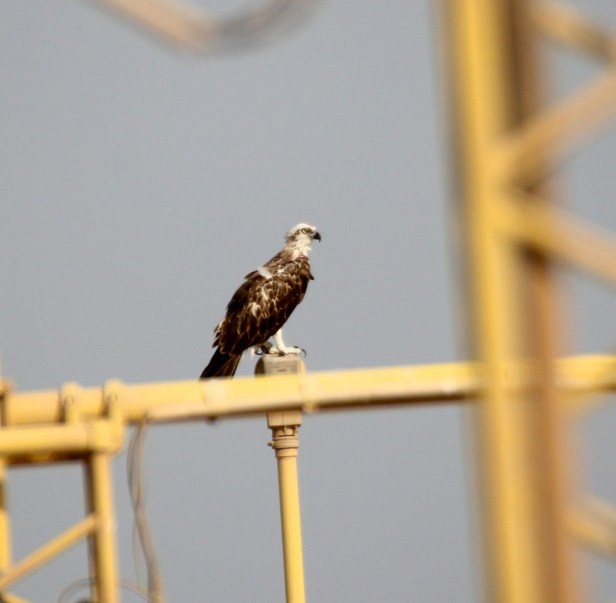
Be on the lookout. One may also see an Osprey. They usually nest on the nearby islands and make sorties to the mainland to fish many-a-time.
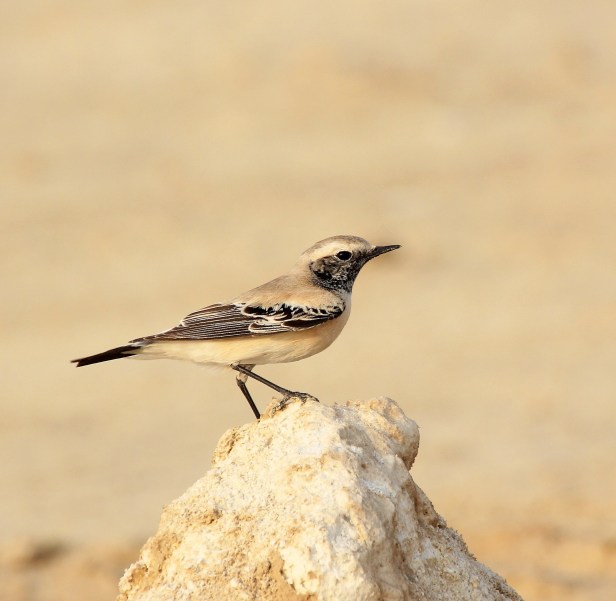
This beach is also a great place to catch the migratory Wheatears. I got to see Isabelline Wheatear, Desert Wheater and the Pied Wheater. They seemed to have their own earmarked areas on this long beach.

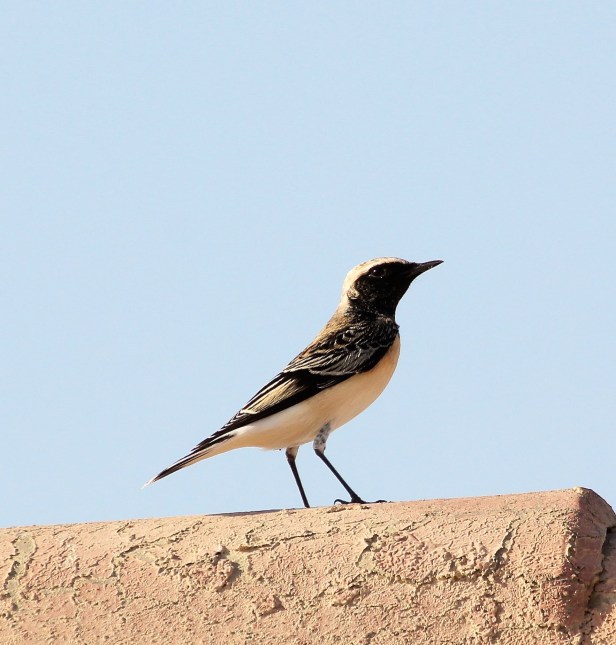
Pied Wheater
Bahrain Fort
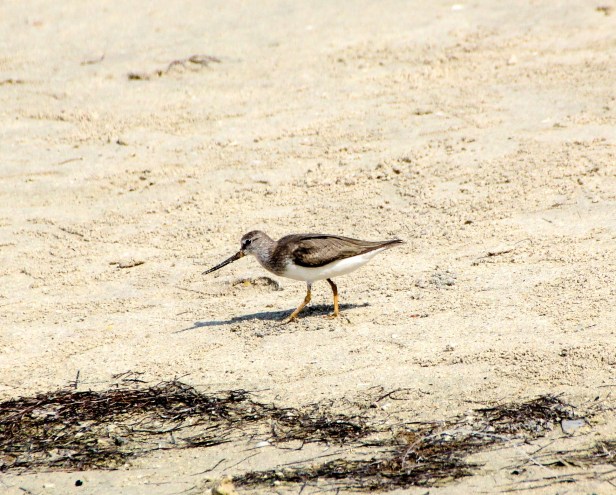
This was actually the first spot that I went to for birding in Bahrain. As the name suggests the Bahrain Fort historical site and the associated museum is located here. It just so happens that there is good stretch of beach just beside it. It is a good place to see waders and shore birds. Along with many of the waders mentioned above I also got to see Terek Sandpipers, Ruddy Turnstones, Spotted Redshanks and Common Redshanks in good numbers.
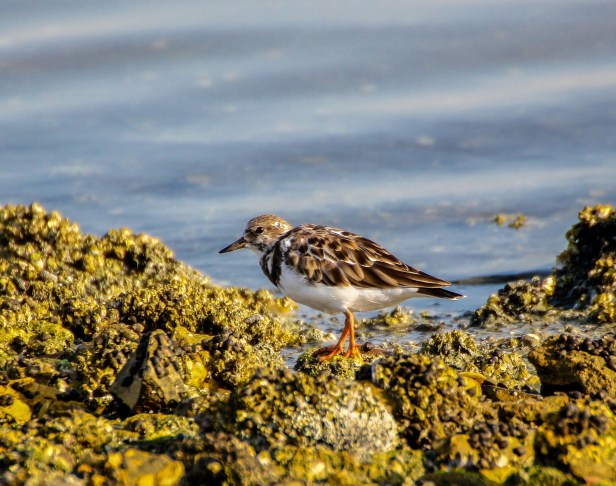

Another bird that was prevalent is the Western Reef Egret.

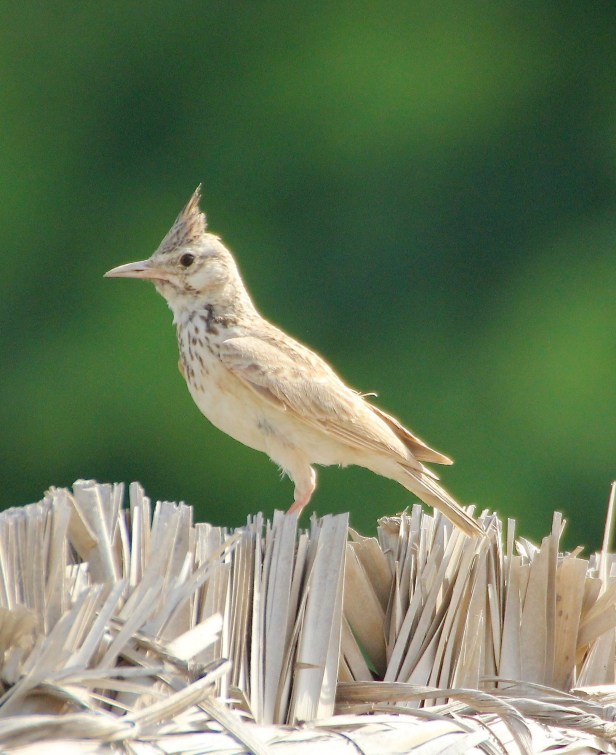
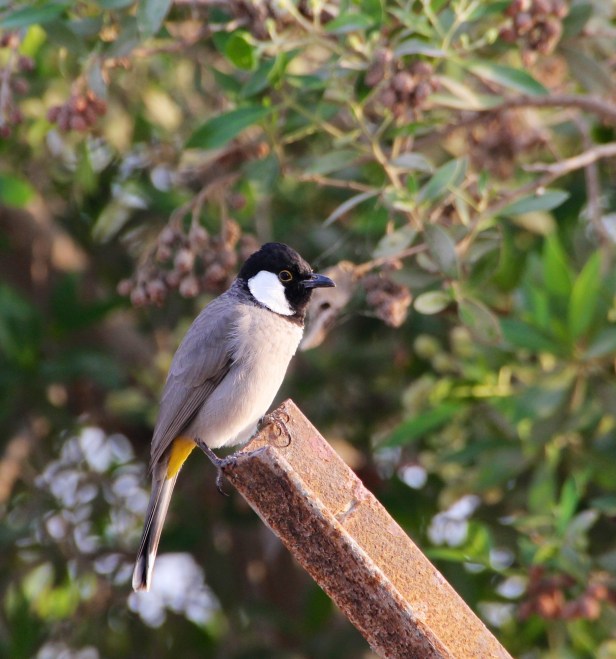
This area also has an agricultural farm nearby. Though I could not go inside the farm to bird I birded the area around its wall. I got good views of the Crested Lark, Eurasian Collared Dove and Bahrain’s national bird, the White-eared Bulbul. These again are common birds around Bahrain.

Eker Creek
This is a fantastic birding spot, especially during low tide. The waders and shore birds come in large numbers to feed on the exposed mud flats at low tide. One can also find the “locals” collecting mussels in these times.
The Greater Flamingos come in large flocks in this area. During the low to mid tide they also come quite close to the bank. It is a great place to observe them, both the adults and the immature.
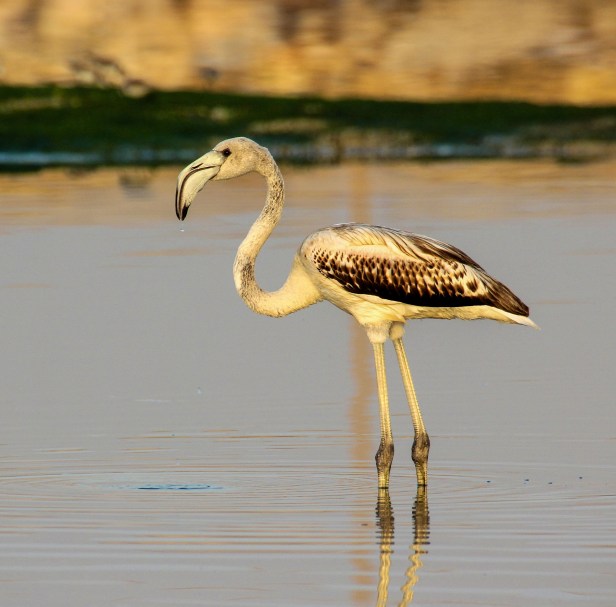
It is here that I got to see my first Eurasian Oystercatchers

and my first Broad-billed Sandpipers.
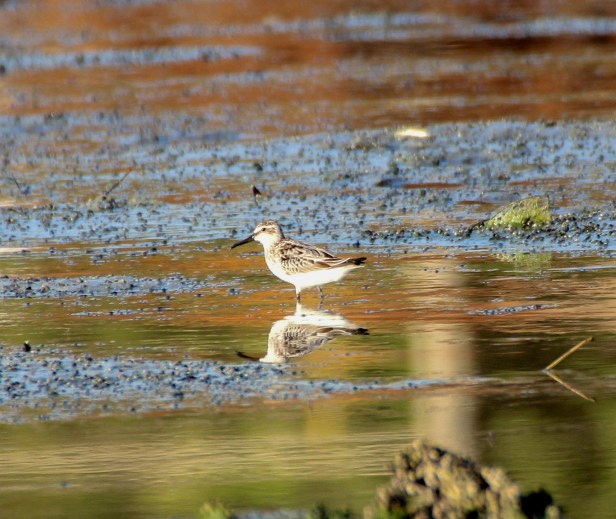
It is also a great place to get photographs with reflections, especially when the water is still.

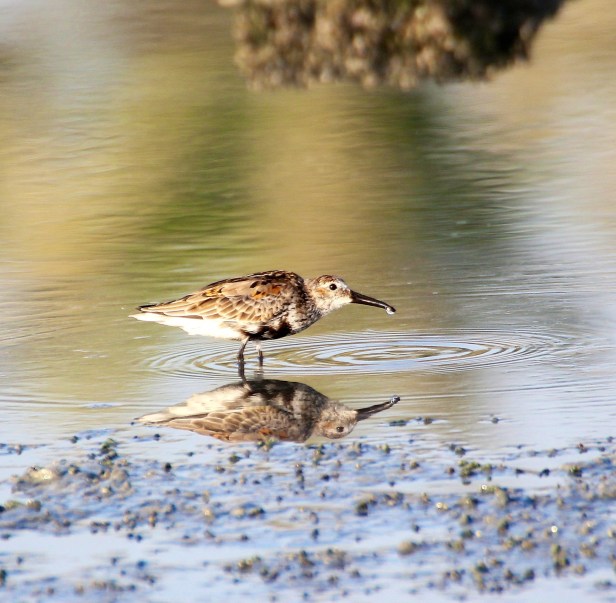
If one wants to get diving shots of the Little Terns as well as gulls then this is place to be. The Bar-tailed Godwits also seemed more tolerant here to human presence on the bank. But obviously the trick is to sit still and let the birds get used to your presence.

At low tides in the evening you can also get to see territorial fights of the Little Egrets as well as the Western Reef Egrets.
Arad Bay
This place was a real surprise for me. It is covered on all sides by human settlements that includes fancy hotels, restaurants and jogging/walking path. But still this place is teaming with activity especially during low tide. This is where I got my best and closest view of the Greater Flamingos.

Flamingos have an unique way of feeding (filter feeders). Have a look at the video towards end of blog to see them in action. You may also get to see the Great Cormorant fishing.

It is amazing how adept they are at it. When we visited there were several Little Terns flying around and diving to catch fish. Most of their dives were unsuccessful. Then comes one Great Cormorant and within a 3 – 5 minutes catches a fish! It is interesting how they toss the fish around before they finally swallow it. Have a look at the video at towards the end of the blog to see this.
Bahair Pool
This is the last remaining freshwater body in Bahrain. I believe it is slowly shrinking over the years. But is still worth a visit. You are likely to see a number of Black-crowned Night Heron, Grey Heron, Purple Heron, Little Grebe, Eurasian Moorhen and Eurasian Coot. But the main attraction for me here is the Squacco Heron.

Ajay had also got to see the Little Bittern here. However I did not. Another bird usually found here is the Glossy Ibis. It seems that they have established a breeding population in Bahrain.

It is worth walking around in the area. I go to see the Menetries’s Warbler here. Keep a look at the sky. I got to the Eurasian Marsh Harrier making a hunting sortie.

During my walk I got to a couple of Red Avadavats and Red-vented Bulbuls. The lake also serves as a stopover point for many a migratory duck like the Garganeys. During one of the trips here I was lucky to see the White-winged Tern as well.

Sadly there seems to be some hunting or poaching of eggs going on here. I hope it stops.
Tubli Bay
There is a place where the treated sewage is let out. This is a place that birds like given the high nutrient content that is likely to be there as far as they are concerned. It is here where I saw the maximum number of migratory ducks species. I got to see the Northern Pintail, Garganey and Northern Shoveler along with Ruff.

Alba Marsh
This is the marsh that is not too far from the Alba plant. It has a lot of reeds and a large grassy area. Got great view of the Common Greenshank and several Graceful Prinias.

A Clamorous Reed Warbler also decided to give us a brief viewing during one of our stop overs. One is also likely to see some migratory Wagtails like the Western Yellow Wagtail.
Jasra
The star bird here and for me in Bahrain, is the Grey Hypocolius. It is a migrant and is not an easy bird to see if you do not know it’s roosting site. I came to know that many birders come to Bahrain with the hope of being able to see this bird. I did not want to miss an opportunity to see this bird before I left Bahrain.
We knew it had a roosting site somewhere in Jasra. We had to make several recces around Jasra before finally getting to see them; it almost felt like reaching an oasis when traveling through the desert, figuratively speaking for a birder of course 🙂 .

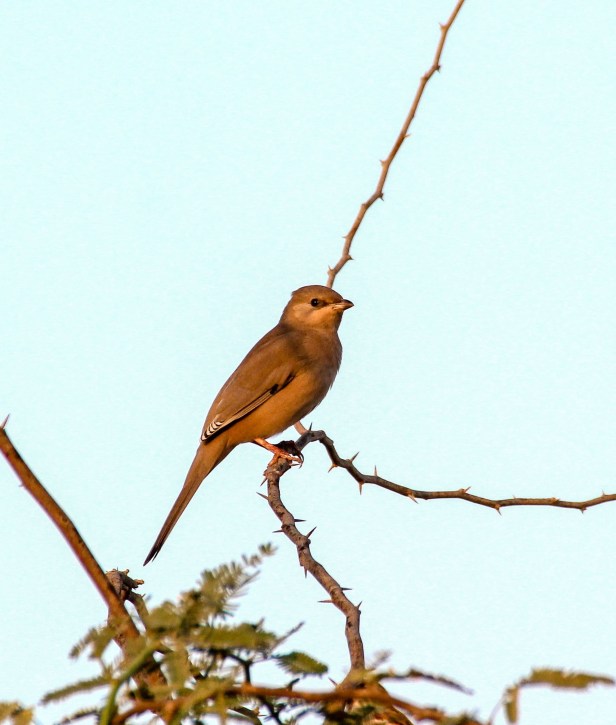
Their roosting site is near the water treatment plan in Jasra. You have to get their before the fly off from their roosting site in the morning. Once gone it is very difficult to know where they go. It could be to any of the date farms across the region.
You can also see several other interesting birds around here. A beautiful resident is the Namaqua Dove.

Another bird on my wish list was the European Bee-eater. This is where I got to see it first. It was indeed a very colourful bird!

The other not so common birds that I got were the Upcher’s Warbler, the Rufous-tailed Scrub-Robin and the vittata sub-species of the Pied Wheatear.


We also saw the Eurasian Hoopoe in several of our visits there. It is always fascinating to see its hair-do and how it keeps poking the ground to get at some grub.
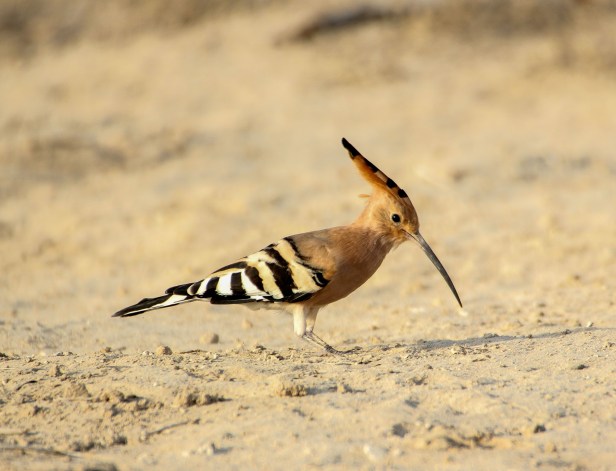
One will also get to see or atleast hear the Grey Francolin around the place.
We also visited a farm in between Al Jasra and Hamalah. You obviously ask the permission on the owner if one can bird inside. Birding in one such place I got to see the White Wagtail and also had great views of a Spotted Flycatcher and a Graceful Prinia.


Ajay told me that he has also got to see Bluethroat at the farm in previous year.
Hamalah Farm
This is yet another great birding spot. Only problem is that one needs to get access to the farm rearing the cattle which is besides the Poultry Factory. Luckily for me, Ajay had the required credentials to get us access to the place. The birding area is around the patch of land where they grow grass for the cattle. The place has sprinklers spread across to water the grass. This area attracts a lot of birds. To bird one essential drive through the pathways between the grass patches and birds from the car.
We had several wonderful outings to this spot, almost every one throwing up a new entrant for me in Bahrain. My first of them was the Collared Pranticole. It was a young one that showed itself to us during our first outing there.

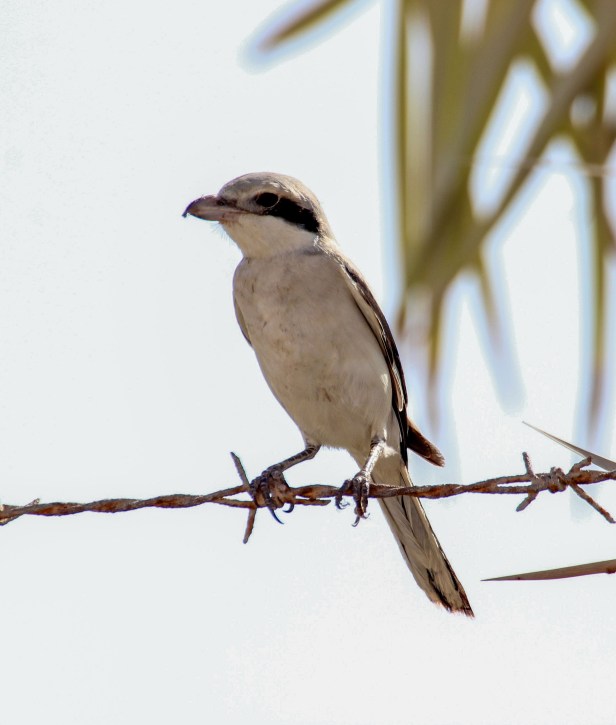
On the barbed wires of the farm fence it was not unusual to see a Southern Grey Shrike perched during the visits.
A unusual sighting however on these wires were the Indian Silverbill and a Red-billed Quelea.


We also got to see Blue-cheeked Bee-eaters over several of our trips. They were a treat to observe!


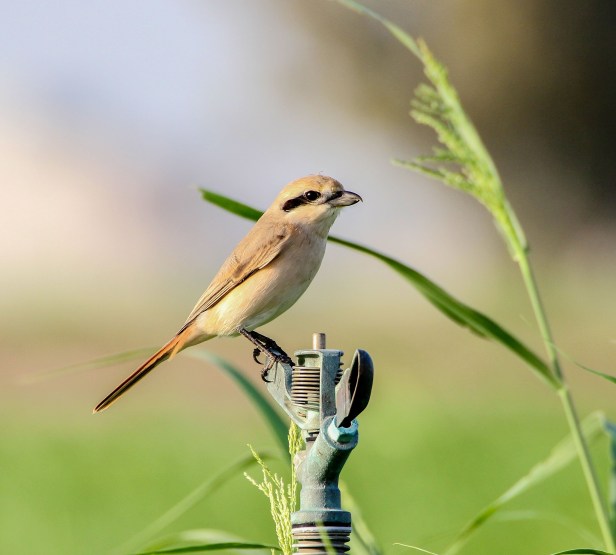
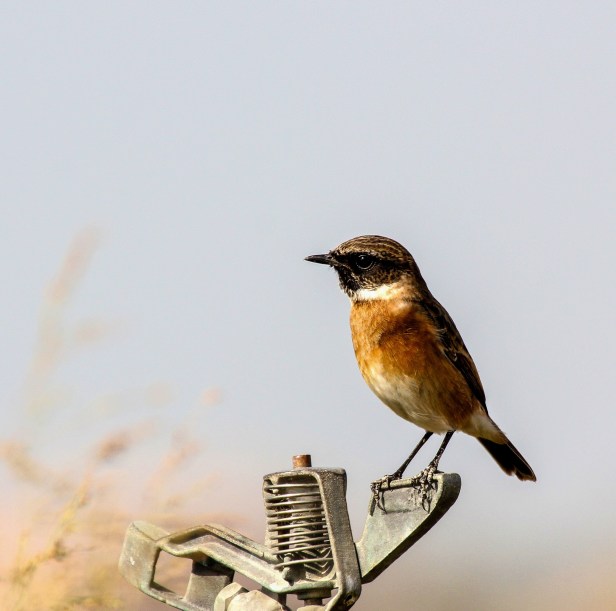
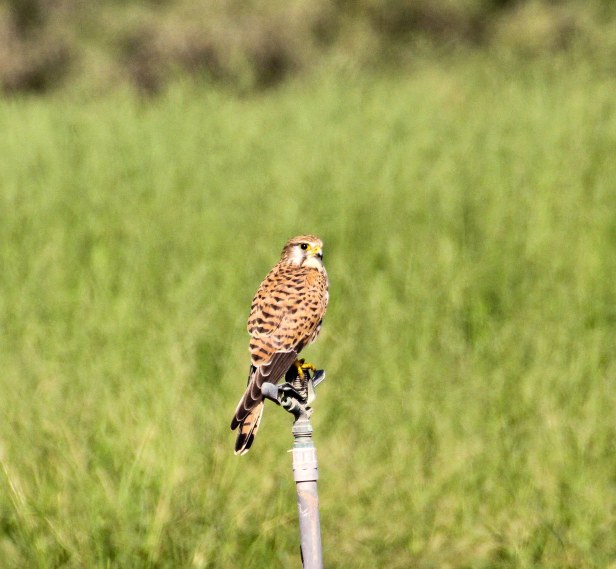
The sprinklers at this farm are a magnet for birds. Some of birds I got to see perched on the sprinklers were the Isabelline Shrike, Common Stonechat and a Common Kestrel.
They were also frequented by Isabelline Wheaters, Spotted Flycatchers and Crested Larks. There will be plenty of sparrow flocks around. Observe the individuals carefully. You may find the Spanish Sparrow amongst the House Sparrows.

The farm was also frequented by an Eurasian Marsh Harrier. On one occasion we saw an Eurasian Sparrowhawk making a fly-by. On a couple of occasions we also saw a few individuals of the Tawny Pipit walking around.
Looking back at it all Bahrain turned out to be a GREAT destination for birding, provided you know the spots and have someone local to take you along if possible. But I guess this is true for most places 🙂 . If you get a chance to bird in Bahrain especially during migratory season do not miss it.
Here is a brief video that I have made with some of the birds seen during my stint there:
Bird Checklist
Here is the list of Birds of Bahrain as reported in Wikipedia.
Here is the list that were reported by users (including me) in eBird : Bahrain Bird List
Recommendations and Tips
It is important to know the High and Low Tide timings. Aim for the Low tide for visits as that is when most waders and shore birds arrive at the spots to feed.
Unfortunately there is some internal strife that is going on in Bahrain (atleast when I was there). So it is important to be cautious. Local authorities tend to be sensitive given this. Always carry your passport and local ID card (if issued). The spots I have mentioned above were alright. But it is better to check the latest information at your time of travel.
Weather
It is HOT and HUMID almost throughout the year. I heard it gets milder during the “winter”. Always take a hat and drinking water.
 Mad about Birding and Travel
Fantastic post! Wonderful to hear about your birding adventures in Bahrain, and how fortunate that you found Ajay to bird with. Excellent photos, and beautiful birds too.
LikeLike
Yes indeed… It certainly gave me so much than what I had expected.
Thank you for dropping by as well.
LikeLiked by 1 person
Thanks a lot
LikeLike
Absolutely stunning pics. I had never thought that Bahrain has such diverse and beautiful fauna. Thanks for sharing.
LikeLike
Thanks for your comment.
Yes, Bahrain surprised me as as well.
LikeLike
Visited Baharin on a very short trip. Didn’t find much of interest but your post is an eye opener. It’s like saying look beyond.
LikeLike
Thanks for reading and commenting. Happy that it changed some perspective
LikeLike
Awesome pictures of beautiful birds.
LikeLiked by 1 person
Thanks Jackie!
LikeLiked by 1 person
What months were you there?
LikeLike
I was there from July to Oct if I remember correctly
LikeLike
Fantastic. I’m in Bahrain and doing my best to find these birds. My list is growing by the day. This has been most helpful.
Unfortunately I don’t have my banauculars and I can’t find any for sale.
LikeLike
That’s great Dave. Hope you get to see a lot of birds
LikeLike
Please let me know which month birds stop nesting and eggs are fully fledged in Bahraini. Small sparrow like garden birds. They’ve made nests in our piping and vents. We will block up the holes and make them nest proof ready for next year after the babies are gone. We’ll put purpose built nesting boxes out for next year. When do you think that will be ? July ? We should be safe by July? We can’t see up the pipe so can’t look to check it would be Empty. And will need to flush it with the hose and can’t risk hurting them. Thanks
LikeLike
Hi Julia,
I am afraid I am not the right one to answer this for you. Many garden birds that I get around my home here in India breed throughout the year. But not many reuse their nests. So one needs to keep an eye out to see them completing the use of their nest when breeding.
Sparrows generally breed from April to Aug. There may variability of the period across regions. I hope it will be the same there as well.
LikeLike
Presently in bahrain & looking for birds. Your article is very helpful.
LikeLike
Glad it is. Have lots of luck with the birds
LikeLike
Great post, excellent pics and information! Is Ajay available for tours or do you know another guide here in Bahrain? Thanks, Hans
LikeLike
Thanks Hans.
Ajay does not usually do tours. Unfortunately I do not know any guide in Bahrain as well.
LikeLike
Hi greetings from Bahrain are you still base here? if yes can I have your whats app I am working on bird sighting for a travel magazine
LikeLike
Sorry I am not based in Bahrain any longer.
LikeLike
Hi there! As a beginner birder who has been in Bahrain since 2018…thank you for this! Now I finally know where to go and look!
LikeLiked by 1 person
That’s great! I hope you get to see lots of birds.
LikeLike
Hello, I really enjoyed your Bahrain article. Thanks for that. I am spending a few days in Bahrain in January and would love to try and see the Hypocolius – I note the roosting site is close to Jasra water treatment plant. Could I ask you for more detailed directions to help me locate the right place? Thanks in advance. Ben
LikeLiked by 1 person
Thanks Ben. I birded there many years ago. Hence I am finding it difficult to recollect the exact directions to the spot. I will let you know if I recollect more specific directions.
LikeLike
Hi thanks, I appreciate your reply, I have found the current location for the pre-roost activity. Best wishes. Ben
LikeLike
That’s great Ben! Seeing them is a treat. So enjoy!
LikeLike