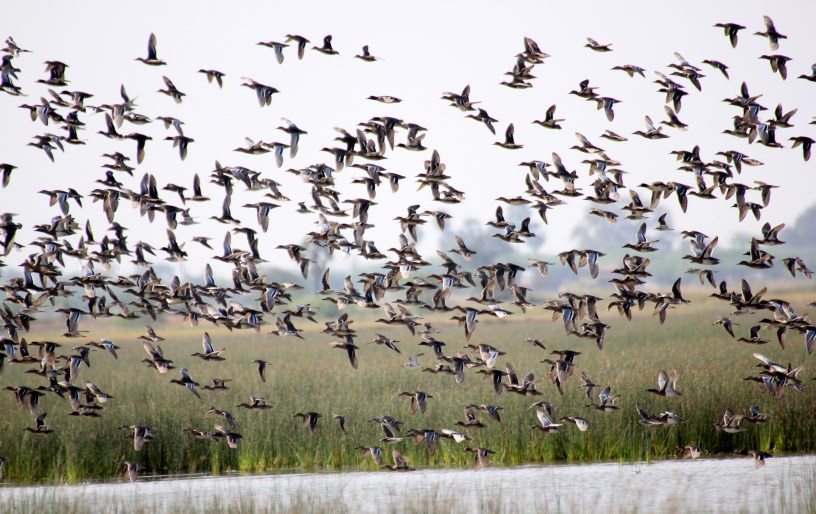
Pulicat Lake, located across the Nellore district in Andhra Pradesh and Tiruvallur district of Tamil Nadu, is the second largest brackish water ecosystem in India after Chilka Lake in Odisha. If you are a birder then it is considered one of the best places in South India to see migratory waterfowl, waders and some shorebirds in large flocks. However it is best known for the flocks of Flamingos.
The birder that I am, there is no way I would miss a chance to visit a birding hotspot like Pulicat Lake in the middle of migratory season. A chance is what I got; well partly made 🙂 . My wife had been recently engaged by a school based in Chittoor district of Andhra Pradesh. She was required to visit the school once a month for 2 days. The school was around 180 kms from home. Being her first visit to the school for work, the good and concerned husband that I am, I did not want her to travel alone the first time. Of course it just so happened that Pulicat Lake on the Andhra Pradesh side was another 180 kms from the school 😉 . The plan was to leave home in the wee hours on day 1, drop my wife at the school and then I would head of to Pulicat Lake. I would stay overnight and then return back to the school the next day by late afternoon, pick my wife and then we would head back home together. And that is how my first trip to Pulicat Lake happened in February of 2015. The second trip to the lake was in January 2018.
I usually research a destination prior to going there. As for Pulicat Lake I did not find many resources of information on birding at the lake . So I am hoping that this blog will do a better job of it; atleast it will cover the aspects that I have experienced and know of from my two trips there.
Sullurpeta is the nearest town to the Pulicat Lake Bird Sanctuary. In both my trips I reached Sullurupeta a bit after noon. So I essentially got two sufficiently lengthy birding sessions at the lake; one from late afternoon till dusk and the other from dawn till late morning. In my view two sessions are enough to get a decent coverage of the sanctuary.
The main birding site is along the road that goes from Sullurpeta to the Satish Dhawan Space Centre located at Sriharikota. The sanctuary itself is on both sides of this road. So the birding is mainly done along this road. There are observation towers that have been built alongside the same road. However I found it more convenient to rather drive on this road, stop where you want at different spots and spend time observing. The birds are spread all across the lake and it is best covered like this.
The birding area starts immediately as you cross the houses and enter the area where cultivation is being done. You will find plenty of the common birds in these fields. This includes bee-eaters, egrets, White-throated Kingfishers and House Crows. Look out for the reeds on the sides. I got to see the Streaked Weavers in them.
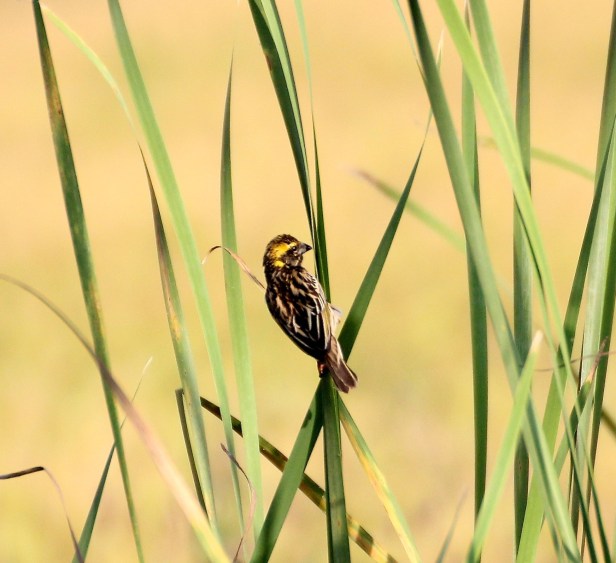
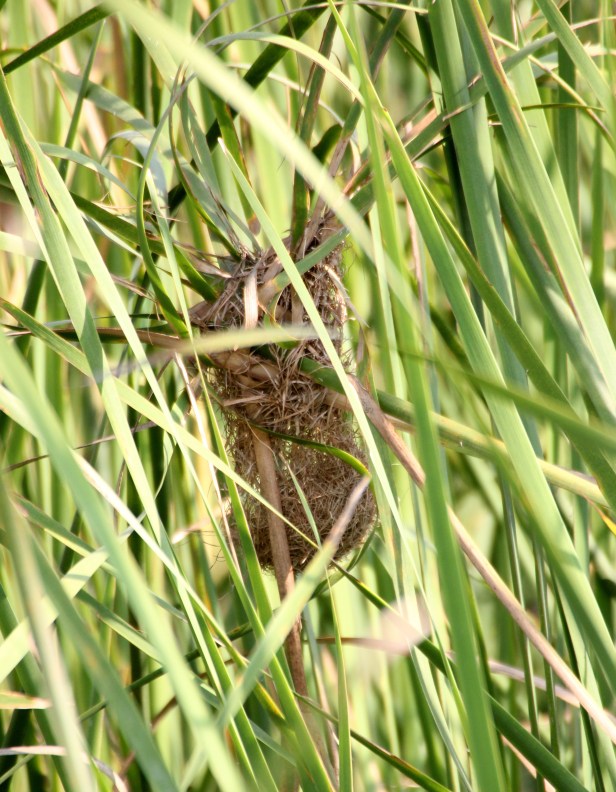
They build their nests on the reeds. You cannot miss their presence if you driving past slowly. They are noisy and keep flying in and out of the reeds. But you have to be patient and stay at spot for a while to have a good look at them. Below is how their nest looks.
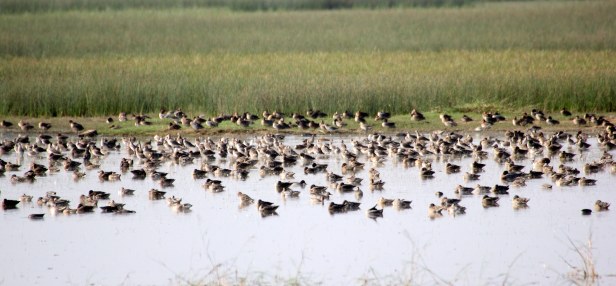
You are likely to see the Purple Heron and Grey Heron around here as well. From this patch on it is a riot; birds everywhere. So you just have to keep a good look out and decide where you would want to stop and observe based on what you are seeing. I saw ducks in plenty. Northern Shoveler, Gargeney and Northern Pintail were the most numerous. You will find them in mixed flocks. Here is a sample of what I saw.
When they fly it is a sight to behold; they will fill almost the entire view!
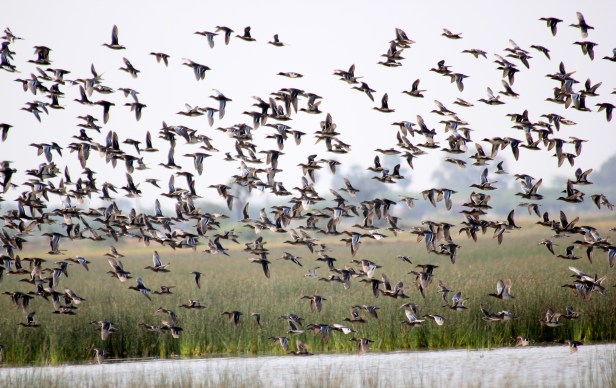
As I mentioned above the flock of ducks is a mixed one. In them I also found a good number of Common Teal as well as some Eurasian Wigeon.
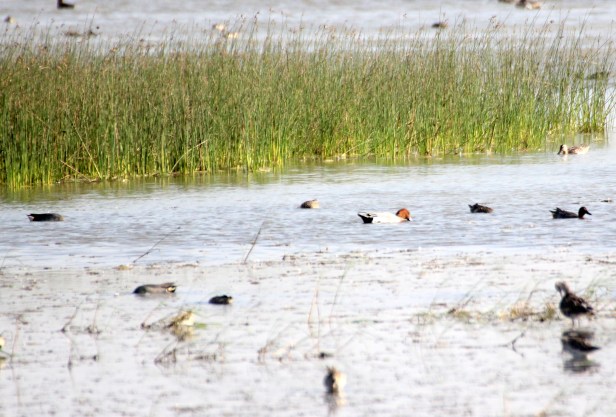
Pulicat Lake is probably the only place in South India where one can get to see the Red-crested Pochard. They come in less numbers though. So keep a watchful eye for them. I got to see a few during my first visit.
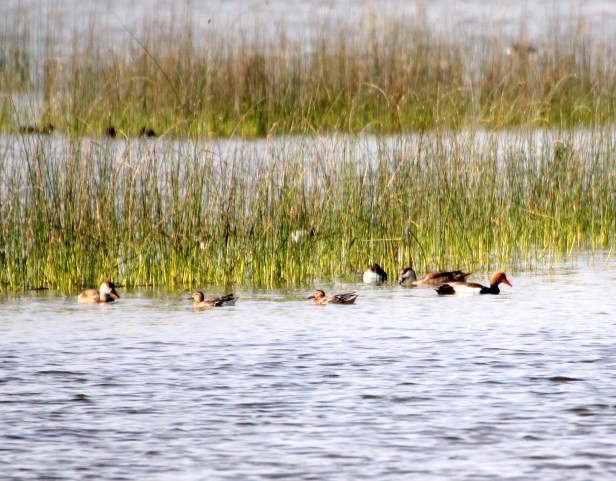
Another bird that comes in good numbers is the Ruff. They can be see in flocks of themselves or also mixed with that of the ducks.
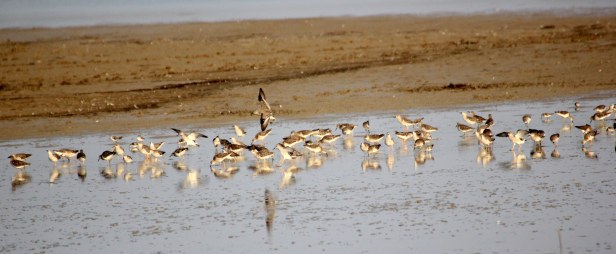
Up until my first visit to Pulicat Lake I had only seen waders in flocks of tens. Nothing could prepare me for what I witnessed in my first visit; massive flocks of stints taking to the wings and flying around in swaying formations that almost equalled a murmuration. They were in 1000s!
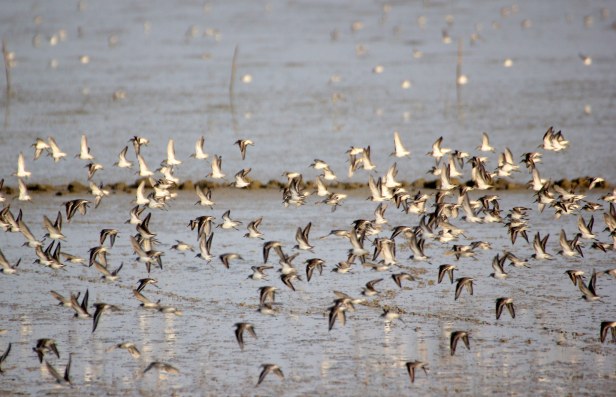
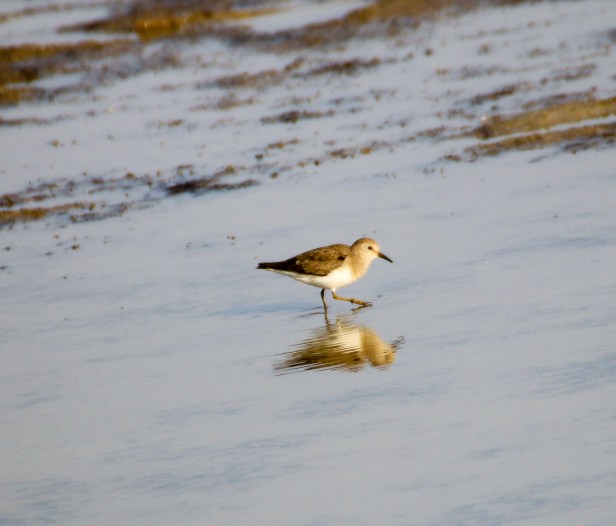
The stints that are most numerous are the Little Stint. You also get good numbers of Temminck’s Stint along with the Little Ringed Plovers. Most of these would be interspersed in a flock. There have been reports of Long Toed Stints as well, though I am yet to see them.
But the star attraction or atleast what the sanctuary is advertised for are the Flamingos. And come they do in a few thousands! I was flabbergasted when I saw their numbers the first time; it was almost like an endless wall of pinkish white.
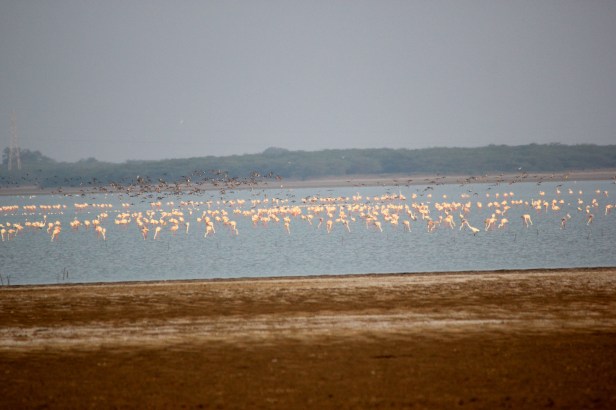
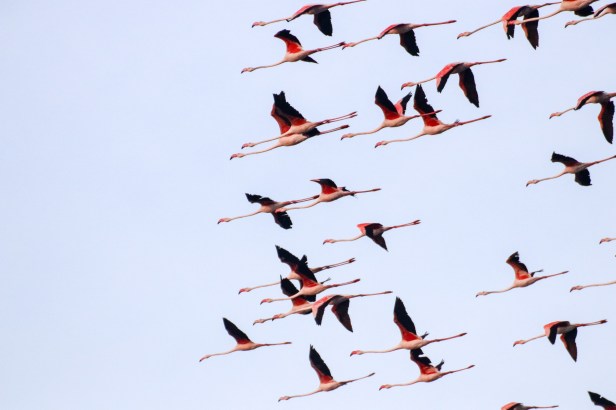
How close they will come to the road and the exposed lake bed depends on the water level. They feed by filtering the water and mostly prefer shallow water to do this. During both my trips they were far away and hence did not allow me to get close photographs of them. But that did not stop me from enjoying seeing them. They however usually take flight in the early morning to move one place to another. This is a great time to observe them closer. A flock flew overhead me in both the trips. It was a sight to behold!
You can also walk on the exposed lake bed in case it is dry. But be extremely careful; what looks dry may not actually be dry. It is best to ask any fishermen around. They are usually helpful.
The flamingos that come are usually the Greater Flamingos. However you may also find Lesser Flamingos amongst them; just as I did.
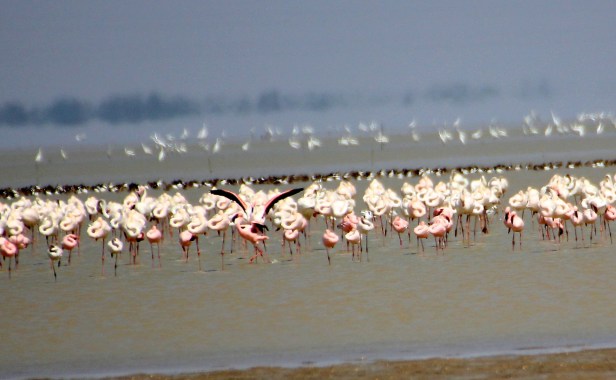
I was also lucky to see a big flock of Pied Avocet along with the flamingos; albeit far away to get good pictures.
The other birds that you are likely to see are the Black-tailed Godwits,
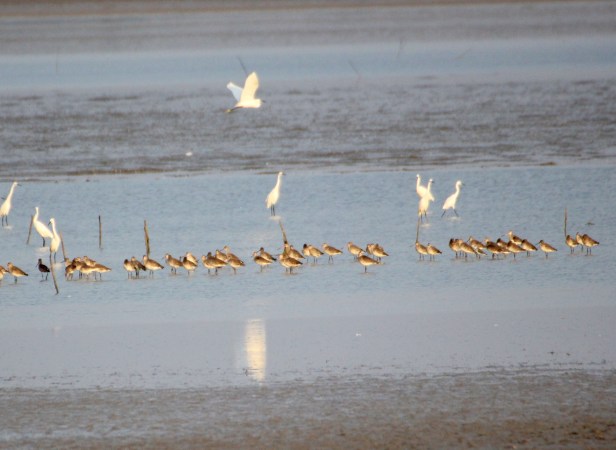
sandpipers such as the Marsh Sandpipers and Wood Sandpipers,
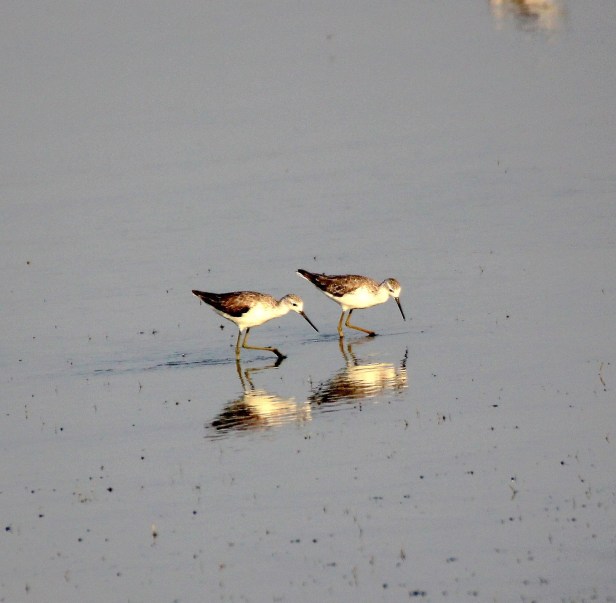
and plenty of terns flying around. The commonly found terns are the Whiskered Terns and the Gull-billed Terns.
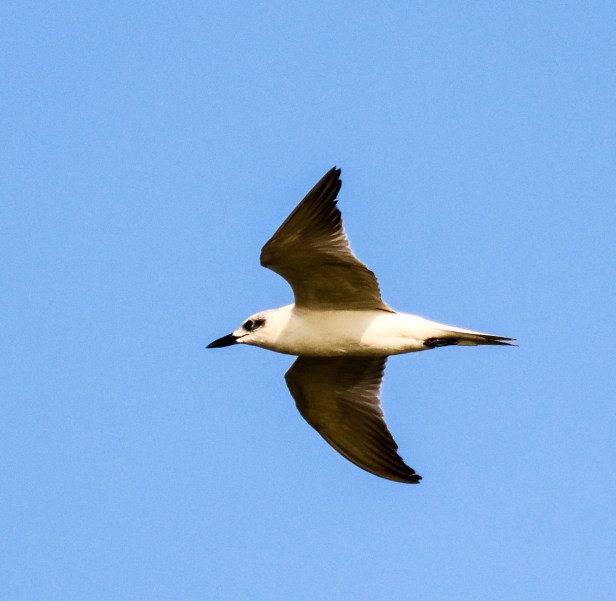
Observe the smaller terns carefully. You are likely to also get the Little Terns amongst them. Some of them may be Saunder’s Tern. However they are difficult to distinguish from the Little Tern in non-breeding plumage.
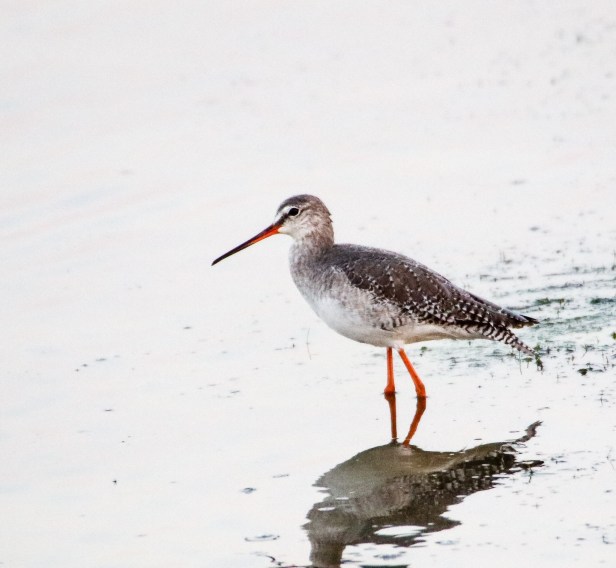
I also got to see Spotted Redshanks in several flocks during my second visit
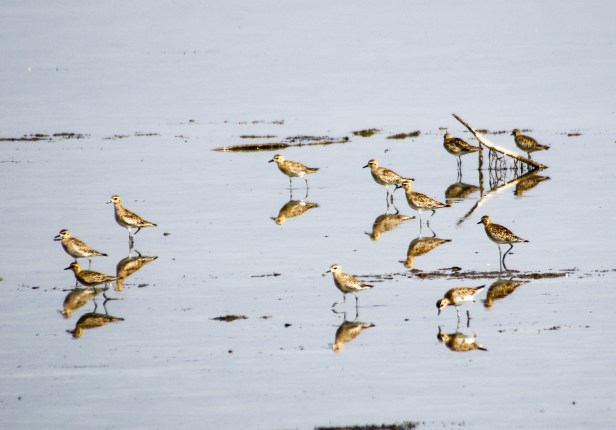
as well as Pacific Golden-Plovers.
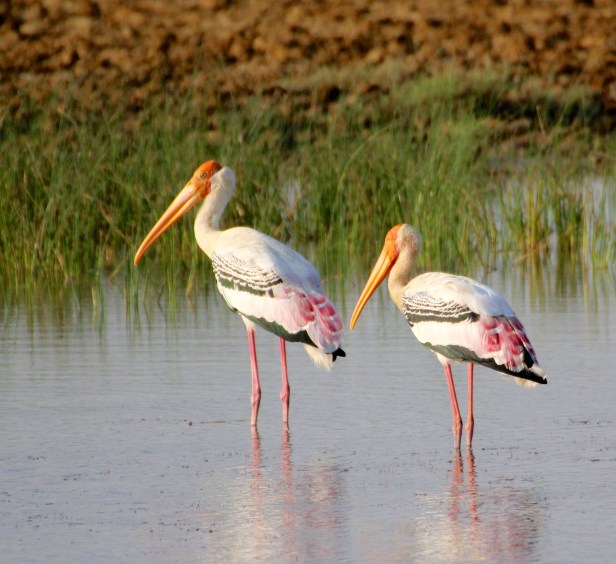
There were several Painted Storks during both my trips. They are so colourful, especially when they “catch” the sunlight.
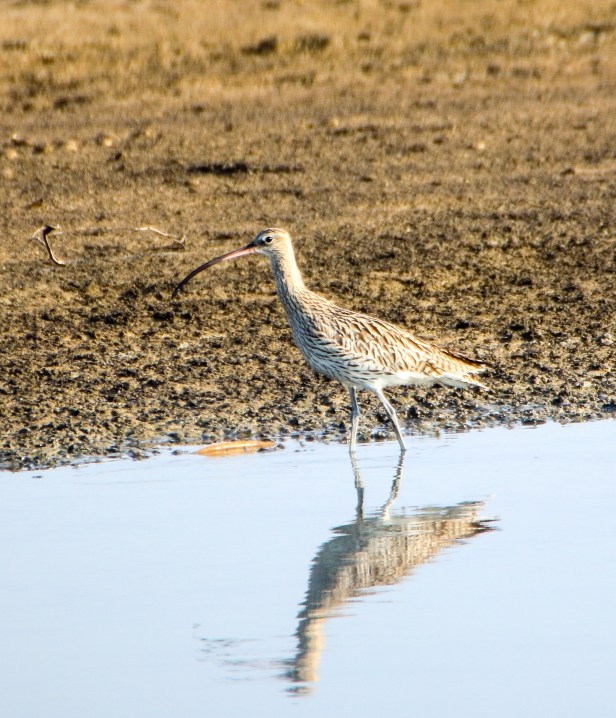
Another not so numerous bird is the Eurasian Curlew. They can be seen as individuals throughout the day and tend to form a flock towards the dusk. It is always fun to watch them probe the mudflat in search of food with their long bill.
I also tried exploring the sandy beach that can be accessed through a pathway on the left just before the last bridge near the space centre. There had been a large flock of ducks near the shore. However they flew off as soon as a fisherman family walked past on the shore.
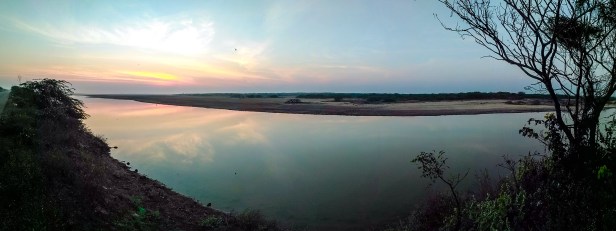
It is not just the birds that is an attraction. The sky and the water together turn out to be canvas for nature at dusk and dawn; something that is not to be missed. In the morning make sure that you are at the lake before the breaking of first light. From then on the sky changes colours very fast.
How can one not visit (or rather drive by) the Satish Dhawan Space Centre at Sriharikota when so close by? It is the launch centre for all space missions of the Indian Space Research Organisation. It is located at the end of the road that one has been driving on. You of course cannot enter the centre without the required permissions.


Update : I finally managed to visit the Tamil Nadu side of Pulicat Lake. You can read about it here. It also includes a comparison based on my experiences at the two side.
Nelapattu Bird Sanctuary
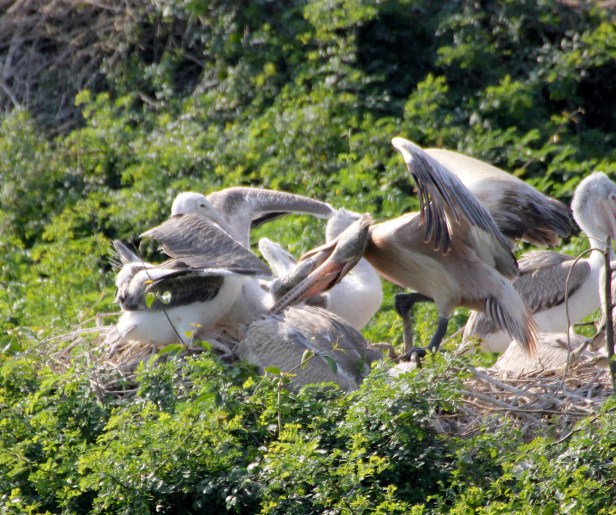
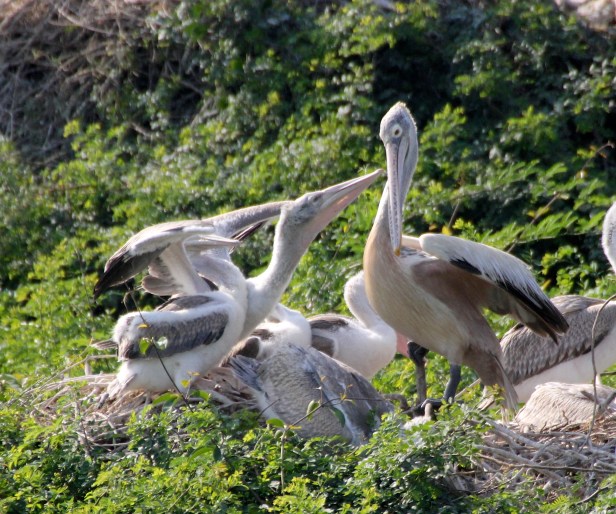
I also visited the Nelapattu Bird Sanctuary during my first trip. It is approximately 20 kms from Sullurpetta. During the visit I saw that there were active colonies of breeding Spot-billed Pelican, Black-headed Ibis and Asian Openbill. Here are a few pictures of what I saw:
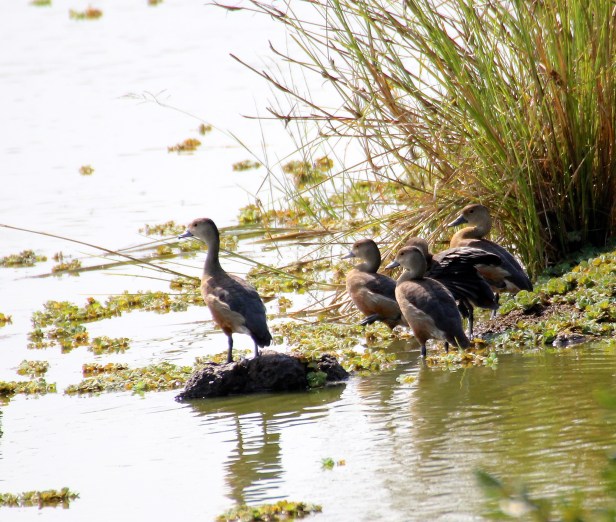
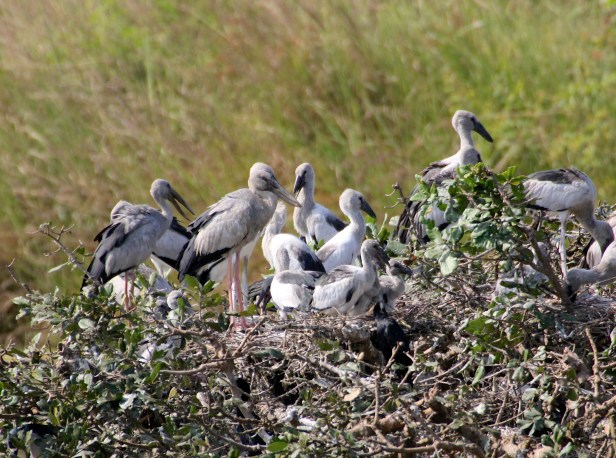
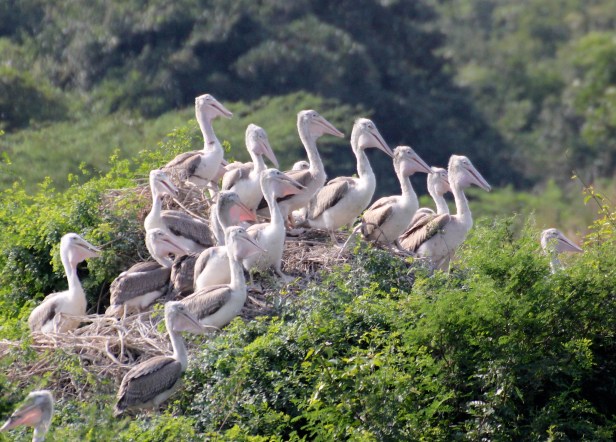
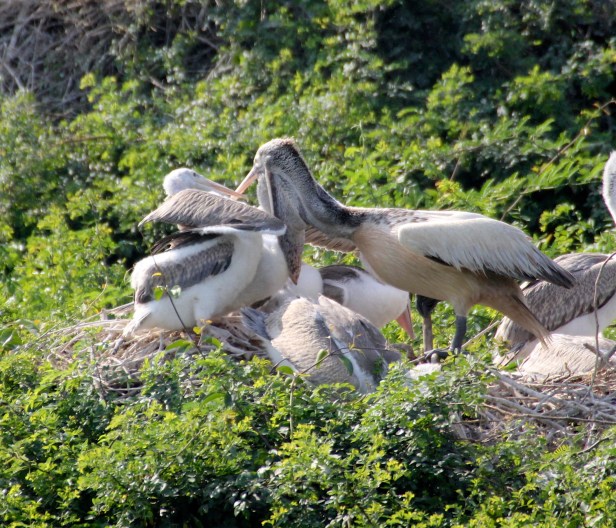
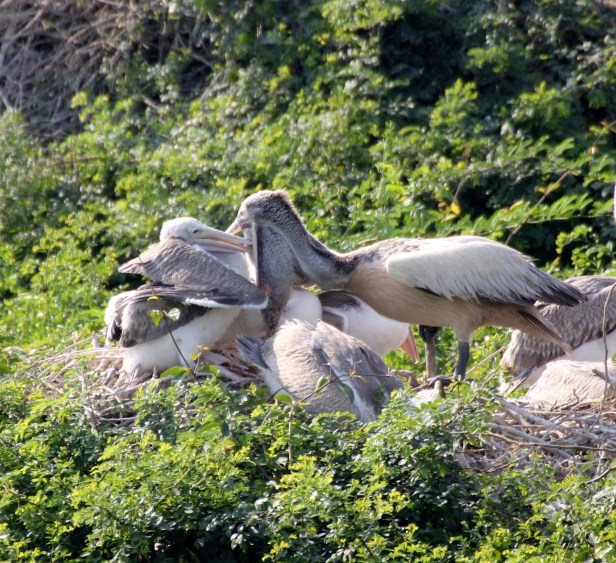
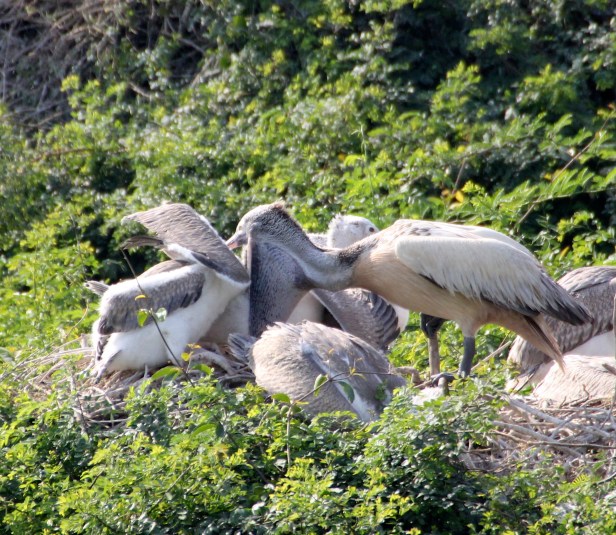
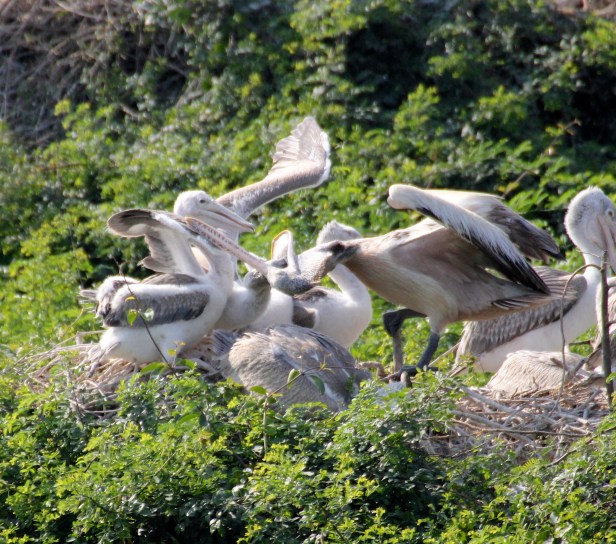
It was very interesting to see how the young ones of the Spot-billed Pelican were being fed or rather how they insisted on being fed. Man, it is tough to be a parent! Here is a sequence of photos captured when one was being fed.
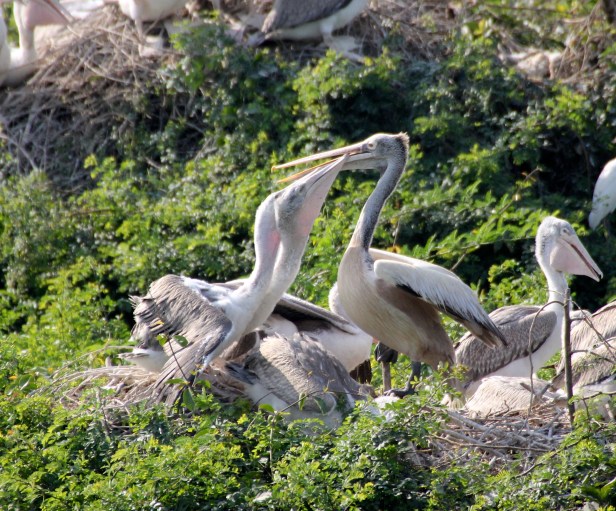
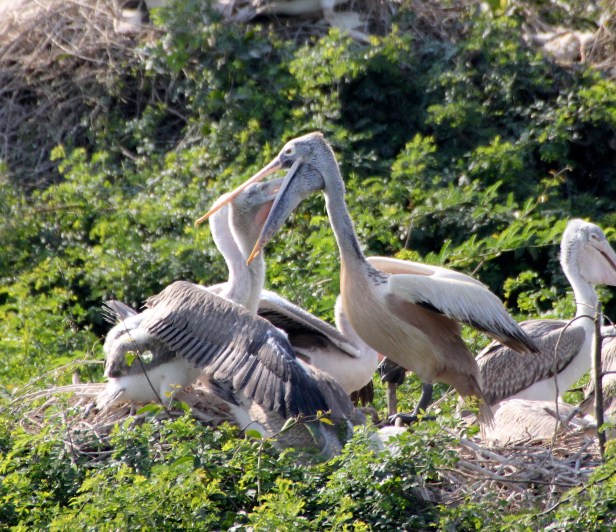
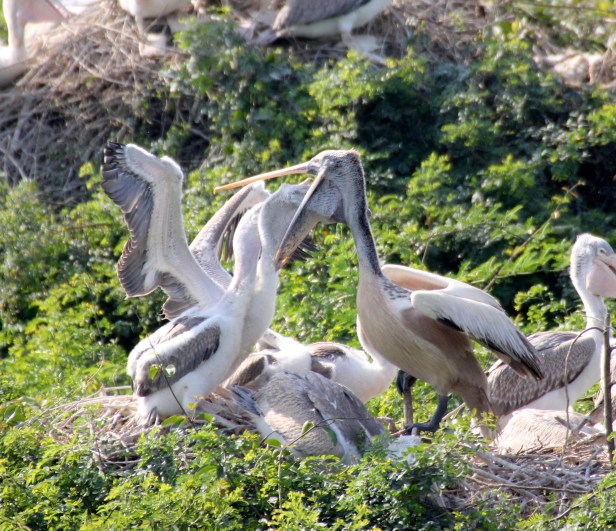
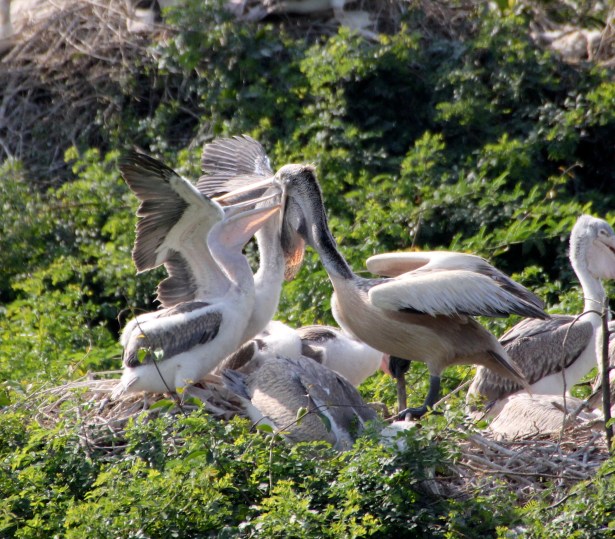
Virtual Tour
Here is a short video giving a virtual tour of the place.
Bird Checklist
Pulicat Lake : Pulicat
Nelapattu Bird Sanctuary : Nelapattu
Recommendations
Take along a spotting scope if you can. Many a times the birds can be a bit far, especially in low tide. At these times you may not be able to see them well with just the binoculars. Any attempts to get close to them will see them flying or moving away further. Having a spotting scope helps overcome this problem. Additionally it will also help you pick out any “different” bird in a flock. Many of the flocks have mixed species in them. You do not want to miss them 🙂 .
Look at the tide information. A low tide would see the birds quite far out. I think the best is somewhere in between high tide and low tide.
Caution
Be extremely careful when attempting to walk on the exposed lake bed. It may not be as dry as one thinks at places. If you do plan to walk then I would suggest wearing footwear that you would not mind getting extremely muddy (sticking mud).
I have read of some people doing birding on the Perenadu Island shore. I have not done so and hence have not commented on it. The drive from the main road to the island is however on un-metalled path a few kilometres long. So be prepared for it if you wish to do so.
Places to Stay
The nearest town is Sullurpeta. All accommodation is found in and around this town. I had stayed in Kinnera Grand Days Inn on both the occasions. The hotel is situated is at the start of the road that finally ends at Pulicat Lake. One would need to cross it whenever going to the lake. Hence I found it most convenient for my purpose. There are other options available and might be worth trying out.
Weather
It gets pretty hot during the day time. There is no cover in most part of the sanctuary that one would be exploring. So I would recommend to take a hat along. Morning and evening are cool during winters. There is also a cool breeze during the day during winter season. I would think that humidity levels will also be high during summers. Do take along plenty of drinking water in all seasons.
 Mad about Birding and Travel
Remarkable exploration. Good work Thomas.
LikeLike
Thanks a lot for reading as well as commenting back
LikeLike
This is absolute great site for water birds…much better compared my “backyard” 😁
And hey! The road seems good too…
LikeLiked by 1 person
Yeah it sure is great for the migratory water birds
LikeLike
Great blog giving very important information helpful for other birders. I like blogs like these
LikeLiked by 1 person
Thanks Alok. I one of the aims of my blog is to provide useful information to others who may want to visit. Glad that you have found it useful
LikeLike
Hi Thomas. Thanks for the detailed article on your trip to Pulicat lake. I am planning to visit this lake around the end of December for some bird watching. is this the ideal time to visit the lake or should I wait till January? Also do you know of any guides who could possibly help in spotting birds?
LikeLike
Hi Aswin,
I have not been there in Dec. So difficult to tell how much of a difference there would be between Dec and Jan. I would however think not much. The winter migrants should have come in by Dec. On the guide front, I do not know of any. If it is the Andhra side of Pulicat that you are visiting, I personally don’t think you will need one. Almost all the birding is done from the main road. You just have to be observant and scan the birds well as you move along. You can get a good idea if you see the virtual tour video that I included in the blogpost.
LikeLike
Very informative and detailed blog with photographs.
LikeLiked by 1 person
Thanks. My blog post on the Tamil Nadu side of Pulicat Lake will be out on 5th Feb. That will also include a comparitive view (mine) between the two sides. Hope that will help will also help others when they want to plan a trip
LikeLike
Love your bird photos. You and I are similar.
LikeLike
Thanks Cindy. I love going through your posts as well
LikeLike
Very Detailed and Informative blog. thanks for putting it together.
LikeLiked by 1 person
Thanks Naveen. Glad you liked it
LikeLike
Thank you for a very detailed blog. We need more like you to showcase the richness of these places
LikeLiked by 1 person
Thanks for reading and commenting Joseph. Yes, there are so many fantastic spots across the country.
LikeLike
Beautiful photos! I especially liked the flamingos! 🦩🦩🦩🦩🦩🦩
LikeLiked by 1 person
Thanks 🙂
LikeLiked by 1 person
Good article.no other information source on internet
LikeLiked by 1 person
Thanks a lot
LikeLike