
Well, the term “Resurrecting” may be a strong word to use, but that is the closest one that seemed to describe the yearly phenomenon that is associated with what happens to what is left of the Shettihalli Rosary Church. And what am I talking about? Read on to know more 🙂 .
I had never heard of Shettihalli Rosary Church till mid of last year. My guesses are that most others wouldn’t have either. My family and I were planning a trip to visit the famous historic temples at Belur and Halebidu (click to read on them) around September of 2018. As a preparation for the trip, I was searching for other interesting places to visit around the area. It was during this search that I stumbled upon this gem.
The church was built in the 1860s by French missionaries on the banks of the Hemavathi river. It was built in the Gothic architecture. In the year 1960, with the construction of the Hemavathi Dam and Reservoir, the church had to be abandoned. While it meant that it could no longer be used for active worship, this created something unique. Every year, during the period July to Oct, the church gets partially submerged in the water, as the water level rises in the reservoir, owing to the monsoon. But in the period Dec to May, the church structure seems to “resurrect”, i.e. slowly re-appear as the water level recedes. Reading about this, we decided to visit the place and see it for ourselves. Trust me, the difference between seeing the same structure across these “seasons” is stark!
Our first visit was in September. We were not sure of how much of the church we would be getting to see. If I remember correctly, we actually did not know what to expect at all. We parked our car in a patch off the main road and decided to walk down the path that lead to the structure. Below was the first sight of it.

We could guess from the water level that the rains during the monsoon had been decent in the area. We obviously wanted a closer inspection. So we found another pathway that led us closer to the structure. Here are some pictures from there.
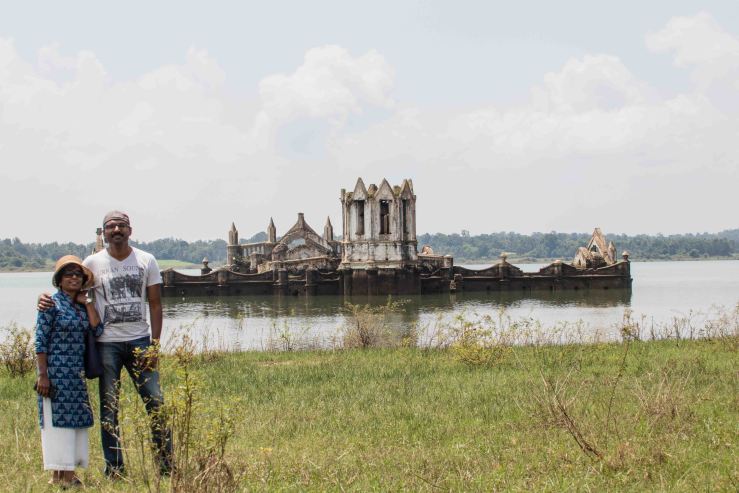
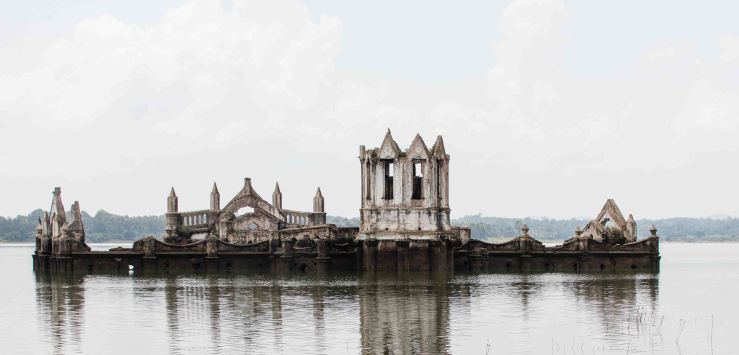
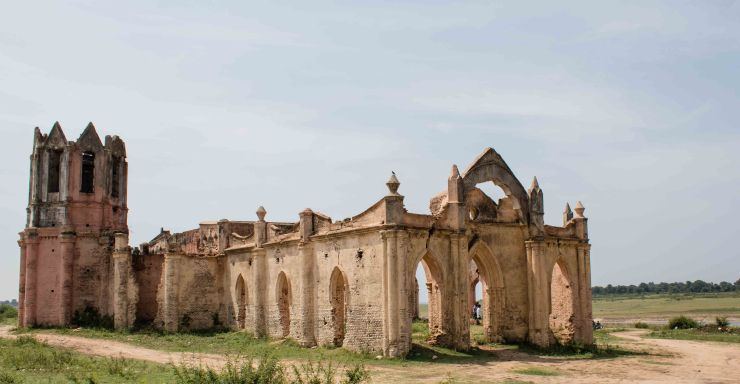
Based on what we could see of the structure, we were not able to make out how much of it was underwater. For this, as well as to appreciate the beauty of the full structure, we decided to make another trip in the dry season. Thus my wife and I made a trip in beginning June 2019. Here is the picture of the structure from the same place as we had seen it first on our previous visit:
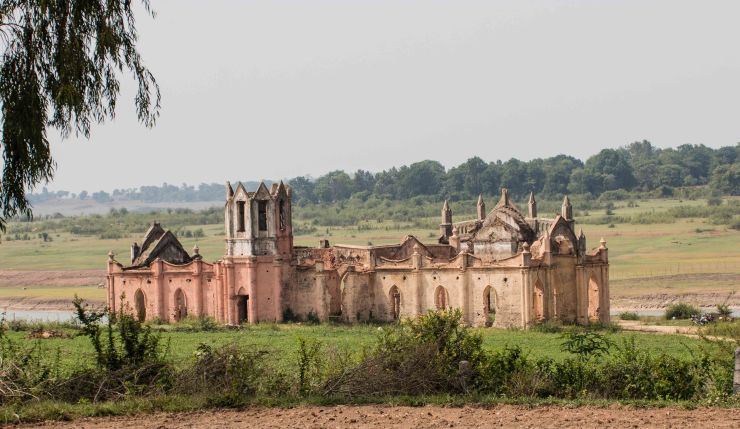
Here are the equivalents photos of the other views:

This time we were able to walk around the structure and explore it from all its sides. We were enthralled by its beauty, even in its decrepit state. It must have been magnificent when it was still in use; one could only imagine it. Anyway, here are some pictures that I took:


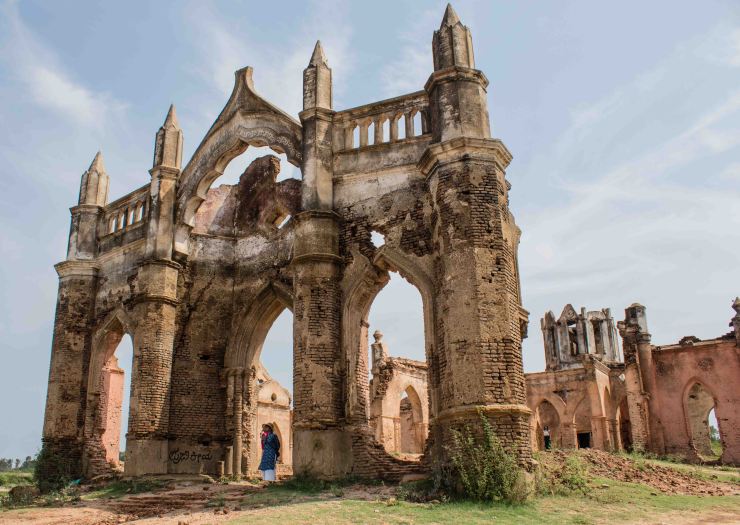

The archways and tower also provide some interesting perspectives:
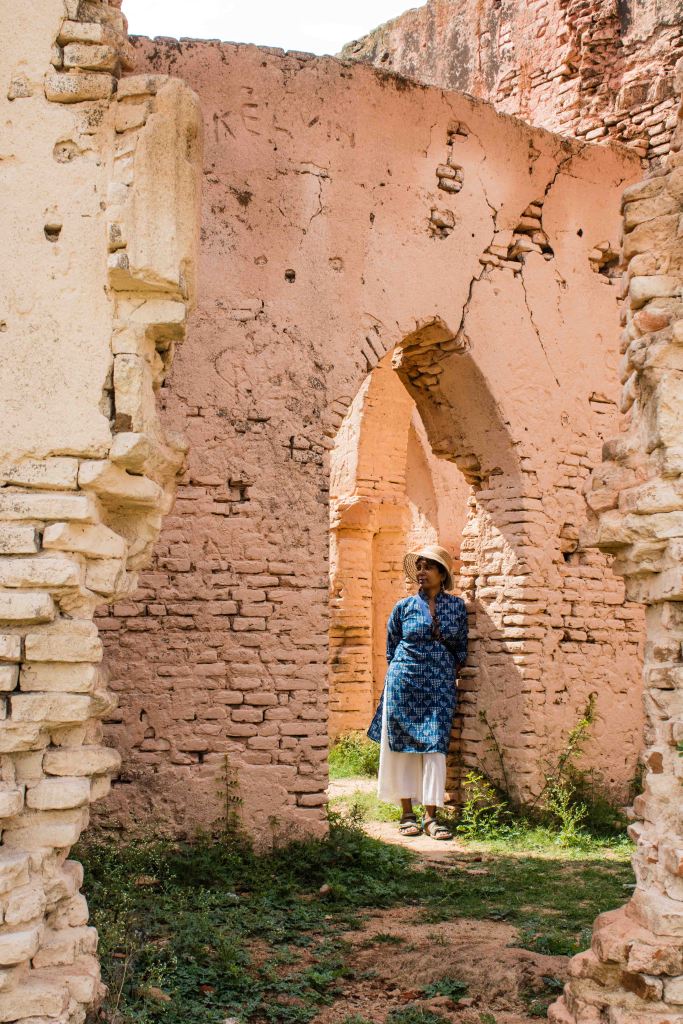
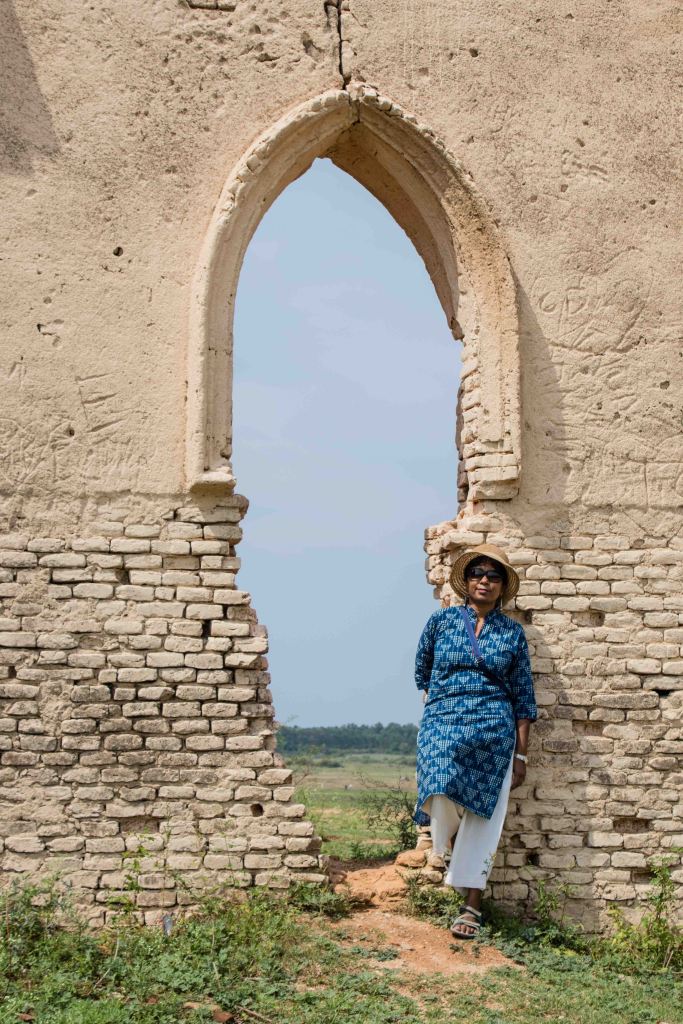

The place also seems to be popular for some event shoots. When we were there, we saw an event shoot happening for a young couple; maybe they were getting engaged or married. One of the favourite spots and certainly the most grand, is the one below:

We also had to our picture clicked in front of it 😀

Here is one from another popular spot.
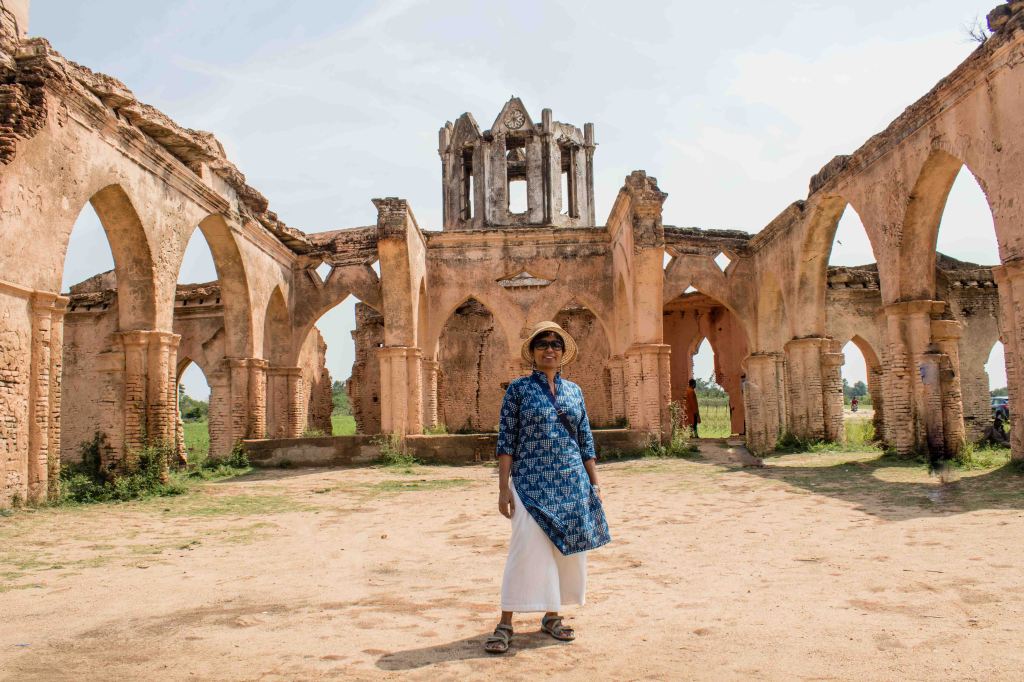
I am sure you can get some very other interesting photos when the weather is different; for e.g. with the rain clouds in the background, or during sunrise etc. Well whatever be your reason, the place is worth a visit.
Useful Information
It gets hot in the summer. So carry water if you plan to hang around for a while. Also a decent hat is a must. Decent places to eat atleast 30 kms away. So prepare appropriately.
If you are living in Bangalore, it can easily be done as a day trip. This is what we did in our second visit. You can drive almost till the structure in the dry season. However I would recommend walking from the main road. It will give you different perspectives of the structure as you walk towards it.
Best is to visit it on a weekday. During weekends, though not crowded, it does have its fair share of visitors. So you may have some challenges in getting photos without other people in it 🙂
 Mad about Birding and Travel
Great post 🙂
LikeLiked by 1 person
Thanks for sharing details. Need to plan for it.
No birding opportunities around it😜😀
LikeLiked by 1 person
It may be a good way to surprise your wife that you can do trips that are not “planned” around birding 😀
LikeLike
This was a lovely find. Beautiful while submerged in monsoon &so easily walkable in summers!!
LikeLiked by 1 person
Yeah, an absolutely stunning place that we could explore
LikeLike