
Maguri Beel is a very large lake located in the south bank of Dibru river, a channel of the river Brahmaputra and is not too far from the town of Tinsukia in the state of Assam in India. We had just finished our birding trip to Mishmi Hills and had included an extra day to do birding around Maguri Beel and nearby. You can read about the Mishmi Hills part of the trip here.
The plan was to do birding in the grasslands around Maguri Beel on the day of return from Mishmi Hills. And that is what we did. We had however spent longer than what had been expected in our visit to RIWATCH in Roing in our return journey and thus, by the time we got to the grasslands around Maguri, it was almost the start of dusk. But we were obviously not got to be dissuaded from birding. At the place where we stopped, we almost immediately got the sighting of an Asian Barred Owlet, perched on a tree.
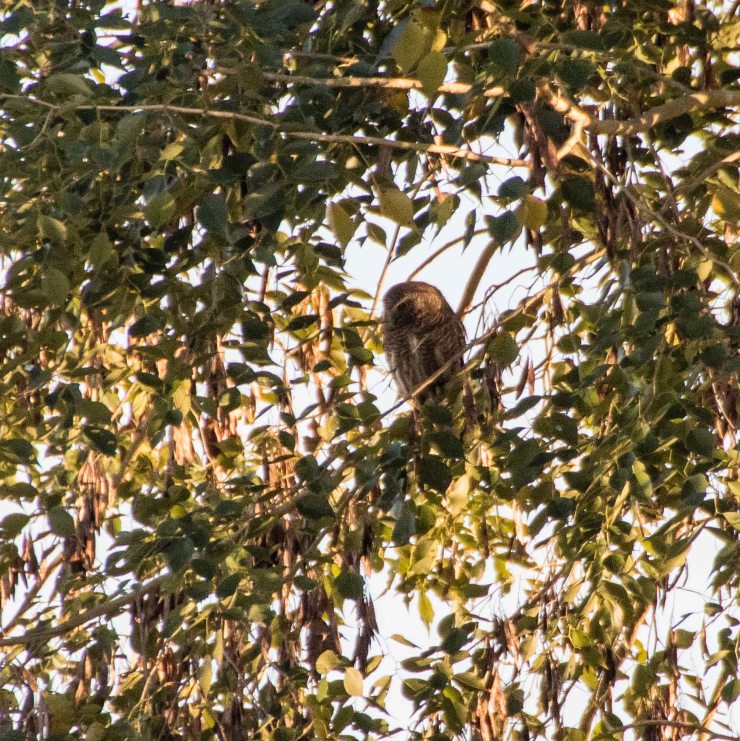
Asian Barred Owlet
We then walked into the grassland, following our guide, Palash. It was important to stay close to him as the elephant grass was quite tall and one could easily get lost. An unexpected sighting was a couple of Swamp Francolins hurrying away into the grass, when they saw walking in from far. But I just about managed to get a bad photo of one of them; a happy sighting though 🙂 .

Swamp Francolin
One of the target birds was the Jerdon’s Babbler. As we walked towards an area where there was a chance of seeing it, we were greeted by a flock of Striated Babblers. They moved across the grass field quite fast as we approached their area. There were also several Common Stonechat that came into our view.
Once in the area, Palash was keenly listening for calls of the Jerdon’s Babbler. He almost immediately signaled us to start walking back the way we had come; Wild Buffalo! We did not want to come in contact with them. They are unpredictable, irritable and attack quite easily if they feel threatened. Darkness was also falling quite fast. But before we headed back to the vehicles, we then decided to try for the Chestnut-capped Babblers. And see three of them we did!
Next day morning, the plan was to explore a bit more of the grassland and then take a boat ride to explore the Beel (lake) itself. The morning had a lot of mist on the path and over the grassland. We slowly crossed a bridge and made our way along the road, keenly listening for any calls. After quite a bit of carefully walking around, we finally managed to get good views of a Spotted Bush Warbler.

Spotted Bush Warbler
Soon we were heading out into the Beel on two hand steered boats. This was great idea, as it helped in a small way, not to spook the birds into flying quickly as we approached them. It also made the boats go slower, thus allowing us to enjoy the sights better. The lake was teeming with plenty of water fowl and waders. Below are some of the birds that we saw in the ride.

Citrine Wagtail 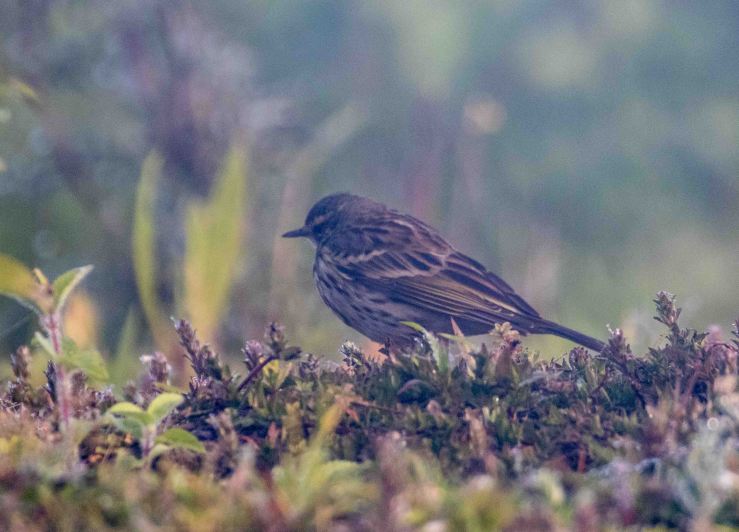
Rosy Pipit 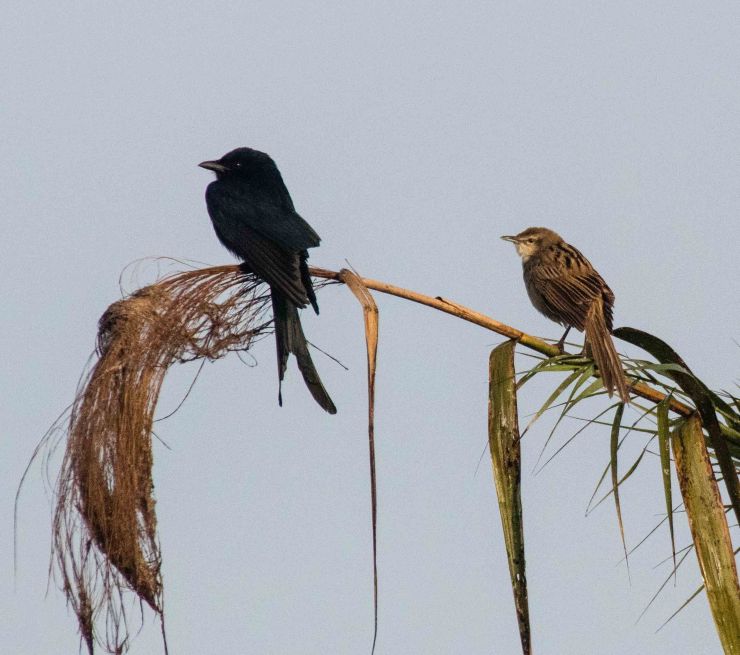
Black Drongo, Striated Grassbird 
Bar-headed Goose 
Northern Lapwing 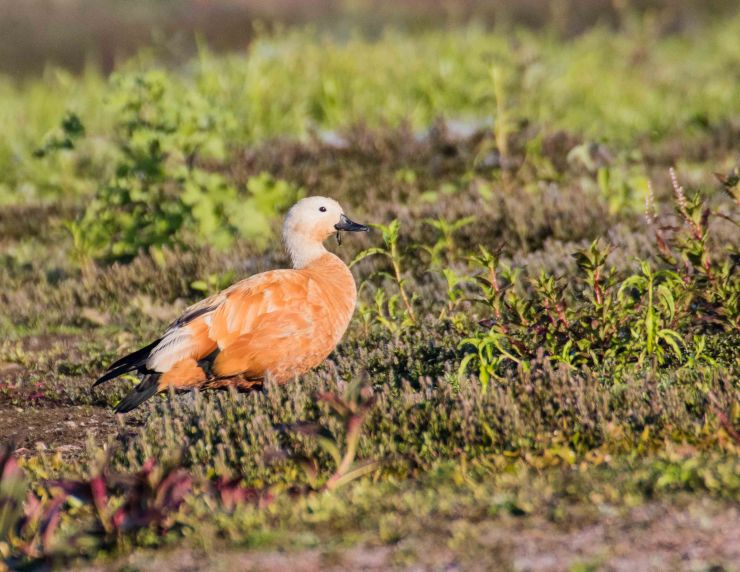
Ruddy Shelduck 
Gadwall 
Eurasian Wigeon 
Ferruginous Duck 
Barn Swallow 
Asian Openbill 
Asian Pied Starling 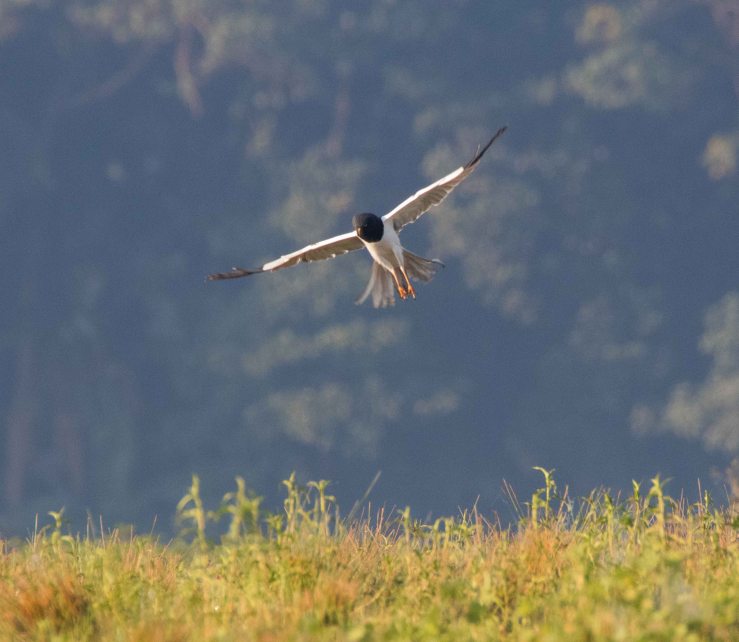
Pied Harrier (M) 
Pied Harrier (F)
We had to return to shore within around 2 hours as we had plans to head off to another location for the remainder of the day. Therefore we could not do complete justice to the lake. It definitely required atleast half a day of exploration. One of the key species that we failed to see in the short ride was the Falcated Duck. It had been sighted for a few days. But since they come in very few numbers and being a large lake, one needs sufficient time (and luck) to locate them. Well, we did not have both on our side that morning.
Post breakfast, Palash took us to a nearby spot to see the Abbott’s Babbler. The particular individual that we finally managed to see, was a shy and restless individual
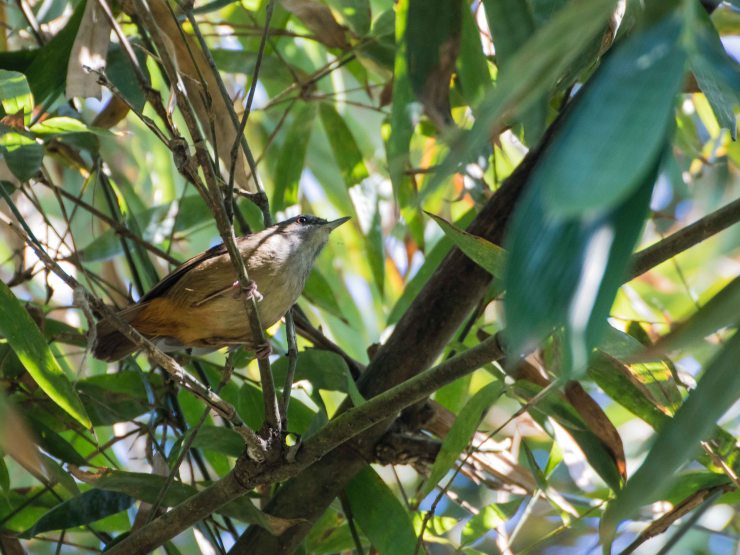
Abbott’s Babbler
We certainly had not done justice to both the Maguri Grasslands and Beel. Both deserved another focused visit in the future. Well, something to look forward to I guess 🙂 .
Video Tour
Here is a short video I made of the birding session in the grassland and lake in the morning.
Recommendation
One must alteast keep 2 days to reasonably cover the grassland and the lake. This was you can possibly dedicate one atleast two full sessions to each. The area is vast and needs this much amount of time.
The water fowl come in large numbers. They all stay in mixed flocks. So one has to observe very carefully these flocks as they can hold multiple species, especially making it easy to miss out ones that look similar or come in less numbers.
Bird Checklist
Below is the list of birds that we saw around Maguri Beel:
| 1 | Swamp Francolin |
| 2 | Red-wattled Lapwing |
| 3 | Asian Openbill |
| 4 | Glossy Ibis |
| 5 | Asian Barred Owlet |
| 6 | Chestnut-capped Babbler |
| 7 | Striated Babbler |
| 8 | Bluethroat |
| 9 | Common/Stejneger’s Stonechat (Siberian/Stejneger’s Stonechat) |
| 10 | Bar-headed Goose |
| 11 | Intermediate Egret |
| 12 | Cattle Egret |
| 13 | Paddyfield Warbler |
| 14 | Spotted Bush Warbler |
| 15 | Lesser Whistling-Duck |
| 16 | Northern Shoveler |
| 17 | Gadwall |
| 18 | Eurasian Wigeon |
| 19 | Indian Spot-billed Duck |
| 20 | Northern Pintail |
| 21 | Green-winged Teal (Common Teal) |
| 22 | Common Pochard |
| 23 | Ferruginous Duck (Ferruginous Pochard) |
| 24 | Tufted Duck |
| 25 | Little Grebe |
| 26 | Eurasian Moorhen |
| 27 | Eurasian Coot |
| 28 | Northern Lapwing |
| 29 | Little Ringed Plover |
| 30 | Pheasant-tailed Jacana |
| 31 | Bronze-winged Jacana |
| 32 | Common Snipe |
| 33 | Common Sandpiper |
| 34 | Green Sandpiper |
| 35 | Wood Sandpiper |
| 36 | Great Cormorant |
| 37 | Great Egret |
| 38 | Pied Harrier |
| 39 | Pale Sand Martin (Pale Martin) |
| 40 | Black Redstart |
| 41 | Paddyfield Pipit |
| 42 | Rosy Pipit |
| 43 | Striated Grassbird |
| 44 | Abbott’s Babbler |
 Mad about Birding and Travel
44 Birds in one visit !! You must be a VERY happy man!!
LikeLiked by 1 person
Definitely 😀
LikeLike
Very informative and the pictures are awesome in a word. Thanks for sharing this beautiful article. I am a bird photographer and bird watcher from Kolkata and also write a blog . My blog “Birds of India” is a bird identification blog for aspirant bird watcher.
LikeLiked by 1 person
Thank Amitava for your comment and appreciation. I will certainly be looking at your blog.
LikeLike