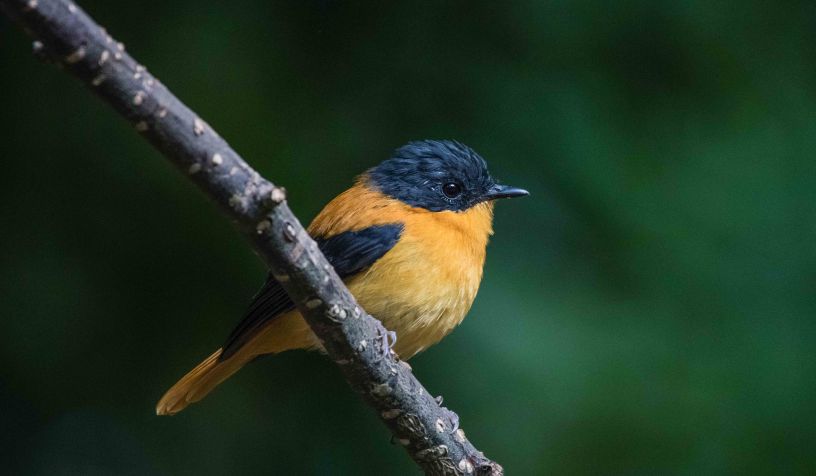
The Nilgiris beckoned; how are we, mere mortals, to say no! I was on a birding trip to The Nilgiris in answer to this call, along with my friend Kumar. Our first major birding stop in the trip was Masinagudi. You can read about our experience there from my previous post here.
We had said goodbye to Siddhan, our guide from Masinagudi, some time after noon. A quick lunch and we were off towards Ooty. The route we took was the one going up Kalahatti ghats. It is shorter and faster than the one compared to the Gudalur route. However this route is not for all. The road up the ghat is quite steep and has 36 hairpins. You can literally hear your engine revving up as you do most of the driving up on your lower gears. I was passing through on this road after almost a decade. I was impressed by how the road was all done up, and reasonably broad. But of course one still needs to be careful and sensible when driving.
Kumar was in his elements driving up the ghats. I happily sat in the side passenger seat and enjoyed the view. A bit after crossing the Kalahatti Falls, we saw a part of the mountains still holding a patch of the blooming Neelakurunji (Strobilanthes kunthianus).
The Neelakurunji is a shrub found in the Shola forests of the Western Ghats, that blossoms only once in 12 years. The flower is of a purplish blue shade. It is thought the name of Nilgiris (literal translation is “blue mountain”) for these mountain ranges came owing to these flowers.
The year 2018 was the year when the Neelakurunji was to bloom again in its cycle. We were surprised (but happy) to see these flowers in bloom as it was almost the end of its blooming period. However we did not to stop for any pictures while going up. We decided to take them on our way back instead.
Ooty was much cooler than Masinagudi. The temperature had dropped around 5 degrees already when we were done with the drive up the ghat. It was of course going to even cooler as night approached. Driving through, I could see that Kumar was getting nostalgic. He had spend most of his childhood in Ooty, as his father used to work there. We took a slight detour off the main road and into the area where he had lived. It was a beautiful and very quite place.
Our base for the next two nights was to be Kotagiri. This was almost an hour’s drive away from Ooty. But before we moved on to Kotagiri, we were going to do a bit of birding around the Botanical Gardens in Ooty. So that is where we went.
Ooty Botanical Garden
It was late afternoon when we entered into the Botanical Garden. Being a Sunday, there were plenty of people around. So we did not bother to try and bird in the grounds close to the entrance. Instead we walked on and up to the rear. This area was less noisy. Slowly the birds started to make their appearance. The first to come were some Oriental White-eyes. A walk near a small water body yielded a Grey Wagtail exploring its bank. We moved on further up in the hope of finding an area with even lesser people. Suddenly the activity started to pick up. The Red-vented Bulbuls were in a playful mood. They were soon accompanied by Cinereous Tits and Grey-headed Canary Flycatchers. It is always a joy to way these beautiful and cute birds.

We walked ahead till we reached a gazebo. It was just us there. Here we saw a few Velvet-fronted Nuthatch. But the main bird that we were hoping to see was the Black-and-Orange flycatcher. But it was not to be. We could hear it call several times when we were there. However it refused to show itself. Time was running out for us as we needed to head off to Kotagiri. So we headed back to the car in the hope that our chances of seeing one would be better the next day.
Virtual Tour
Here is a short virtual tour of the walk through the Botanical Gardens
Coonoor
We met our local guide, Mr. Aggal Sivalingam, by 6:30AM near our place of stay in Kotagiri. The morning was cold. So the cup of hot tea and freshly made pakodas (fritters) tasted even better in this chill.
The drive to Sim’s Park, our destination in Coonoor for the morning, took around 45 minutes. The ride had us seeing a Grey Junglefowl climbing the hill side as well as a Stripe-necked Mongoose crossing the road. Reaching there we were one of the early bird(er)s, so to speak, at Sim’s Park. I had heard of it being a great place for birding. So being actually here, had me filled with anticipation. Aggal was confident on getting some of target endemics here. Well, that was indeed good news, as far as I was concerned 🙂 .
The first of the targets that we got was the Nilgiri Flycatcher. It was partly hidden inside a pine tree; a female specimen. Here is another one we got later in the session.

Our next one, was the much awaited Black-and-Orange Flycatcher. And what a show they put on. Of course, full credit goes to Aggal, who really knew their pattern, behaviour and the usual spots. Here are some of their photos.

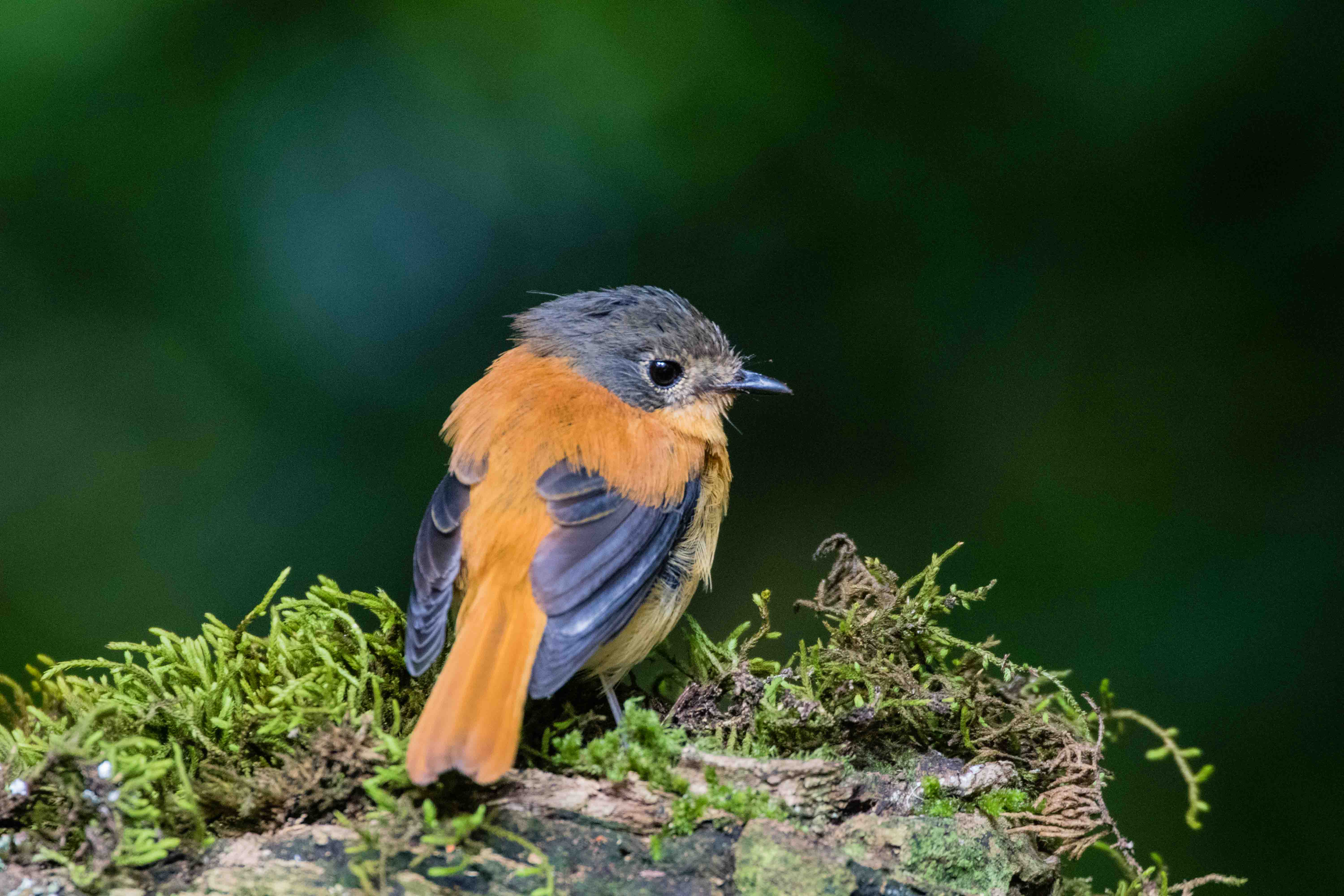
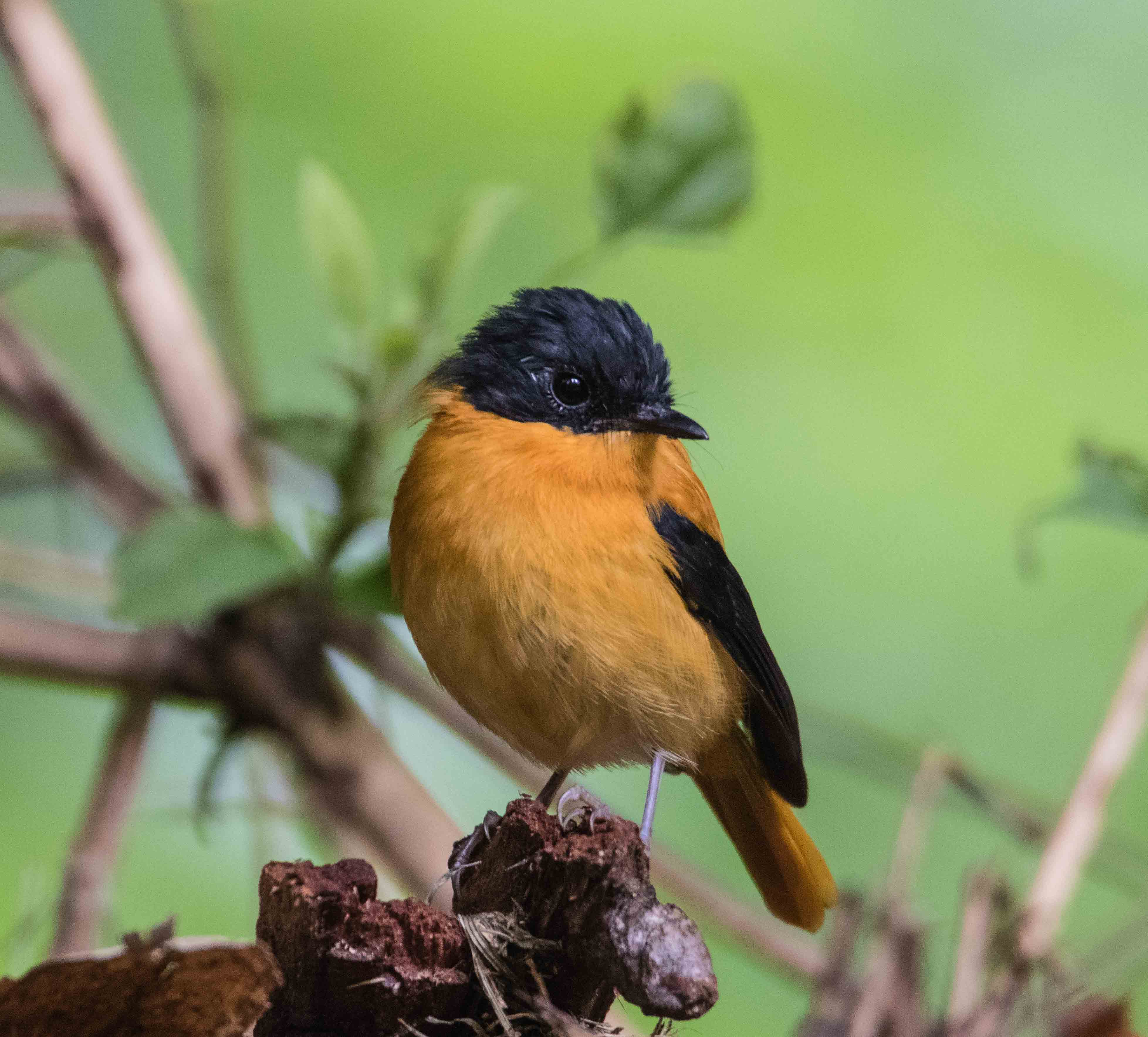
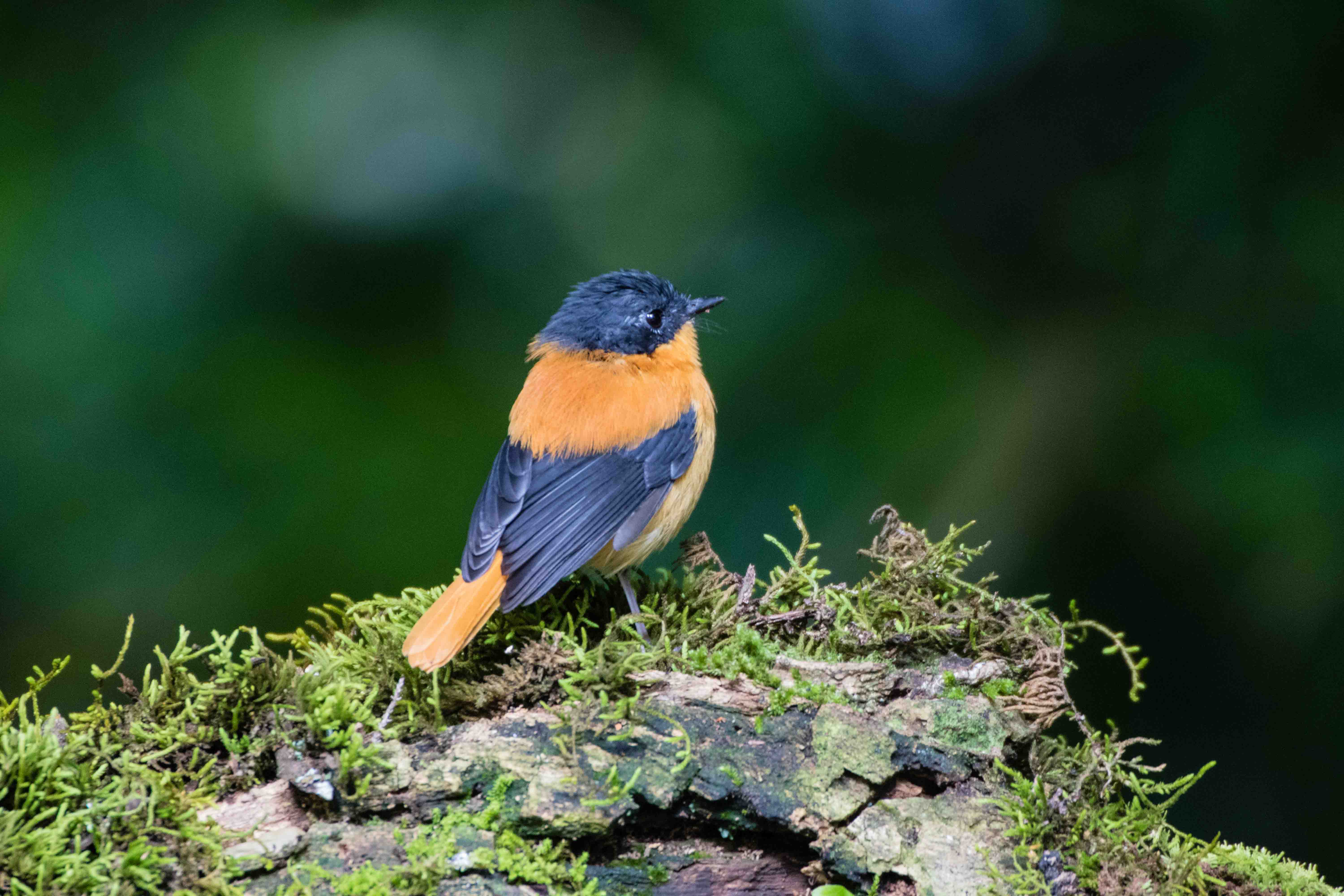
A walk around the area with the flycatchers had us seeing several Indian Blue Robins and Cinereous Tits.


Suddenly a loud and familiar call caught my attention; a Large-billed Leaf Warbler. My attempts to see one in Bangalore over a couple of outings in the past few weeks, had not met with success. So getting to see one here would be fantastic. Success does come with perseverance. I managed to see it and get some photos of it as well 🙂 .

An Indian Yellow Tit and several Vernal-hanging Parrots joined the party. There was also an Indian Scimitar Babbler calling and going about its morning search for food near the stream. Another spot gave us fantastic views of a Grey-headed Canary Flycatcher. It was amazing to see if fly off quickly from its perch, catch an insect and then return back to the same perch.

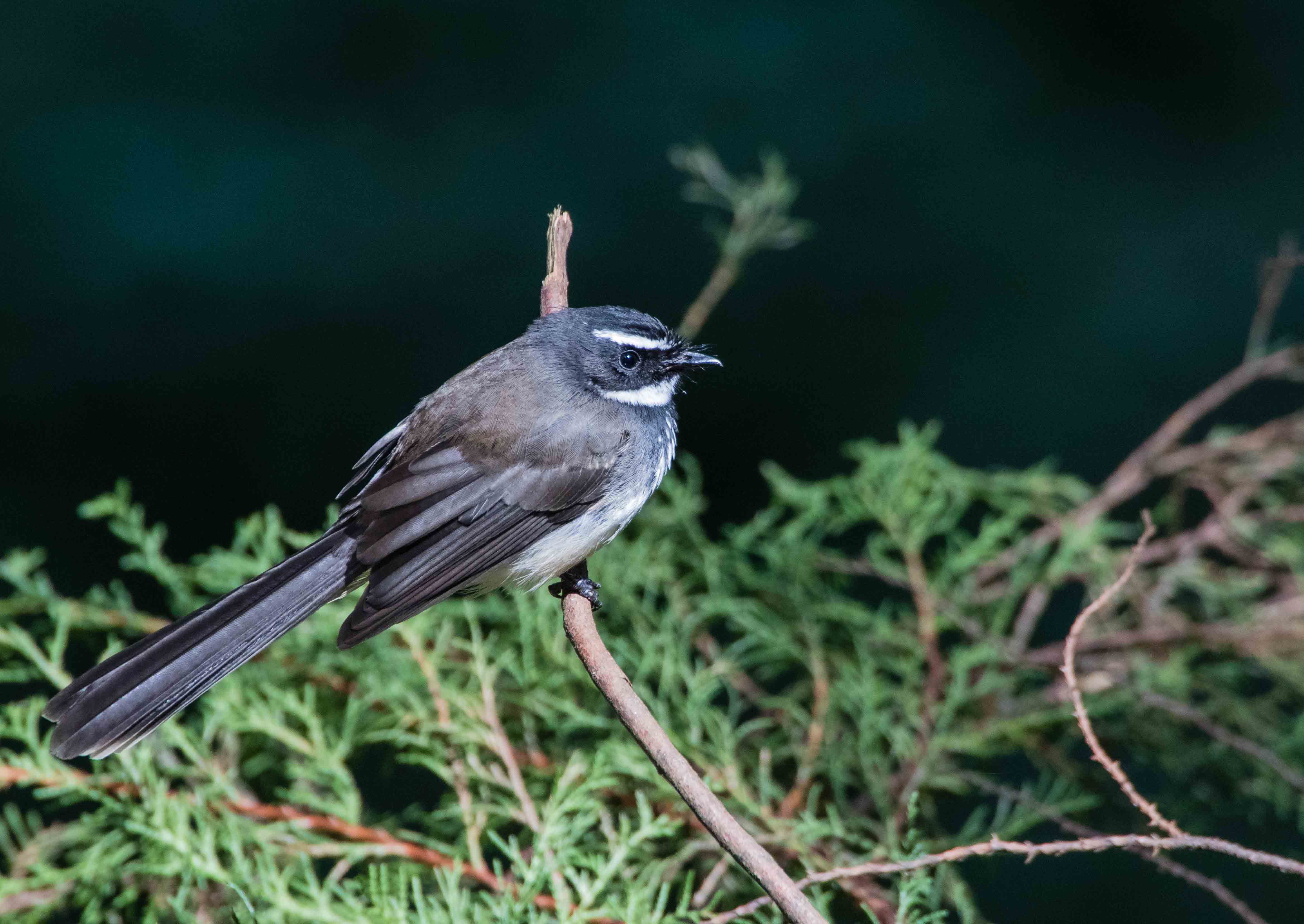
A Spot-breasted Fantail decided to come and entertain us at the same spot. It went about hopping from one perch to another, each type spending a few seconds there fanning in tail. What a pleasure it was to watch it in action!
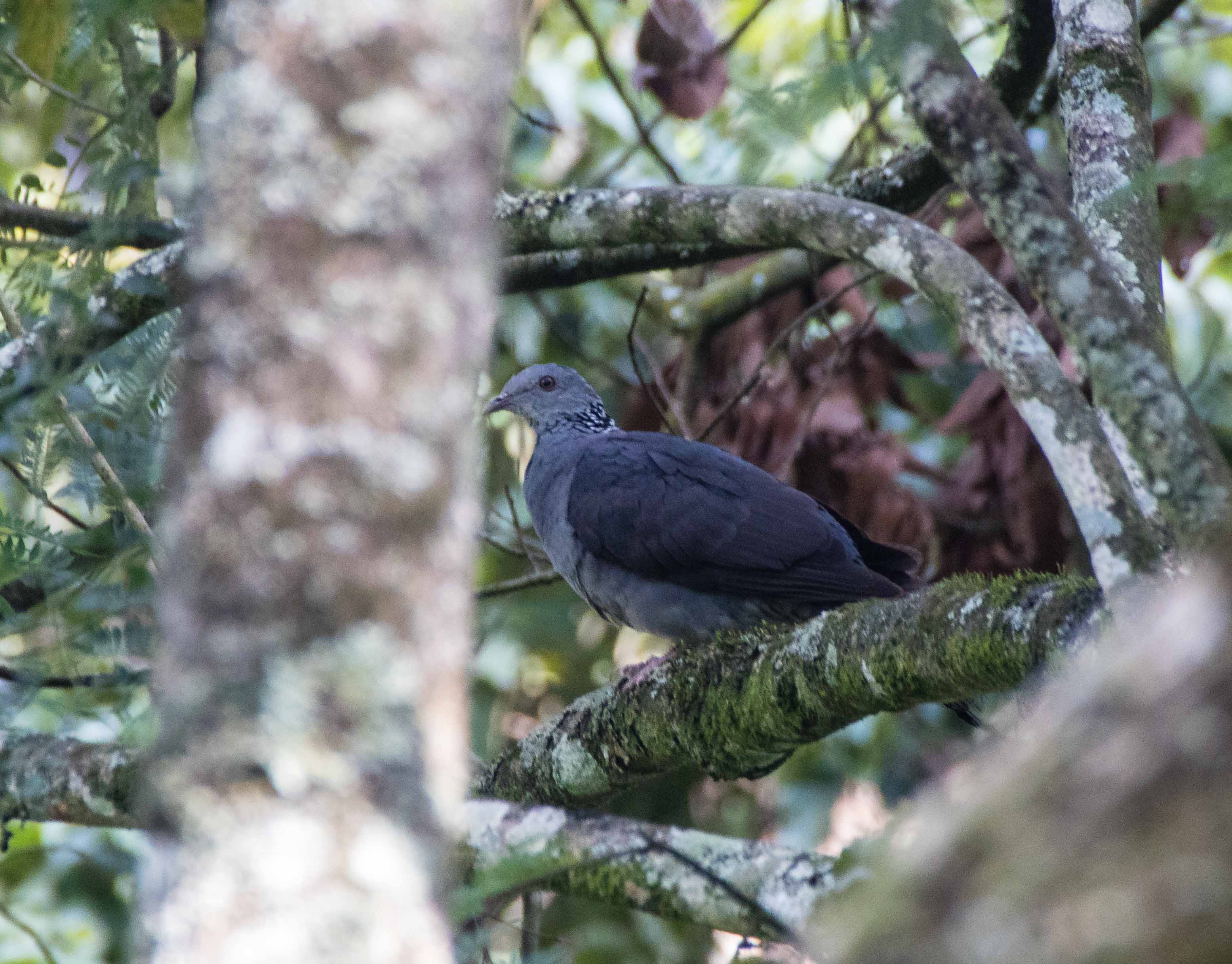
A branch above the bush where the fantail was playing, had a Nilgiri Wood-Pigeon.
Scanning the other tree tops yielded the resident Crested Goshawks. The angle of the light was however not conducive to getting a good photograph.

There was not one, but four; 3 perched and one in flight. I wondered how they all lived together; may be some were “teenagers” who would move out soon 🙂 .
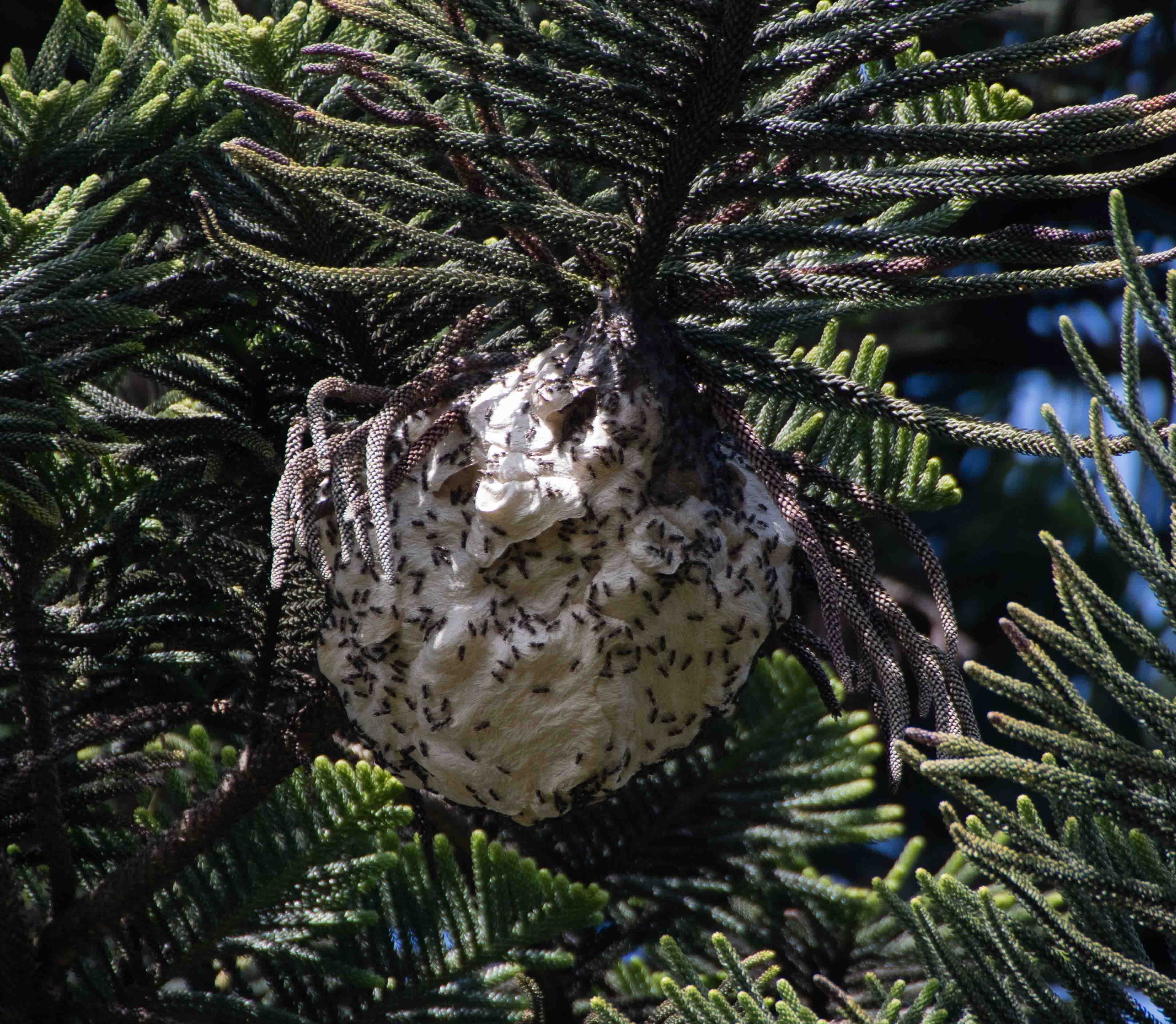
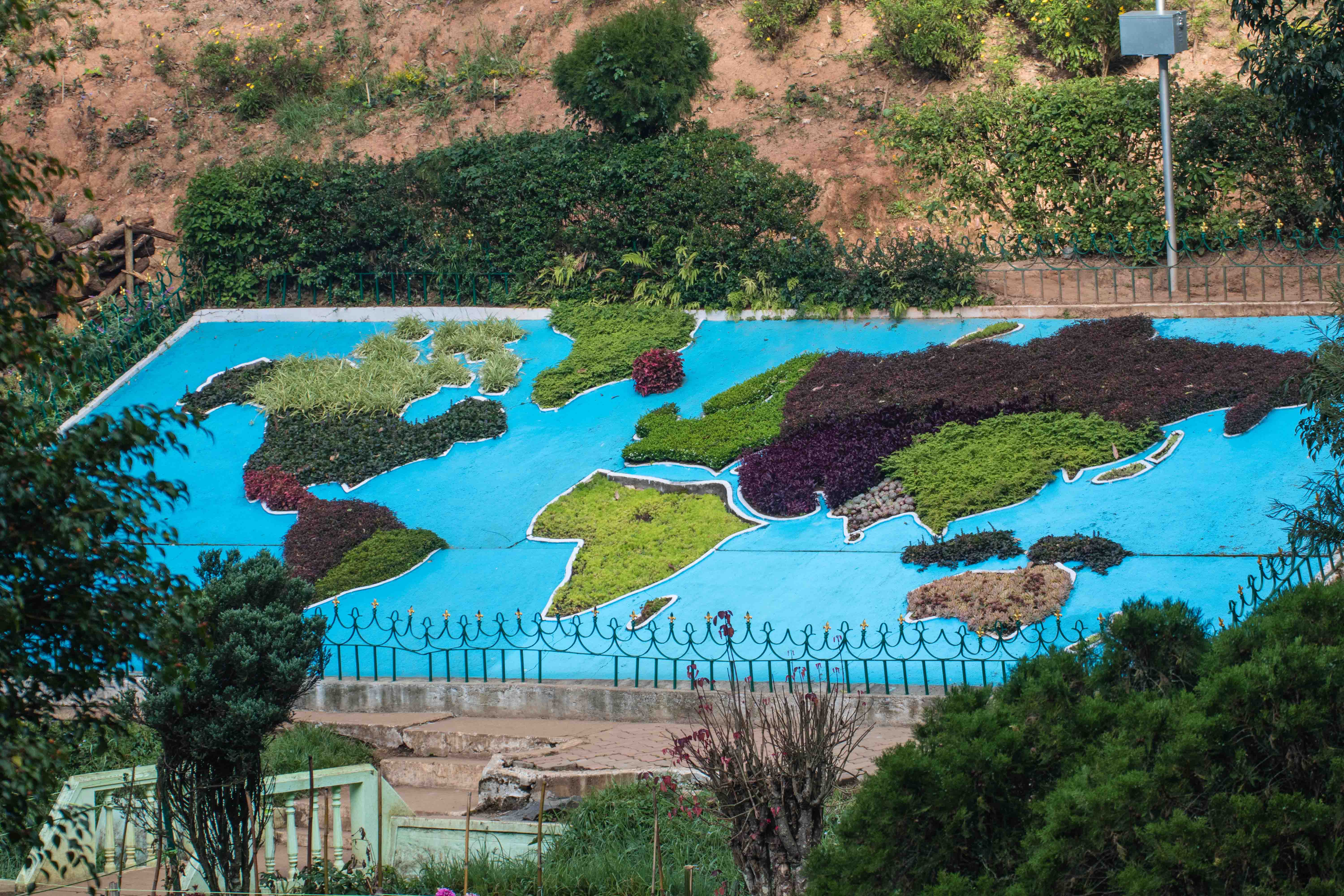
It was not just birds that were interesting. Some of the other sights were that of a nest of Flying Ants and the World Map.
We decided to call it a wrap around 11AM.
Virtual Tour
Here is a short video that I made from the visit.
Around Kotagiri
Kotagiri and its surrounding area, are great places to bird. Of course one needs to know the potential spots. This is where having a local guide like Aggal really helpful. Some of the spots were a little away from the main road or in someone’s private property. Not only does he try and show them to you, but also tries to let you take decent photographs of them. What more could one ask 🙂 . Here are some of the birds that we saw.
The star has to be the Kashmir Flycatcher. It is unlike most other flycatchers; a very restless bird. We got to see a female.

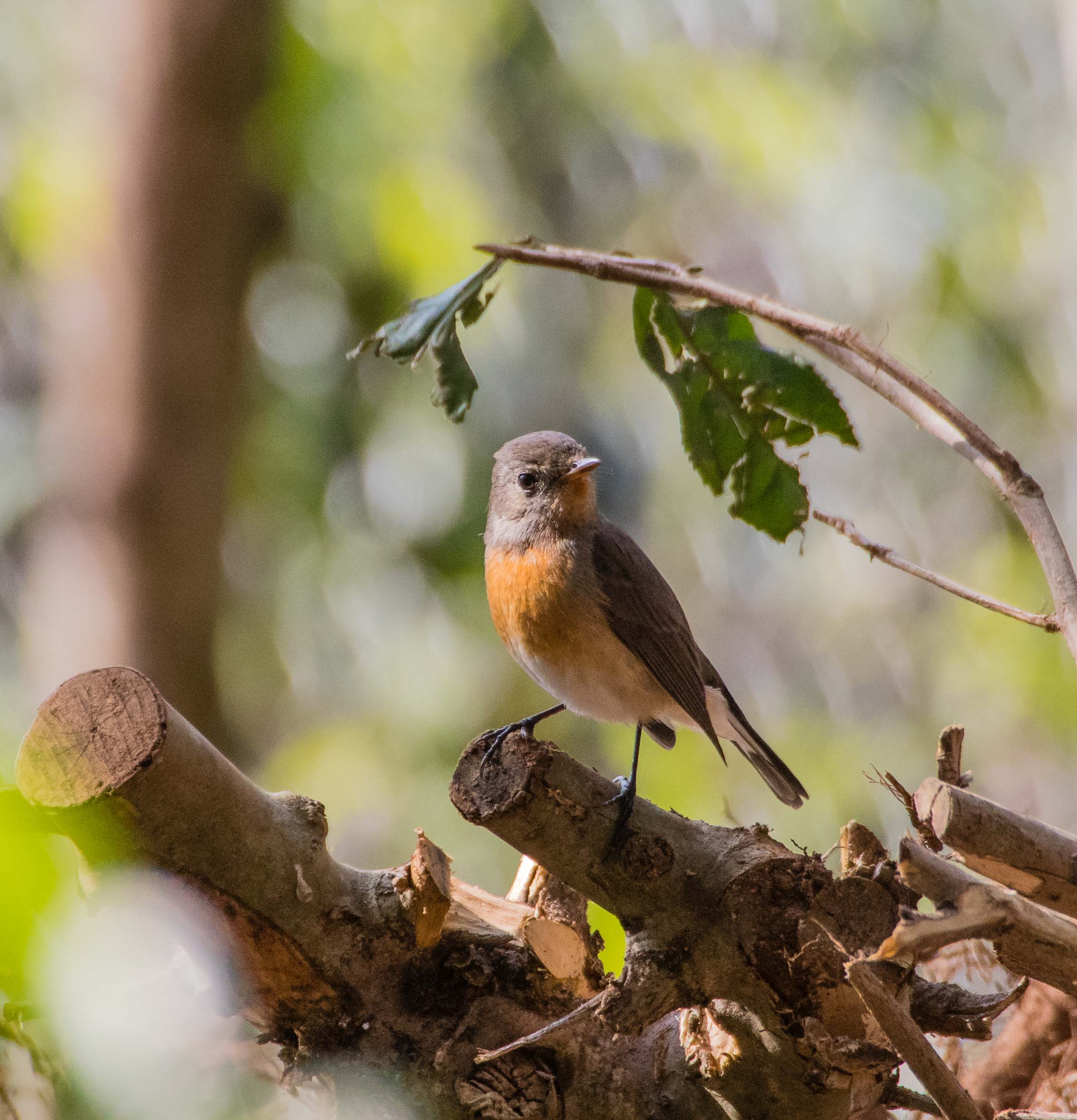
There was also a Greenish Warbler adding the confusion of trying to spot the Kashmir Flycatcher

Another spot later in the evening had us getting fantastic views of birds like the Southern Hill Myna, Malabar Parakeet and a Streak-throated Woodpecker.


We heard an Indian Pitta calling while enjoying the sights of the woodpecker. A Grey-headed Bulbul also called and took flight from one tree to another; but not perching to allow a photograph.
Besides the birds at the spot, we were also enthralled by a Barking Deer, grazing in the bushes and periodically looking at us.
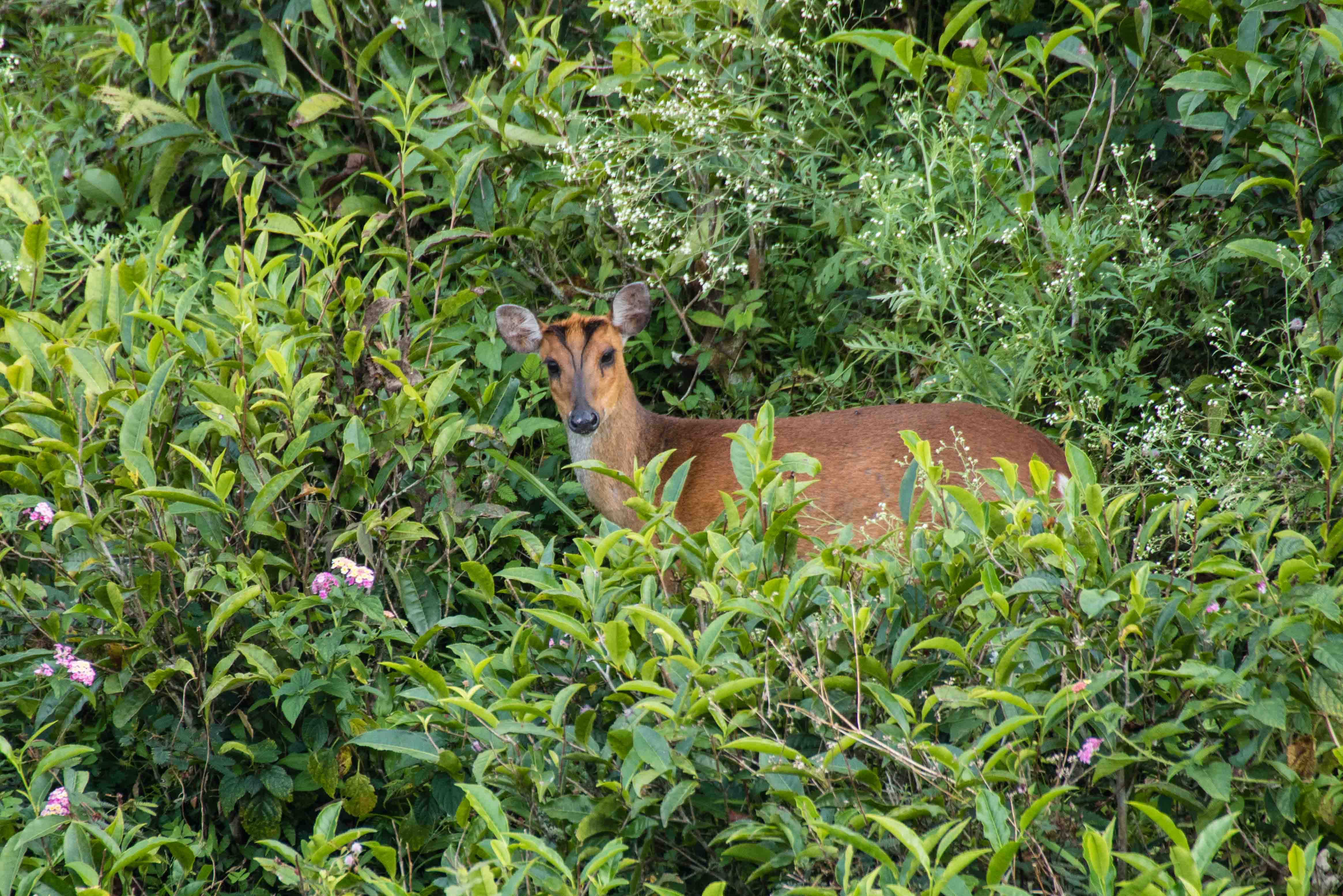
We decided to head off to another spot that had the potential of it being visited by a Leopard. Aggal had mentioned that he been seeing Leopard markings for a few days now. And there was a chance of it visiting one of its vantage spots. That is where we were heading to. But it was not be. Well, one can only try. We did, however, get to see an Indian Gaur roaming around the tea gardens that we were walking in. Man, they were big!

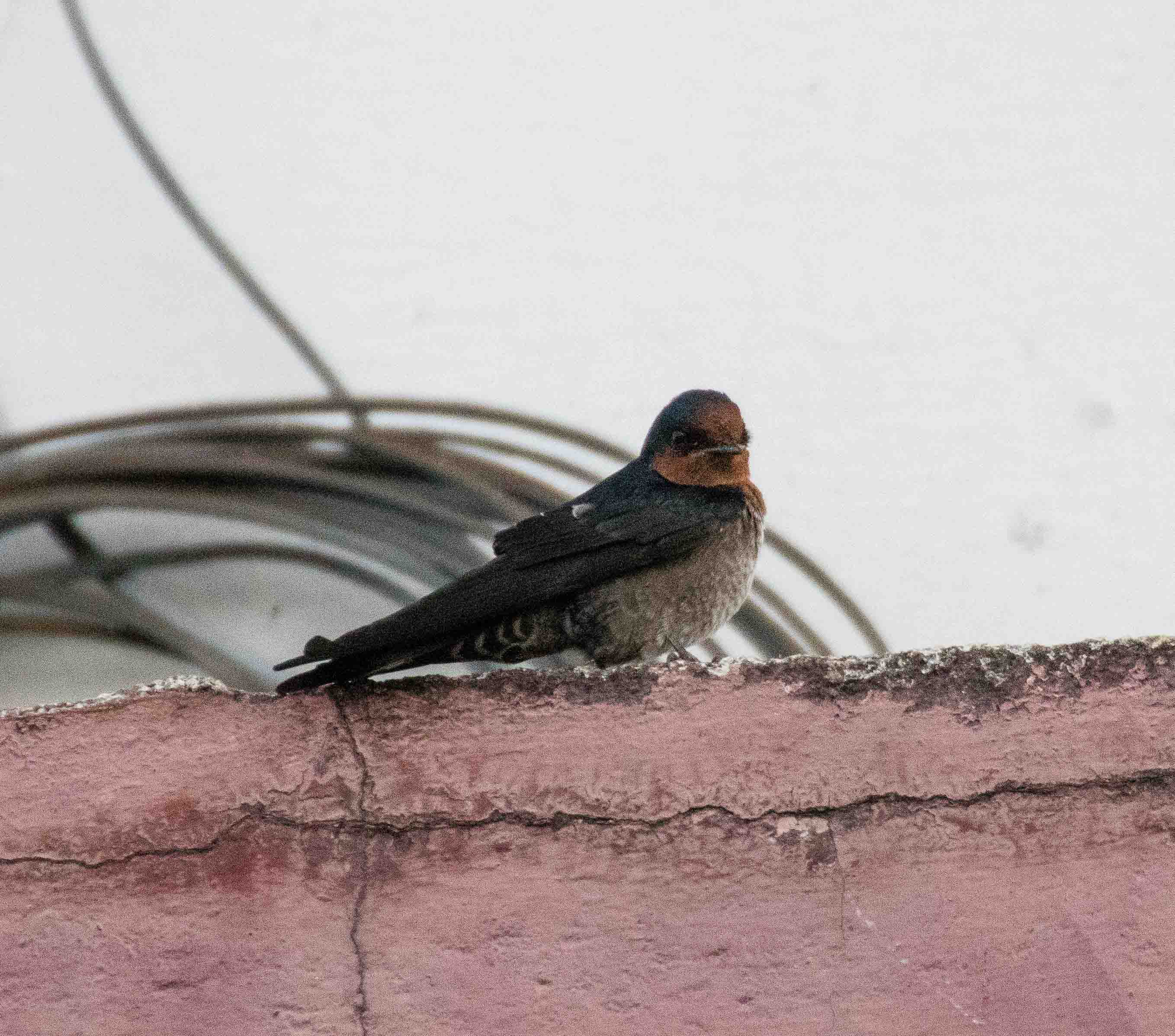
The morning session of the next day was to look for the Nilgiri Sholakili, the Nilgiri Laughingthrush and the Painted Bushquail. Of course any others were welcome. Before we headed out we got good views of Hill Swallows. Most were hawking insects on the wing. But one decided to perch briefly in front of me.
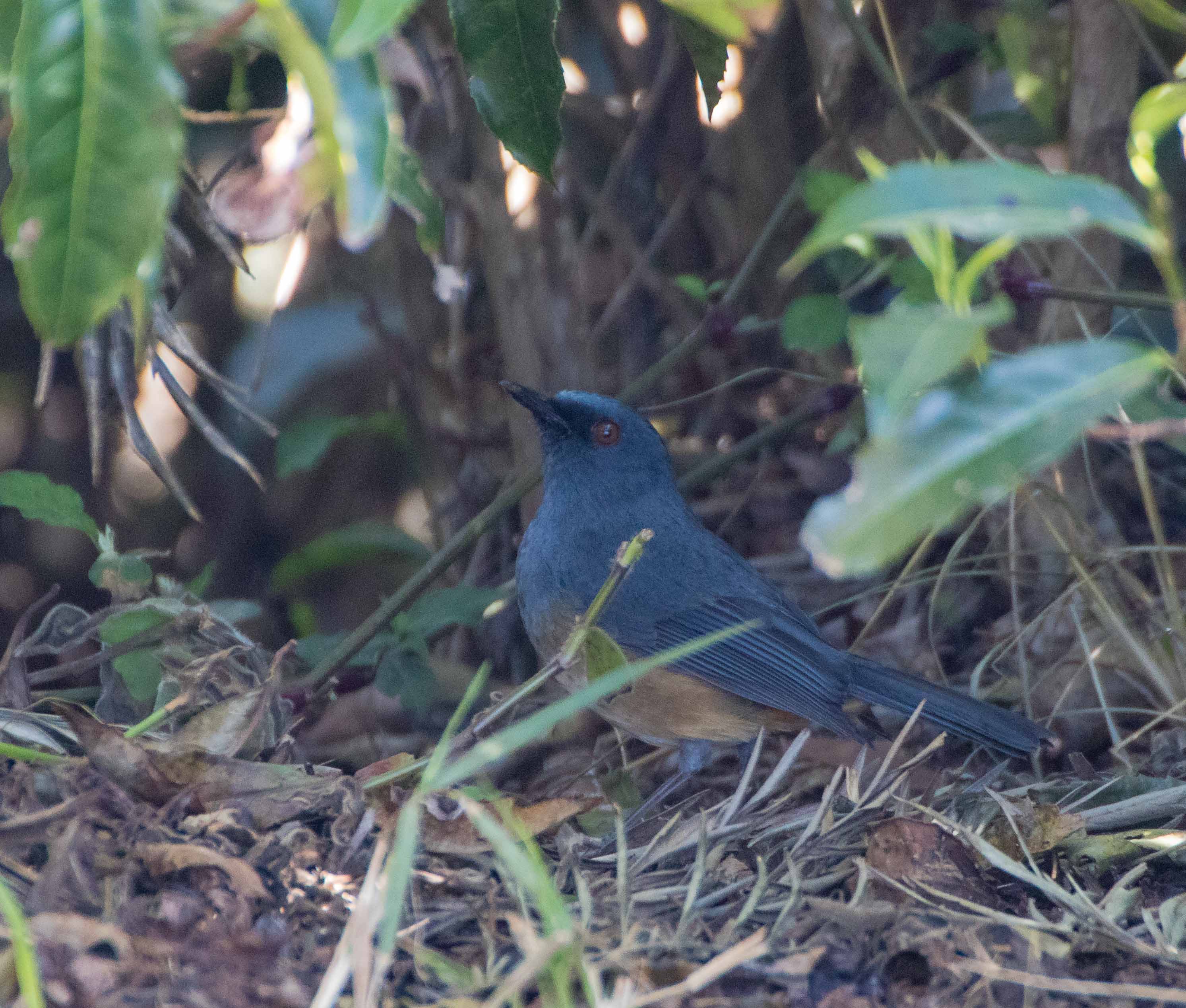
We got to see the first two targets around Longwood Shola forest.
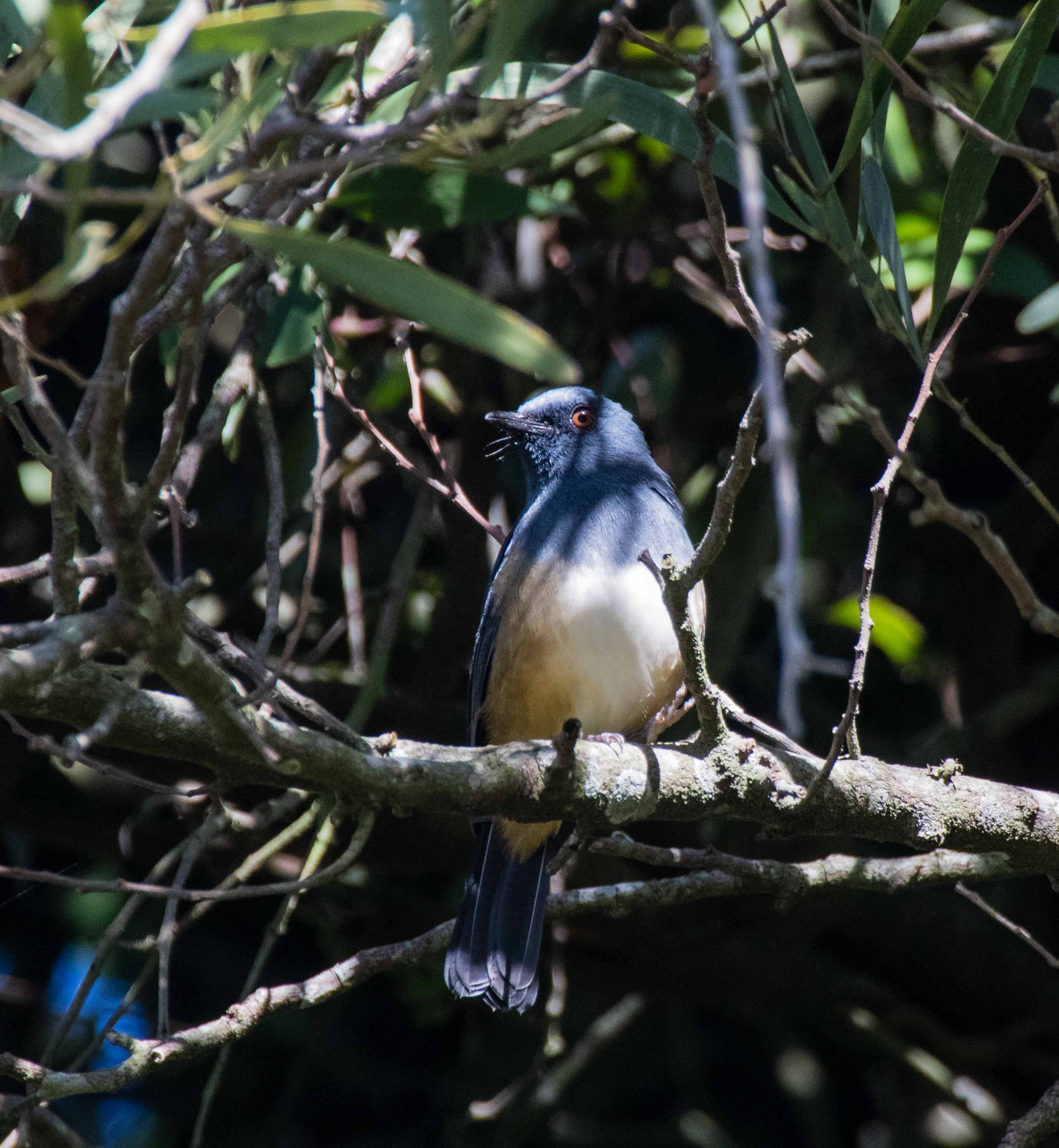


We also saw a couple of Tickell’s Leaf Warbler and a Booted Warbler. We could also hear several Large-billed Leaf Warblers calling.
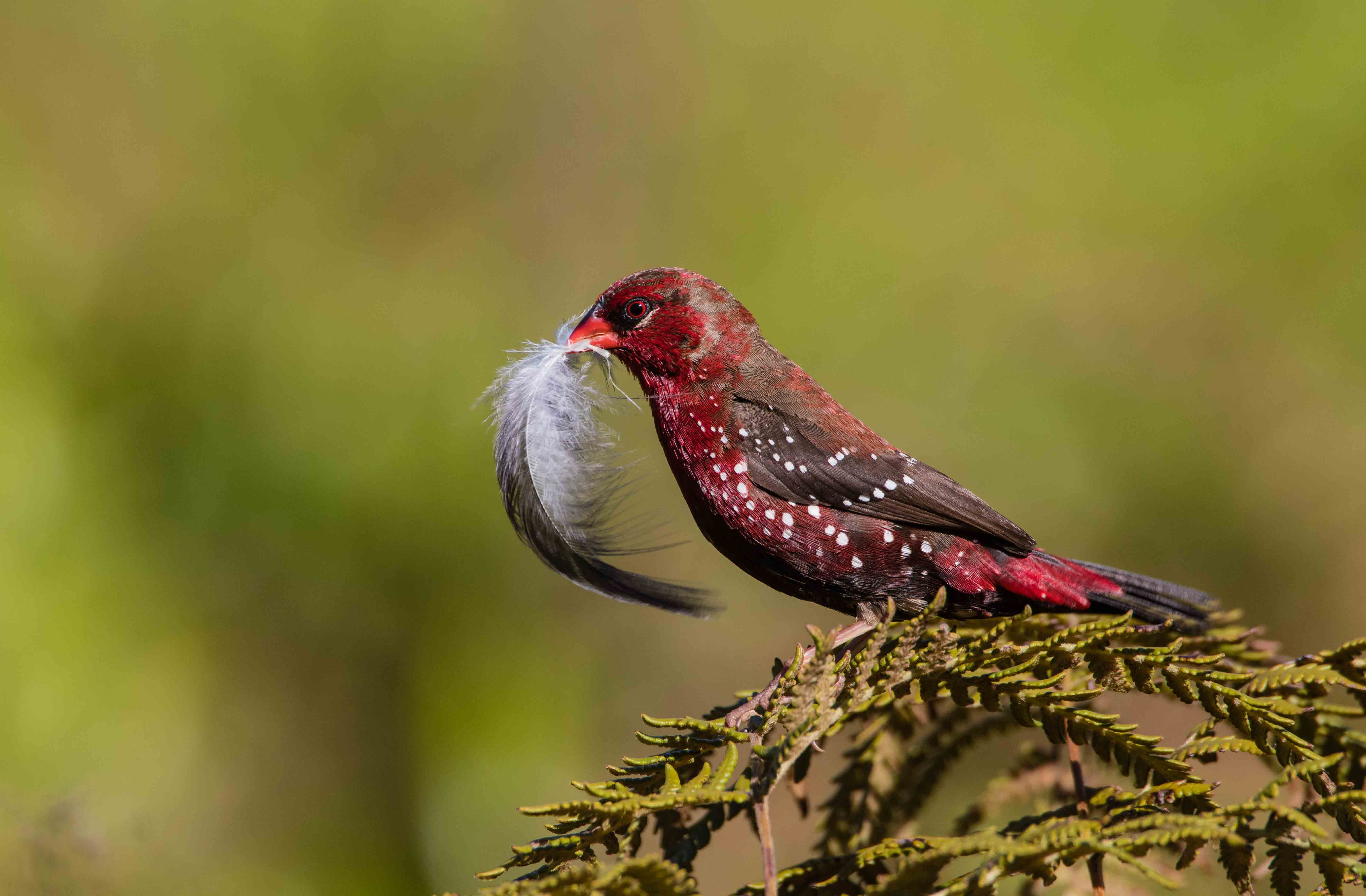
For the Painted Bushquail we had to go a place near agricultural fields. We did not get to see any. But we go some fantastic views of a male Red Avadavat.
Doddabetta Peak, Near Ooty
We paid a visit to this peak as we were heading back to Bangalore from Kotagiri. It is very popular with tourists coming to Ooty. From a birding perspective I had heard it was a sure shot place to get to see the Nilgiri Laughingthrush. And we sure did. We reached the place around noon. Our sighting the birds started right near the car park. They were several that we spotted eating of the leftovers thrown by the visitors; “fast food” I guess for them 🙂 . Don’t know if it has any biological impact on them though.


Another bird that was completely at ease around the humans, was the Indian Blackbird.

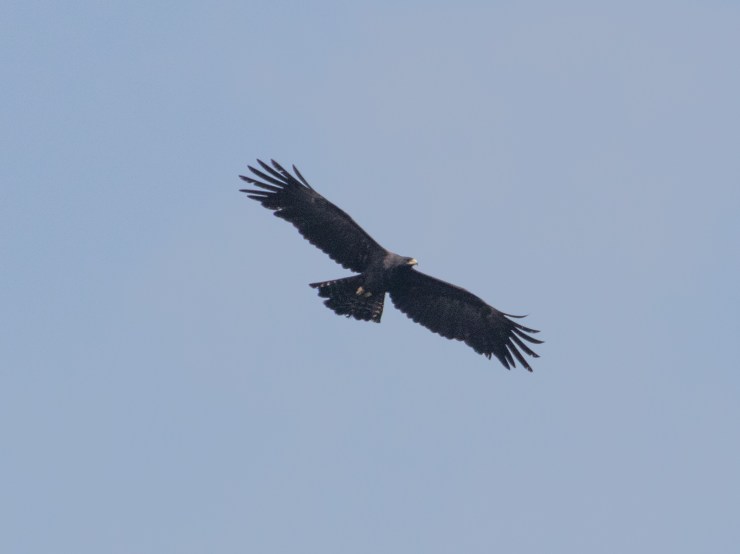
We were wondering why we had not seen any eagles. Lo and behold, a Black Eagle decided to take away any disappointment we may have had, as we were on the outskirts of Ooty.
Summary and Recommendations
There are some very colourful and pretty birds to see in the region. Of course, one must do their homework on the potential sites where they may be found. Even then, having a local expert like Aggal, increases your chances of seeing them. I am sure we would not have been able to see some of the rarities like the Kashmir Flycatcher, had it not been for him. He is also considered one of the best for the region.
If you have only limited days to spare for birding, I would recommend Sim’s Park to Ooty Botanical Garden. The number of the local specialties and the chances of seeing them is higher in a smaller area. Moreover, Ooty gets really crowded owing to it being more popular with tourists.
The region has several avian “hotspots” that we were not able to visit owing to lack of time. Many also need special permission; something which many officials are weary of giving sadly.
Bird Checklist
Here are the list of birds that we saw in the trip.
| 1 | Greater/Common Flameback |
| 2 | Ashy Drongo |
| 3 | Indian Paradise-Flycatcher |
| 4 | Large-billed Crow (Indian Jungle) |
| 5 | Grey-headed Canary-Flycatcher |
| 6 | Cinereous Tit (Great Tit) |
| 7 | Velvet-fronted Nuthatch |
| 8 | Red-whiskered Bulbul |
| 9 | Green/Greenish Warbler |
| 10 | Oriental White-eye |
| 11 | Pied Bushchat |
| 12 | Grey Wagtail |
| 13 | House Sparrow |
| 14 | Rock Pigeon (Feral Pigeon) |
| 15 | Long-tailed Shrike |
| 16 | Hill Swallow (House Swallow) |
| 17 | Jungle Myna |
| 18 | Grey Junglefowl |
| 19 | Nilgiri Wood-Pigeon |
| 20 | Spotted Dove |
| 21 | Crested Goshawk |
| 22 | White-cheeked Barbet (Small Green Barbet) |
| 23 | Rose-ringed Parakeet |
| 24 | Vernal Hanging-Parrot (Indian Lorikeet) |
| 25 | Bar-winged Flycatcher-shrike |
| 26 | Orange Minivet |
| 27 | Spot-breasted Fantail (White-spotted Fantail) |
| 28 | Indian Yellow Tit |
| 29 | Tickell’s Leaf Warbler |
| 30 | Greenish Warbler |
| 31 | Large-billed Leaf Warbler |
| 32 | Indian Scimitar-Babbler |
| 33 | Oriental Magpie-Robin |
| 34 | Tickell’s Blue Flycatcher |
| 35 | Nilgiri Flycatcher |
| 36 | Indian Blue Robin |
| 37 | Black-and-orange Flycatcher |
| 38 | Blue-capped Rock-Thrush |
| 39 | Indian Blackbird |
| 40 | Nilgiri Flowerpecker |
| 41 | Scaly-breasted Munia (Spotted Munia) |
| 42 | Kashmir Flycatcher |
| 43 | Asian Emerald Dove |
| 44 | Chestnut-headed Bee-eater |
| 45 | Streak-throated Woodpecker |
| 46 | Plum-headed Parakeet |
| 47 | Malabar Parakeet (Blue-winged Parakeet) |
| 48 | Indian Pitta |
| 49 | Common Iora |
| 50 | Grey-headed Bulbul |
| 51 | Red-vented Bulbul |
| 52 | Asian Fairy-bluebird |
| 53 | Southern Hill Myna |
| 54 | Purple Sunbird |
| 55 | woodpecker sp. |
| 56 | House Crow |
| 57 | Booted Warbler |
| 58 | Nilgiri Laughingthrush (Nilgiri Chilappan) |
| 59 | Nilgiri Sholakili |
| 60 | Red-wattled Lapwing |
| 61 | Malabar Lark |
| 62 | Ashy Prinia |
| 63 | Paddyfield Pipit |
| 64 | Red Avadavat |
| 65 | Black Eagle |
 Mad about Birding and Travel
Such pretty Birds. No wonder you’ve them!!
LikeLiked by 1 person
Yes, they were a treat to see when we had been there.
LikeLike
Love your detailed posts, complete with a very helpful bird list at the end of each one.
LikeLike
Thanks Henry
LikeLike
Enjoyed reading it. Experienced the same just few days before your visit. It’s beautiful place for birding and your narration makes it more interesting.
LikeLike
Thanks Rahul. The inputs from your trip had been useful when preparing for my trip
LikeLike
Great write up Thomas. lived each and every line again
LikeLiked by 1 person
Thanks Kumar. It had indeed been a great trip for us
LikeLike
Wow!! That is SO detailed!! And a lovely and very cute collection of all the birds that you were able to spot!!
Of course I would have to use the word “majestic” for the Indian Gaur and Black Eagle!!
LikeLiked by 1 person
Thanks Suraj, glad you liked it. As you say, they were indeed majestic!
LikeLike
So gorgeous!!!
LikeLiked by 1 person
Thanks Cindy!
LikeLike
Great collection of beautiful birds and nice write up!
LikeLike
Thanks a lot
LikeLike
Wow! That’s a treat for bird lovers. I am soon to make a trip to these places. I hope to see these flighty beauties there. Beautifully captured too Thomas
LikeLiked by 1 person
I am sure you will. Hope you have a great trip there.
LikeLiked by 1 person
great write up, i have been to Masinagudi where a Dinesh helped us and on our second trip he took us to Coonoor and Ooty, not much of luck in either of the places. Planning Kotagiri now some timenext month and stay with my cousin in his farm house.. wondering if you can share Aggals contact.
thanks Ramesh
LikeLike
Ramesh, I will send you an email with his contact details.
LikeLike
Nice write up on the birding tour of Nilgiris. I would like to have the guide Aggal’s contact if you don’t mind so that I can use him next time I go. Thanks so much
LikeLike
I will send you the number I have over email
LikeLike
Hi Thomas, nice pretty birds out there in Nilgris, I saw through your lense. Help me with the contact number of Mr.Sivalingam.
LikeLike
Thanks Shanmugam. I sent you an email with his contact details
LikeLike
Dear Sir ,
can you share the contact number of the birding guide,
LikeLike
Hello. I do not share the contact details as public information in order to respect the privacy of the individual. You can submit a comment to the post as a signed up user or use the Contact Me form to reach out to me.
LikeLike
Beautiful write up.
Awesome pics. Lovely shots of so many birds.
I would like to know the contact number of the guide Siddhan, Masinagudi and Aggal Sivalingam, Kotagiri.
LikeLike
very detailed and nice post. I am going tmrw to kotagiri fr 4 days. Can u share Aggal’s number and any other. Is he a Guide? How much do we pay him? tks
LikeLike
Thanks Rajpal. I will send you an email with the contact details that I have.
LikeLike
Hi,
Really a nice writeup ,treat to read through it..
If you can send details about kotagiri stay and contact details of Aggal,guide fee etc it will be great..
Thanks,
Ram
LikeLike
Thanks Ram.
I have sent the contact details over an email now
LikeLike
Hi , Nice writeup
Could you share us the guide details to experience kotagiri.
Thanks in advance and happy birding.
LikeLike
Hi Nagendra,
I have sent you his contact number over email
LikeLike
Hi! Nice coverage. Loved it. My wife and me do a lot of travel and birdwatching. Though I have been to Ooty a couple of times; we haven’t been able to spot the goshawk, sholakili and some other species. It’s nice to have.a well informed guide; we haven’t been able to find one so far. Could you pl share the contact of the guide you have mentioned in your write up. We propose to explore Kotagiri side in the month of May this year. Thanks.
LikeLike
Hi Mr. Vijayaraghavan
I will share the contact details over email. Hope you have a great time on your next visit.
LikeLike
Oh my God! So beautiful!
LikeLiked by 1 person
Thanks Cindy
LikeLike
Hi…
Very well written appreciated,……After seeing your post I was very impressed and planned a trip to ooty this month end after a long break….
Can you please help me in giving the contact number of Siddhan, Masinagudi and Aggal Sivalingam, Kotagir.
LikeLike
Hi Vinod,
I have emailed you their contact numbers
LikeLike
Thanks Sir…
For some reason I am not able to see the mail…..Can you please re-forward it.
Thanks in advance….
LikeLike
Hi,
Can you help me with the guide at Ooty for birding. Visiting Ooty during Diwali time.
Thank
LikeLike
Hi Jeenal,
I have sent you an email with his contact details
LikeLike
Very Nice. Any particular place is Sim’s park you would recommend for flycatchers…. Planning this December holidays… I don’t plan to take any guide, but just walk and chance upon my luck… But this blog gives me a rough idea of what to expect…
Balu A
LikeLike
Hi Balu, areas which have less human presence around the park generally tends to be rich with birds. Going early morning will have less human presence. The south east section of the park was particularly buzzing with birds when we went. Observe the various pine trees as well. We saw some of the flycatchers perched on them.
LikeLike
Hi Thomas
We went to Sims park…as suggested we looked out near the south east side and we’re rewarded… thanks again.. I’ll post pics in FB…
Balu A
LikeLiked by 1 person
hi, nice writeup.. can u pls share details of the Guide.. am planning to visit ooty and coonoor. thanks
LikeLike
hi, nice writeup..
can u pls share details of the Guide.. am planning to visit ooty and coonoor. thanks…
LikeLike
I have sent you an email with the details. All the best for the trip
LikeLike
Hi Kishore, I have send you the details over an email.
LikeLike
Very informative site. Also beautiful pictures. Can you please share contact number for Mr. Aggal Sivalingam.
LikeLike
Thanks Saroj. I have sent you an email with the contact details I had for him
LikeLike
Hi, Great write up! I was searching for birding in kotagiri and ooty and came across your post. Please let me know when did you travel, what was your itinerary and contact details of the bird guides. thanks
LikeLike
Thanks Santosh. If my memory serves me correctly, it was in Oct 2018 that we did the trip. We spent 1.5 days in and around Kotagiri before heading back home. On the way back we also stopped in Doddabetta Peak in Ooty. The publicly accessible sites we visited are already listed in the blog post. I will send you the contact details I have for Aggal over an email.
LikeLike
Great work and pictures
LikeLiked by 1 person
Thanks Amit!
LikeLike
Hi
We are going to Nilgiris tomorrow. Thanks for the detailed blog! It will be very helpful for us to do our birding. Hope to catch most of the birds in your list.
LikeLiked by 1 person
Thanks Padma. Hope you have a great and rewarding trip
LikeLike
Dear
The blog was not simply a travelogue but a rendition with words. Please guide me for a Birding Trip to Ooty, Coonnoor & Kotagiri with Aggal Sivalingam’s contact details.
LikeLike
Thanks Ashish. I have emailed you the details
LikeLike
Would be of great help if you can share the contact details of Mr. Aggal.
LikeLike
I have sent you the info over email.
LikeLike
thank you for a well documented visit. Would love to have Mr Aggals number, if you could share
LikeLike
Hi. I have sent the details over email.
LikeLike
Hello,
I loved your blog. I will be travelling to Coonoor this Diwali.
Henceforth, can you please email @ sanjibbehera@gmail.com with Mr Aggal contact, would like to contact him?
Warm Regards
LikeLike
Thanks Sanjib. I have emailed you with the contact details I have.
LikeLike
Hi, loved your blog. Could you please share contact details of Mr. Aggals. I am planning a trip to Ooty/Conoor in March. My email id is rahul_mimansa@rediffmail.com.
LikeLike
Hi Rahul. I have sent you an email with his contact details. Hope you have a good trip there.
LikeLike
Beautiful sightings and excellent post! Since Longwood Shola was declared a Ramsar Site last year, I would like to know if it is still possible for birdwatchers to access the area (provided you have the information, google map reviews do not provide a conclusive answer.) It would greatly help me plan my visit to the Nilgiris in March.
Also I kindly request you to share the contact details of Mr Aggal and Mr Siddhan and share some helpful tips on finding the endemics such as the sholakili, laughingthrush, flycatchers and bush-quail.
LikeLike
Hi Samarth. I would think the places will still be open for birding. But then having someone local who knows the places and language obviously helps. I have emailed you the contact details that I have for them. Hope you have a great trip.
LikeLike
Thanks a lot for your help!
LikeLike