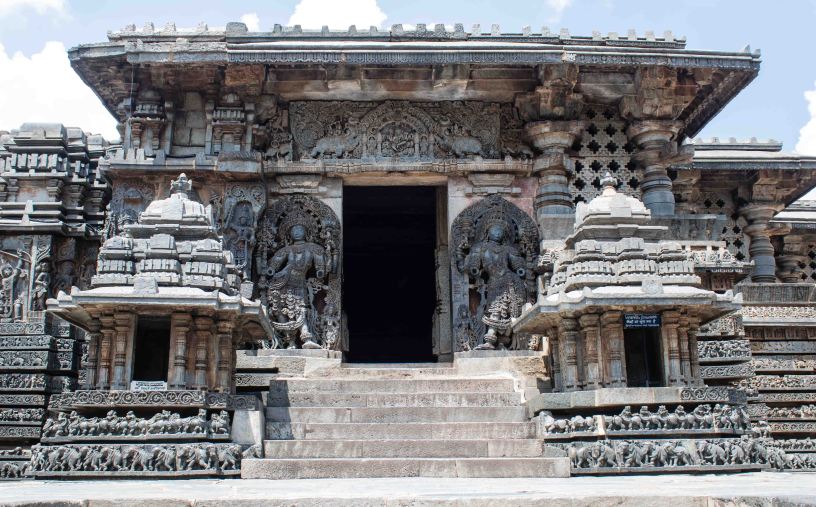
Hoysaleswara Temple; magnificent is a single word to describe it. It is the other place (along with the stunning Chennakesava Temple at Belur) that is not to be missed if you anywhere in the state of Karnataka or its neighbouring states in India.
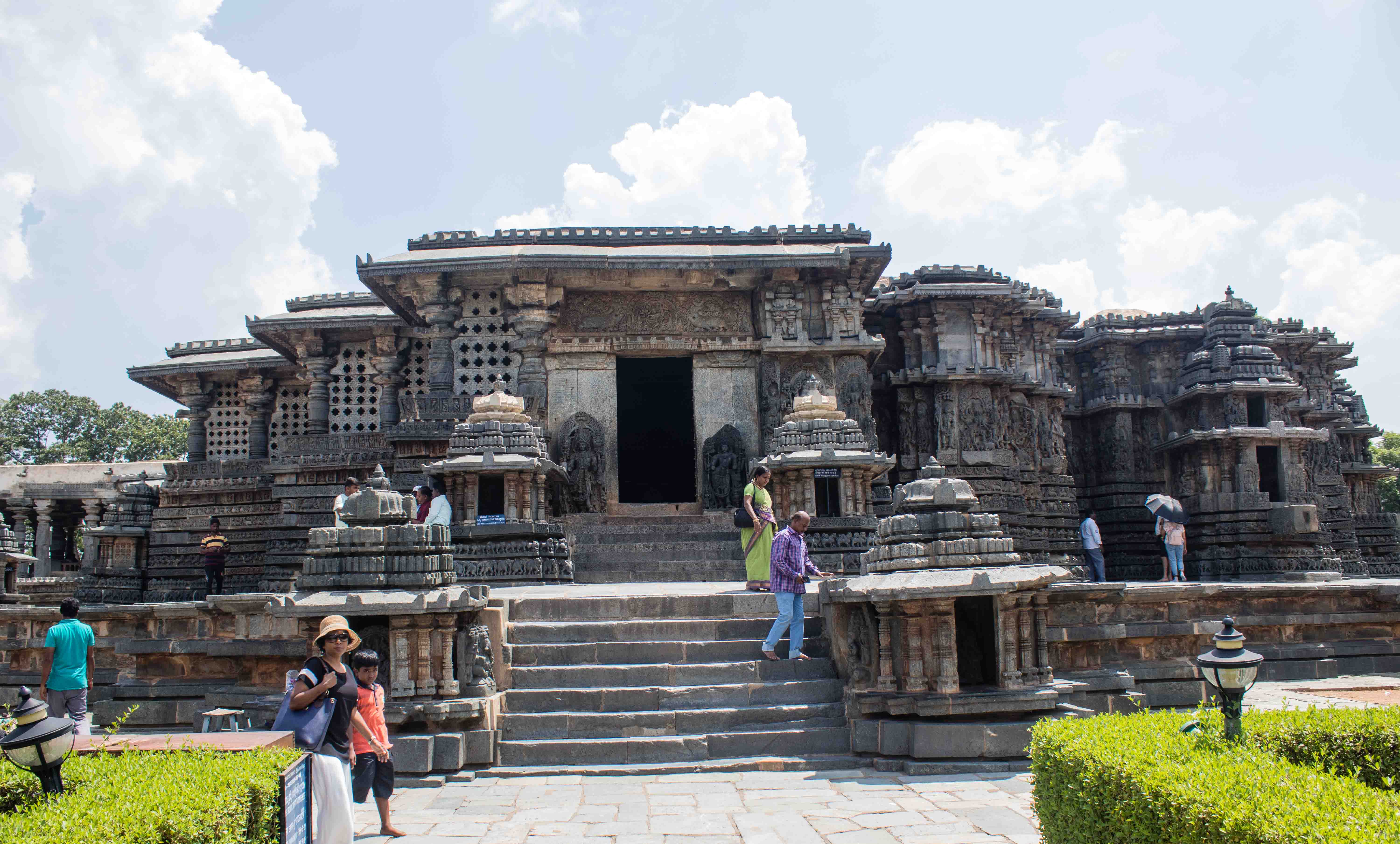
The Hoysaleswara Temple is located in Halebidu. The temple construction was sponsored by King Vishnuvardhana of the Hoysala Empire and is located in Halebidu, the erstwhile capital of the Hoysala Empire. It is now in the Hassan district of Karnataka state in India. Its construction started around 1121 CE and was completed in 1160 CE. Halebidu has faced several onslaughts by the invading armies from northern India. This has of course resulted in the capital including the various temples, to also be damaged. As with other temples in the region, it has been reconstructed and repaired over its history. This has, at times, been for enhancements or to deal with structural issues.
The Hoysaleswara Temple is interestingly a twin temple; meaning it has two shrines. One was meant for the king (“Hoysaleswara”) and the other for the queen Shantala Devi (“Shantaleswara”).
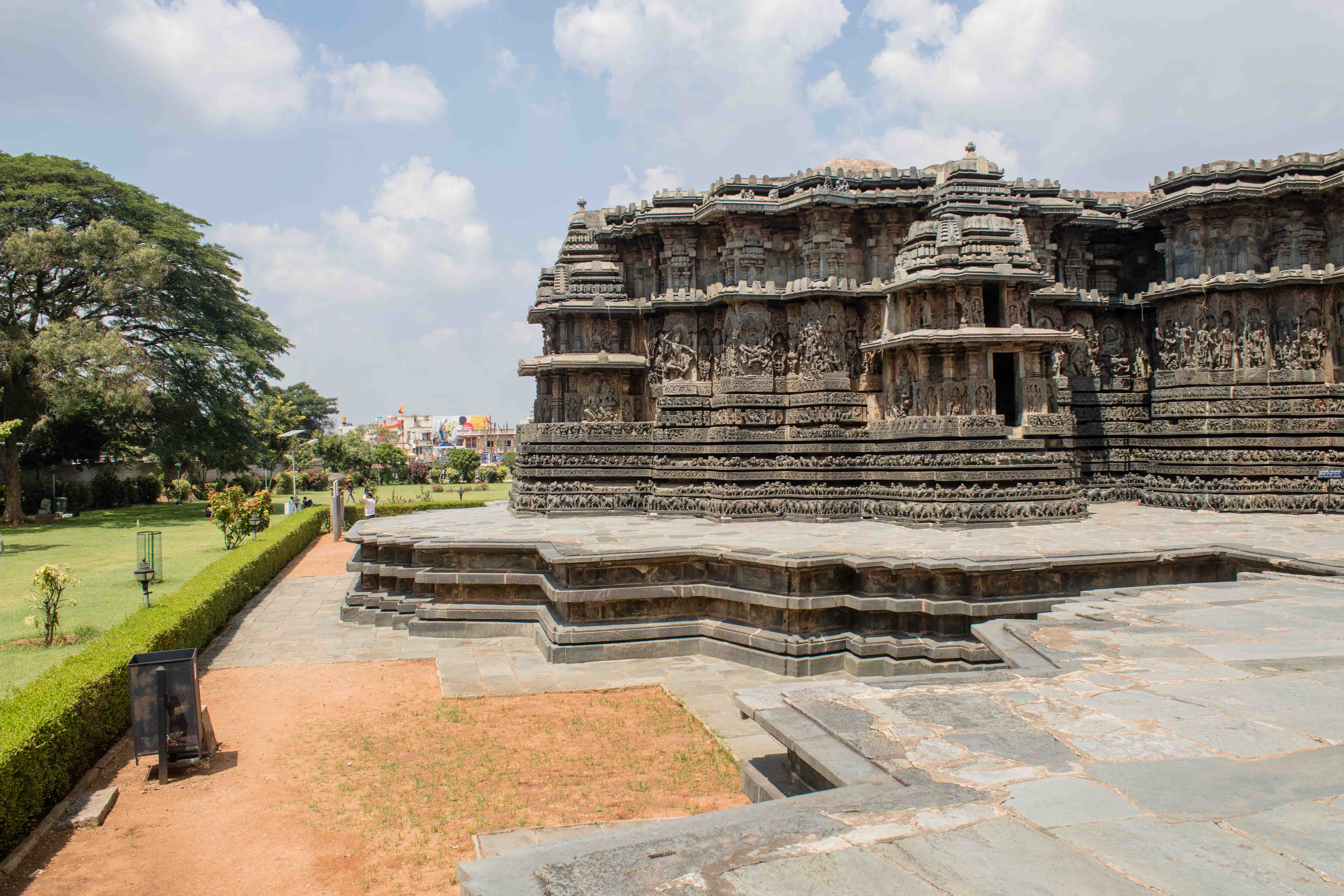
As was seen in the other temples we visited in the region, this temple complex too is also placed on a jagati (meaning “worldly platform”). This platform goes all around the temple and was meant for the visitors to walk in a clockwise direction, viewing the artwork on the walls as they completed their circumambulation of the sanctums. Some views of it can be seen in the pictures below.
Hoysaleswara Temple is dedicated to Lord Shiva. Hence the two sanctums have Shiva linga. Both of the sanctums open to the east. And of course, his trusted vaahan (ride) Nandi the bull, cannot be far. So is it the case in this temple; there is a Nandi each opposite the two sanctums in the east. Below are the pictures of the two Nandi
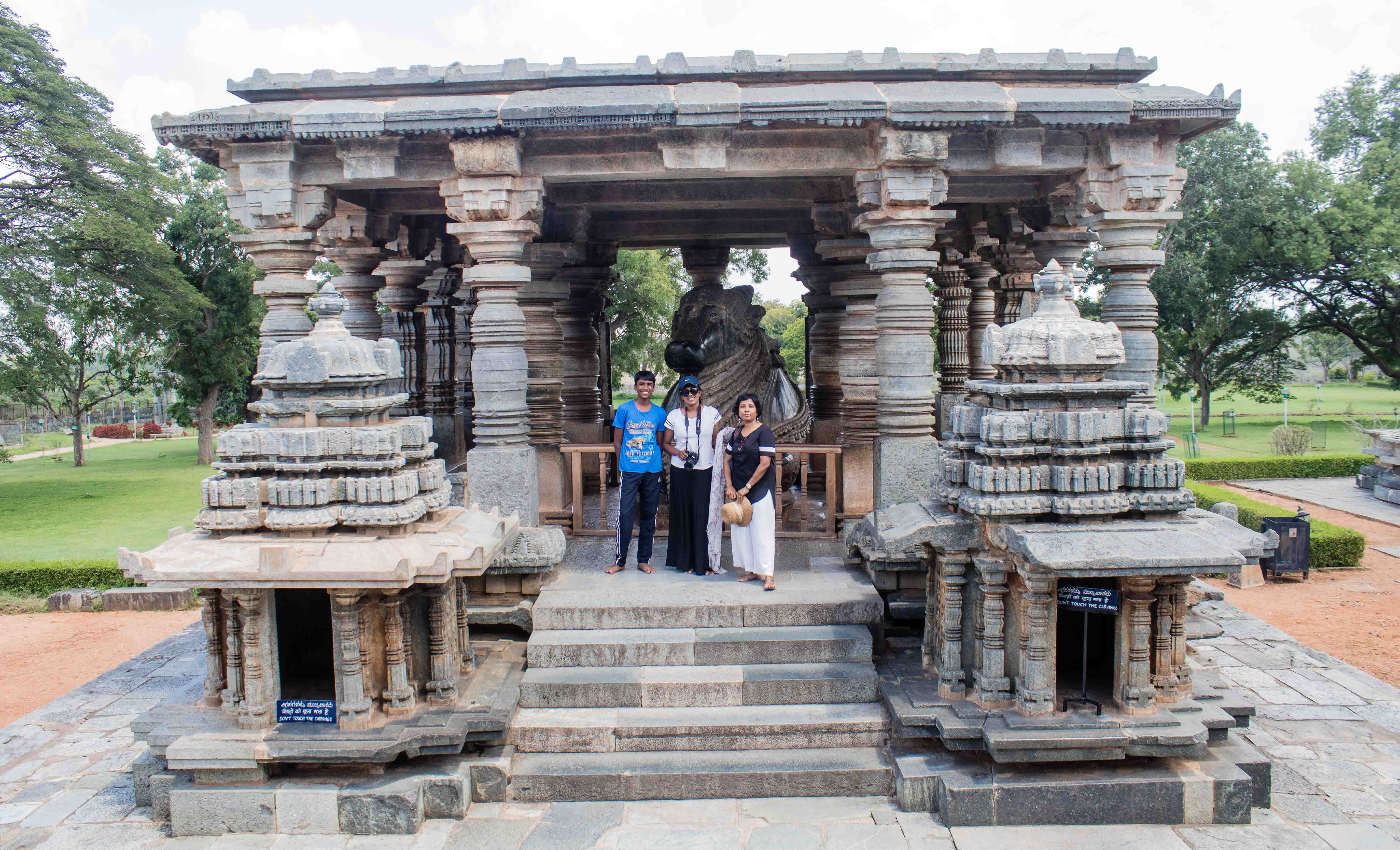
North Nandi shrine 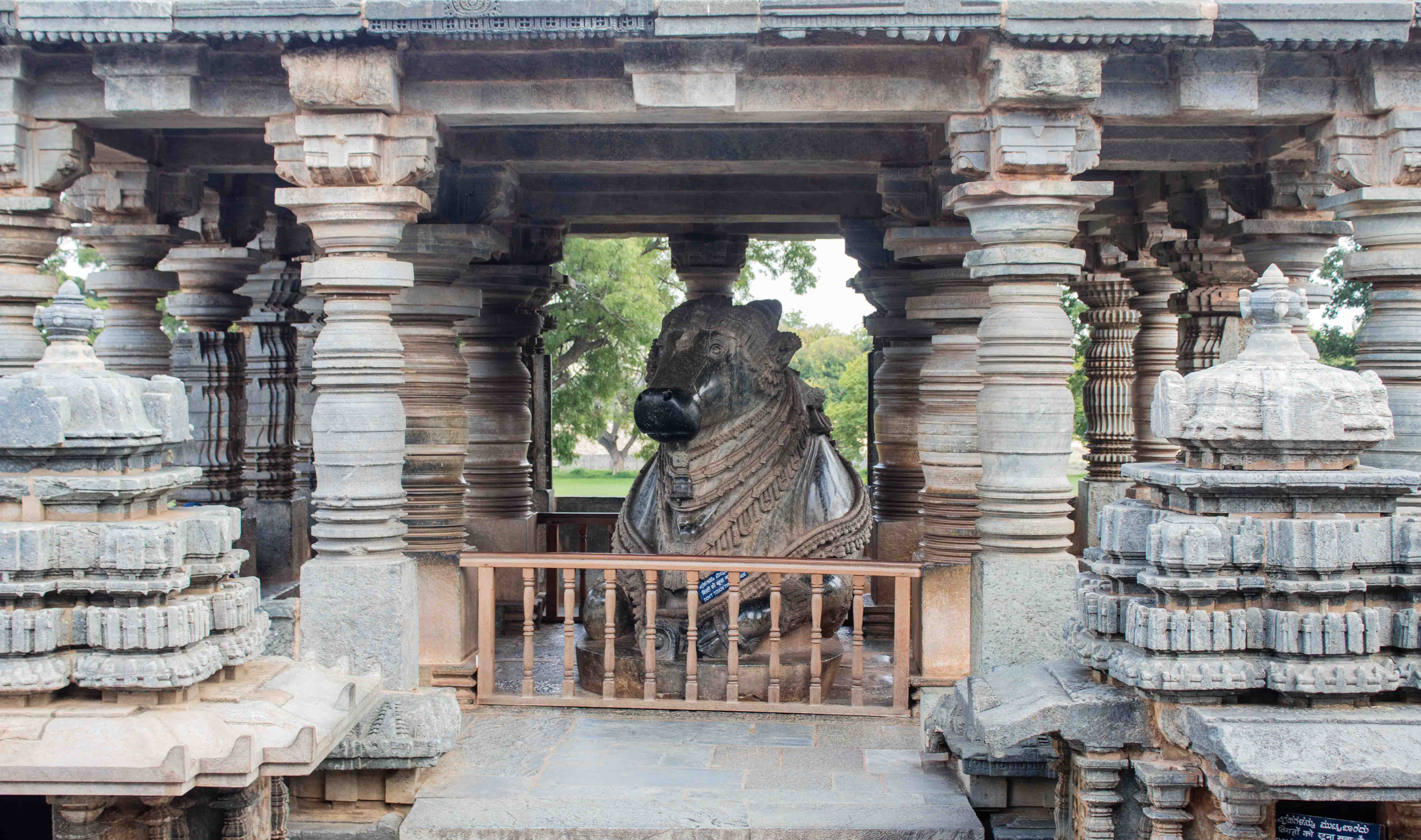
North Nandi shrine 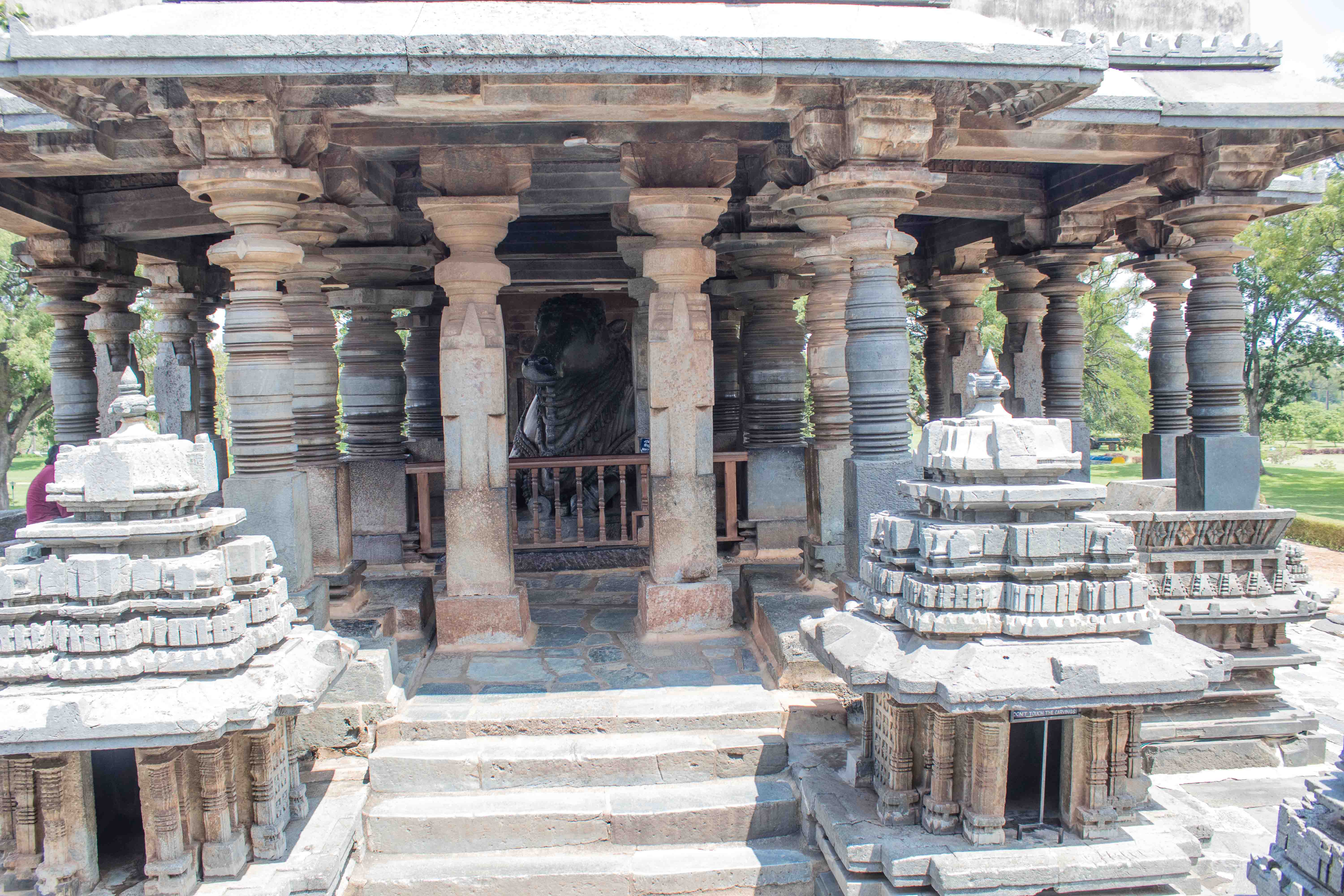
South Nandi shrine
There is deep symbolise to what Shiva linga, Nandi and its pose etc. represent and I find it fascinating how intricately our ancestors had tried to weave it into the fabric of ordinary people’s daily lives and a bit saddened how most of us have begun to “miss the point” now 😦 . Anyway it is not a subject for this post; so moving on…
As with the Chennakesava Temple at Belur, the outer walls are intricately carved. There are different layers consisting of elephants, lions, scrolls, miniature dancers.
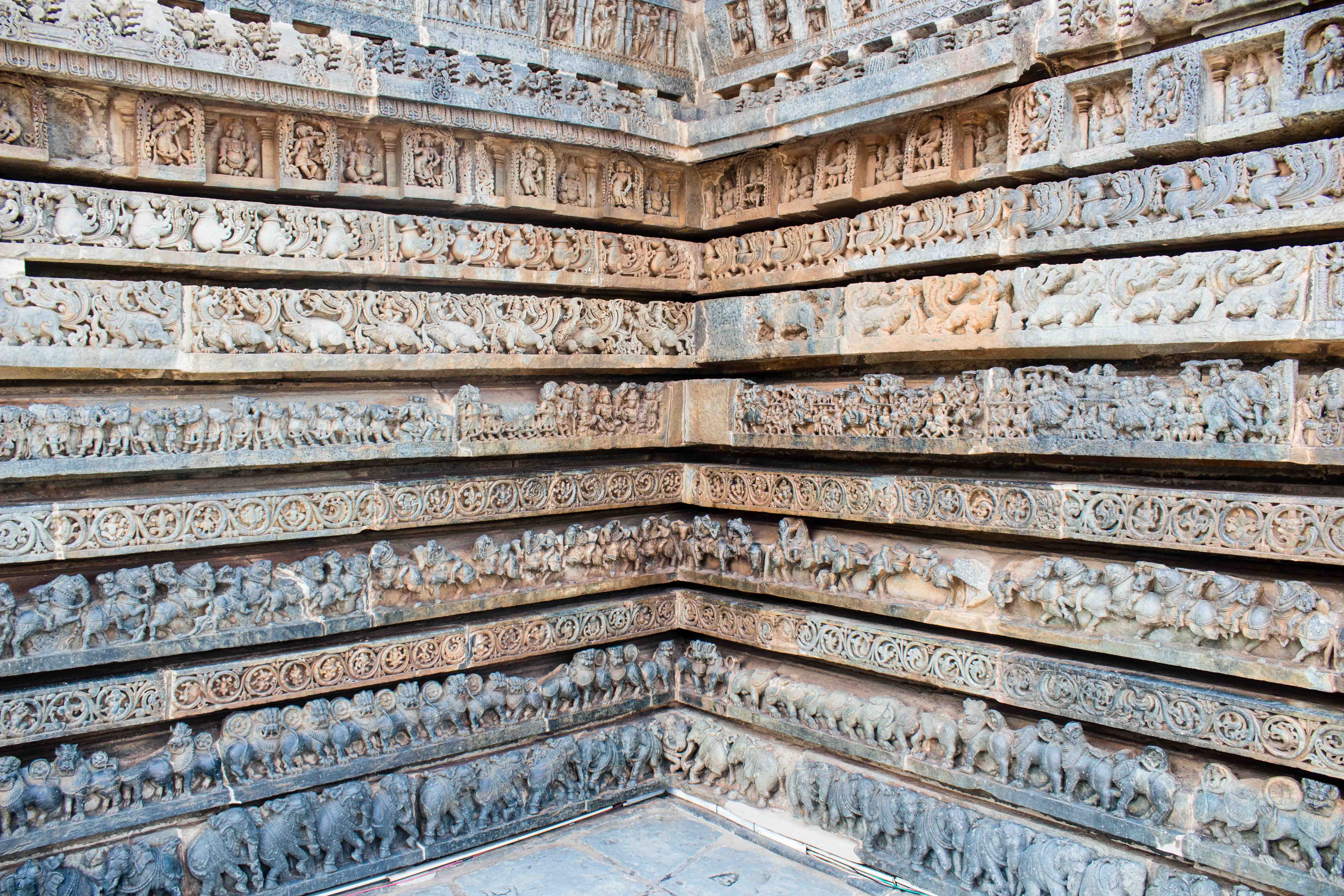
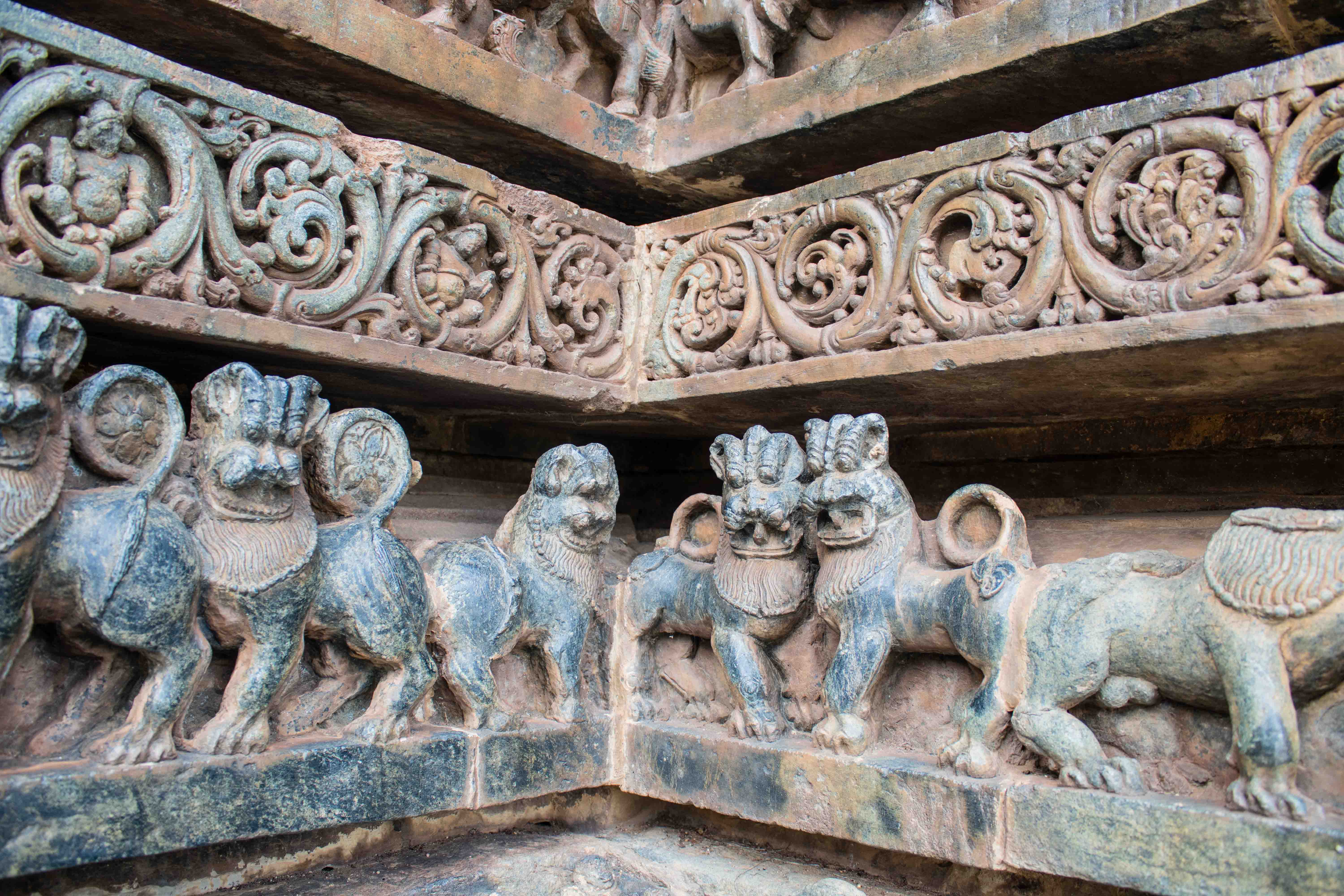
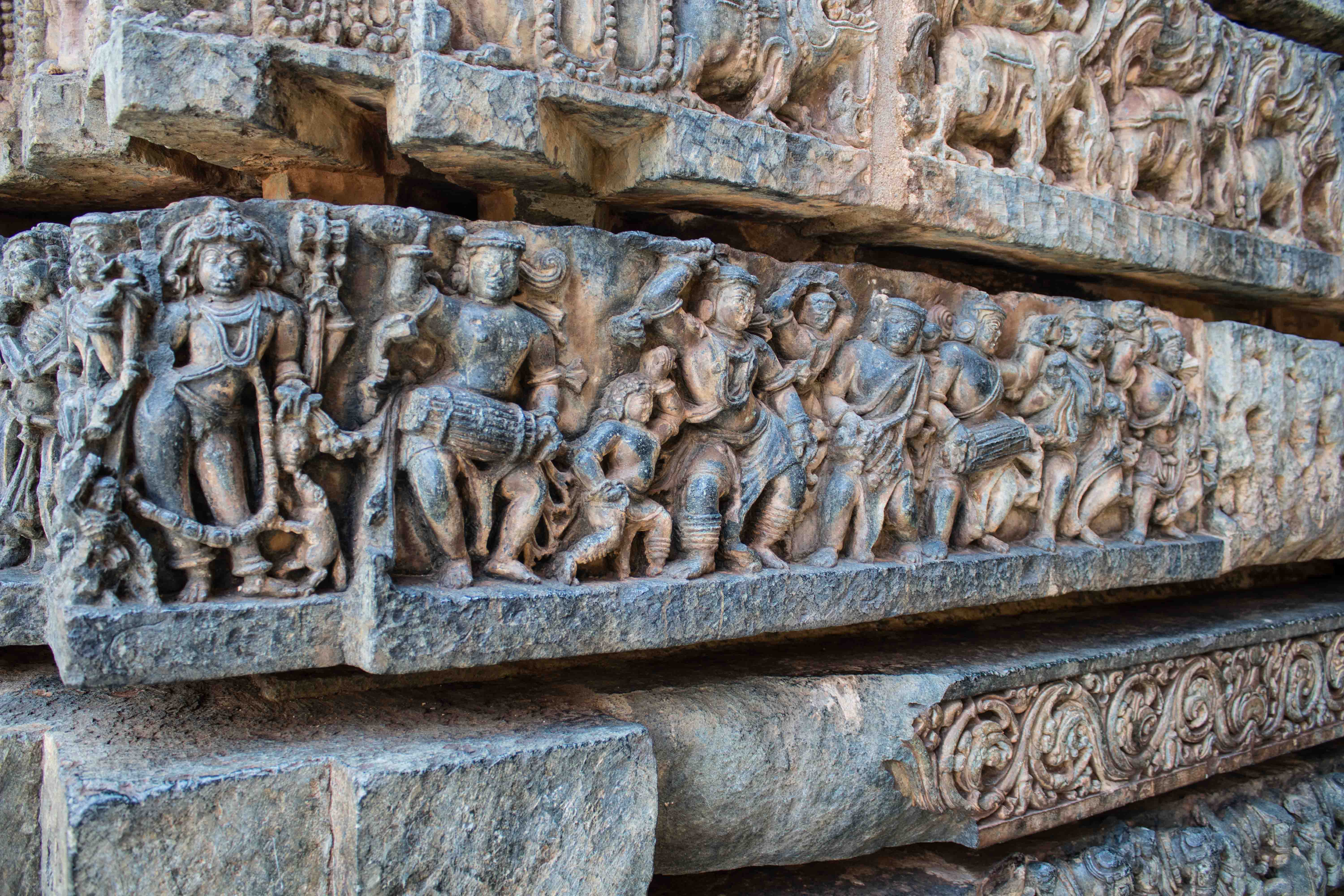
There are mythical beasts known as makaras (as shown below) depicted in the carvings.
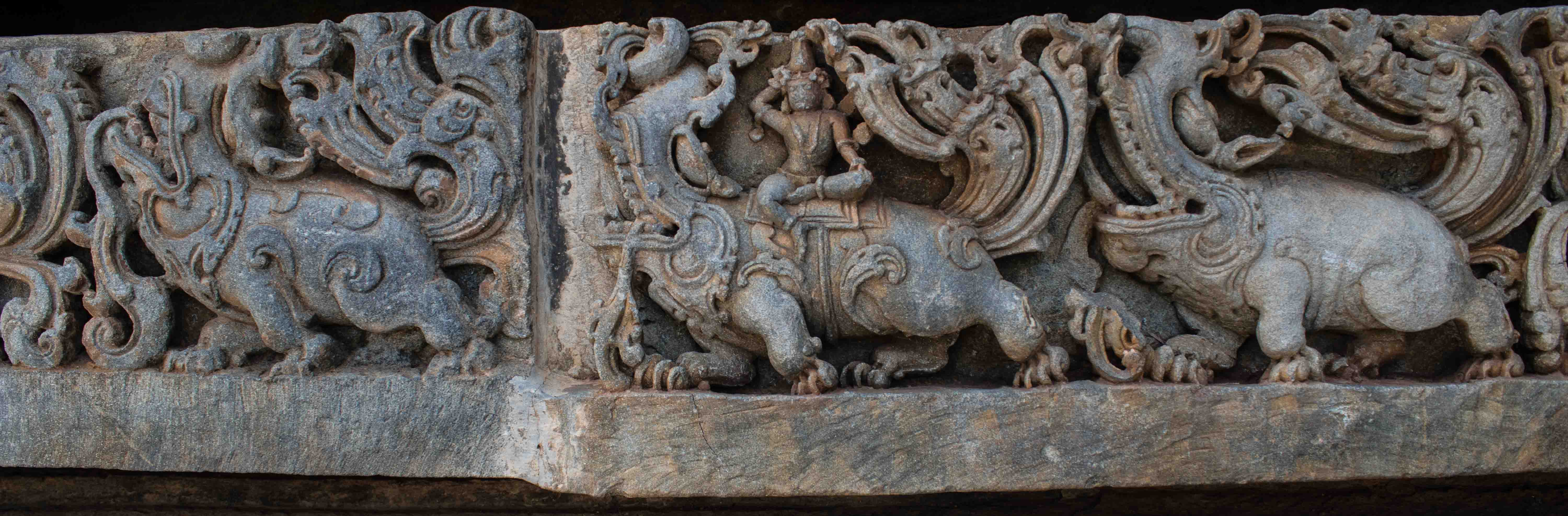
Makaras
There are also numerous depictions from the ancient texts of the Ramayana, the Mahabharata etc. included in the carvings.

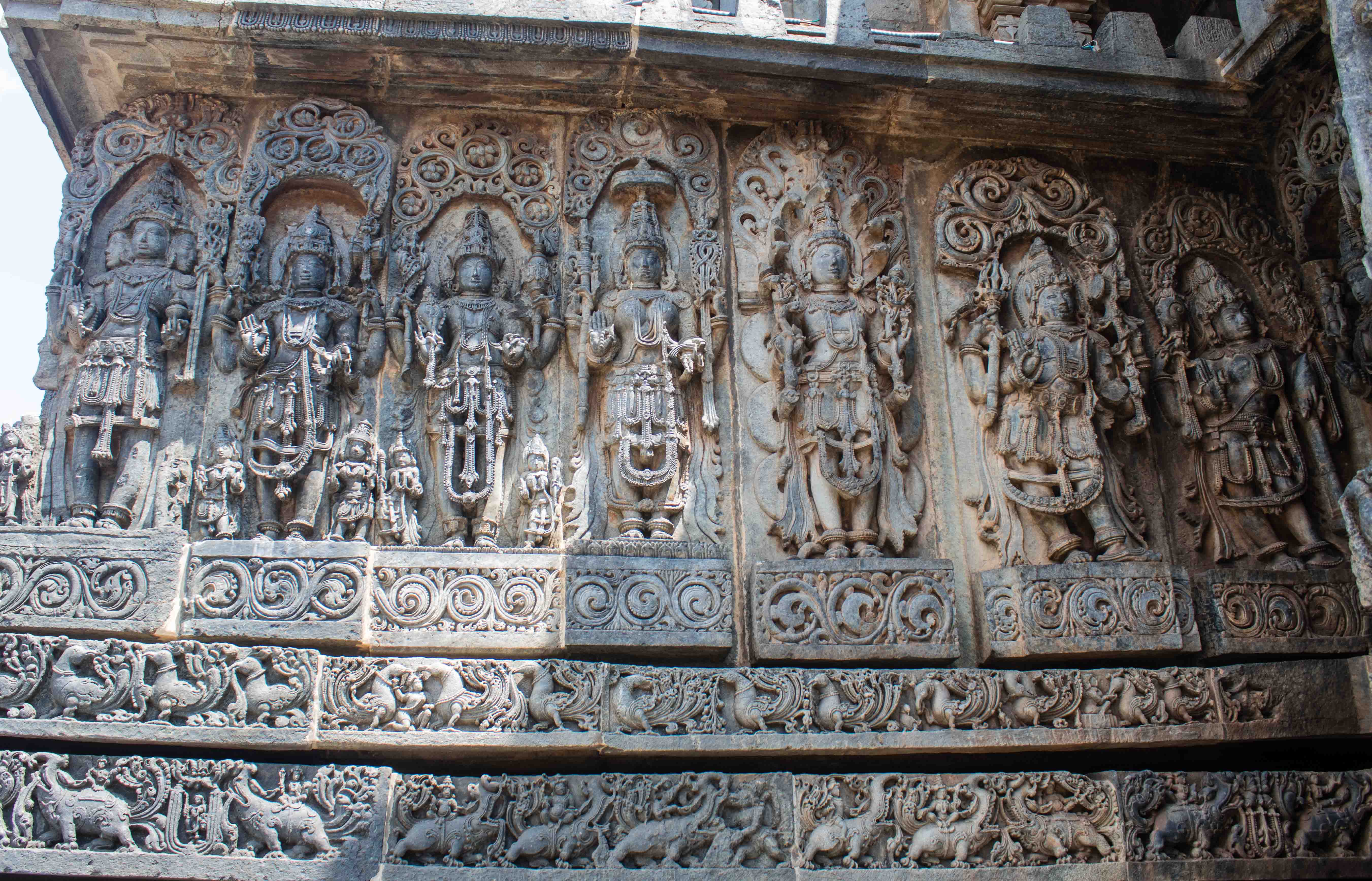
One can easily get lost in them in awe and admiration.
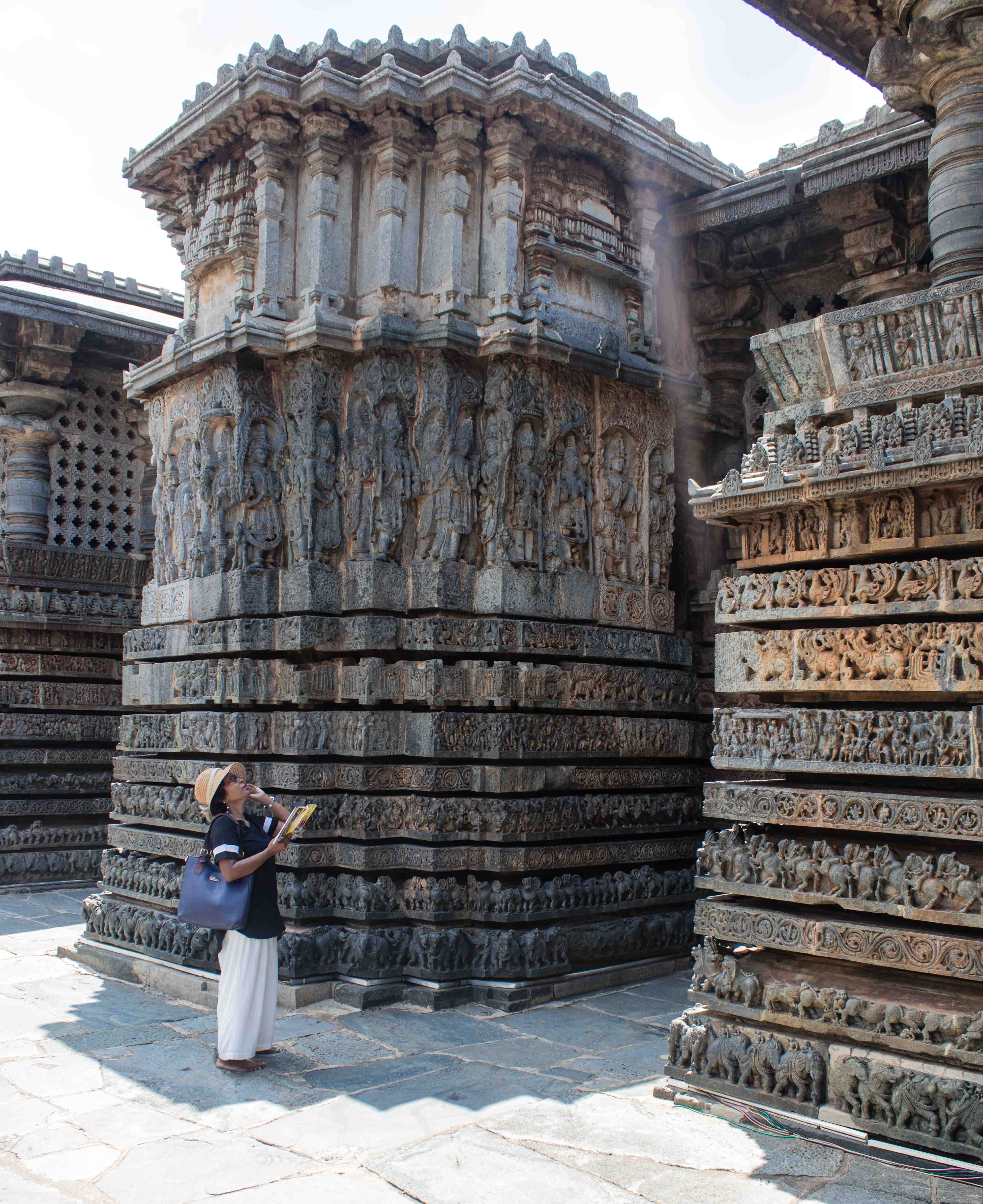
The entrances to the temple are meant to guarded by dvarapalas. Sadly only a few of them survived. So there is a doorway which has none
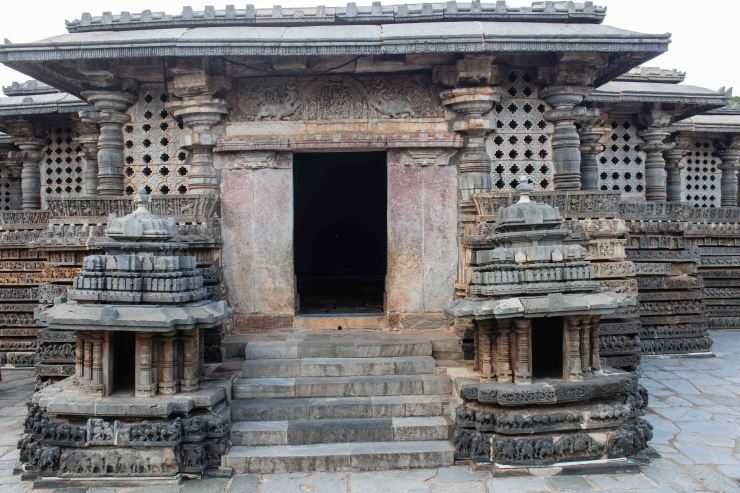
Doorway without dvarapalas
and another one which has its dvarapalas replaced with ones found amongst other ruins in the region.
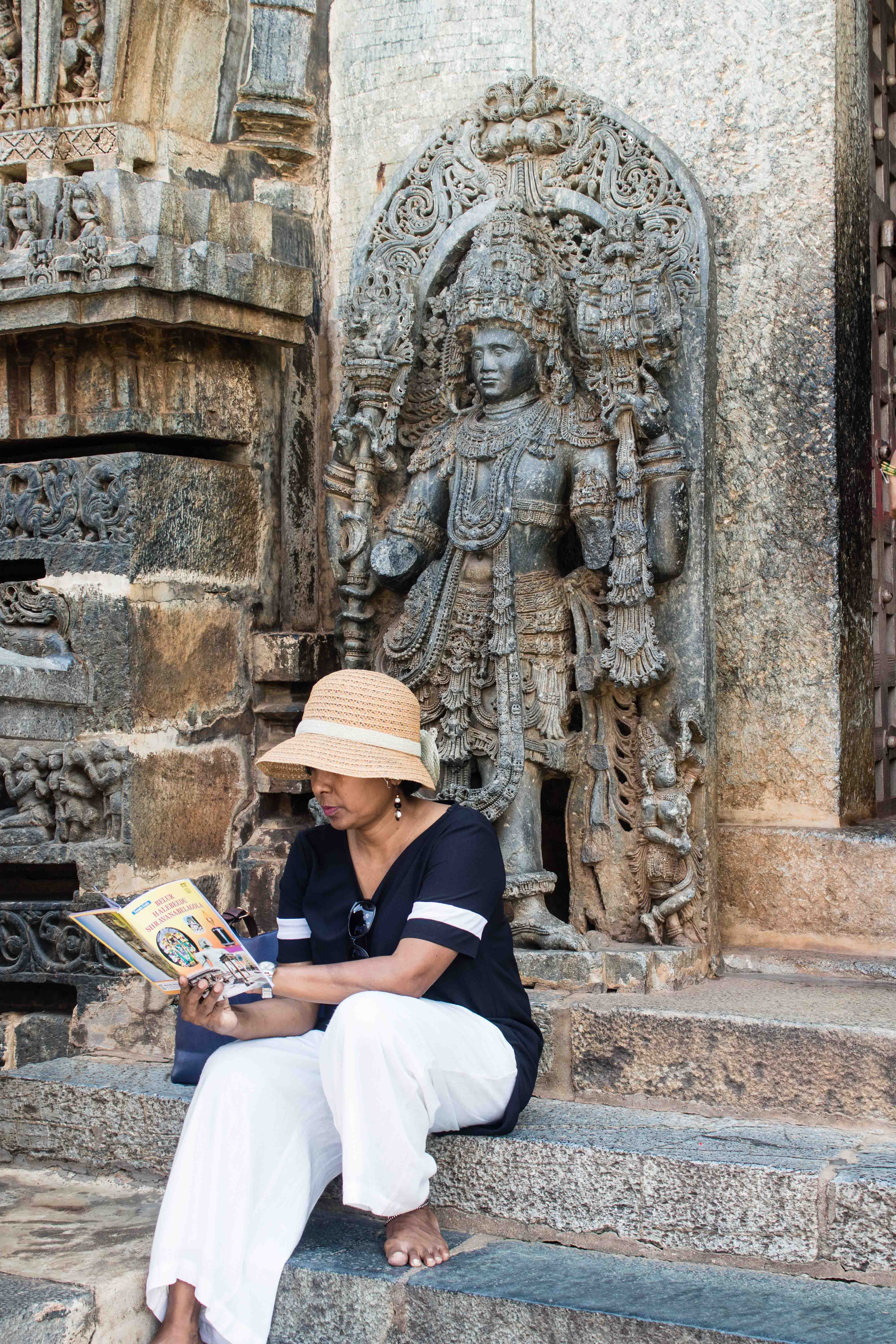
The ones in the southern entrance are the most preserved, though they have their hands broken. You can see them in the title picture of this blog post.
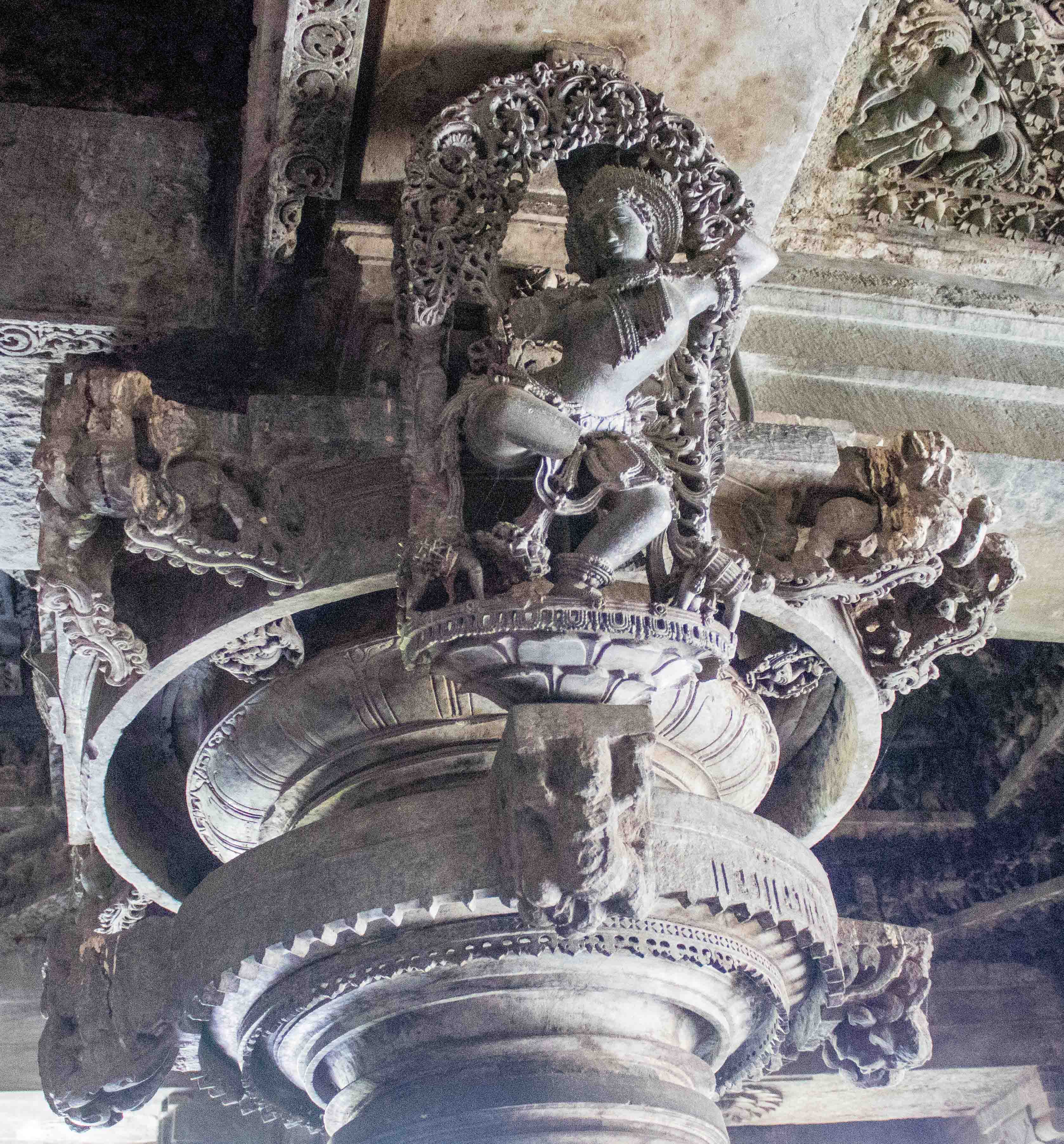
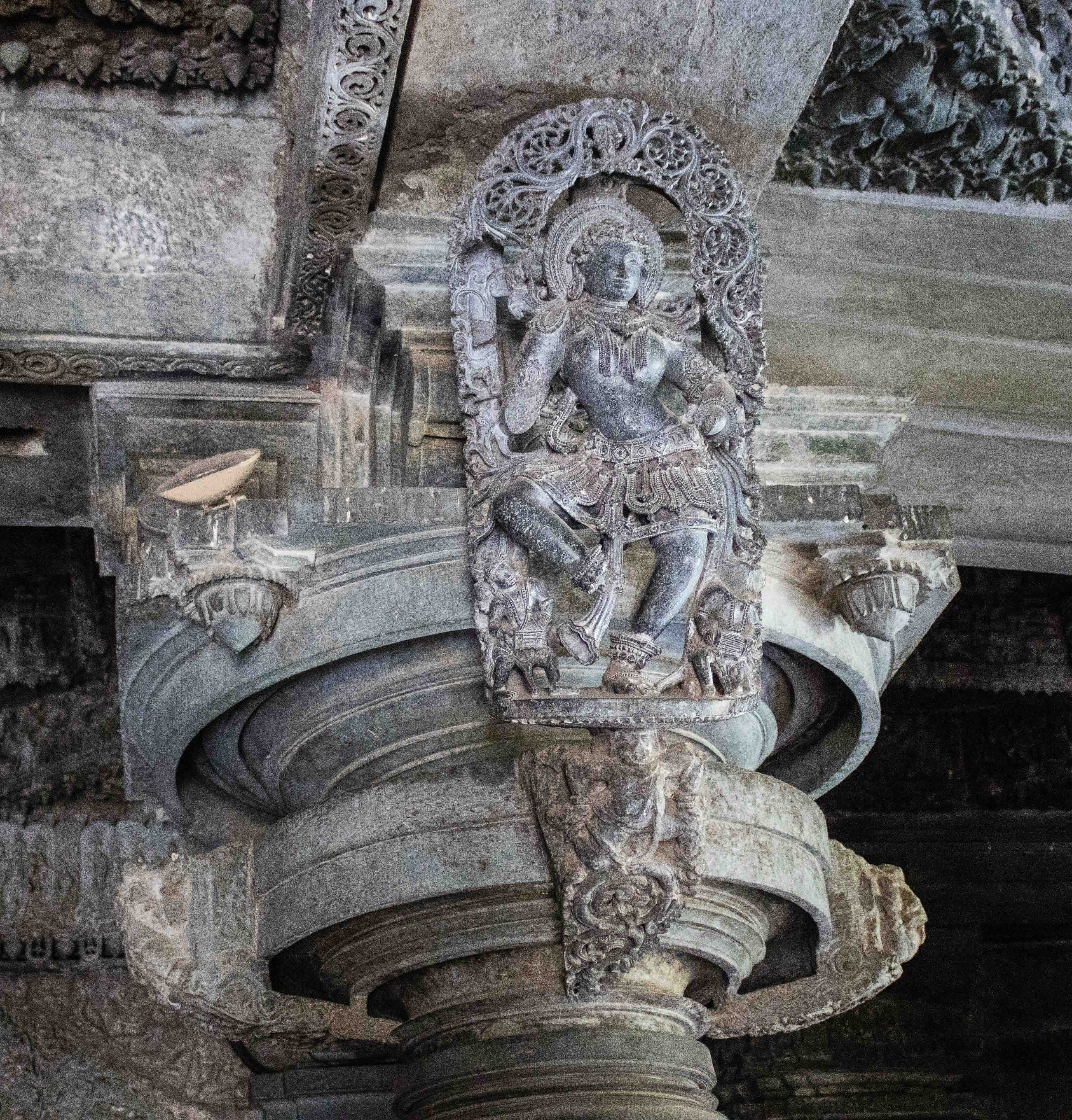
The carvings in the inside the temple are no less intricate. The four pillars that are around the central platform of the two temples have four standing madanikas figures. A sample of the couple of them are below.
Overall all it is definitely worth a visit atleast once, especially if you are in the vicinity. We have over the years visited it thrice and its awe has not diminished for us whatsoever. Again as with the other temples, engaging a guide will allow you to know its history and other smaller details which otherwise one will miss out.
Virtual Tour
You can get a good idea of the temple in the below video that I put together from my trip.
Useful Tips
Pretty much all the tips I had given for the Chennakesava Temple at Belur, hold good for this temple. You can access it here.
 Mad about Birding and Travel
Well captured Thomas!
LikeLiked by 1 person
Thanks Sunith.
LikeLiked by 1 person
Very well written with excellent pictures & a lot of information!
LikeLiked by 1 person
Thanks
LikeLike
Thanks for being supportive on this, without which my trips would not have been possible
LikeLike