
Hampi; a destination that pops up in almost every conversation, destination books and online search that one does for weekend getaways from Bangalore.
My family and I love to take long drives out of Bangalore whenever possible; us humming or whistling the songs as they play during the drive, the wonderful discussions we have, the sights and the memories we get to make in these trips. It also helps that we get to “miss” the traffic in Bangalore during this period 🙂 . The getaway trips are generally for 2 or 3 nights.
Flashback to Dec 2012; we were looking at possible destinations where we could go that time around. Hampi it was going to be after working through the choices. It had been high on our list for some time given the wonderful reviews in both the print media as well as online reviews. December would be perfect weather given that Hampi is supposed to be very hot during summers. Hampi is a UNESCO World Heritage Site with a high number of historical sites to cover. Given this we wanted to have enough days to do justice to it. Kids had their Christmas break and I had to use up the remaining days of my annual leave from office. We decided to make it 4 days trip.
Hampi is around 360 kms from Bangalore. We left in the wee hours and reached Hosapete around 1PM. Hosapete is the nearest town to Hampi and is where we had booked our stay. It is also the nearest railhead to Hampi. The drive was smooth as almost the entire journey was through National Highways. Once we turned off from the Bangalore – Pune Highway (NH 48) at Chitradurga and got onto NH 50 the scenery started to change quite a bit. One thing that struck us were the sunflower fields. They were just fantastic to see! And of course we just had to stop at one to walk through them as well as take pics.

We completed our check-in formalities at the hotel and then had lunch at the restaurant in the hotel itself. After a short rest post lunch we decided to head out and start our visit to Hampi (around 12 kms from Hosapete). The children stayed back at the hotel for the afternoon and it was just my wife and I going.
One sight that will definitely leave an impression are the large granite boulders lying across the landscape. Much of them have been shaped over years by forces of nature. They are stark and yet beautiful especially when they catch the evening golden sunlight.

Our first stop was at Talarigatta Gate.

I don’t know if it was the granite or the golden light of the evening sun or both but we were already falling in love with the architecture even with the simple structure that we saw in front us.


Our next stop was the Ganagitti Jain Temple. It was a serene place with just us being the visitors there that evening.

Adjacent to the temple is Bhima’s Gateway.


Again having the place to ourselves allowed us to explore it at our own pace and admire its beauty.

By the time we finished with Bhima’s Gateway dusk was starting and we wanted to reach back to the kids at the hotel before dark. We could not however ignore the beauty of the sun setting over Kamalapur Lake as we headed back.

The kids had “settled in” well into the hotel; they had watched a couple of movies and ordered in room-service! It is amazing how resourceful they can be when they want to be 🙂 . The rest of the evening was spent in all of us walking and exploring Hosapete. The weather was pleasant and it was relaxing to just walk around the place; the best way to explore any new place. We ended the evening with a relaxing dinner by the pool in the hotel.
The plan for the second day was to hire a local tourist guide and visit all the historical sites. We always make it a point to hire a local guide whenever we visit any heritage or historical sites. The wealth of information they have to share on the history as well as some of the intricacies in sculptures and paintings makes the sites much more interesting and awe-inspiring. We left immediately after breakfast and drive towards Sri Virupaksha temple. We stopped at a junction a bit before the Kadalekalu Ganesh and hired the tourist guide from there.
Sri Virupaksha Temple
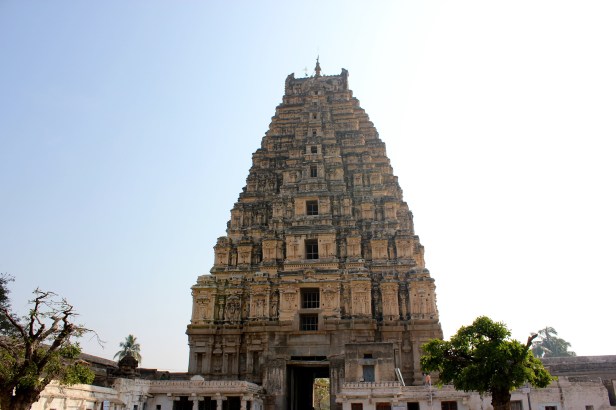
Our first stop was the Sri Virupaksha Temple. What greeted us was the magnificent and detailed gopuram.

Below is a view of the gopuram from the inside of the temple.
Another sculpture that caught our eye at the entrance of the temple was that of the 3 headed Nandi statue made in black stone.

The entrance of the temple led us into a sizable courtyard.
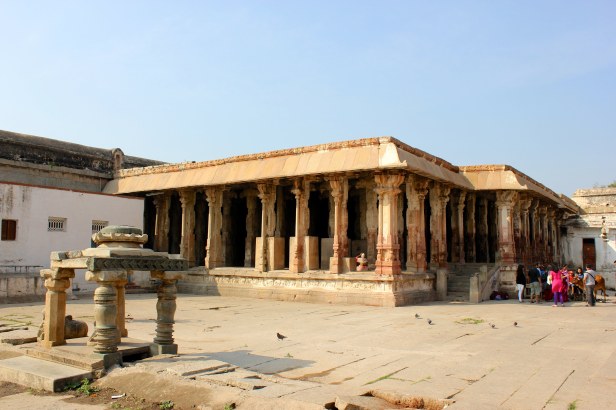
At the other side of this courtyard was a smaller gopuram. Walking through this gopuram saw us enter a smaller courtyard that lead to the main mandapa of the Shiva temple.

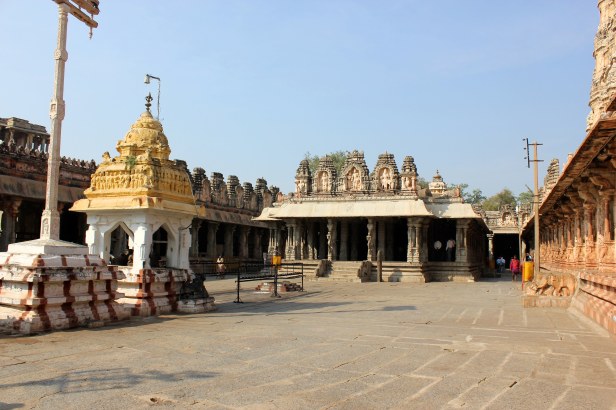

Below is the view from the second courtyard back to the smaller gopuram.
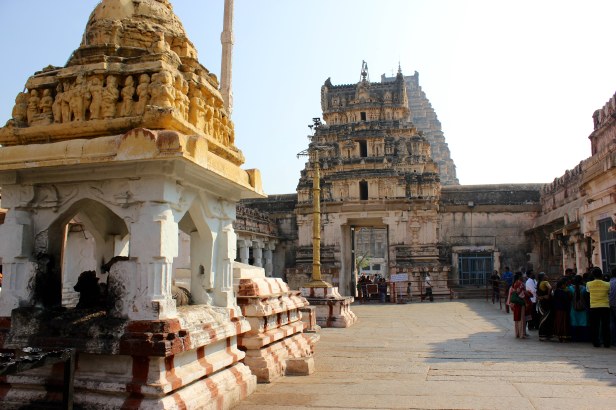
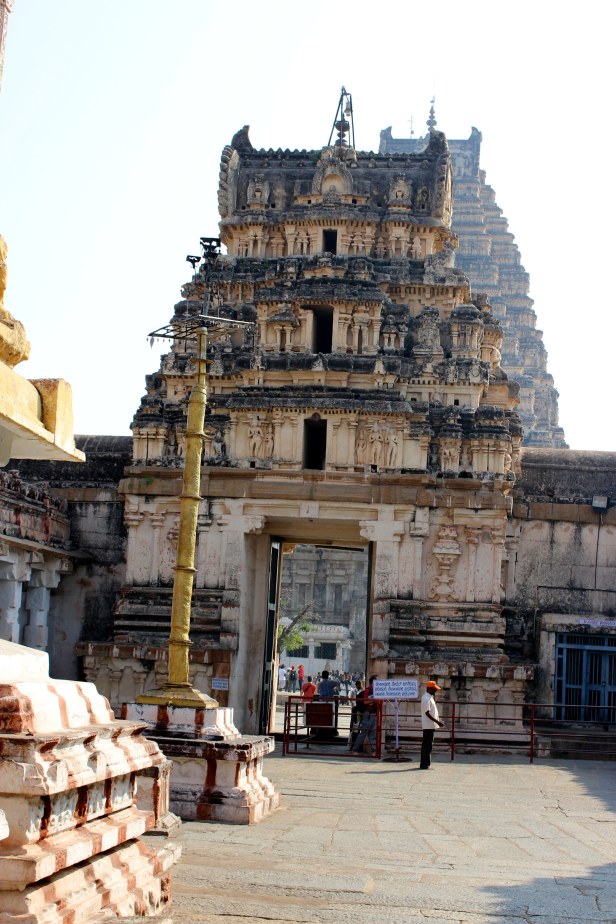
The open hall of the mandapa has exquisite painting on its ceiling and sculptures in various sections depicting various legends Shiva-Parvati, Rama-Sita and the Advaita Hindu scholar Vidyaranya.
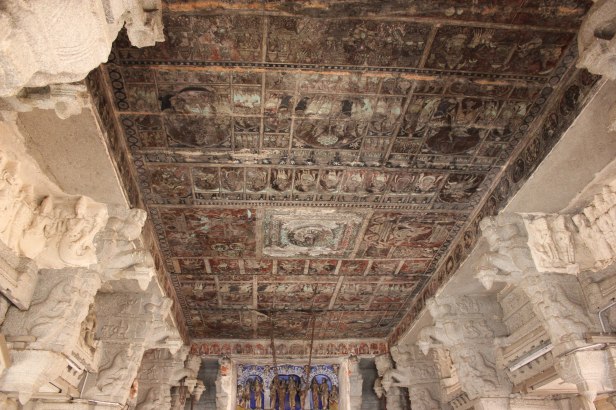

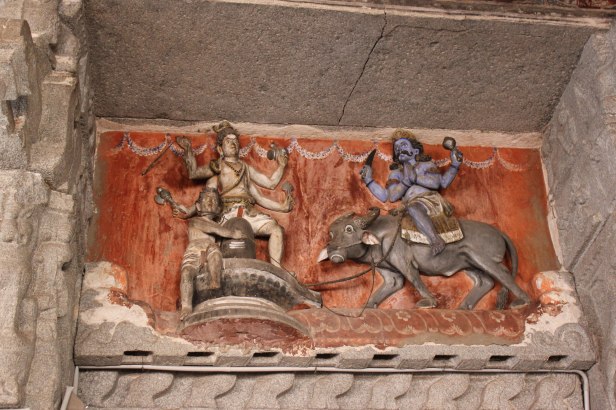


Sri Virupaksha Temple is an active temple of worship. So we made sure that we were careful in offering obeisance and respect to the deity and temple that was due.
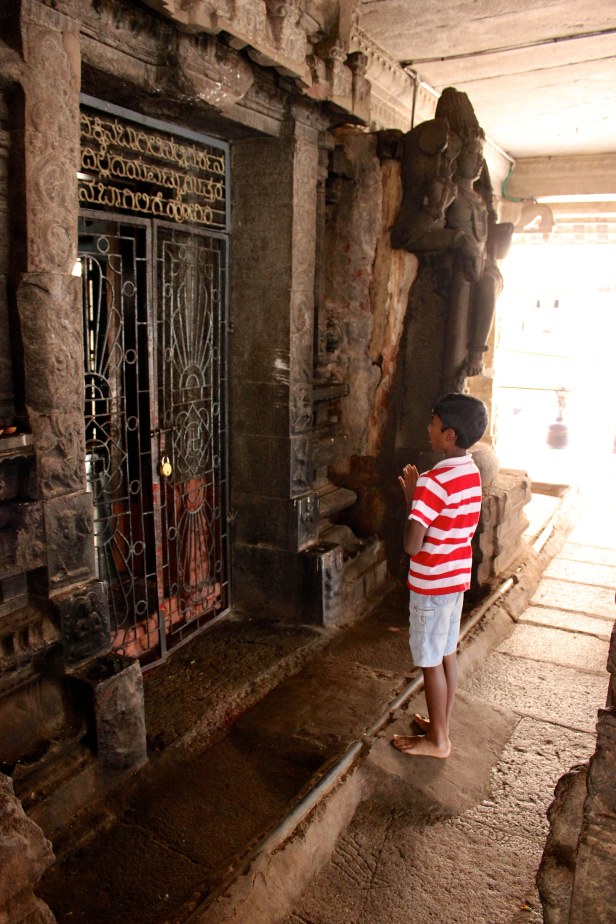

We could also see that the temple also had primate visitors. This meant that the pujari was keeping a watchful eye on their proceedings.

The structures on either side of the main hall also have well sculptured pillars and halls is well worth some time exploring.

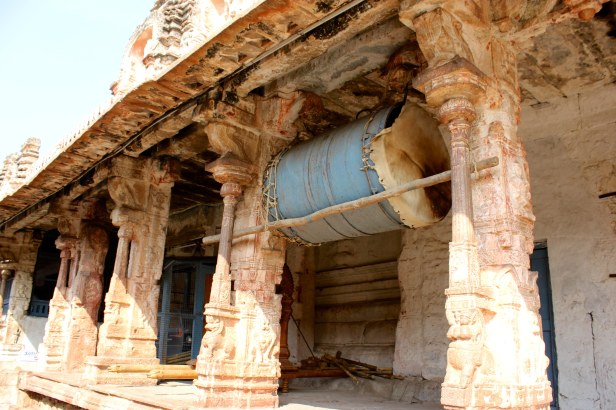
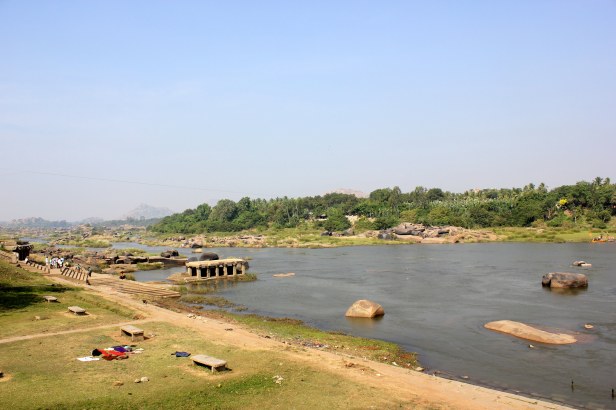
There are other small temples to the north of the main temple building. The path eventually leads to a view of the Tungabhadra.
Kadalekalu Ganesh, Sasivekalu Ganesha, Hemakuta Temples
Our next stop was the Kadalekalu Ganesh, a monolithic Ganesha carved from a single granite boulder with its belly resembling that of an unsplit bengal gram and hence its name.

My son of course could not stop himself from running through the hallway of the structure leading to the Ganesha; much needed way to spend some energy for an active boy that he is.

Next we walked over to Sasivekalu Ganesha, a monolith that has been carved from rock with his belly resembling that of a mustard seed and hence its name.

Another interesting aspect about the statue is that Sasivekalu Ganesha is carved sitting in his mother Parvati’s lap. Parvati is only visible from the back of the statue.

After finishing admiring the statue we walked up the sloping path up the Hemakuta hill towards the Hemakuta Temples. A view back to the Ganesha from the top of the hill can be seen below.

Before we reached the Hemakuta Temples there were a number of smaller structures on the hill. I particularly liked the small hut-size shrine with the two firangi pani trees in front of it, especially since their leaves had mostly been shed for winter.


A walk down the other side of the Hemakuta hill will reveal a small water body and further smaller structures. These I believe were also places of worship as well as rest places for travellers.


Finally it reveals the Hemakuta Temples after them adjacent to the Sri Virupaksha Temple.
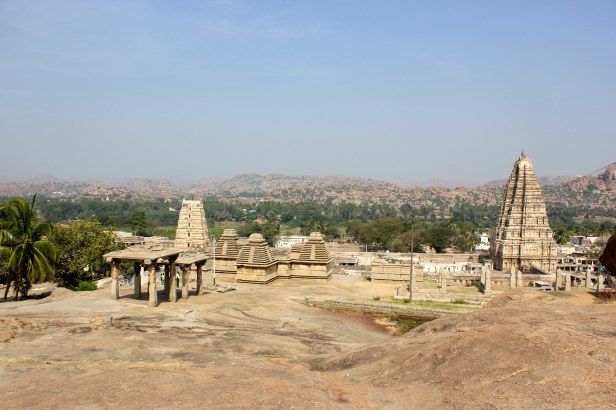
Here is a panaromic view of the place:
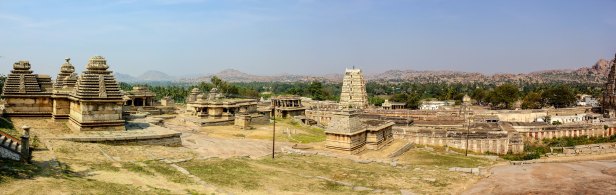
We were told that Hemakuta hill is a good place to catch the sunset. We made a mental note of coming back for one during our trip.
Vitthala Temple
The next destination was the Vitthala Temple. I had heard and briefly read about it wonders, especially the musical pillars. Yes, you read it right; musical pillars! It was said that the musical hall at the temple had various pillars which when struck produced different musical sounds. It was said that the hall was used for public celebrations of music and dance. Mind-blowing to me!
Upon arriving we parked our car at the parking lot. The temple itself is at a fair distance from the parking lot. There was a choice of walking or availing a ride on electric buggies. We chose to walk. The walk took us through a pathway that almost a kilometer and had sheds built with columns. We were walking through an erstwhile market street leading up to the temple. I could almost imagine the hustle and bustle that must have prevailed on the street in those times.


Finally we got to the entrance of the temple marked with a large gopuram.
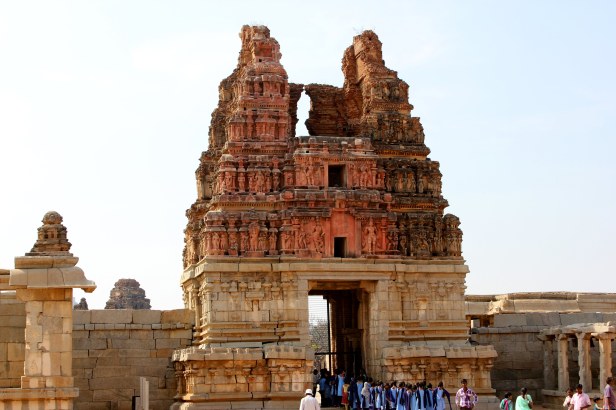
Looking at the gopuram itself we could start to see the artistic beauty of the temple. Here is a view of the gopuram from the inside of the temple.
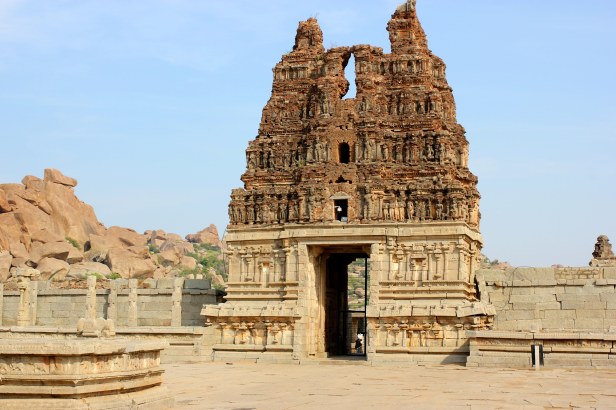
Entering through the gopuram lead us to a large courtyard with several structures on all sides.

The first structure that captured out attention was the stone chariot. This is supposed to be a Garuda shrine. It is probably one of the most popular photos that one gets to see on Hampi. So here is ours 🙂 .

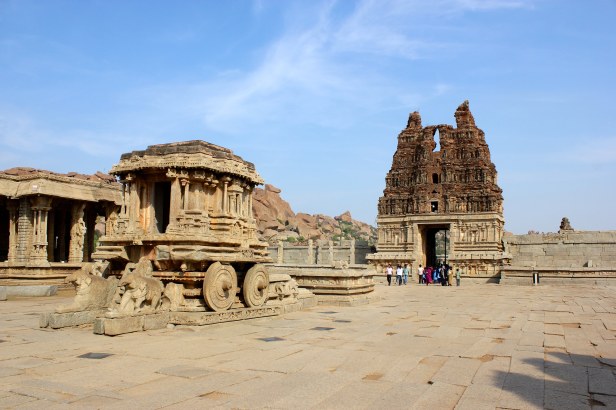
After the chariot we saw the famed musical hall. Visitors were unfortunately not allowed onto it given that restoration was ongoing as well as to prevent unwanted damage to the structure.
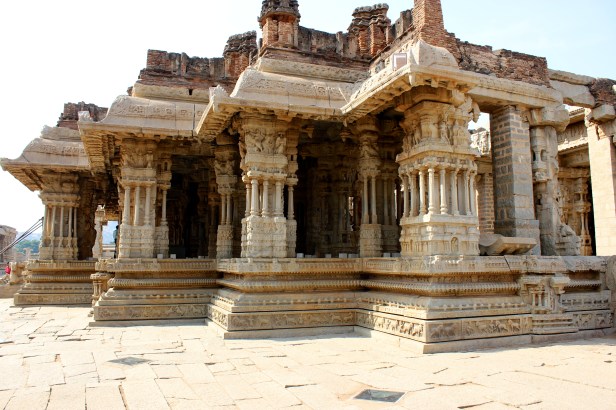
In order to demonstrate the musical pillars in whatever manner possible our guide took us one of the adjoining structures and knocked on one of the pillars. We could indeed hear a musical note emanate. Wow!
Here are some of the other structures we saw in the courtyard.


By the time we reached back to the car it was well past noon and our tummies reminded us that they were missing lunch. I certainly am not one to who don’t listen to their tummy. So lunch it was! We went by the recommendation of our guide and went to the Mango Tree restaurant. From what we saw upon reaching there it certainly seemed like a popular one. We chose to sit outside on the “steps” part of the restaurant. Food was good and the atmosphere relaxing.
Queen’s Bath, Zanana Enclosure, Elephant’s Stable
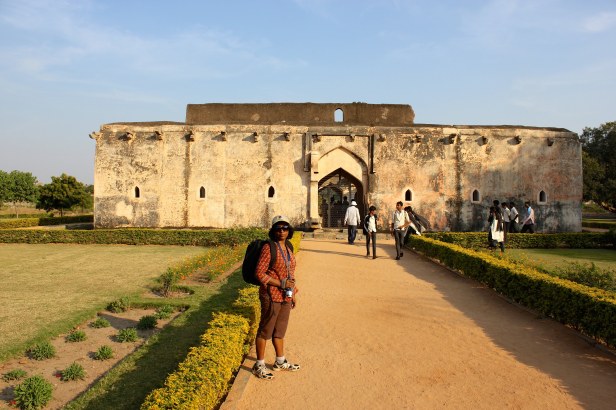
Our first stop post lunch was the Queen’s Bath. It was essentially an enclosure with several changing rooms, a bath and different channels for bringing in fresh water and letting out wash water.
From the interiors we could make a change in architecture from other structures we had seen thus far; a clear influence of Islamic style in its arches.
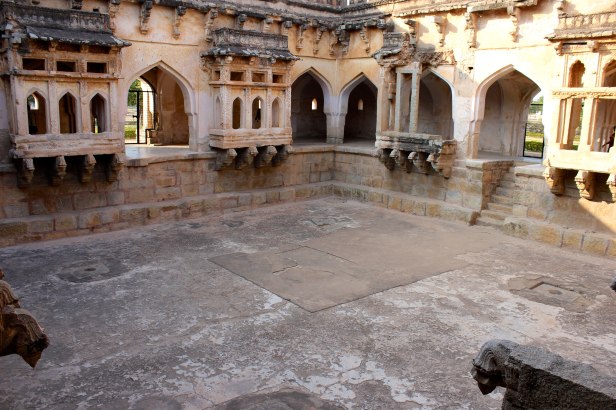
There also seemed to have been intricate plaster work on its ceiling.


The Treasury is the first building that we explored in the Zanana Enclosure. It was located in the north-east corner of the enclosure.
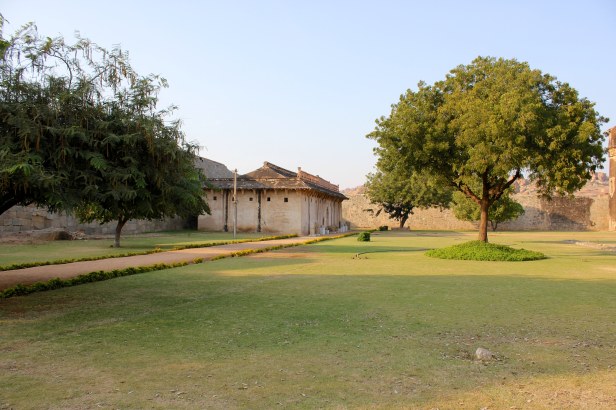
There were also several towers at the various corners of the enclosures. They must have been watch towers.


Next we visited the Lotus Mahal, a two stored pavilion within the enclosure. One could imagine what a beautiful structure this must have been in its original form.

We then moved onto the Elephant Stables, a large structure towards the north east of the Lotus Mahal.

Lakshmi Narasimha Temple, Badaviling Temple
The subsequent stop was the Lakshmi Narasimha Temple. As the name itself suggests it housed a large monolithic statue of the Lord Narasimha being seated on the coils of Adishesha. We could see that parts of the structure had been damaged. It was still an imposing sight to behold even in its current form.

Adjacent to this was the Badaviling Temple that contained a large monolithic Shiva Linga. The Linga was standing on a base of water. We saw a priest perform puja while standing within the temple in the water.

Hazararama Temple, Royal Enclosure
Our next destination the Hazararama Temple was an exquisite temple. It was a temple dedicated to Lord Rama.
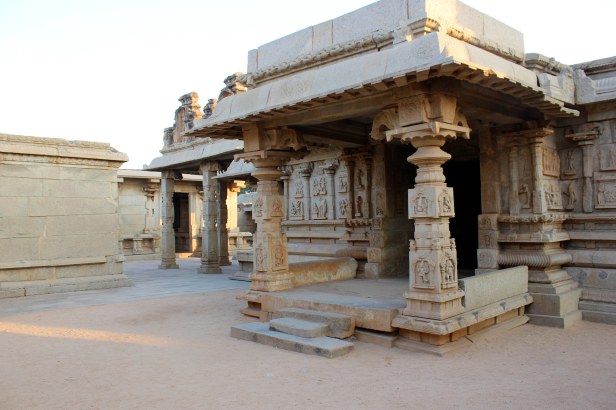
The outer wall of the temple has depictions of Dasara and the inner walls of Ramayana.
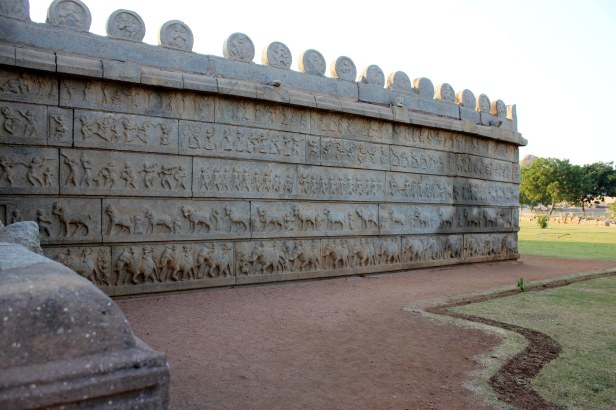

The guide also showed us one carving on the wall that had two animals merged into one carving. The picture below shows the carving that has a cow and an elephant together. What creativity!

The inner part of the temple had a mandala with four pillars with various carvings.
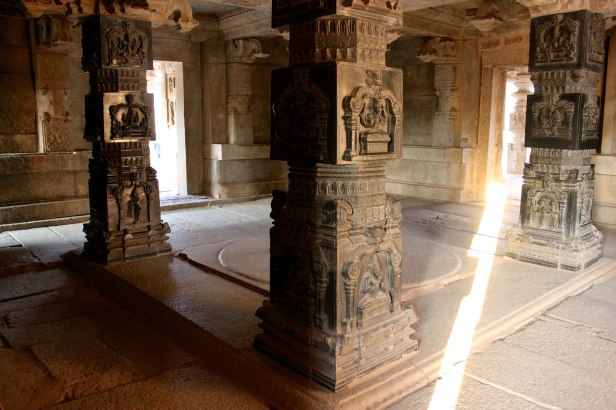
The natural lighting also gave some interesting aspects for photography. Some of my experiments are below:


It was definitely worth walking around and exploring the temple; the evening sun was changing the stone to golden!


As we exited the Hazararama Temple we noticed the gate made with stone. We wondered how they had operated the gate.

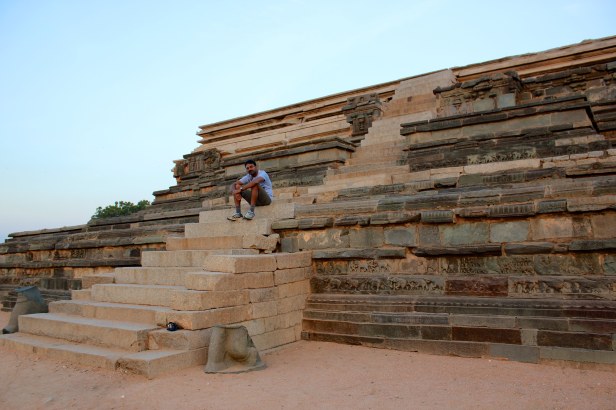
Next we went to the Mahanavami Dibba. This area supposedly had the ceremonial structures. What is remaining are only the platforms on which the wooden structures were built; the actual structures were burnt down during the destruction of the city.
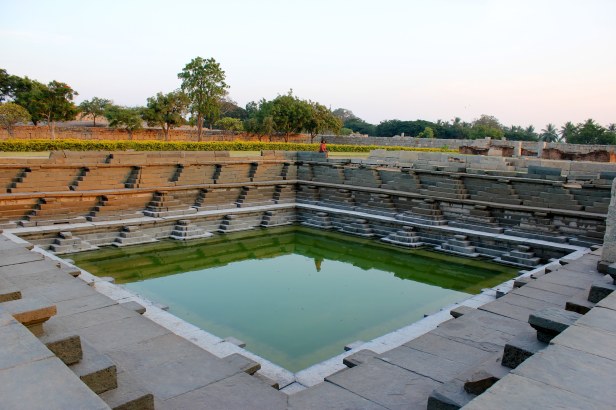
There was also a symmetrical stepped tank at one corner which also had an aqua-duct system around it.
The light was fading quite fast. This was one place we wanted to visit again to view in a different light. We ended the days’ outing with a view of the setting sun from the Mahanavami Dibba platform.

Once the sun had set we headed back to the hotel extremely satisfied with what we had experienced during the day.
In the next part of the trip I will cover our adventure of catching the sunrise from atop Matanga Hill, visit to a few other monuments and the scenic views of the sunset. You can read the next part of the trip in Hampi – A Tour of the Historical Site (Cont’d) .
Historical Details
I am not competent to cover this aspect and hence have left it out from this blog. It is best left to the experts and the historians. A good starting point is Wikimedia : Hampi.
Getting There
Hampi is around 360 kms from Bangalore. Hosapete is the nearest town to Hampi and is the nearest railhead too. You can choose to the reach Hosapete by overnight train or bus and then proceed to visit Hampi by hiring local transport. If you do this it is advisable to hire a vehicle for the full period of stay so that getting around is easy. Or you could choose to drive in your own vehicle all the way to Hampi just as we did.
Weather
Hampi gets very hot during summers. Hence it is best visited during winters (between Dec and Feb). Even during Dec and Feb the days are warm. However the breeze keeps its pleasant. Do remember to carry hats and water when going around. Nights are cool.
Recommendations and Tips
Visit the same site both in the morning and in the evening. The direction of the sunlight will amplify the beauty of these sites at both these times. I found the same site looking “different” when seen in the morning and evening when compared to seen during the day. If you are into photography you will be in paradise!
Hire a local tourist guide for atleast one full day. The guide will travel with you in your vehicle and take you around to all the historical sites. The details and information that the guides are able to impart will definitely make one appreciate the intricacies and history of the place much better; it will be money well spent. You will also in a way be contributing to the livelihood of the local people. They usually stand in the mornings at the junction a bit before the Kadalekalu Ganesh.
Several of the monuments are active places of worship. So expect to see high number of visitors through the year. You may also be required to take off your footwear in some places especially those with active worship.
 Mad about Birding and Travel
Nice pictures and writeup..We went recently there…the pictures brought memories of our visit!..
LikeLiked by 1 person
Thank you Srini.
It was a joy to write this blog as were the others. The best part of writing blogs are that you get to re-live the moments again. The pictures invoked a lot of beautiful memories from our Hampi trip
LikeLike
Fabulous locale, Fantastic memories, Painstakingly complied & Wonderfully written!! Well done Thomas!! I loved this holiday now everyone can see ‘WHY’…
LikeLiked by 1 person
Words and pictures come so nicely that felt like oneself is on Hampi Tour
LikeLike
Thank you for your kind words
LikeLike